
×

Western Balkans Digital Summit 2025

02.10.2025

Image for Western Balkans Digital Summit 2025

We were honoured to participate in the annual Western Balkans Digital Summit in Skopje, a core side-event of the Berlin Process that sets the stage for the upcoming Western Balkans Leaders' Summit. The event featured high-level dialogues with prominent voices, including the European Commission, Regional Cooperation Council (RCC), International Telecommunication Union (ITU), ministers responsible for digital transformation and cybersecurity from across the region, and leading European experts. These conversations reinforced the critical link between regional security and digital transformation.
This gathering was a powerful reminder that regional security and digital transformation go hand-in-hand. It's clear that cybersecurity is no longer a standalone technical issue, but the essential trust-builder that enables integration across digital services, critical sectors and ultimately, with the EU's single market. 
We were proud to see our WB3C cybercrime trainer, Yannick Casse, take the stage on a panel dedicated to cybersecurity solutions. He presented the WB3C as the primary regional hub for building cyber capabilities and the essential platform for fostering cross-border cooperation, the key enabler for implementing regional cybersecurity policies and fight against cybercrime. 

Beyond the panel, our colleagues Vanja Madzgalj MBE and Guillaume Narjollet used the opportunity to hold productive meetings with our key stakeholders and expand our network with new contacts, reinforcing the partnerships that are central to our mission.

The message in Skopje was clear: collaboration is our greatest asset. We return energized to continue our work across cybersecurity, cybercrime and cyberdiplomacy, looking with enthusiasm into our work plan for the next three months, which will bring some exciting activities with ransomware as the central theme.


Cybersecurity Training for Medium and Large Networks

Resilient critical infrastructure depends on secure networks, prepared teams and the ability to keep essential services running when cyber incidents occur.
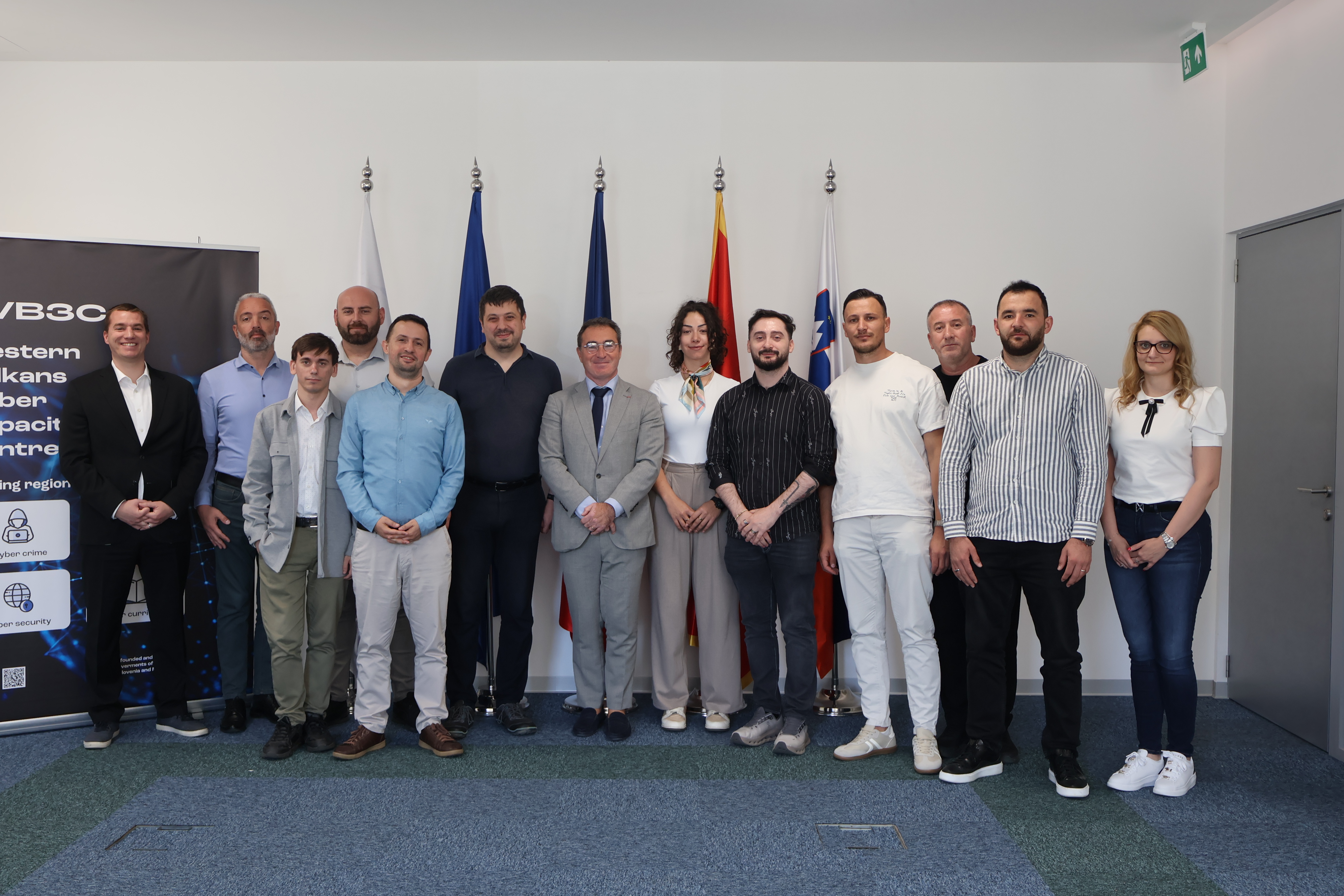
This was the focus of WB3C’s regional training on Network Security for medium and large networks, hosted on 18–19 May in partnership with Slovenia Government Agency for Cybersecurity - URSIV (Urad Vlade Republike Slovenije za informacijsko varnost) and led by Slovenian expert Primoz Bratanic.
The training brought together institutions whose work is closely connected to the stability of public services, government systems and essential infrastructure across the Western Balkans. Participants came from the Secretariat for Legislation - Government of R.Macedonia and the Ministry of Digital Transformation (Министерство за дигитална трансформација) of North Macedonia, Serbia’s Jaroslav Černi Water Institute, the Autoriteti Kombëtar për Sigurinë Kibernetike / National Cyber Security Authority of Albania, GOV-CIRT within Montenegro’s Crnogorski elektrodistributivni sistem, the Agencija za sajber bezbjednost Crne Gore / Cybersecurity Agency of Montenegro, and Ministry of Digitalization and Public Administration - Kosovo.
Over the two days, participants worked through practical approaches to making complex networks safer, reducing unnecessary exposure, recognising early warning signs and responding before a cyber incident disrupts services, operations or public trust.
A ransomware scenario was also part of the training, with a focus on the decisions institutions need to make under pressure: how to contain the incident, preserve evidence, coordinate internally and plan recovery.
For Western Balkans Cyber Capacity Centre (WB3C), this type of regional training is directly linked to the wider goal of strengthening cyber resilience of critical infrastructure - the systems, services and institutions that citizens rely on every day.
Thank you to Igor Kovač of Urad Vlade Republike Slovenije za informacijsko varnost, Primoz Bratanic and all participating institutions for two productive days and great engagement as a group.
Cyber Vigilance for Schoolchildren

Children grow up online long before they fully understand what the online world can expose them to. This is why early cyber vigilance is important, whether as part of the school curriculum or informal education for children and teens. 
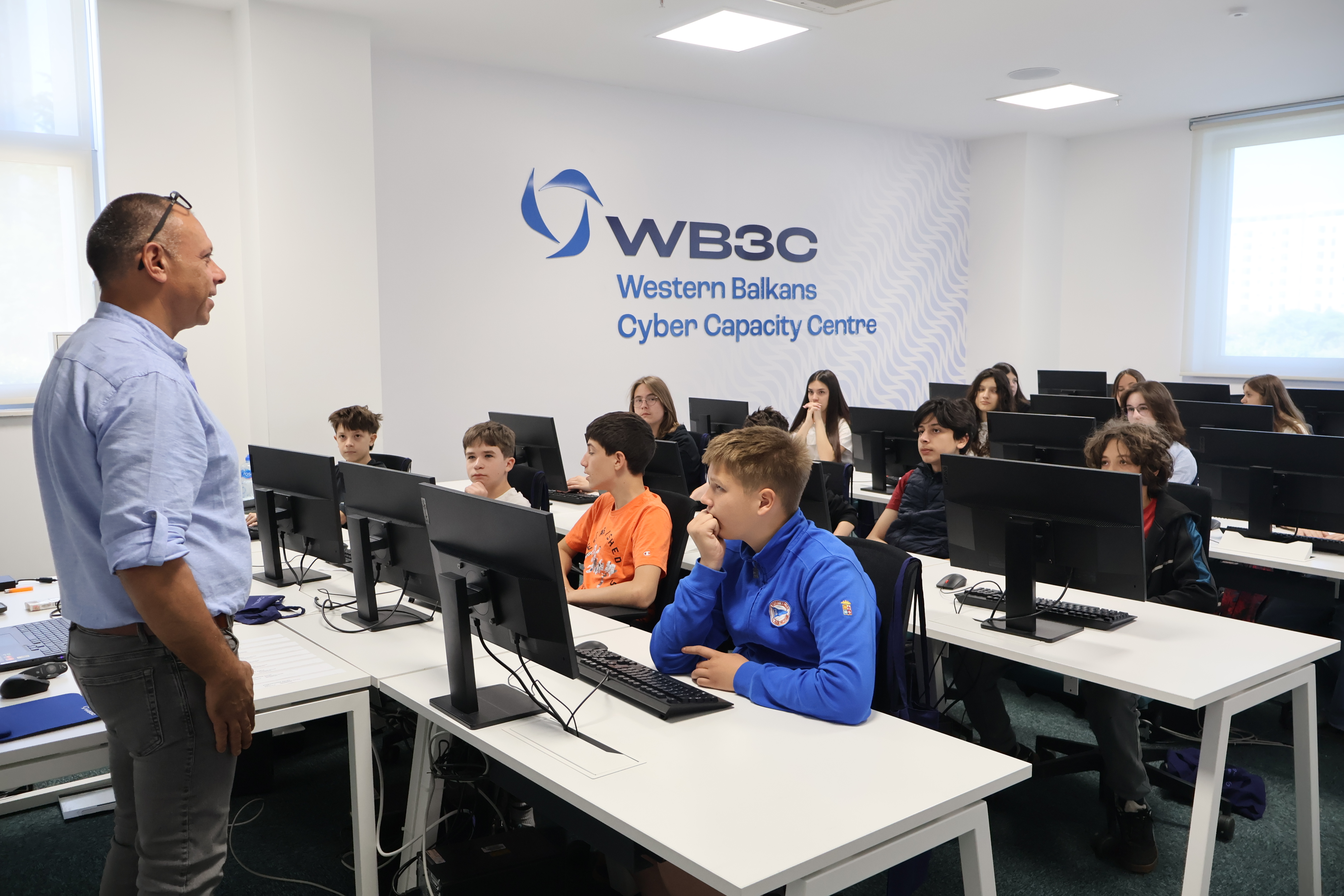
This week, Western Balkans Cyber Capacity Centre (WB3C) delivered a three-hour course titled "Our Digital Space: Screen Time Balance & Online Safety", for children of the French School in Montenegro. The session was prepared and delivered by our in-house trainers for cybercrime Cyril CORRIAS and Yannick CASSE, with a simple but important goal: to help children build safer, healthier and more responsible digital habits.
The session covered screen time balance, with age-appropriate recommendations from early childhood to teenage years, as well as the basics of online safety: strong passwords, privacy, social media, and how to recognise situations that should not be ignored.
The session also opened the discussion on child protection online — from risky content and behaviour to reporting mechanisms, parental controls and the role of schools in preventing online bullying and harassment.
To make the learning practical and engaging, the children took part in a group-game questionnaire and received their individual Internet License at the end of the morning.
Cybersecurity education does not begin with technology, it begins with awareness, good habits and the confidence to ask for help when something feels wrong online.

OSINT Training for Trafficking in Human Being and Migrant Smuggling

Four days in the training room, focused on a topic where online traces can make a very real difference: OSINT for Trafficking in Human Beings (THB) and Migrant Smuggling.
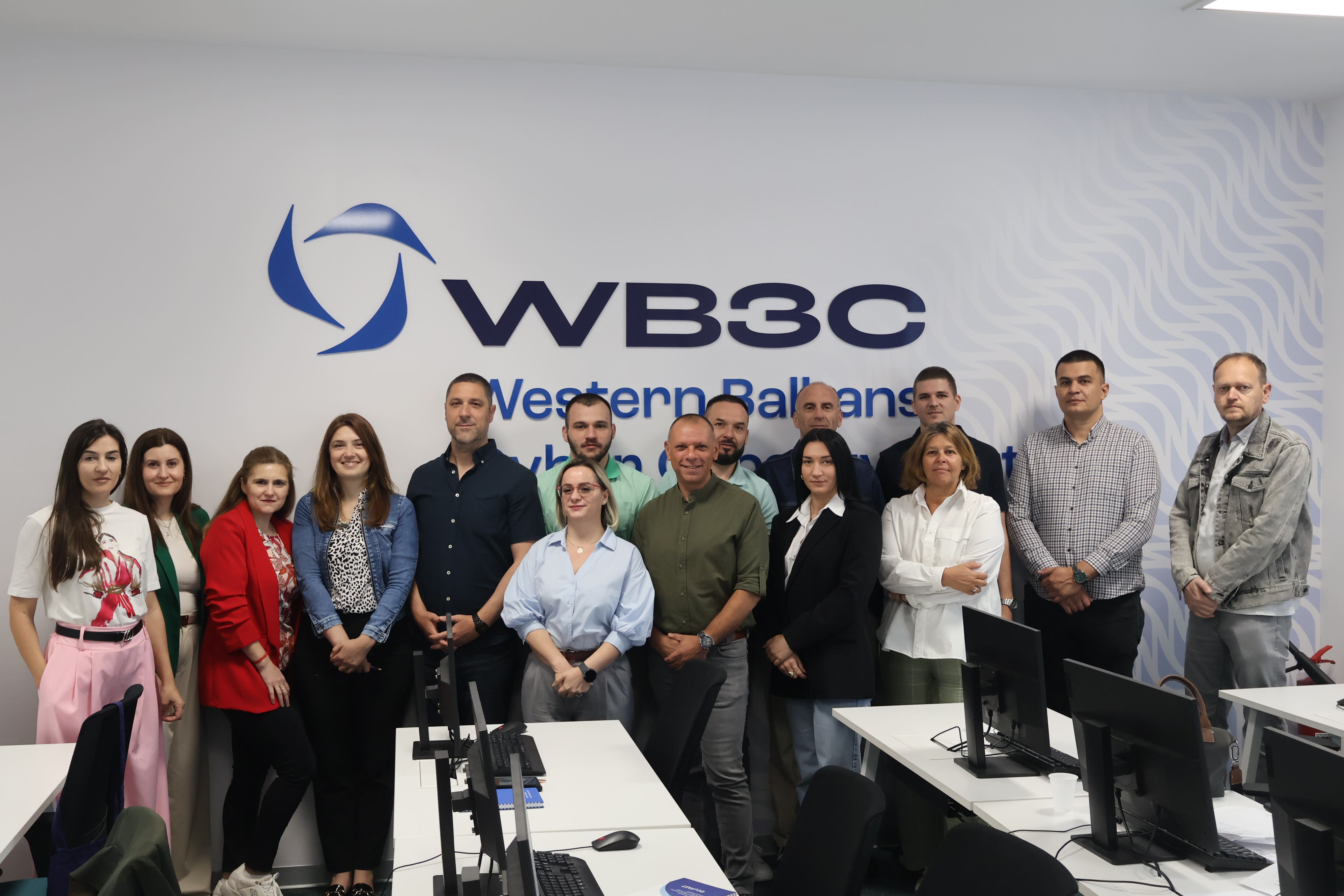
WB3C has just concluded this regional training for law enforcement units, organised together with Marie Pierre MOSIN, EU4FAST and CIVIPOL and delivered by our in-house trainer Cyril CORRIAS.
For investigators working on THB and migrant smuggling, the digital aspect is essential. Recruitment, communication, movement, facilitation networks and financial signals often leave online traces. Knowing how to find, assess, preserve and use that information responsibly can strengthen investigations and support better cross-border cooperation.
This is why OSINT remains part of WB3C’s core programme. It connects cyber skills with real operational needs in the Western Balkans and helps law enforcement units build practical capacity against serious and organised crime.
A strong three days, with committed participants and a clear regional purpose.


Copyright © WB3C

Disclaimer: Translations of the original content written in English into other languages are AI generated by Weglot.