×

Governing Commercial Cyber Intrusion Capabilities (CCICs)

12.12.2025

Image for Governing Commercial Cyber Intrusion Capabilities (CCICs)

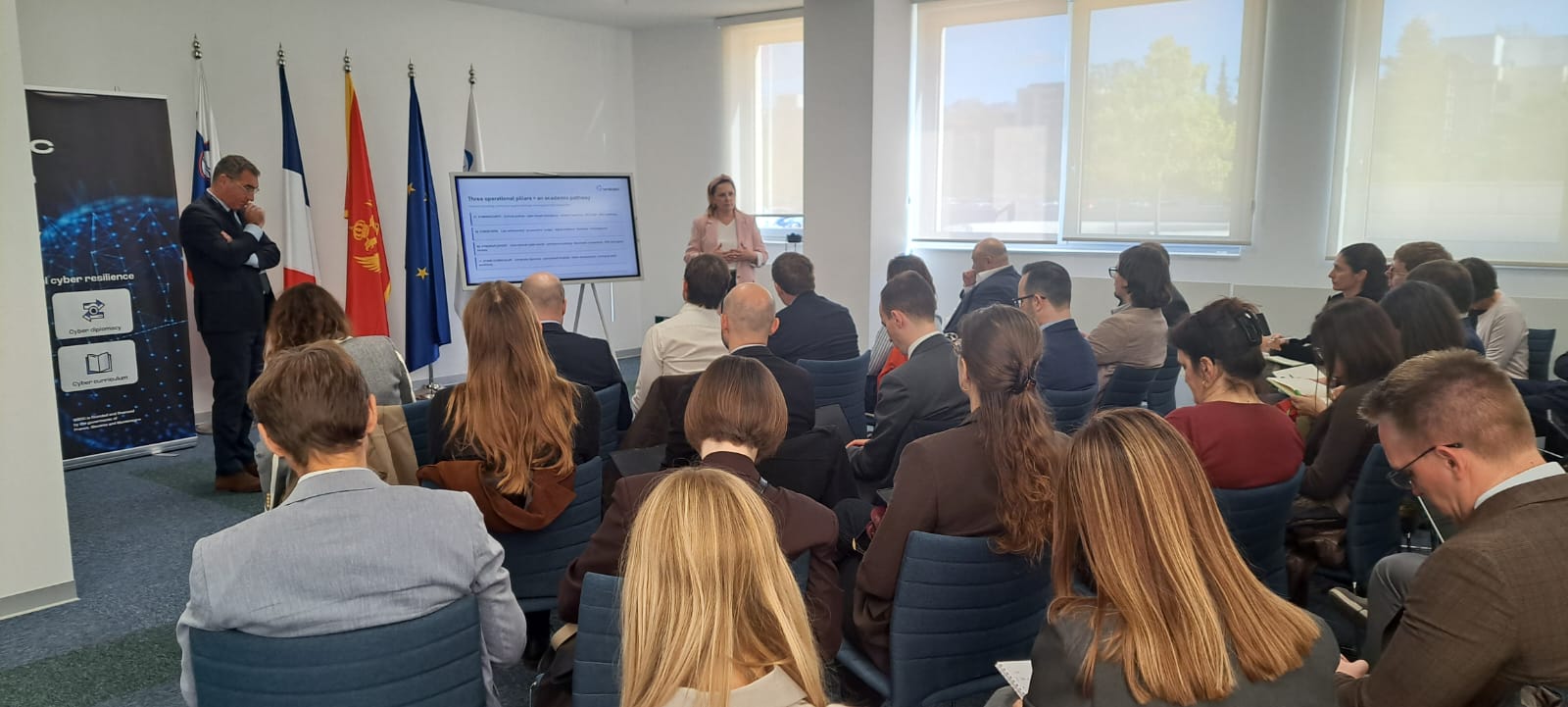
Today, December 12th, the Western Balkans Cyber Capacity Centre (WB3C) had the pleasure to host a training on Governing Commercial Cyber Intrusion Capabilities (CCICs). 
Organized by the Ministère des Affaires étrangères français and implemented by Expertise France in the framework of a European Commission subvention under the Multi-Partner Contribution Agreement (MPCA) on Cyber and Artificial Intelligence, this training gathered diverse actors involved in the cybersecurity landscape of the Western Balkans region such as diplomats, magistrates and law enforcement officers to discuss the growing challenge posed by the proliferation and irresponsible use of CCICs. 

Throughout the day, participants deep dived into the characteristics of the CCICs market and exchanged the need for strong governance frameworks:
1)     Assessing the threat and current trends in the global cyber intrusion market.
2)     Decoding the Pall Mall Process: ensuring government responsible use of commercial cyber intrusion capabilities.
3)     National CCIC governance frameworks: sharing of national experiences and identifying challenges and guidance.

Complementary to the other WB3C trainings, this workshop has contributed to advancing responsible governance of CCICs and strengthening accountability in the cyber domain. We thank the speakers Mahé Dersoir (Ministère des Affaires étrangères français), Robert Pellow (Foreign, Commonwealth and Development Office), James Shires and Lena Riecke for their precious contributions and expertise in the subject. 
Moreover, we thank all participants for their active engagement and constructive exchanges, which are essential to continuously improve our collective understanding and oversight of CCICs. 
We are grateful to our local partners Davide Meinero, PhD of the EU Delegation to Montenegro, Melanie Moffat of the British Embassy, Bertrand Baucher of the French Embassy and Gilles Schwoerer, Head of WB3C for supporting this initiative.


Image for Disinformation and Foreign Information Manipulation and Interference Capacity Building Workshops
Upcoming
Disinformation and Foreign Information Manipulation and Interference Capacity Building Workshops

Draft Programme 


📅 30 November – 1 December 2026
📍 Science and Technology Park, Podgorica, Montenegro
🏛️ Conference Hall Unicorn, 2nd floor
 

Context: Building on WB3C’s May 2026 regional conference, these workshops examine how governments, media and other stakeholders can anticipate, prevent and respond to malign information operations. Sessions combine strategic perspectives with practical approaches to threat detection, crisis coordination, reporting and AI-enabled information manipulation. The programme is provisional and still subject to change. 
Audience: Government strategic communications officials, cybersecurity leadership, journalists, media regulators, fact-checkers and civil society organisations.
Working language: English (no simultaneous interpretation).
Chatham House Rule: The workshops will be held under the Chatham House Rule, providing a safe space for an open dialogue.                                               

Funding: The event is organised under the EU-funded project “Improving the resilience of critical entities and the protection of public spaces and cyberspace against security threats in the Western Balkans” (2026–2028). This event is also supported by Poland, Norway, United Kingdom and France, through their diplomatic missions in Podgorica and Belgrade.


DAY 1 – Monday, 30 November 2026


☕ 08:30–09:00  |  ARRIVAL
Registration and welcome coffee


🕘 09:00–09:30  |  OPENING REMARKS
• WB3C
• Ministry for European Affairs of Montenegro
• EU 


🎙️ 09:30–10:00  |  MODERATED POLICY DIALOGUE
Montenegro at the Crossroads: Safeguarding Its Democracy and European Future in an Era of Hybrid Threats
• Biljana Papović — State Secretary, Ministry of European Affairs of Montenegro
• Todor Goranović — Defence and Security Advisor to the Prime Minister of Montenegro
 

🕘 10:00–10:45  |  EXPERT SESSION
The Agents of Chaos: The Shadow Campaign Against the West
• Maciej Bukowski — Casimir Pulaski Foundation, Poland


☕ 10:45–11:15  |  COFFEE BREAK


🕚 11:15–12:00  |  EXPERT SESSION
From Detection to Decision: How VIGINUM Feeds Government Crisis Management During Hybrid Campaigns
•VIGINUM — France’s service for vigilance and protection against foreign digital interference


🕐 12:00–13:00  |  MODERATED DISCUSSION
The AI Disinformation Battlefield: New Weapons, New Threats, New Defences – and the Fight for Public Trust
• Raphaël-David Lasseri — Magic LEMP, France
• Henrik Vold — Norwegian Institute of Journalism, Norway
• Eirik Veum — Norwegian Police Security Service (PST), Norway 
• Daniel Schroeder — SINTEF Digital, Norway   
                                                                                                                                                                                                                                                                                                                                                                                                                                                                                                                                  

🍽️ 13:00–14:00  |  LUNCH


🕑 14:00–14:30  |  EXPERT SESSION
Geopolitical shifts and impact on the Western Balkans 
• Jamie Tarabay — Crumpton Global, USA  (TBC)


🕑 14:30–15:15  |  EXPERT SESSION
Coordination and decision making during an ongoing hybrid assault
• Matthew Booth — FCDO, United Kingdom


🕒 15:15–16:30 |  EXPERT SESSION
Modern Information Warfare: The Global Strategy to Destabilise the Western Balkans
• David Colon — Sciences Po, France


🎤 16:30–17:00  |  QUESTIONS FROM THE AUDIENCE 


DAY 2 – Tuesday, 1 December 2026


🛠️ 08:00–09:30  |  CLOSED WORKSHOP

• David Colon — France
• Matthew Booth — United Kingdom
 

🕙 10:00–12:00  |  ROOM 1: WORKSHOP FOR GOVERNMENT INSTITUTIONS 
From Detection to Institutional Response

• David Colon — Sciences Po, France
• VIGINUM — France  
• Raphaël-David Lasseri — Magic LEMP, France   

Context: Government institutions may detect suspicious activity without a clear process for assessing significance and mobilising a response.

Objective: Practise moving from initial indicators and analytical findings to an institutional assessment, escalation decision and coordinated response.


🕚 10:00–12:00  |  ROOM 2: WORKSHOP FOR MEDIA AND CIVIL SOCIETY 
Verification of an AI-Amplified Information Operations

• Henrik Vold — Norwegian Institute of Journalism, Norway
• Eirik Veum — Norwegian Police Security Service (PST), Norway 
• Daniel Schroeder — SINTEF Digital, Norway

Context: Synthetic content, coordinated amplification and misleading claims complicate verification under time pressure.

Objective: Apply verification and source-assessment methods to a simulated information operation, distinguishing evidence, uncertainty and responsible reporting.


☕ 12:00–13:00  |  LUNCH 
 

🧩 13:00–14:30  |  WORKSHOP FOR GOVERNMENT INSTITUTIONS 
Crisis decisions under pressure
• Maciej Bukowski — Casimir Pulaski Foundation, Poland
Practical tabletop exercise.


🧩 13:00–14:30  |  WORKSHOP FOR MEDIA AND CIVIL SOCIETY 
Editorial judgement during a hybrid crises (TBC)
• Jamie Tarabay  — Crumptom Global, USA
Practical tabletop exercise.


🍽️ 14:30–15:00  |  COFFEE BREAK 
 

🛠️ 15:00–16:30  |  PLENARY WORKSHOP 
Government-Media Crisis Coordination Simulation 

• Matthew Booth — FCDO, UK 


DAY 3 – Wednesday, 2 December 2026 


🛠️ Time TBC  |  UNIVERSITY GUEST LECTURES 

• Maciej Bukowski — Casimir Pulaski Foundation, Poland
• Jamie Tarabay — Crumpton Global LLC
University of Donja Gorica, Faculty of Humanities 

NB. To register for the conference please use this LINK or contact vanja.madzgalj@wb3c.org. The number of seats is limited. 

This event will be photographed. Please read our Privacy Policy on the Registration Form. 

To download the programme and the speakers bios, go to the top of the page.
 

Strengthening Cybercrime Investigation Skills in Kosovo

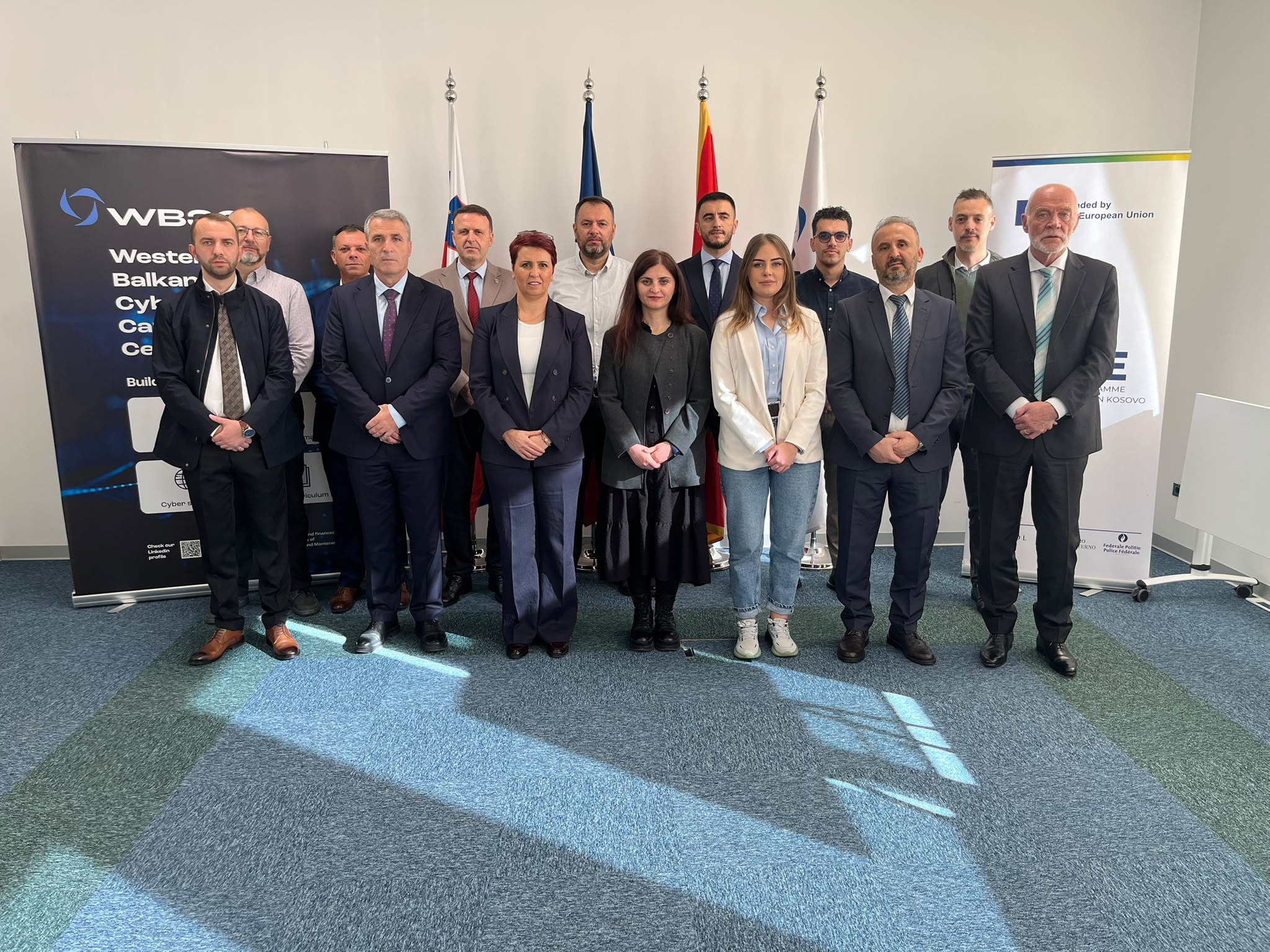
This week, WB3C delivered a hands-on training programme on the fundamentals of cybercrime investigations under the Home Affrairs Programme of European Union In Kosovo (HAPE-Kosovo) initiative, led by our experts Philippe Marie and Cyril Corrias.
The training covered key areas of modern cybercrime investigations, including:
✅ Internet and darknet operations, network fundamentals and operational security
✅ Open-source intelligence (OSINT) techniques
✅ Investigation of cyber-enabled crime
✅ Practical approaches to cybercrime investigations, from field operations to digital evidence collection
✅ Cryptocurrency-related investigations and European and international frameworks for cross-border cooperation.

Through progressively challenging practical exercises, participants strengthened their investigative skills, applied established methodologies and developed a more consistent approach to tackling cybercrime.
The week was marked by strong engagement, active participation and valuable exchanges of professional experience.
Building investigative capabilities and strengthening cross-border cooperation remain central to WB3C's mission to combat cybercrime across the Western Balkans.

WB3C Welcomes EU Council Working Party on Hybrid Threats

On 4 November, the Western Balkans Cyber Capacity Centre (WB3C) welcomed a high-level delegation from the Council of the European Union's Horizontal Working Party on Enhancing Resilience and Countering Hybrid Threats (HWP ERCHT), led by Conor Nelson of Ireland.
The delegation, comprising representatives of EU Member States and EU institutions, was joined by colleagues from the EU Delegation to Montenegro and Montenegro's Ministry of Foreign Affairs.
During a tour of the Centre, we presented WB3C's mission, strategic objectives and capacity-building activities across cybersecurity, cybercrime and cyber diplomacy, including our work on foreign information manipulation and interference (FIMI) and disinformation, which are currently in our focus.
The discussions highlighted WB3C's distinctive value as a regional platform connecting institutions, expertise and international partners, translating shared security priorities into practical capacity building and stronger regional cooperation. This approach generated particular interest among the visiting delegation.
Engagements of this calibre are especially valuable in strengthening WB3C's visibility among EU institutions, fostering a closer understanding of its strategic role and opening opportunities for deeper cooperation on shared security challenges.
We thank the delegation for their interest and constructive exchange, and look forward to continuing the dialogue.


Copyright © WB3C

Disclaimer: Translations of the original content written in English into other languages are AI generated by Weglot.