×

Governing Commercial Cyber Intrusion Capabilities (CCICs)

12.12.2025

Image for Governing Commercial Cyber Intrusion Capabilities (CCICs)

Today, December 12th, the Western Balkans Cyber Capacity Centre (WB3C) had the pleasure to host a training on Governing Commercial Cyber Intrusion Capabilities (CCICs). 
Organized by the Ministère des Affaires étrangères français and implemented by Expertise France in the framework of a European Commission subvention under the Multi-Partner Contribution Agreement (MPCA) on Cyber and Artificial Intelligence, this training gathered diverse actors involved in the cybersecurity landscape of the Western Balkans region such as diplomats, magistrates and law enforcement officers to discuss the growing challenge posed by the proliferation and irresponsible use of CCICs. 

Throughout the day, participants deep dived into the characteristics of the CCICs market and exchanged the need for strong governance frameworks:
1)     Assessing the threat and current trends in the global cyber intrusion market.
2)     Decoding the Pall Mall Process: ensuring government responsible use of commercial cyber intrusion capabilities.
3)     National CCIC governance frameworks: sharing of national experiences and identifying challenges and guidance.

Complementary to the other WB3C trainings, this workshop has contributed to advancing responsible governance of CCICs and strengthening accountability in the cyber domain. We thank the speakers Mahé Dersoir (Ministère des Affaires étrangères français), Robert Pellow (Foreign, Commonwealth and Development Office), James Shires and Lena Riecke for their precious contributions and expertise in the subject. 
Moreover, we thank all participants for their active engagement and constructive exchanges, which are essential to continuously improve our collective understanding and oversight of CCICs. 
We are grateful to our local partners Davide Meinero, PhD of the EU Delegation to Montenegro, Melanie Moffat of the British Embassy, Bertrand Baucher of the French Embassy and Gilles Schwoerer, Head of WB3C for supporting this initiative.


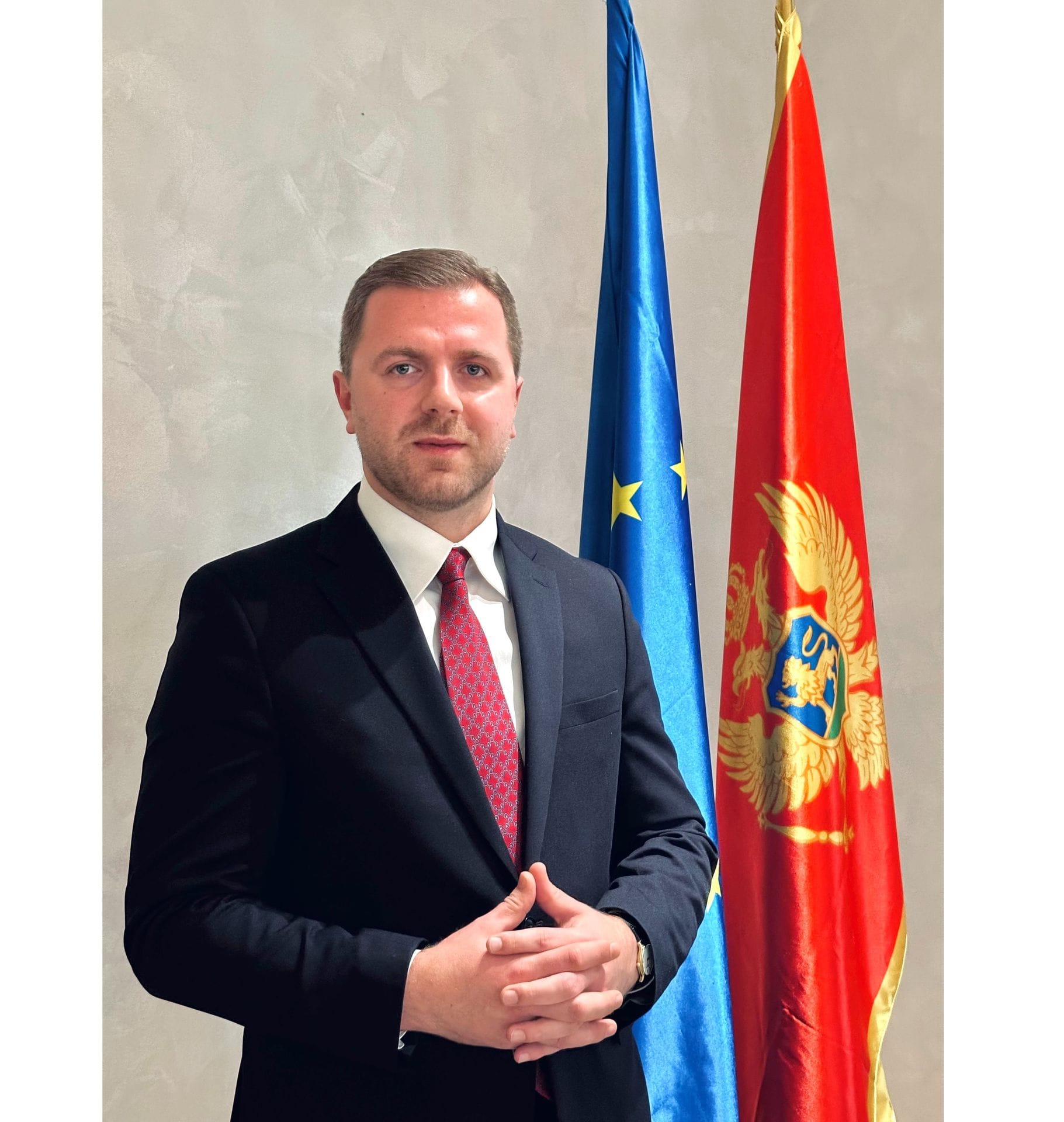
WB3C Elects Naim Djokaj as its First Director General

The Governing Board of the Western Balkans Cyber Capacity Centre (WB3C), meeting for its first session in Podgorica on 10 March 2026, elected Naim M. GJOKAJ as the Centre’s new Director General.
Mr. Gjokaj currently serves as State Secretary at the Ministry of Public Administration of Montenegro, a role he has held since December 2023. 
He brings extensive experience in public administration reform and regional cooperation, with a strong focus on digital transformation and institutional development. Mr. Gjokaj holds a degree in Banking from the Faculty of Financial Sciences at Marmara University in Istanbul, where he studied as a scholarship recipient of the Government of Turkey. 
His election marks an important step in the continued institutional development of WB3C following the Centre’s transition into an international organisation.
Mr. Gjokaj will be joining WB3C soon to lead the next phase of the Centre’s development, with a focus on strengthening the institution’s foundations, deepening regional cooperation, expanding strategic partnerships and further consolidating WB3C’s role as a key regional platform supporting the EU integration and digital resilience of the Western Balkans. He will be working alongside our Programme Director Gilles Schwoerer in guiding the Centre’s strategic growth and programme development in the years ahead.

We warmly congratulate Director General-elect Naim Gjokaj and look forward to welcoming him to the WB3C team.
WB3C Participates in EU CYBER DIRECT Workshop in Brussels

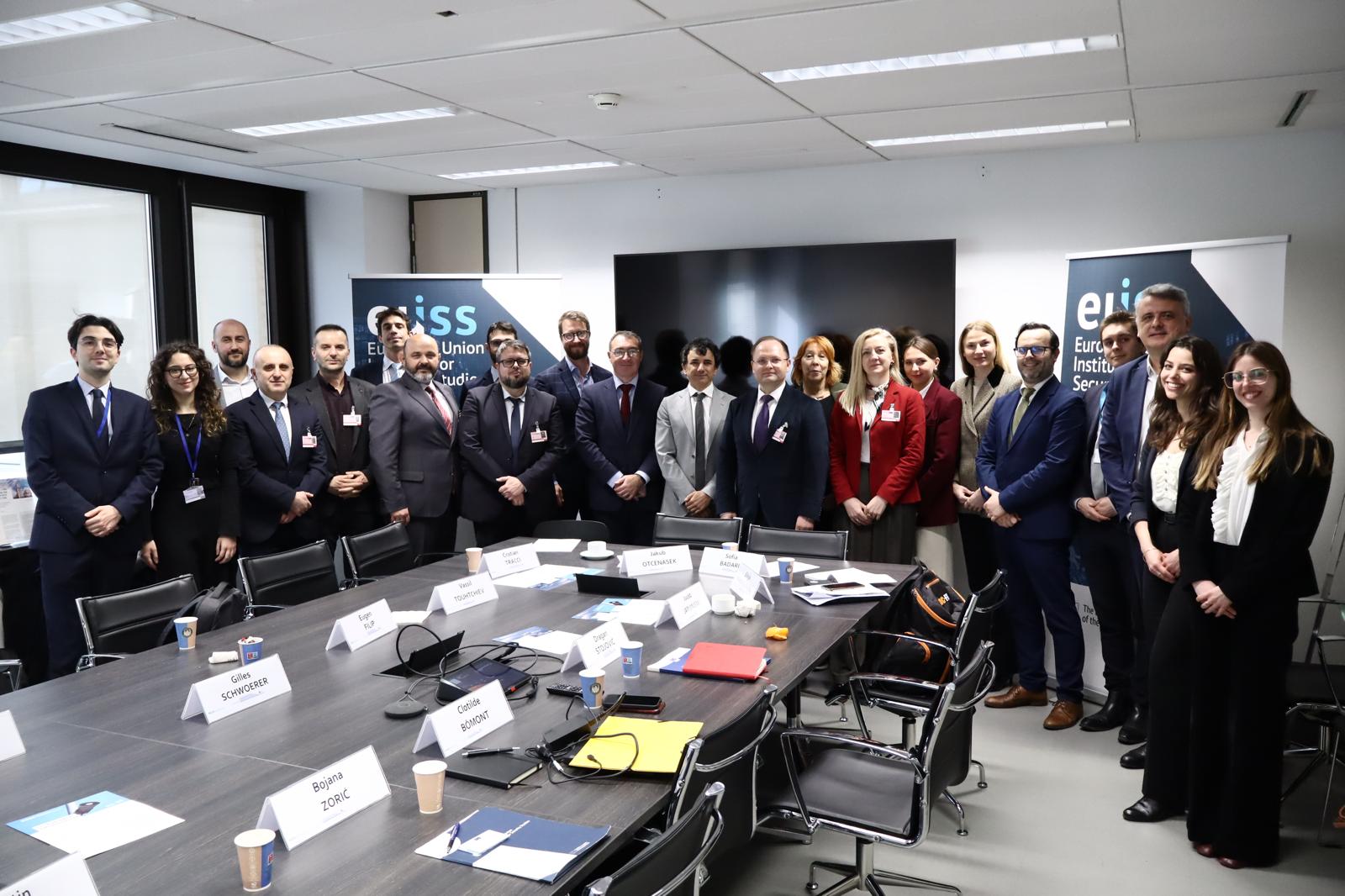
WB3C was pleased to take part in the discussion organised by the EU Institute for Security Studies and EU Cyber Direct – EU Cyber Diplomacy Initiative on “Europe Connected and Secure: Leveraging cyber and digital capacities in enlargement countries,” held in Brussels on 12 March.
The workshop brought together representatives from the Western Balkans, EU institutions and partners from Ukraine to assess common cyber threats, institutional realities, and the role that digital resilience can play in strengthening Europe’s neighbourhood security.
For WB3C, it was a valuable opportunity to exchange perspectives with colleagues from the WB6 partners, DG ENEST, DG CONNECT, ENISA, EEAS and other stakeholders working to support the EU enlargement agenda through stronger cyber and digital capacities.

Two ideas emerging from the discussion that our Programme Director Gilles Schwoerer engaged in are particularly important for us and will guide WB3C’s work in the coming months:
• A regional cyber diplomacy initiative, to be developed together with EU Cyber Direct, which WB3C aims to host in the second half of the year.
• A structured dialogue with universities across the region, to explore how practice-based cyber modules developed at WB3C can complement and strengthen existing or emerging Master’s programmes in cybersecurity.

Developing talent and building institutional capacity remain central to the region’s digital future. WB3C looks forward to continuing this conversation with partners across the region and the EU.

WB3C Officially Becomes an International Organization

Yesterday, the Western Balkans Cyber Capacity Centre (WB3C) reached a major milestone in its institutional journey.

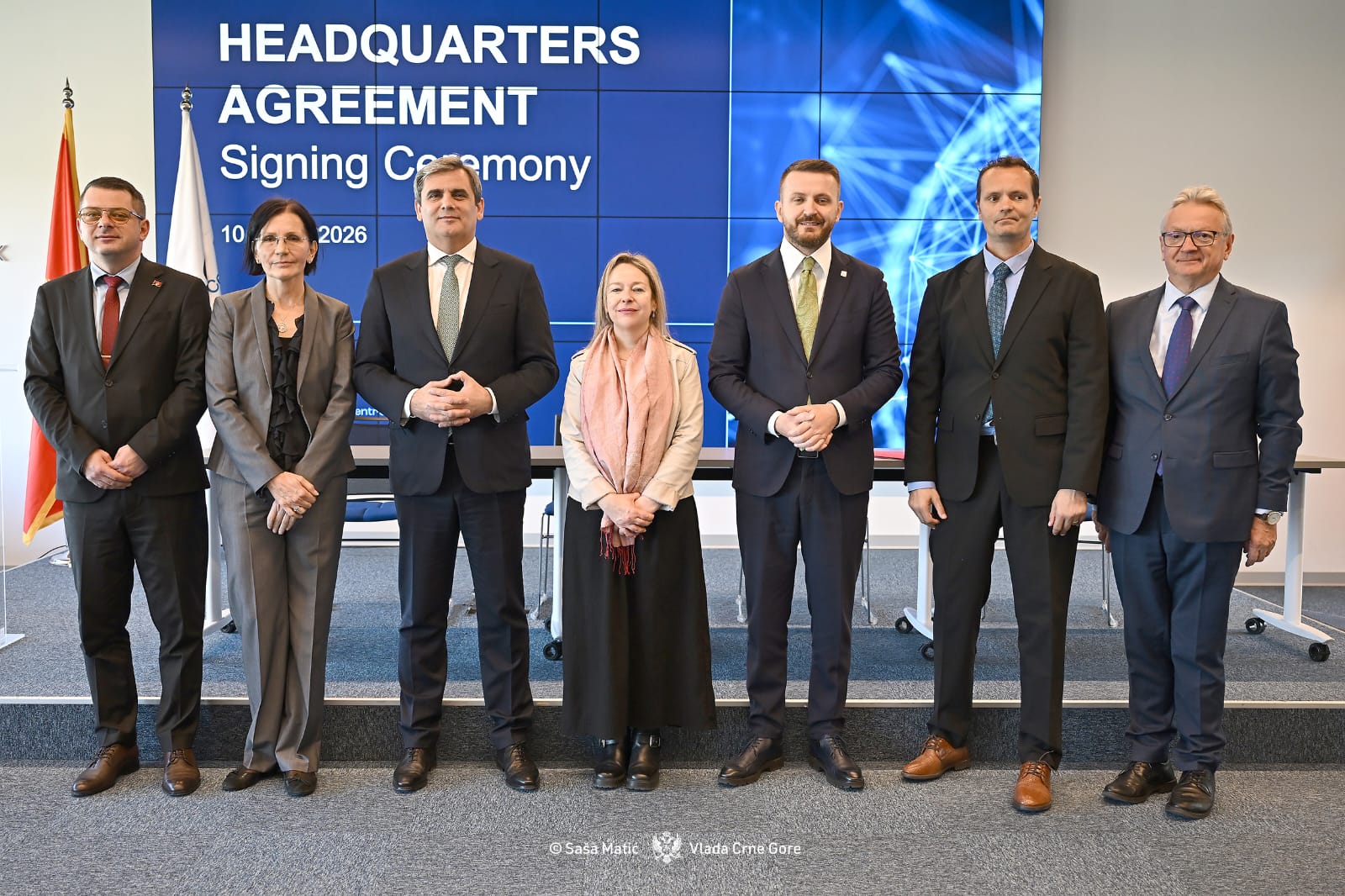
At the first meeting of its Governing Board, representatives of France, Slovenia and Montenegro came together to mark a new chapter for the Centre, with the signing of the Headquarters Agreement formally confirming WB3C as the first international organization headquartered in Podgorica. The appointed members of the Governing Board, H.E. Anne-Marie Maskay and Gen. Stephane Richou for France, iztok jarc and Uroš Svete for Slovenia and Ivan Lekovic and Aleksandar Zecevic for Montenegro, held the first inaugural session to adopt internal documents, while the Programme Director Gilles Schwoerer presented the achievements of the Centre in 2025 and the ambitious plan for 2026.

The event was honoured by the presence of the Deputy Prime Minister and Foreign Minister Ervin Ibrahimovic, Minister of Public Administration Marash Dukaj, French and Slovenian Ambassadors to Montenegro Anne-Marie Maskay and bernarda gradišnik, representatives of the EU Delegation and the diplomatic corps in Montenegro and our institutional partners, reflecting the strong support behind WB3C’s mission to serve as a regional platform for cyber capacity building, cooperation and resilience.

During the official addresses of the high representatives of the founding members, we heard the reassuring words of unwavering support to the region's European future and WB3C's mission in supporting the region on this path through strengthening its resilience against cyber and hybrid threats.

Beyond the formal ceremony, the day also offered a meaningful reminder of what this institution is ultimately about: investing in people, knowledge and the region’s future. On this occasion, General Stéphane Richou, Director of Security and Defense Cooperation at the French Ministry for Europe and Foreign Affairs (Direction de la Coopération de Sécurité et de Défense DCSD 🇫🇷) visited the first class of the Cybersecurity Diploma Course, engaging with participants who represent the next generation of cyber professionals in the Western Balkans.

Taken together, yesterday’s events stood as a powerful testament to a shared commitment to regional cooperation, European values and a more secure digital future.


Copyright © WB3C

Disclaimer: Translations of the original content written in English into other languages are AI generated by Weglot.