×

Strengthening OSINT Capacities for Investigators and Prosecutors

24.02.2026

Image for Strengthening OSINT Capacities for Investigators and Prosecutors

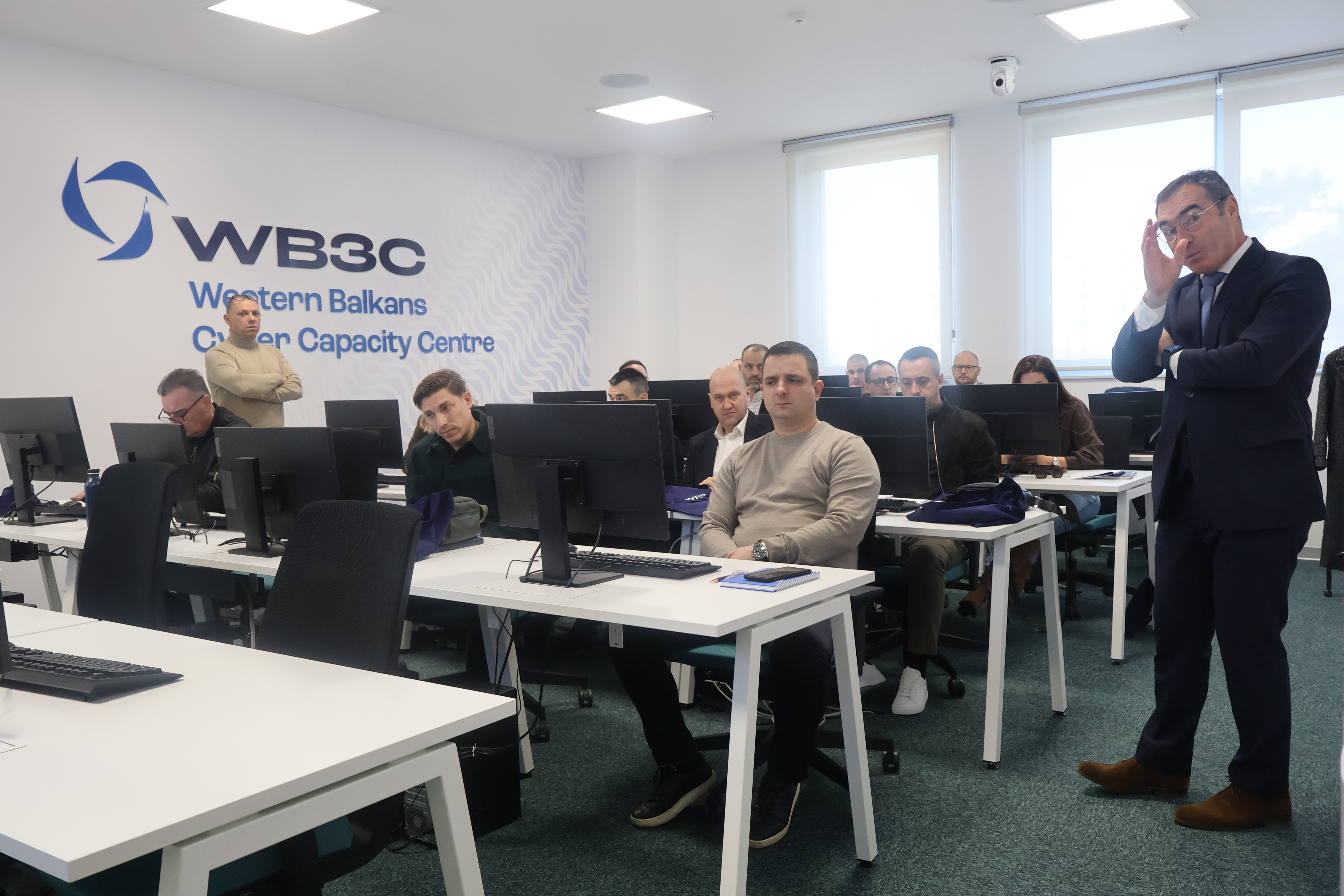
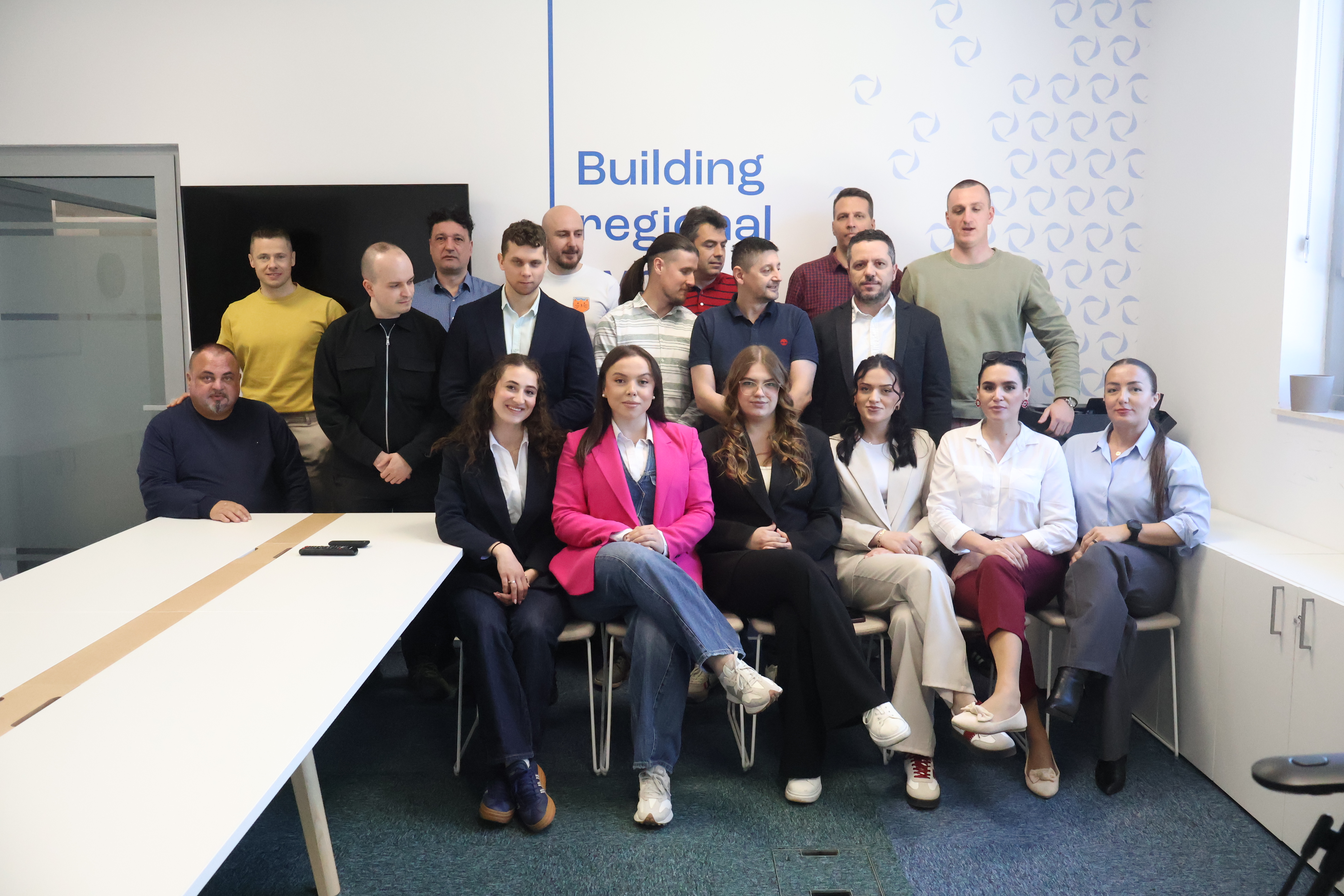
WB3C has launched a new edition of its four-day intensive OSINT training, bringing together police investigators and prosecutors from across the Western Balkans.
The participants were welcomed by Gilles Schwoerer, Head of WB3C, who underlined the importance of building coordinated investigative and prosecutorial responses to evolving digital threats. The training is delivered by WB3C’s in-house cybercrime expert, Cyril C., specializing in open-source intelligence (OSINT).
The programme focuses on practical, case-based learning to strengthen participants’ ability to collect, analyse and preserve digital evidence in line with legal standards. Through structured exercises, participants develop skills in advanced online searches, metadata analysis, secure data handling and safe navigation of the darknet environment.
By combining investigative techniques with prosecutorial perspectives, the training supports stronger end-to-end cooperation between police and justice actors — a critical factor in delivering prosecution-ready cybercrime cases.
Building sustainable regional capacity in open-source intelligence remains a key pillar of our work to enhance resilience against evolving digital threats.


CTI for Critical Infrastructure Training Completed

Last week at WB3C, we wrapped up a four-day training on Cyber Threat Intelligence (CTI) focused on the energy sector and government infrastructure, led by Ljuban Petrovic.

Working with SOC, CSIRT and CERT teams from across the region, the training reinforced a simple point: CTI only matters when it informs decisions. When it helps prioritise. When it changes how teams prepare and respond.
The sectoral focus proved its value. Energy infrastructure comes with its own risk landscape, and the discussions reflected that reality—specific, operational, and directly relevant.

We are continuing this work in September, building on what started here.
Because strengthening resilience is not a one-off effort. It is something that develops over time, through practice, exchange, and trust. 

What is Cyber Threat Intelligence (CTI) — and why does it matter?

Simply put, CTI is about turning information into insight, before a threat happens.

Not just collecting data on threats, but understanding who is behind them, how they operate, and what that means for your own systems.
Without that understanding, cybersecurity remains reactive. With it, organisations can anticipate, prioritise and respond with purpose.

Next week at WB3C, we will be running a four-day regional training on Cyber Threat Intelligence (CTI).
The training is designed for SOC, CSIRT and CERT teams, as well as IT professionals working within critical entities—specifically the energy sector. The choice is deliberate.

We are taking a sectoral approach to cybersecurity capacity building. Because threats are not abstract—they target specific systems, infrastructures and vulnerabilities. And the energy sector, as a backbone of economic and societal stability, requires tailored, operationally relevant skills that reflect its real risk landscape.
Over four days, participants will cover:
💡 understanding CTI in the context of critical infrastructure
💡 analysing threats and assessing their impact
💡 translating intelligence into actionable outputs

All week, we will be working closely with cybersecurity professionals from across the region’s energy sector—moving from concepts to application, and building capabilities that can directly support operational decision-making.
This is where CTI becomes operational. Protecting our energy infrastructure means protecting our economy, our security and our livelihood.

Image: Patrick https://lnkd.in/diYnZEgB

Day 3 at the Forum INCYBER (FIC) Europe 2026 in Lille

Day 3 was dedicated to direct engagement with industry.
The WB3C delegation attended presentations by leading cybersecurity companies, including Alcyconie, Sekoia.io and GATEWATCHER, gaining insight into practical solutions and operational approaches to current cyber threats.
The day continued with a hands-on workshop by Alcyconie focused on crisis management, built around a real-life scenario. Members of the delegation took part in the exercise, working through response coordination and decision-making in a simulated incident environment. There was a number of informal meetings with numerous industry representatives around the event venue.

Today, the Western Balkans Cyber Capacity Centre (WB3C) team also met with the organisers of the Forum INCYBER (FIC) to advance discussions on bringing a similar event to Podgorica this June. The meeting focused on shaping the concept, format and partnerships of what would become the first cybersecurity industry forum of this kind in the Western Balkans, formally linked to the InCyber network.

A highly productive and valuable study visit to Lille.


Copyright © WB3C

Disclaimer: Translations of the original content written in English into other languages are AI generated by Weglot.