
×

Regional Conference on Foreign Information Manipulation and Interference and Disinformation

06.05.2026

Image for Regional Conference on Foreign Information Manipulation and Interference and Disinformation

Regional Conference on Foreign Information Manipulation and Interference (FIMI) and Disinformation

REGIONAL CONFERENCE ON FIMI AND DISINFORMATION

📅 6–7 May 2026
📍 Science and Technology Park, Podgorica (Day 1: Conference Hall Unicorn, II floor; Day 2: MVP Conference Room, II floor)

Held under the Chatham House Rule, the conference explores how governments and societies can anticipate (prebunk), prevent, and respond (debunk) to malign information operations. Filming and recording is allowed only in the opening session. The preparation of this conference is supported by the Atlantic Council of Montenegro.

Conference programme:

DAY 1 – Wednesday, 6 May 2026


🕘 09:00 – 09:30 | OPENING REMARKS

Objectives, Chatham House Rule, Expected Outcomes

Conference host: Ms. Vanja Madzgalj, Senior Project Manager, WB3C

Speakers:

  • Mr. Gilles Schwoerer, WB3C
  • Mr. Filip Ivanović, PhD, Deputy Prime Minister for Foreign and European Affairs, Government of Montenegro
  • Mr. Emanuele Giaufret, Deputy Managing Director - Western Europe, European External Action Service (EEAS)
  • Mr Cosmin Dobran, Director for Peace, Partnerships and Crisis Management, European External Action Service (EEAS) 


🕤 09:30 – 10:15 | KEYNOTE ADDRESS

FIMI as a National Security and Governance Challenge

How foreign influence exploits governance gaps — a historical reflection and how states respond without undermining freedoms.

Speaker: Mr. David Colon, PhD, Associate Professor, Sciences Po, France


🕥 10:15 – 11:15 | CASE STUDY

Anatomy of Disinformation Operations: Case Study and Lessons Learned

From storyline to impact: mapping actors, vectors, and decision-making pressure points.

Speaker: Mr. Ronan Mouchoux, Co-founder and CTO,  XRATOR, France


☕ 11:15 – 11:45 | NETWORKING BREAK


🕦 11:45 – 12:30 | PANEL 1

How FIMI Operations Actually Work

What distinguishes organic debate from coordinated manipulation? Evidence thresholds: what is enough to act as a government? How can early detection enable prebunking of emerging narratives before they take hold?

Speakers:

  • Ms. Lejla Turčilo, PhD, Full Professor at the Faculty of Political Science, University of Sarajevo
  • Mr. Miroslav Sazdovski, Senior Analyst, European Centre of Excellence for Countering Hybrid Threats
  • Mr. Filip Stojanovski, Metamorphosis Foundation

Moderator: Mr. Marko Banović, Digital Forensic Centre, Montenegro


🕧 12:30 – 13:15 | CASE STUDY

Disrupting a Covert Influence Operation: The REST Media / Rybar Case

A deep dive into a Russian state-affiliated influence operation, examining tactics, attribution, and links to the Western Balkans. The session will also explore how such networks can be exposed and disrupted, including legal and operational approaches to tackling FIMI infrastructure.

Speaker: Mr. Jakub Kubś, PhD, Researcher at GLOBSEC


🍽 13:15 – 14:15 | LUNCH BREAK


🕑 14:15 – 15:00 | PANEL 2

Election Integrity: Building Resilience

A whole-of-society approach to countering FIMI — institutions, platforms, media, and rapid response protocols for the final mile including prebunking of electoral manipulation narratives.

Speakers:

  • Ms. Milica Kovačević, President, Centre for Democratic Transition (CDT)
  • Mr. Zlatko Vujović, PhD, CEO of the European Network for Election Monitoring (ENEMO)
  • Ms. Danijela Vojinović, Centre for Research, Transparency and Accountability (CRTA)
  • Ms. Madalina Voinea, EFOR, Romania

Moderator: Ms. Olivera Komar, PhD, Full Professor at the Faculty of Political Science, University of Montenegro


🕒 15:00 – 15:45 | PANEL 3

Response Options: What is Legitimate, Effective and Safe 

Public communication under uncertainty, legal tools, cross-government coordination, institutional trust, media literacy

 Speakers:

  • Ms. Radica Zeković, Director General at the Directorate for Media, Ministry of Culture and Media of Montenegro
  • Mr. Jetmir Rajta, Specialist at the Sector for Statistics, Modelling and Indicator Analysis, National Authority for Cybersecurity of Albania

Moderator: Mr. Draško Jabučanin, Analyst, Digital Forensic Centre, Montenegro


🕓 15:45 – 16:00 | DAY 1 CLOSING

Reflection and Family Photo


DAY 2 – Thursday, 7 May 2026

🕘 09:00 – 09:15 | MORNING BRIEFING AND OPENING REMARKS

Recap & Key Takeaways

Speaker: Ms. Sofia Badari, Programme Manager for Cybersecurity, DG ENEST


🕤 09:15 – 10:15 | PANEL 4

Safeguarding the European Path: Building Resilience in the Western Balkans

Strengthening institutions, defending public trust, and reducing vulnerabilities to foreign interference.

Speakers:

  • Ms. Biljana Papović, State Secretary, Ministry for European Affairs of Montenegro
  • Ms. Natalie Pauwels, Head of the Strategic Coordination and Communication Unit, DG ENEST
  • Mr. Miroslav Sazdovski, Senior Analyst, European Centre of Excellence for Countering Hybrid Threats
  • Ms. Armela Krasniqi, Chairwoman of the Audiovisual Media Authority of Albania

Moderator: Nikoleta Đukanović, PhD, Associate Professor, Faculty for Humanistic Studies, University Donja Gorica


🕤 10:15 – 10:25 | INSIGHT

Election Integrity in the Age of FIMI: Lessons from Election Observation

Speakers: Ms. Jelena Stefanović, MPA, Political and Election Expert, OSCE; Serbia


🕥 10:25 – 11:10 | PANEL 5

Judicial Response to FIMI and Disinformation
From digital evidence to prosecution of FIMI. Strengthening rule of law in the digital space.

Speakers:

  • Ms. Audrey Gerbaud, Deputy Prosecutor at the Paris Judicial Court, Cyber Department J3
  • Mr. Arben Murtezić, PhD, Legal Counsel at the Office of Vice President of the Federation of Bosnia and Herzegovina
  • Ms. Marina Barbir, Judge at Higher Court in Belgrade
  • Mr. Ivan Jokić, Head of Head of the Criminal Intelligence Division at the Police Administration of Montenegro

Moderator: Ms. Ana Bukilić, Programme Manager at IDLO


☕ 11:10 – 11:40 | NETWORKING BREAK


🕦 11:40 – 12:40 | PANEL 6

Media on the Frontline of the Fight Against Disinformation    

How media organisations detect, verify, respond to, and build resilience against disinformation, including AI-generated content with a focus on debunking practices and audience trust.

Speakers:

  • Mr. Nicolas Goinard, Journalist, Ouest-France
  • Mr. Marko Banović, Analyst, Digital Forensic Centre
  • Ms. Adelina Hasani, PhD, Head of Research  at Kosovar Institute for Policy Research and Development (KIPRED)
  • Ms. Sunčica Bakić, Director, Agency for Audio-Visual Media Services of Montenegro

Moderator: Olivera Nikolić, Director of Montenegro Media Institute


🕧 12:40 – 14:10 | INTERACTIVE EXERCISE

War Game: Tabletop Simulation

Mixed country groups with assigned roles. Injects: manipulated video, leaked documents, coordinated hashtags, proxy media, diaspora channels, offline incidents. Participants will test both prebunking and debunking responses under time pressure.

Facilitators:

  • Mr. Ronan Mouchoux, Co-founder and CTO, XRATOR
  • Mr. Nicolas Goinard, Journalist, Ouest-France 


🕑 14:10 – 14:15 | CLOSING REMARKS

Conference Wrap-up 


🍽 14:15 – 15:15 | LUNCH  

✈️ DEPARTURE


WB3C in the International Spotlight: Cyber Resilience at the Heart of Regional Security and European Integration

The Western Balkans Cyber Capacity Centre has attracted growing attention from senior European officials, government delegations, defence representatives and international media during a particularly active period of diplomatic engagement in Montenegro. Several visits took place on the margins of the Berlin Process, reflecting the increasing importance of cybersecurity and institutional resilience within the wider European security and integration agenda.

As cyberattacks become more sophisticated and increasingly target essential services, public institutions and critical infrastructure, the ability of Western Balkan countries to prevent, withstand and respond to cyber incidents has become a matter of strategic importance. These challenges extend beyond national borders and require closer regional cooperation, stronger institutions and sustained investment in specialised skills.

For countries pursuing EU membership, cybersecurity is also an important dimension of alignment with European legislation, standards and security frameworks. Building the capacities required to implement the NIS2 Directive, the Critical Entities Resilience Directive and other relevant EU requirements is essential for the region's integration into Europe's common security and digital environment.

High-level visits during the Berlin Process

On 16 September, WB3C welcomed Marie-Pierre Vedrenne, French Minister Delegate, during her visit to Montenegro on the margins of the Berlin Process. The visit provided an opportunity to present the Centre's regional mandate and its contribution to strengthening cybersecurity, combating cybercrime and supporting cyberdiplomacy across the Western Balkans.

On 25 September, the Centre received representatives of EU Member States, providing further opportunities to present its work and discuss the contribution of international cooperation to regional cyber resilience.

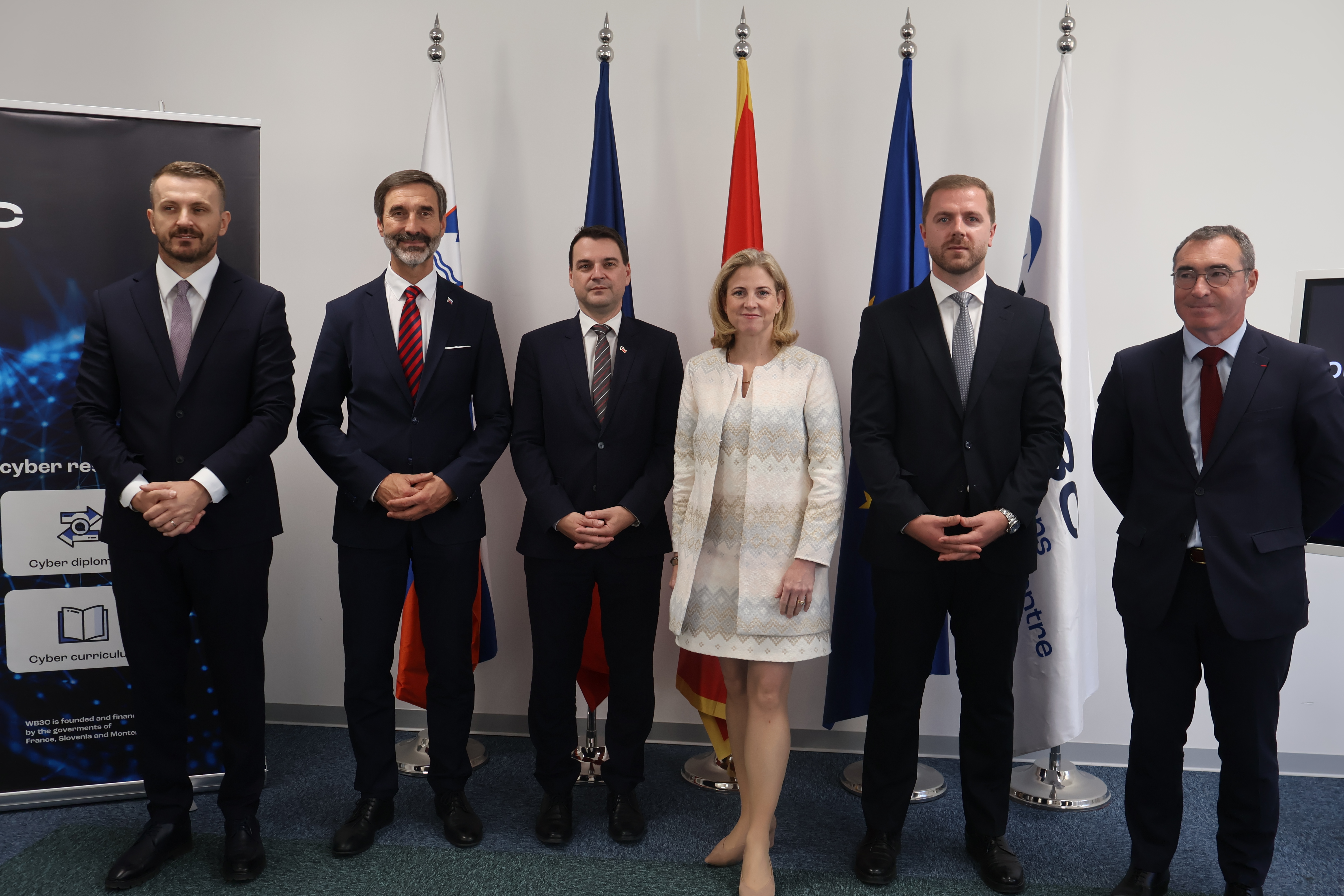
A further high-level visit followed on 2 October, when the Foreign Ministers of Austria, Czechia and Slovakia visited WB3C. The engagement placed the Centre's work within the broader context of European security, regional stability and the Western Balkans' EU perspective.

These visits offered opportunities to demonstrate how the Centre translates international cooperation into practical support for Western Balkan institutions, bringing together European expertise, regional priorities and targeted professional training.

European media engagement

On 13 October, WB3C welcomed a delegation of European media representatives in cooperation with the European Commission's Directorate-General for Enlargement and Eastern Neighbourhood (DG ENEST) and the EU Delegation to Montenegro.

The visit focused on the Centre's role in strengthening regional cyber resilience and addressing emerging security challenges, including hybrid threats, foreign information manipulation and interference (FIMI), and disinformation.

Discussions highlighted the links between cybersecurity, institutional resilience and democratic stability, particularly in an environment where information manipulation, cybercrime and cyberattacks can undermine public trust and the functioning of essential services.

Regional defence and security cooperation

The Centre's international engagement also extends to the defence and security community.

On 28 October, WB3C is scheduled to welcome delegations participating in the Framework Nations Concept cooperation initiative led by Italy (FNC-ITA), in cooperation with Montenegro's Ministry of Defence. The visit will bring together representatives of participating NATO member and partner countries from South-East Europe, providing an opportunity to exchange perspectives on cyber resilience and regional security cooperation.

During this period, WB3C representatives were invited to Zagreb to meet with RACVIAC – Centre for Security Cooperation, a regional intergovernmental organisation dedicated to strengthening security dialogue, institutional capacities and cooperation in South-East Europe, including in cybersecurity and countering transnational threats, to explore opportunities for closer cooperation in addressing shared regional security challenges.

This engagement reflects the importance of cybersecurity across civilian and defence sectors, where the protection of critical infrastructure, continuity of essential services and effective institutional coordination are closely interconnected.

Building resilience is a strategic investment in the region's European future. Through its training programmes, institutional partnerships and regional cooperation mechanisms, WB3C will continue to contribute to a more secure and resilient Western Balkans, strengthening both regional stability and Europe's collective cyber resilience.
Infrastructure and Cloud Security

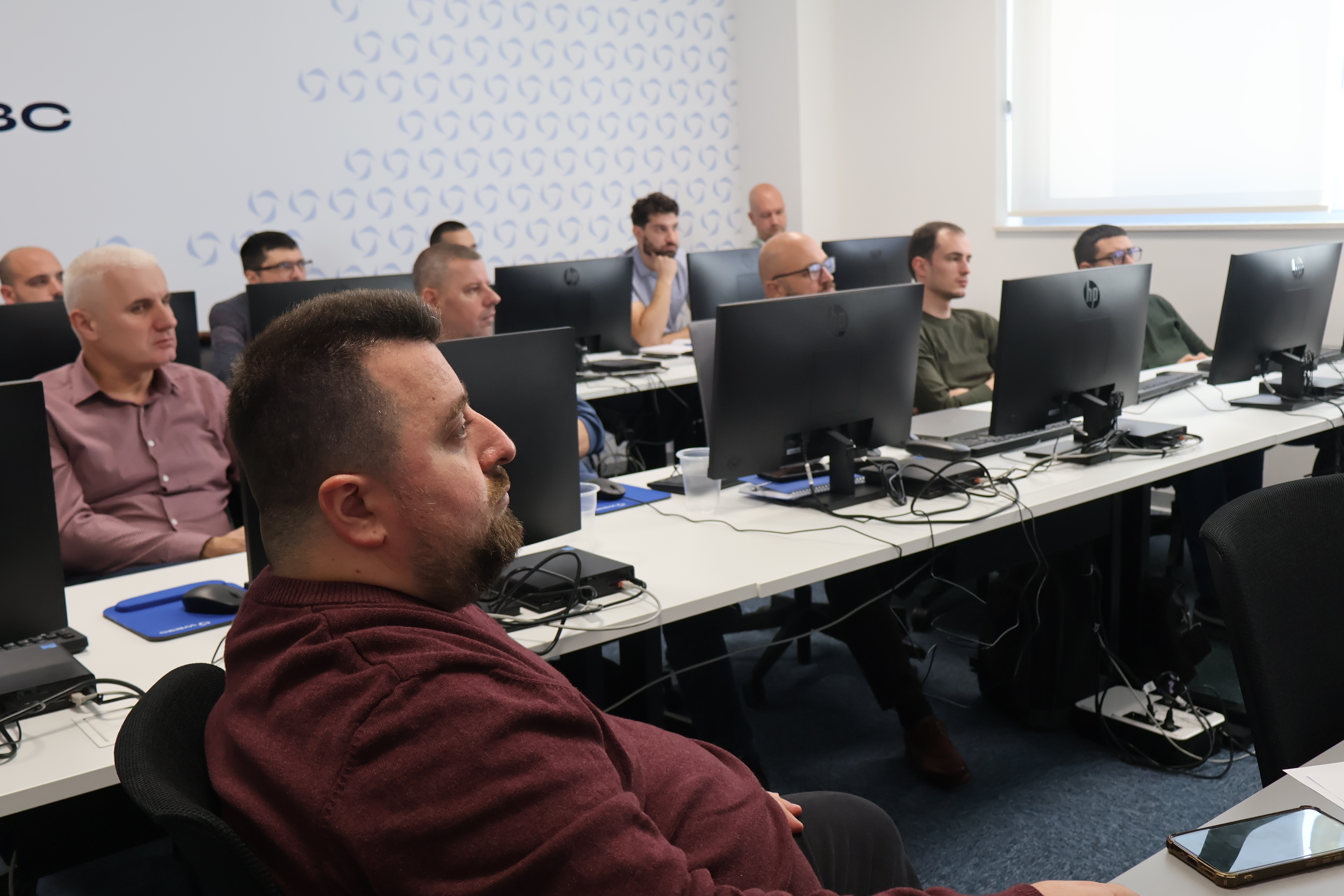
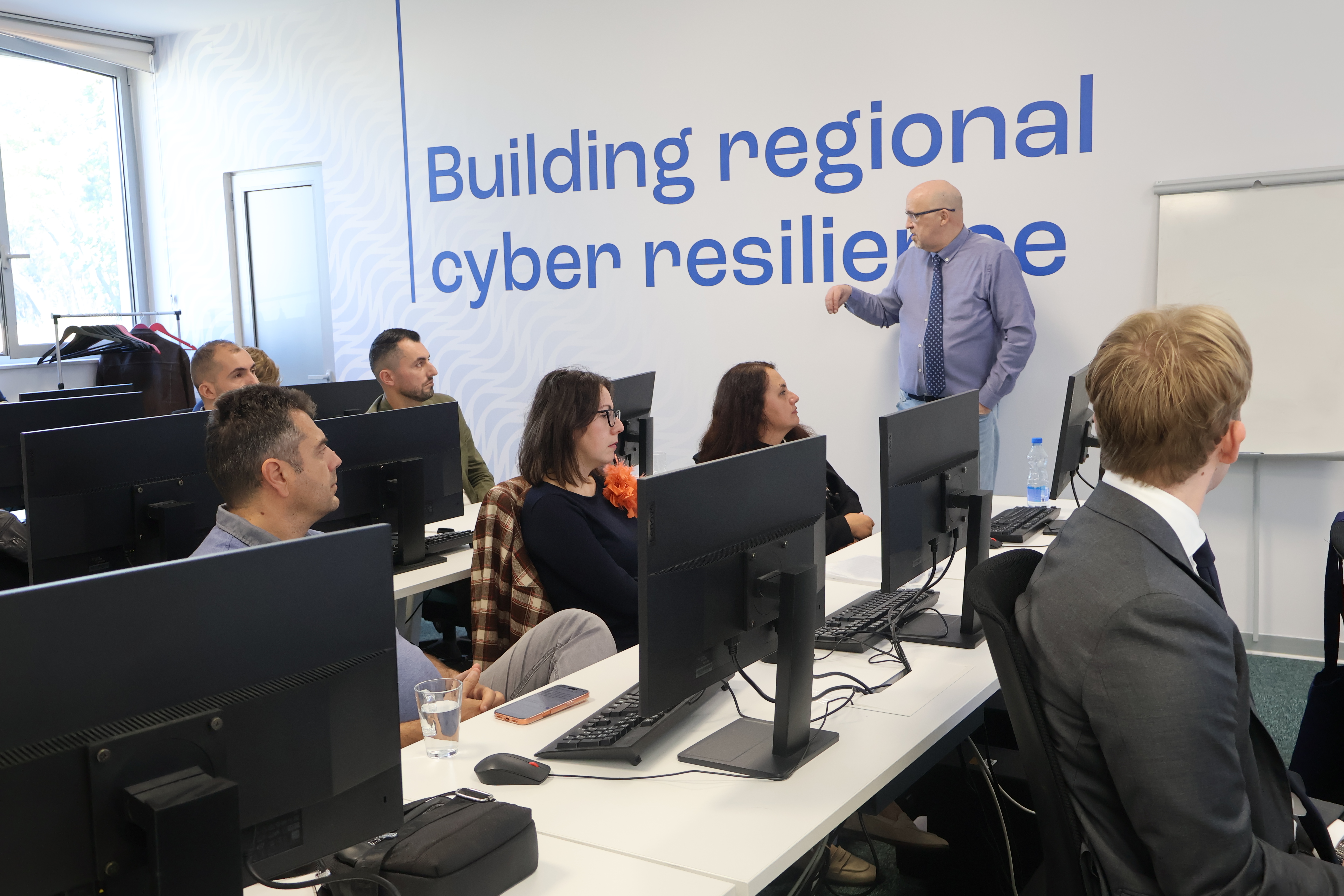
Today, WB3C started a four-day technical training programme on Infrastructure and Cloud Security aimed at cybersecurity professionals from the region.

As public institutions and critical infrastructure operators increasingly rely on interconnected networks and cloud-based services, securing these environments has become essential to maintaining the continuity and reliability of vital services. This requires not only appropriate security policies and technical safeguards, but also professionals capable of identifying vulnerabilities, preventing intrusions and responding effectively when incidents occur.

Today, we have security administrators, SOC analysts, critical infrastructure IT specialists and public sector network engineers in the classroom led by Ljuban Petrovic, Cybersecurity Manager at Siemens, MSc|CISSP|GCIH|GPEN|GRID|CFCE|CCO|CCPA.


The training follows an intensive, hands-on approach, allowing participants to work in simulated network and cloud environments. Over four days, they will address secure systems administration, network and infrastructure protection, vulnerability assessment and penetration testing, cloud security and incident response.

Particular emphasis is placed on practical exercises in which participants identify security weaknesses, implement protective measures and respond to simulated cyberattacks. Working both individually and in teams, they will apply techniques and tools directly relevant to their responsibilities within their home institutions.

By combining technical skills development with opportunities for professional exchange, WB3C continues to support stronger operational capabilities and closer cooperation among cybersecurity practitioners across the region.

NIS2 Strategic Leadership and Cyber Risk Management in the Western Balkans

Today, WB3C welcomed representatives of national cybersecurity authorities from the region for a four-day programme on NIS2 Strategic Leadership and Cyber Risk Management, organised in partnership with the The World Bank and with the involvement of the European Union Agency for Cybersecurity (ENISA).

The programme addresses a central challenge facing the region: how to translate the requirements of the EU's NIS2 Directive into effective national cybersecurity governance, particularly when it comes to protecting critical infrastructure and essential services.

Welcoming the participants, our Programme Director Gilles Schwoerer highlighted the importance of strengthening institutional capacities and regional cooperation in responding to increasingly complex cyber threats.

Ghislain de  Salins (WB) and Tom Lenters (ENISA) contributed to bringing together the programme, combining expertise in institutional governance, cybersecurity risk management and European regulatory practices.


Over the next four days, participants will examine national cybersecurity frameworks, risk-based supervision, incident reporting and crisis management. Practical workshops and a strategic tabletop exercise will provide opportunities to apply these concepts to realistic scenarios, including cyber incidents with cross-border implications.


For the Western Balkans, alignment with NIS2 is both an important element of the EU accession process and an opportunity to strengthen national resilience. With essential services and infrastructure increasingly interconnected, effective cybersecurity governance also depends on cooperation across borders. 

The training is led by Konstantinos Moulinos, ENISA expert, Ilmar Toom of the Riigi Infosüsteemi Amet // Estonian Information System Authority (NCSC-EE) and Mladen Bukilic, CISO and SOC Manager of Čikom.

The programme forms part of the ongoing cooperation between WB3C and the World Bank, launched in May 2026, to support cybersecurity leadership and institutional capacity development across the region.


Copyright © WB3C

Disclaimer: Translations of the original content written in English into other languages are AI generated by Weglot.