×

RCC CyberPulse 2025: Regional Stakeholder Join Forces in Cybersecurity

02.07.2025

Image for RCC CyberPulse 2025: Regional Stakeholder Join Forces in Cybersecurity

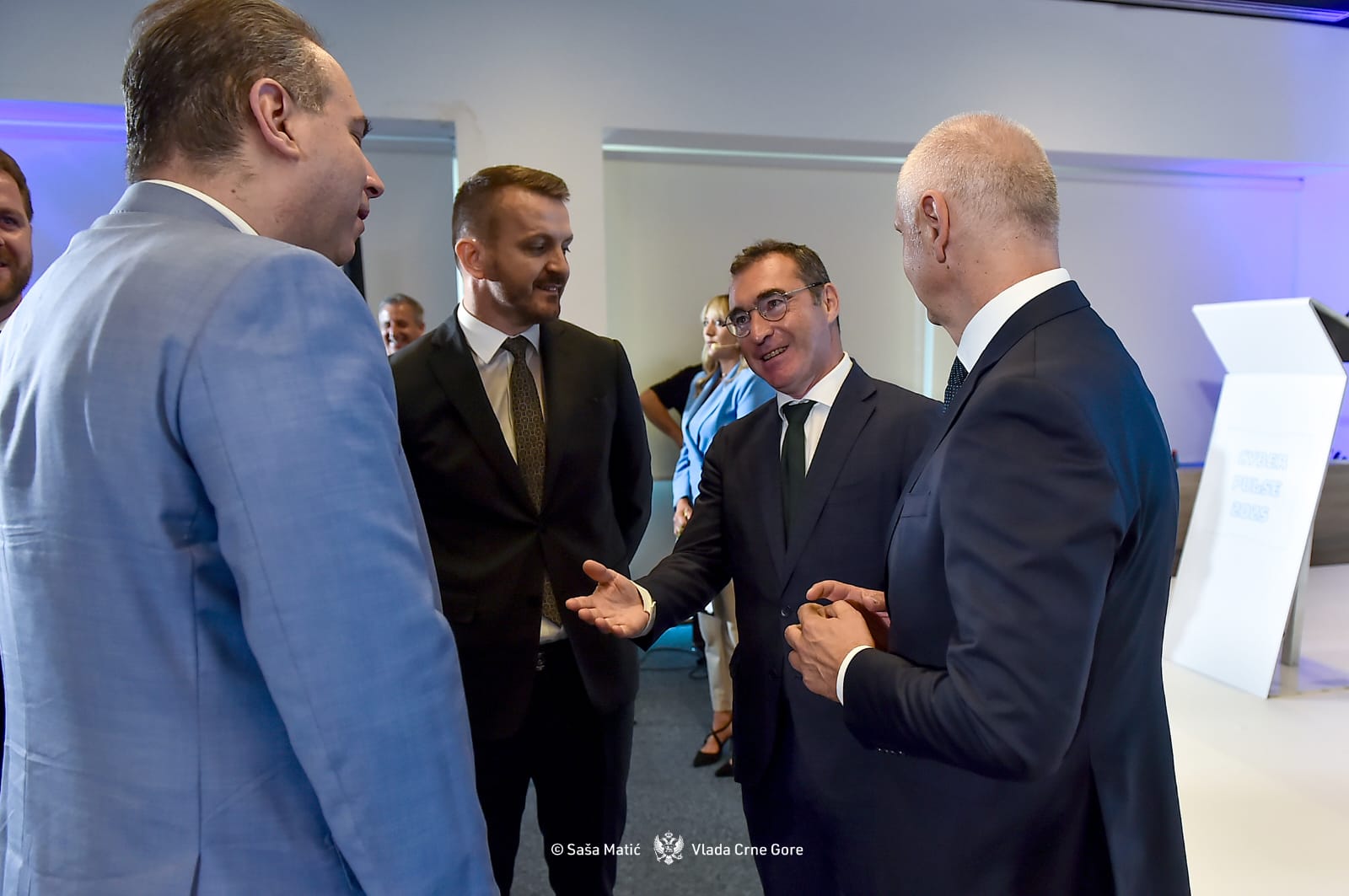
The High-Level Western Balkans Cybersecurity Conference – CyberPulse 2025: Tracking Progress, Building Resilience, Driving Change – gathered government representatives, EU institutions, regional organizations, cybersecurity experts and private sector leaders to address the growing cyber threat landscape in the Western Balkans.

CyberPulse 2025 focused on three priorities:

  • addressing current gaps in regional cyber capacities,
  • exploring the role of emerging technologies, and
  • operationalising joint initiatives and partnerships.

Opening Remarks

The conference opened with high-level messages of commitment to regional cyber resilience:

  • Amer Kapetanović, Secretary General of the RCC, highlighted the sharp rise in cyber incidents and stressed that trust, political will and coordinated regional action are the strongest “firewall” against threats. He also announced the development of the new regional cybersecurity needs database.
  • Filip Ivanović, Deputy Prime Minister of Montenegro for Foreign and European Affairs, emphasized Montenegro’s adoption of European cybersecurity standards and its vision of a secure, resilient digital future as part of EU integration.
  • Michael Docherty, speaking on behalf of the European Commission Delegation, reaffirmed EU support for the region through initiatives with ENISA and the Council of Europe, underlining that cybersecurity is now a central element of the EU Growth Plan for the Western Balkans.
  • Gilles Schwoerer, Head of WB3C, noted that while digital transformation offers many opportunities, it also expands the attack surface, underscoring the urgent need for secure digital pathways and collective resilience.

Conference Panels

  • High-Level Panel: Stronger Connectivity, Smarter Security, Resilient Future (moderated by Danijela Gačević, Head of the Programme Department, RCC)
    Senior government representatives from the region exchanged views on national priorities, institutional capacities, and EU integration in the field of cybersecurity.
    • Governments stressed the shortage of cybersecurity professionals as a critical challenge.
    • Kosovo*’s representative emphasized dependence on external consultants and the need to train public servants internally.
    • Montenegro focused on intersectoral cooperation and the role of NATO and EU support.
    • North Macedonia presented its new Ministry for Digital Transformation and its national cybersecurity strategy.

      Panelists:

    • Bardhyl Dobra – Deputy Minister of Internal Affairs, Pristina
    • Naim Gjokaj – State Secretary, Ministry of Public Administration, Podgorica
    • Radoslav Nastasijevikj Vardjiski – Deputy Minister for Digital Transformation, Skopje


  • Navigating Cyber Threats in the Western Balkans: The Evolving Role of AI and Emerging Technologies (moderated by Mirza Jamaković, Prosecutor's Office Sarajevo)
    Experts from Europol, law enforcement, and the private sector discussed the opportunities and risks of AI, from forensic tools to the misuse of generative AI by organized crime groups.
    • Europol described using machine learning to analyze millions of data points in criminal investigations.
    • Concerns raised about organized crime groups developing their own AI tools, including large language models, for cybercrime.
    • Calls for explainable and transparent AI outcomes in cybersecurity decision-making.
    • Oracle warned against uploading confidential data into public AI tools, stressing regulatory gaps.

      Panelists:

    • Emmanuel Kessler – Europol
    • Jelena Zelenović Matone – WomenCyberForce / Women4Cyber
    • Nenad Bogunović – Cybercrime Unit, Belgrade
    • Amar Dedović – Oracle


  • Empowering Talent: Skill-Building for the Future in the Western Balkans (moderated by Andreja Mihailović, Women4Cyber Montenegro)
    The session focused on education, workforce shortages, women’s participation in cybersecurity, and ways to redirect youth talent from informal digital activities to formal opportunities.
    • Highlighted that women’s participation in cybersecurity remains below 20% in the Western Balkans.
    • Croatia shared progress from 30% to 52% female participation in the UN Cybersecurity Working Group between 2019 and 2024.
    • Albania’s Cybersecurity Agency argued for education reform starting at primary school.
    • Open Society Foundation raised concerns about youth involvement in grey/illegal digital activities, calling for redirection into formal sectors.

      Panelists:

    • Tamara Tafra – Deputy Minister of Foreign and European Affairs, Zagreb
    • Igli Tafa – Director, National Cybersecurity Agency, Tirana
    • Andi Dobrushi – Open Society Foundation
    • Fabio di Franco – ENISA


  • Integrating Experience and Strategy: A Multisector Dialogue on SOC Advancement (moderated by Vanja Madžgalj, WB3C)
    Panelists shared good practices for building and operating Security Operations Centres, stressing the importance of policy alignment, inter-sectoral cooperation and trust-building between public and private actors.
  • Albania’s national experience showed that the 2022 cyberattack became a catalyst for building SOC capacity and adopting “zero trust” and defense-in-depth strategies.
  • Differences between public and private sector approaches to threat intelligence were emphasized, with trust and data-sharing seen as barriers for public institutions.
  • North Macedonia introduced a new law placing the Ministry for Digital Transformation as the central cybersecurity authority.

    Panelists:

    • Franc Zyliftari – Head of Incident Response Team, Tirana
    • Philippe Gillet – Gatewatcher, Paris
    • Aleksandar Acev – Cyber Balkans, Skopje


  • Sectors United Against Cyber Threats: Building Bridges Across Sectors (Milan Sekuloski, e-Governance Academy, Tallinn)
    This discussion brought together public institutions, civil society, academia, and the private sector, highlighting how multi-stakeholder collaboration is essential to strengthening regional resilience.
    • Pristina shared good practices in bringing all relevant actors together regularly on critical infrastructure protection.
    • Civil society organizations were recognized as important but vulnerable actors requiring targeted cyber hygiene tools and support.
    • SMEs were highlighted as particularly exposed, requiring systemic support from the public sector.
    • The EBRD linked its investment strategy to cybersecurity, showing that infrastructure projects cannot be sustainable without integrated cyber risk management.

      Panelists:

    • Lulezon Jagxhiu – Prime Minister’s Cabinet, Pristina
    • Predrag Puharić – Cybersecurity Centre of Excellence, Sarajevo
    • Ivona Dabetić – NGO Secure, Podgorica
    • Roy Yarom – European Bank for Reconstruction and Development (EBRD)

The conference concluded that cybersecurity in the Western Balkans can no longer be treated as a purely technical issue but must be recognized as a strategic priority, requiring long-term cooperation, sustained investment and coordinated regional action.


Cybercrime Investigation for Police Officers

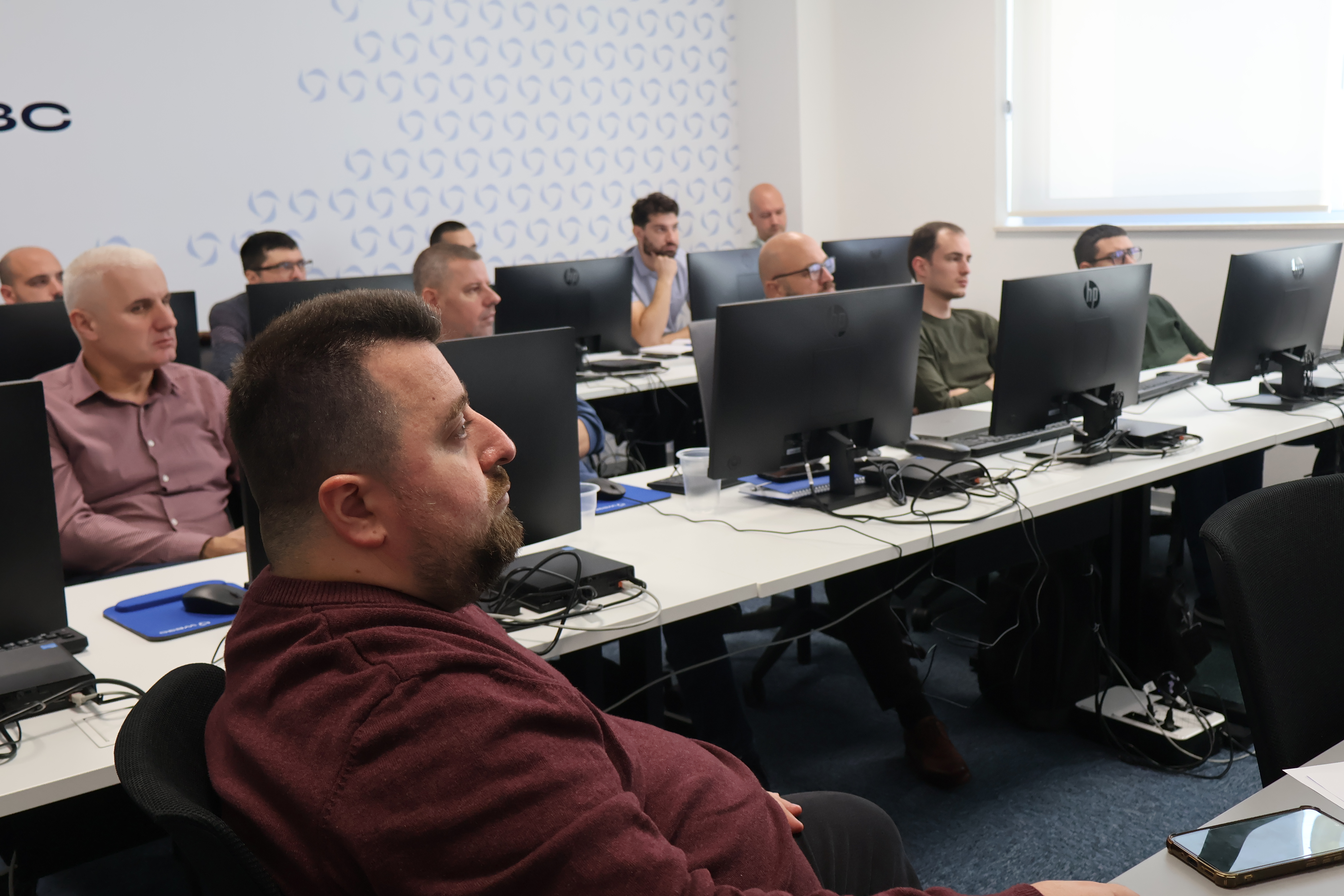
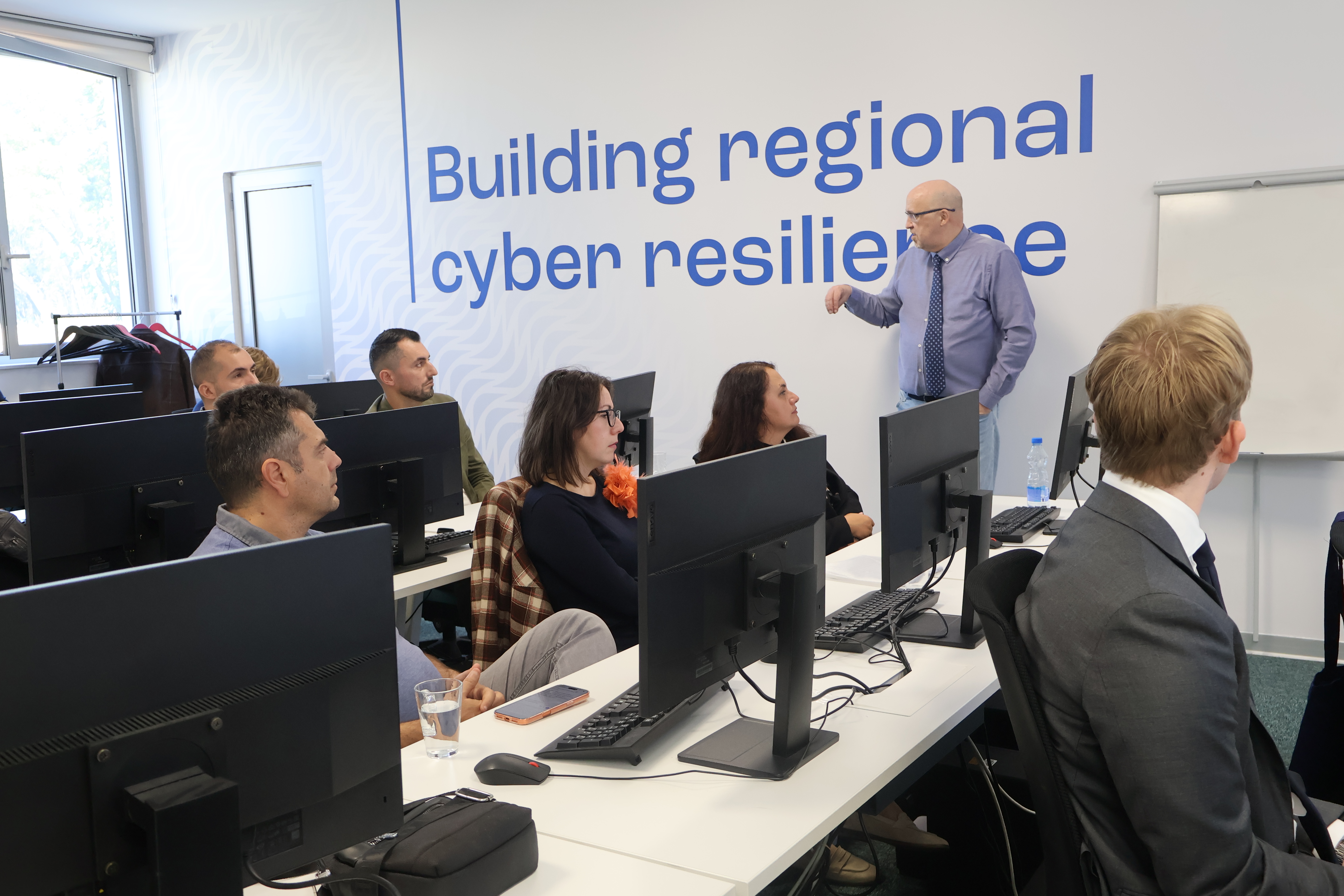
This Friday, in cooperation with UNDP Kosovo, we completed an intensive training cycle for the Kosovo* Police Cyber Unit. Over the four days, 15 participants engaged deeply with the landscape of modern digital threats.
Our in-house trainers for cyber crime Cyril C. and Yannick Casse prepared a comprehensive curriculum covering the full spectrum: from the hashtag#typologies of cyber-enabled crimes and attacks on data systems to practical sessions in hashtag#OSINT techniques and the evolving challenges of hashtag#cryptocurrency in criminal investigations.
The group was highly committed, proactive and engaged and demonstrated exceptional analytical skills needed for their practical work as investigators.

A sincere congratulations to the entire cohort and thanks to UNDP for their support.

Regional Conference on Ransomware Concludes with Cross-Sector Dialogue

The Western Balkans Cyber Capacity Centre (WB3C) hosted the regional conference Confronting Ransomware: Analysis and Strategy for the Western Balkans” on 2-3 December 2025. The event served as a platform for structured dialogue among key stakeholders from the region and international partners. The discussions were guided by Vanja Madzgalj, our Senior Project Manager, who served as the conference host, ensuring a cohesive and productive exchange of ideas throughout the two-day programme.

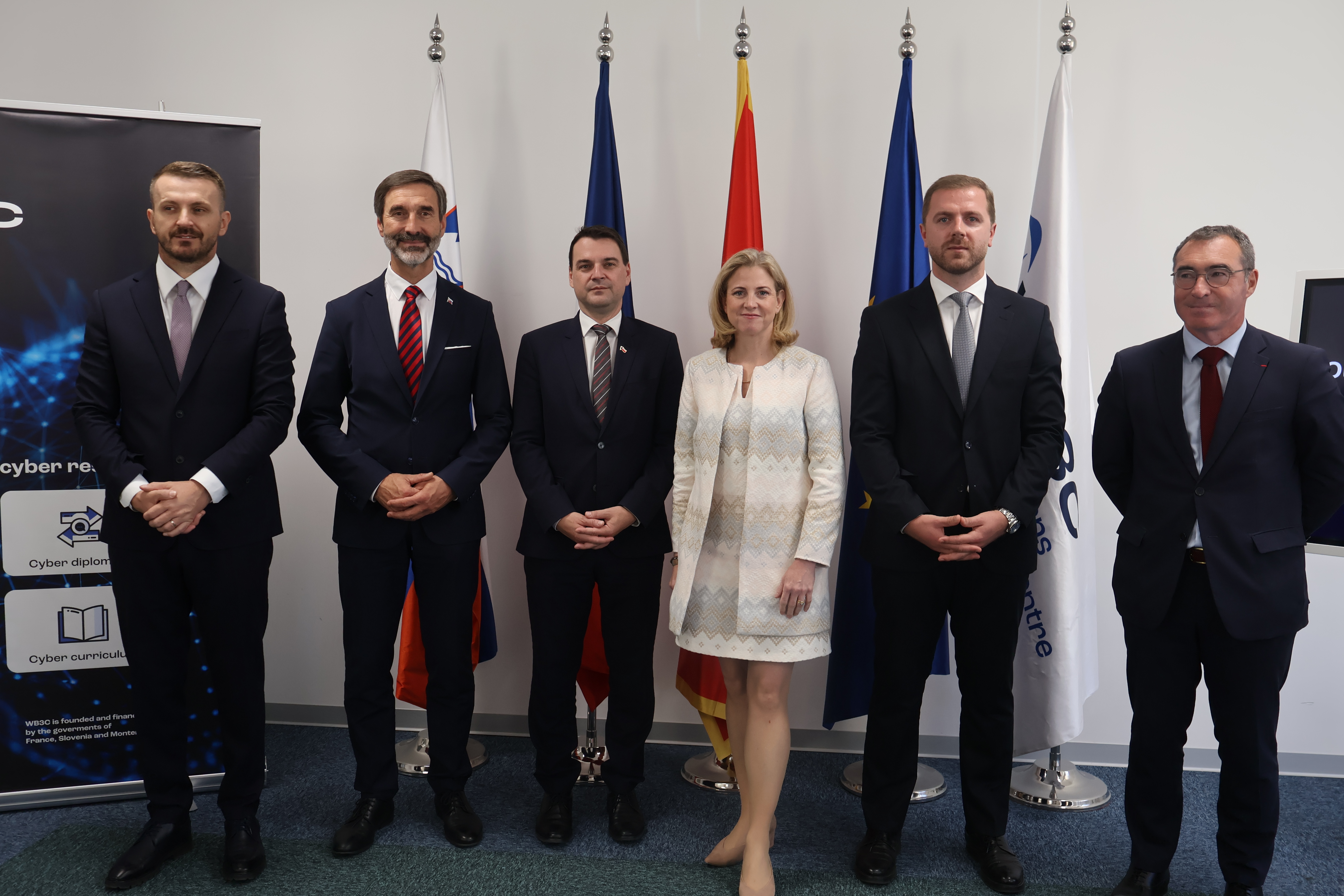
The conference was opened by Mr. Marash Dukaj, Minister of Public Administration of Montenegro who stressed the importance of continued development and collaboration, despite significant progress Montenegro has made over the past few years. The critical role of international cooperation was acknowledged by H.E. Anne-Marie Maskay, Ambassador of France to Montenegro, and H.E. Bernarda Gradišnik, Ambassador of Slovenia to Montenegro, highlighting the partnership that established the WB3C.

Over two days, sessions were designed to address the ransomware challenge from distinct professional viewpoints.

Day 1: Understanding the Threat and Response Mechanisms

  • Panel 1: The Operational Threat Landscape. This session provided a technical and strategic overview of ransomware from national and private sector perspectives.
    • Moderator: Igor Kovač, Government Information Security Office of Slovenia (URSIV).
    • Panelists: Dušan Polović (Ministry of Public Administration, Montenegro), Saimir Kapllani (National Cyber Security Authority, Albania), Predrag Puharić (Cyber Security Excellence Centre, BiH), and Mladen Bukilić (Čikom, Montenegro).
    • Key Discussion: The panel detailed the current scale and methods of attacks, emphasizing the need for shared threat intelligence. They looked at how ransomware has been evolving in the recent years and how governments and private sector are preparing for to prevent and respond growing threats. Disparity in defensive resources, especially sophisticated AI capabilities, affects overall organizational esilience.
  • Panel 2: Law Enforcement Perspective on Cybercriminal Organizations. This panel focused on the investigative viewpoint, examining the structure and operations of ransomware groups.
    • Moderator: Francisco Losada, Cybercrime Specialist, EUROPOL.
    • Panelists: Julien Hamm (Anti-cybercrime Office (OFAC), France), Nenad Bogunović (High-Tech Crime Unit, Ministry of Interior, Serbia), and Sreten Ćorić (High-tech Crime Unit, Police Directorate of Montenegro).
    • Key Discussion: Experts outlined the sophisticated, business-like models of cybercriminal groups. Challenges highlighted included the cross-jurisdictional nature of investigations and the constant evolution of adversarial tactics, which require continuous adaptation and closer international police collaboration.
  • Keynote Presentation: A Law Enforcement Blueprint. Captain Pascal Martin of the French Gendarmerie delivered a keynote address, decrypting a successful operation against a ransomware network. His presentation provided a concrete blueprint for combining digital forensics, international judicial cooperation, and public-private intelligence sharing to achieve tangible results.
  • Case Study: The Private Sector Response. Vladimir Mlynar, CISO for VINCI Energies CEE, presented a detailed case study from the private sector. He walked through the operational timeline of a real-world ransomware incident, offering insights into crisis management, communication challenges, and recovery strategies under pressure.
  • Panel 3: The Legal and Jurisdictional Framework. This discussion explored the judicial and prosecutorial challenges in combating ransomware.
    • Moderator: Ana Bukilić, International Development Law Organisation (IDLO).
    • Panelists: Aurélien Brouillet (Deputy Prosecutor, Judicial Court of Paris), Marina Barbir (Judge, Higher Court of Belgrade), and Ivaylo Iliev (Assistant to the National Member for Bulgaria, EUROJUST).
    • Key Discussion: The conversation centered on the complexities of applying national laws to transnational cybercrime. Key challenges involve harmonizing legal standards for evidence collection, ensuring effective prosecutions, and streamlining formal international cooperation channels to keep pace with the speed of cyber incidents. The need for training in digital forensics for prosecutors and judges was emphasized as key in advancing judicial response in cases involving digital evidence and other sophisticated technologies.  
  • Special Session: Technical and Legal Aspects of Cryptocurrency Seizure. This exchange focused on the financial dimension of ransomware response.
    • Participants: Laurent Tisseyre (TRM Labs) and Dr. Arben Murtezić (Legal Counsel and Law Professor).
    • Key Discussion: The dialogue between a technical analyst and a legal expert underscored the difficulty of tracing and immobilizing illicit cryptocurrency payments. Challenges include the need for specialized blockchain forensic tools and navigating varied national regulations for asset seizure and recovery.

Day 2: Evolving Tactics and Crisis Management

  • Panel 1: The Impact of Artificial Intelligence. This session assessed AI's dual role in both advancing threats and empowering defenses.
    • Moderator: David Toulotte, Cyber reservist, Head of Global IT @ ArcelorMittal Europe.
    • Panelists: Mitja Trampuž (Creaplus/ai4si, Slovenia), Ivan Bošković (IT Advanced Services, Montenegro), and Prof. Dimitar Bogatinov (Military Academy, Skopje).
    • Key Discussion: Panelists explored how AI lowers barriers for executing more persuasive and adaptive attacks. A significant challenge is the rapid adoption of AI systems without corresponding security safeguards, creating new vulnerabilities even as AI offers new tools for cyber defense. Constant advancement of attacks forces defenders to also develop faster. The conclusion of the panel was that AI is here to stay, as one of the greatest inventions of man.
  • Panel 2: Incident Response and Negotiation Dynamics. This panel addressed the critical decision-making processes during an active ransomware attack.
  • Presentation: Resilience at Scale. Jérémy Couture, former Head of Cybersecurity for the Paris 2024 Olympic Games, provided a unique testimony on defending a hyper-complex, global target. His presentation on managing extreme-scale threats and stakeholder coordination offered critical lessons for national and corporate resilience planning.
    • Moderator: Gilles Schwoerer, Head of WB3C.
    • Panelists: Jean-Dominique Nollet (CISO, TotalEnergies) and Captain Pascal Martin (French Gendarmerie).
    • Key Discussion: The session covered the operational, legal, and ethical complexities of ransom negotiations. The main challenges discussed were balancing incident containment, legal obligations, and business continuity under severe pressure, all while coordinating with law enforcement investigations.

The conference facilitated a substantive exchange of perspectives from law enforcement, the judiciary, the private sector, and policy makers. The discussions reinforced that an effective response to ransomware requires continuous, practical collaboration across these sectors and borders, with a focus on addressing shared challenges in capacity, legislation, and joint operations.  The highly engaged audience, whose numerous questions created a dynamic, two-way conversation deepened the value of each session.  We thank all the speakers and participants for their great contribution to this conference and our Project Manager Maja Miranovic for putting together this great event. 

Check out event photos here: 

https://www.jaredic.com/p467614661 (day 1)

https://www.jaredic.com/p549115929 (day 2)

Confronting Ransomware: Analysis and Strategy for the Western Balkans 2–3 December 2025 | Science and Technology Park of Montenegro

Ransomware continues to pose one of the most serious and persistent cyber threats to institutions and businesses across the Western Balkans. In response to this growing challenge, the Western Balkans Cyber Capacity Centre (WB3C) is hosting a two-day conference that brings together national authorities, law enforcement agencies, EU institutions, the private sector and international experts to examine the evolving threat landscape and identify practical paths forward.

The discussions will follow the structure of the latest published agenda (available below), covering operational, legal, technical and strategic dimensions of ransomware response.

A diverse regional and European expert community

The conference brings together a wide range of contributors, reflecting the cross-sectoral nature of ransomware resilience:

  • National cybersecurity authorities, CSIRTs and police high-tech crime units from Montenegro, Albania, Bosnia and Herzegovina, Serbia, and North Macedonia
  • European and international law enforcement institutions, including Europol and France’s Anti-Cybercrime Office (OFAC)
  • Judicial representatives and prosecutors from France, Serbia, Montenegro and EUROJUST
  • Private-sector leaders in cybersecurity, including technical experts, CISOs, SOC practitioners and incident-response specialists from across the region and the EU
  • Academic and research communities specialising in cybercrime, digital forensics and AI-enabled cyber threats

Key themes across the two-day programme

The agenda examines several critical aspects of the ransomware ecosystem:

  • Mapping current ransomware tactics and regional threat activity
  • Understanding criminal group structures, operational models and international cooperation needs
  • Lessons learned from high-profile investigations and successful dismantling of ransomware groups
  • Comparative legal frameworks and the challenges of jurisdiction, prosecution and evidence handling
  • Real-world case studies from organisations that have managed and recovered from ransomware attacks
  • Technical and legal issues surrounding cryptocurrency tracing and seizure
  • The emerging role of AI in enhancing both attacker capabilities and defensive measures
  • Operational insights from securing major international events, including Paris 2024
  • The complexities of negotiating under pressure during active ransomware incidents

Through panels, keynotes, and practitioner-to-practitioner exchanges, the event aims to deepen understanding of how ransomware is evolving, where regional vulnerabilities lie, and what coordinated action is needed to strengthen resilience.

WB3C is committed to strengthening cybersecurity capacity across the Western Balkans by connecting national stakeholders with European expertise and by translating insights into practical improvements for public authorities, critical service operators and the wider digital ecosystem.

Access the latest agenda below.


Copyright © WB3C

Disclaimer: Translations of the original content written in English into other languages are AI generated by Weglot.