At 21, Tom Husson has already learned something that many professionals discover much later: education does not stop at the classroom door.
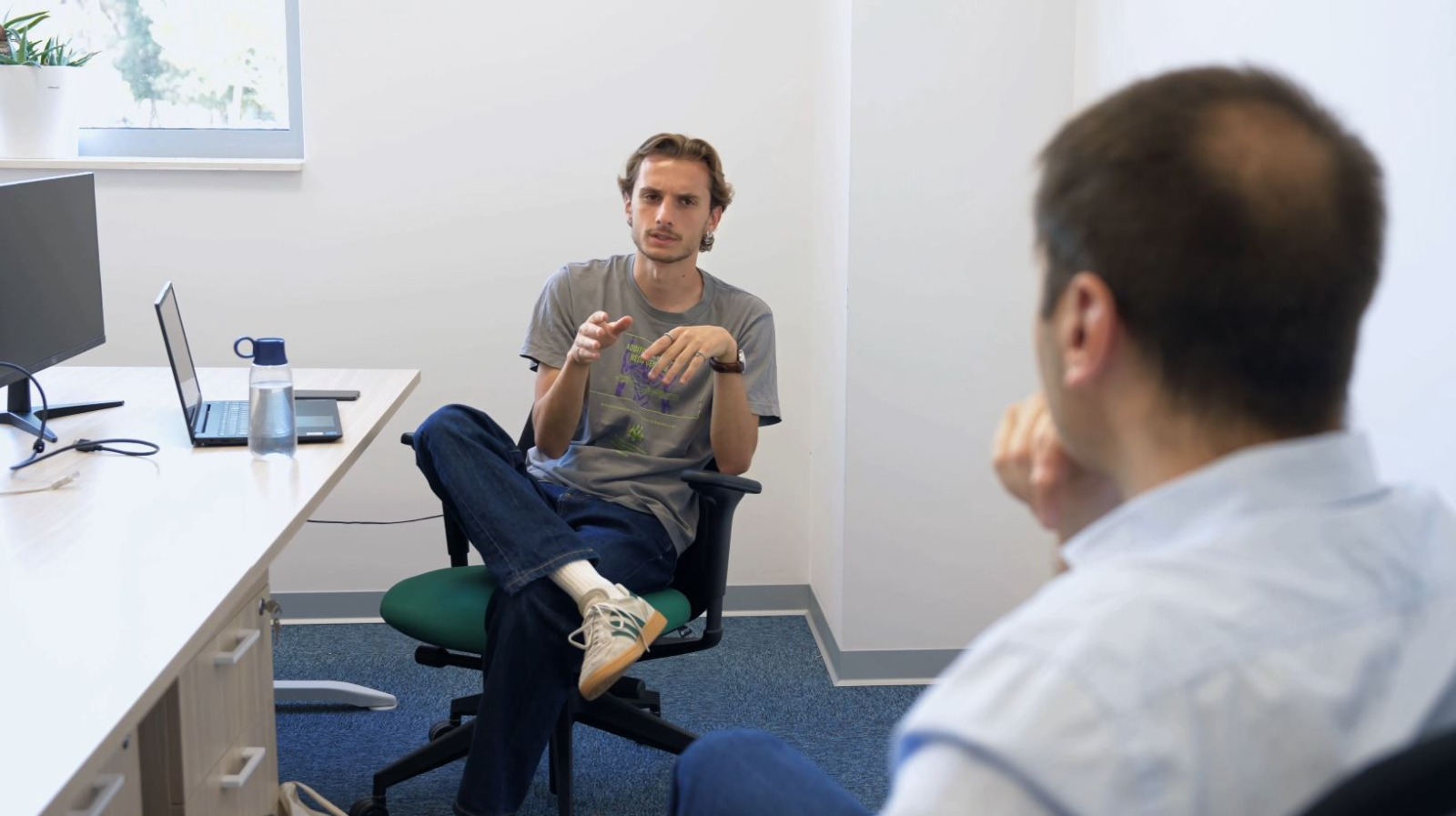
Tom is a fourth-year Artificial Intelligence student at ISEN Lille, one of France's leading engineering schools. As part of his degree, he is spending a full year outside the traditional academic environment — combining a six-month industry internship with an international experience designed to expose students to different cultures, challenges and ways of working.
Before arriving in Montenegro, Tom spent two months in South Africa, living with a local family and helping with daily chores in exchange for accommodation and meals. In May, his journey brought him to Podgorica.
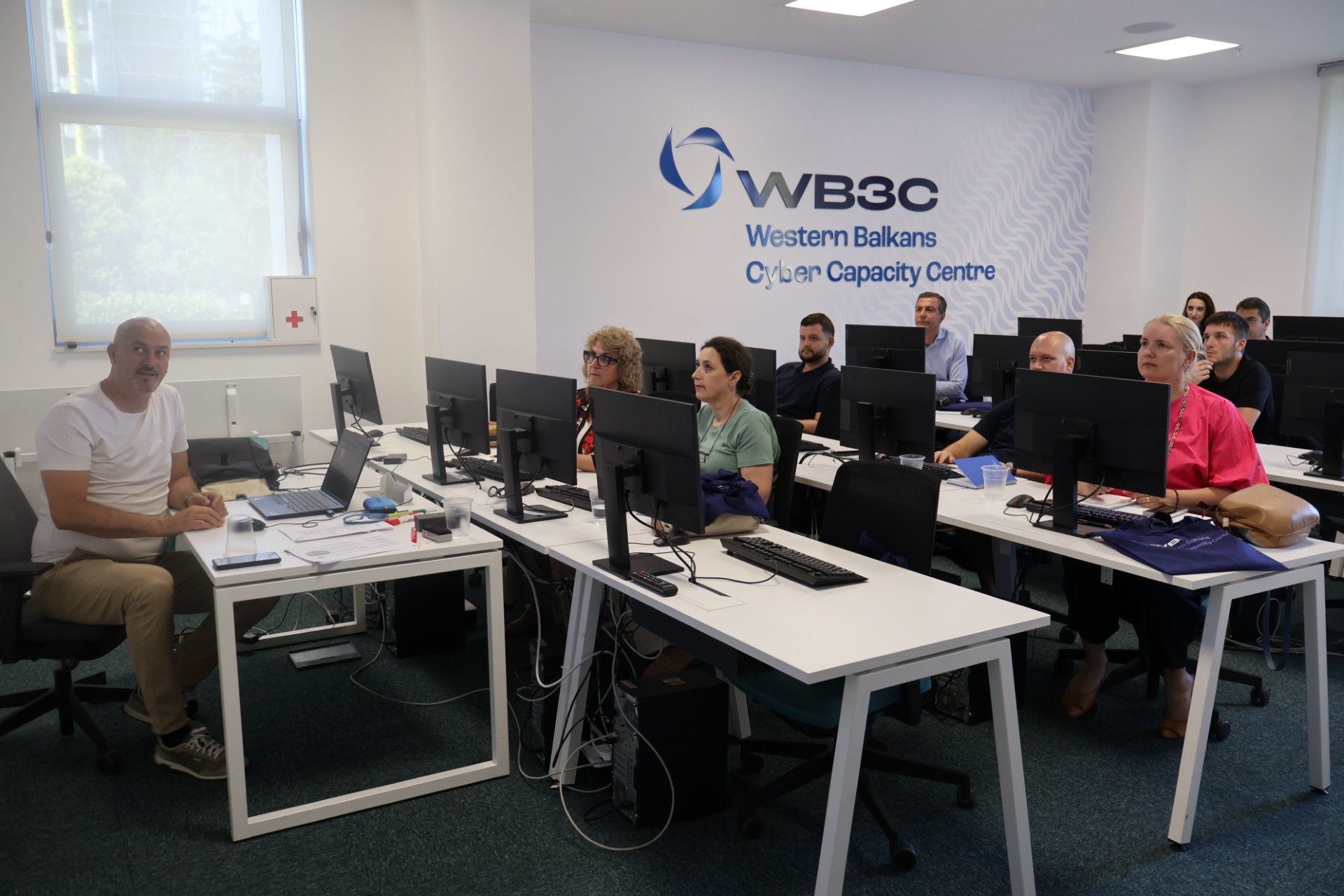
This opportunity was enabled by the whole ecosystem of players. It was prompted by WB3C's programme director Gilles Schwoerer, and Tom indeed feels at home at WB3C where he spends a lot of time working. Further, Naučno-tehnološki park Crne Gore / Science Technology Park of Montenegro kindly agreed to sign an internship contract, but it is thanks to Ivan Boskovic, ITAS CEO, that Tom has been granted this valuable 3-month experience along with the ongoing mentorship that Ivan provides as a seasoned tech professional working with AI driven technologies.
The project aims to transform the way hotels interact with guests by automating bookings, handling enquiries, solving everyday issues and supporting hotel operations in real time. Information generated by the system is fed directly to hotel managers, enabling faster decision-making and improved customer service.
Beyond improving existing functionalities, Tom is also exploring one of the most important questions facing AI today: how to protect intelligent systems from malicious inputs and external manipulation. His research touches on the intersection of artificial intelligence and cybersecurity — a field that is becoming increasingly important as AI systems gain greater autonomy.
For ITAS, the collaboration brings fresh ideas, research capacity and a direct link to the latest developments coming from one of Europe's strongest engineering ecosystems.
For Tom, it is something equally valuable: the opportunity to apply theory in practice, work alongside experienced professionals and build the skills that employers increasingly seek.
This opportunity emerged through an unexpected connection. Tom's father, an officer in the French Gendarmerie, visited Podgorica in 2024 during a regional cybersecurity conference and met representatives of WB3C. A conversation that started there eventually helped connect his son with an internship opportunity a year later.
With the support of Science and Technology Park Montenegro, WB3C and ITAS, Tom has become part of an ecosystem that brings together education, innovation and industry.
His story also highlights something larger.
Lille, where Tom studies, is home to one of Europe's most dynamic cybersecurity communities and hosts the annual Forum InCyber Europe, one of the continent's leading cybersecurity gatherings. WB3C has participated in the forum twice, bringing public and private sector representatives from across the Western Balkans to connect with industry leaders, explore innovation and build partnerships.
These experiences continue to inspire our own ambitions for the region.
Because talent grows fastest when education, industry and international cooperation work together.
And sometimes, that journey starts with a student willing to leave home and embrace the unknown.
The ITAS Perspective: Why Investing in Young Talent Matters
The pace of technological development has created an ever-widening gap between what young professionals learn through formal education and what is expected of them when they enter their first jobs. This is especially visible in fields such as artificial intelligence and cybersecurity, where tools, methods and business needs evolve faster than traditional curricula can adapt. That is why companies have an important role to play — as a bridge between academic knowledge and state-of-the-art practice.
This year, ITAS piloted a small but meaningful concept: bringing together students from economics and electrical engineering with an international student from France. The idea was to create a multidisciplinary and multicultural working environment, closer to what young people will encounter tomorrow in real professional life — where engineers, business thinkers, researchers and international teams work side by side.
The result exceeded our expectations.
By opening real projects to students, sharing current technological challenges and exposing them to the way modern teams actually work, we help them build the confidence, adaptability and practical understanding that junior professionals increasingly need. At the same time, our company gains fresh perspectives, curiosity and research energy, while educational institutions receive valuable feedback from the real economy — helping them keep pace with technologies that change faster than traditional systems can adapt.
Tom’s journey from Lille to Podgorica is an example of how growth often happens outside familiar environments. International experience teaches young people independence, adaptability and openness. Practical work teaches them responsibility, teamwork and problem-solving.
In a world where knowledge becomes outdated quickly, schools, universities and companies are jointly challenged to shape curricula, adapt learning modules and expose students to real projects much earlier.
Because talent develops fastest when it is trusted, challenged and connected to the real world.
IT Advanced Services — ITAS is a Montenegrin technology company focused on software development, digital transformation and the practical application of artificial intelligence. Based in Podgorica, ITAS develops solutions for different sectors, including healthcare, tourism, hospitality, finance, e-commerce and public services.
A growing part of the company’s work is dedicated to AI research and applied innovation. ITAS is developing projects in digital pathology and medical image analysis, AI-supported hospitality solutions, data-driven fraud and risk detection, process automation and intelligent business systems. The company combines software engineering, domain knowledge and research-oriented development to create practical solutions with real market and social value.