
Regional Conference on Foreign Information Manipulation and Interference and Disinformation
Regional Conference on Foreign Information Manipulation and Interference (FIMI) and Disinformation
REGIONAL CONFERENCE ON FIMI AND DISINFORMATION
📅 6–7 May 2026
📍 Science and Technology Park, Podgorica (Day 1: Conference Hall Unicorn, II floor; Day 2: MVP Conference Room, II floor)
Held under the Chatham House Rule, the conference explores how governments and societies can anticipate (prebunk), prevent, and respond (debunk) to malign information operations. Filming and recording is allowed only in the opening session. The preparation of this conference is supported by the Atlantic Council of Montenegro.
Conference programme:
DAY 1 – Wednesday, 6 May 2026
🕘 09:00 – 09:30 | OPENING REMARKS
Objectives, Chatham House Rule, Expected Outcomes
Conference host: Vanja Madzgalj, Senior Project Manager, WB3C
Speakers:
- Gilles Schwoerer, WB3C
- Filip Ivanović, Deputy Prime Minister for Foreign and European Affairs, Montenegro
- EU representative (TBC)
🕤 09:30 – 10:15 | KEYNOTE ADDRESS
FIMI as a National Security and Governance Challenge
How foreign influence exploits governance gaps — a historical reflection and how states respond without undermining freedoms.
Speaker: David Colon, PhD, Associate Professor, Sciences Po, France
🕥 10:15 – 11:15 | CASE STUDY
Anatomy of Disinformation Operations: Case Study and Lessons Learned
From storyline to impact: mapping actors, vectors, and decision-making pressure points.
Speaker: Ronan Mouchoux, Co-founder and CTO, XRATOR, France
☕ 11:15 – 11:45 | NETWORKING BREAK
🕦 11:45 – 12:30 | PANEL 1
How FIMI Operations Actually Work
What distinguishes organic debate from coordinated manipulation? Evidence thresholds: what is enough to act as a government? How can early detection enable prebunking of emerging narratives before they take hold?
Speakers:
- Lejla Turčilo, PhD, Full Professor at the Faculty of Political Science, University of Sarajevo
- Miroslav Sazdovski, Senior Analyst, European Centre of Excellence for Countering Hybrid Threats
- Filip Stojanovski, Metamorphosis Foundation
Moderator: Marko Banović, Digital Forensic Centre, Montenegro
🕧 12:30 – 13:15 | CASE STUDY
Disrupting a Covert Influence Operation: The REST Media / Rybar Case
A deep dive into a Russian state-affiliated influence operation, examining tactics, attribution, and links to the Western Balkans. The session will also explore how such networks can be exposed and disrupted, including legal and operational approaches to tackling FIMI infrastructure.
Speaker: Jakub Kubś, PhD, Researcher at GLOBSEC
🍽 13:15 – 14:15 | LUNCH BREAK
🕑 14:15 – 15:00 | PANEL 2
Election Integrity: Building Resilience
A whole-of-society approach to countering FIMI — institutions, platforms, media, and rapid response protocols for the final mile including prebunking of electoral manipulation narratives.
Speakers:
- Milica Kovačević, President, Centre for Democratic Transition (CDT)
- Zlatko Vujović, PhD, CEO of the European Network for Election Monitoring (ENEMO)
- Danijela Vojinović, Centre for Research, Transparency and Accountability (CRTA)
- Madalina Voinea, EFOR, Romania
Moderator: Olivera Komar, PhD, Full Professor at the Faculty of Political Science, University of Montenegro
🕒 15:00 – 15:45 | PANEL 3
Response Options: What is Legitimate, Effective and Safe
Public communication under uncertainty, legal tools, cross-government coordination, institutional trust, media literacy
Speakers:
- Thibaud Perrard (Mhack), THUCY, Cybersecurity expert and founder of Offensive Intelligence
- Radica Zeković, Director General at the Directorate for Media, Ministry of Culture and Media of Montenegro
- Jetmir Rajta, Specialist at the Sector for Statistics, Modelling and Indicator Analysis, National Authority for Cybersecurity of Albania
Moderator: Draško Jabučanin, Analyst, Digital Forensic Centre, Montenegro
🕓 15:45 – 16:00 | DAY 1 CLOSING
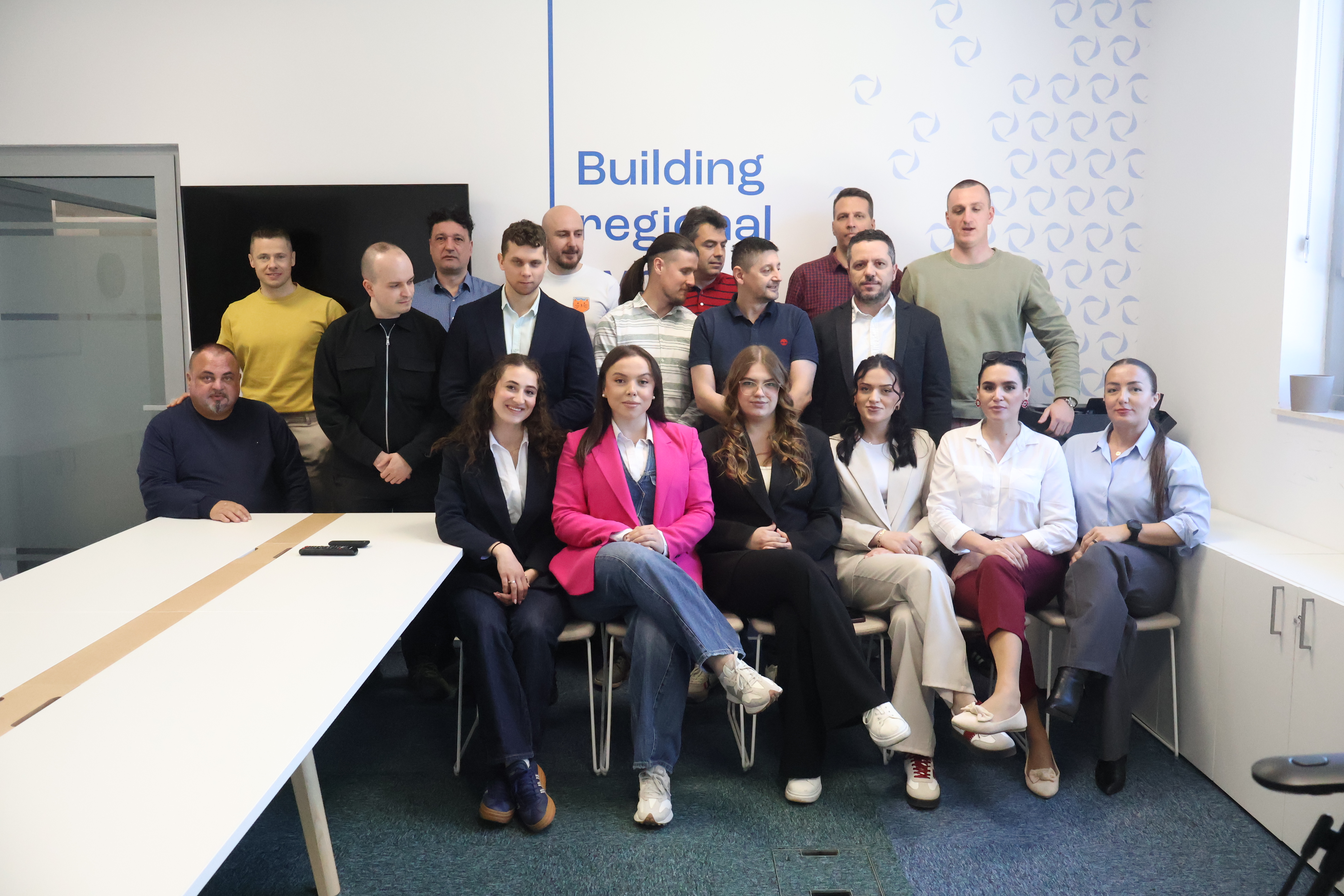
Reflection and Family Photo
DAY 2 – Thursday, 7 May 2026
🕘 09:00 – 09:15 | MORNING BRIEFING
Recap & Key Takeaways
🕤 09:15 – 10:15 | PANEL 4
Safeguarding the European Path: Building Resilience in the Western Balkans
Strengthening institutions, defending public trust, and reducing vulnerabilities to foreign interference.
Speakers:
- Biljana Papović, State Secretary, Ministry for European Affairs of Montenegro
- Natalie Pauwels, Head of the Strategic Coordination and Communication Unit, DG ENEST
- Miroslav Sazdovski, Senior Analyst, European Centre of Excellence for Countering Hybrid Threats
- Armela Krasniqi, Chairwoman of the Audiovisual Media Authority of Albania
Moderator: Nikoleta Đukanović, PhD, Associate Professor, Faculty for Humanistic Studies, University Donja Gorica
🕤 10:15 – 10:25 | INSIGHT
Election Integrity in the Age of FIMI: Lessons from Election Observation
Speakers: Jelena Stefanović, MPA, Political and Election Expert, OSCE; Serbia
🕥 10:25 – 11:10 | PANEL 5
Judicial Response to FIMI and Disinformation
From digital evidence to prosecution of FIMI. Strengthening rule of law in the digital space.
Speakers:
- Audrey Gerbaud, Deputy Prosecutor at the Paris Judicial Court, Cyber Department J3
- Arben Murtezić, PhD, Legal Counsel at the Office of Vice President of the Federation of Bosnia and Herzegovina
- Marina Barbir, Judge at Higher Court in Belgrade
- Ivan Jokić, Head of Cybercrime Unit, Police Administration of Montenegro
Moderator: Ana Bukilić, Programme Manager at IDLO
☕ 11:10 – 11:40 | NETWORKING BREAK
🕦 11:40 – 12:40 | PANEL 6
Media on the Frontline of the Fight Against Disinformation
How media organisations detect, verify, respond to, and build resilience against disinformation, including AI-generated content with a focus on debunking practices and audience trust.
Speakers:
- Nicolas Goinard, Journalist, Ouest-France
- Marko Banović, Analyst, Digital Forensic Centre
- Adelina Hasani, PhD, Head of Research at Kosovar Institute for Policy Research and Development (KIPRED)
- Sunčica Bakić, Director, Agency for Audio-Visual Media Services of Montenegro
Moderator: Olivera Nikolić, Director of Montenegro Media Institute
🕧 12:40 – 14:10 | INTERACTIVE EXERCISE
War Game: Tabletop Simulation
Mixed country groups with assigned roles. Injects: manipulated video, leaked documents, coordinated hashtags, proxy media, diaspora channels, offline incidents. Participants will test both prebunking and debunking responses under time pressure.
Facilitators:
- Ronan Mouchoux, Co-founder and CTO, XRATOR
- Thibaud Perrard (Mhack), THUCY, Cybersecurity expert and founder of Offensive Intelligence
- Nicolas Goinard, Journalist, Ouest-France
🕑 14:10 – 14:15 | CLOSING REMARKS
Conference Wrap-up
🍽 14:15 – 15:15 | LUNCH
✈️ DEPARTURE