
×

The first generation of cybersecurity diploma course students are starting a one-year journey!

10.11.2025

Image for The first generation of cybersecurity diploma course students are starting a one-year journey!

The first cohort of 7 final-year and master’s students in ICT have just begun the preparatory course of our University Diploma in Cybersecurity, delivered by the Western Balkans Cyber Capacity Centre (WB3C) in partnership with the Université de Technologie de Troyes (UTT), France, under the leadership of professor Reza Elgalai.

This two-week preparation helps students strengthen their foundations so they can follow the full program confidently and succeed in final exams. The second preparatory course will take place in December with another 13 students, after which UTT will select the top 10 candidates to continue with the full diploma course in February 2026.

The program itself is unique in the region. It’s an off-campus study with UTT professors, leading to a 60-ECTS diploma in cybersecurity. With UTT’s recognition of prior learning (120 ECTS from earlier studies), students can earn a parallel EU-recognized professional Bachelor’s degree - a true bridge into the European cyber workforce.

It’s also highly practical. Students learn by doing through lectures, labs, case studies and Capture-the-Flag exercises - building skills that will allow them to step directly into roles such as:
🔹 Security Administrator
🔹 SOC Analyst
🔹 Junior Penetration Tester
🔹 Digital Forensics Technician
🔹 Cybersecurity Auditor

At the same time, WB3C is in discussions with the University of Montenegro exploring how we call collaborate on our cybersecurity initiatives and provide a sustainable academic pathway for the next generation of cyber professionals. The momentum is here. These two programs mark a turning point for Montenegro’s cybersecurity education landscape - building a talent pipeline for the region’s most in-demand cyber roles.


Four days of OSINT and Dark Web training for Western Balkan law enforcement

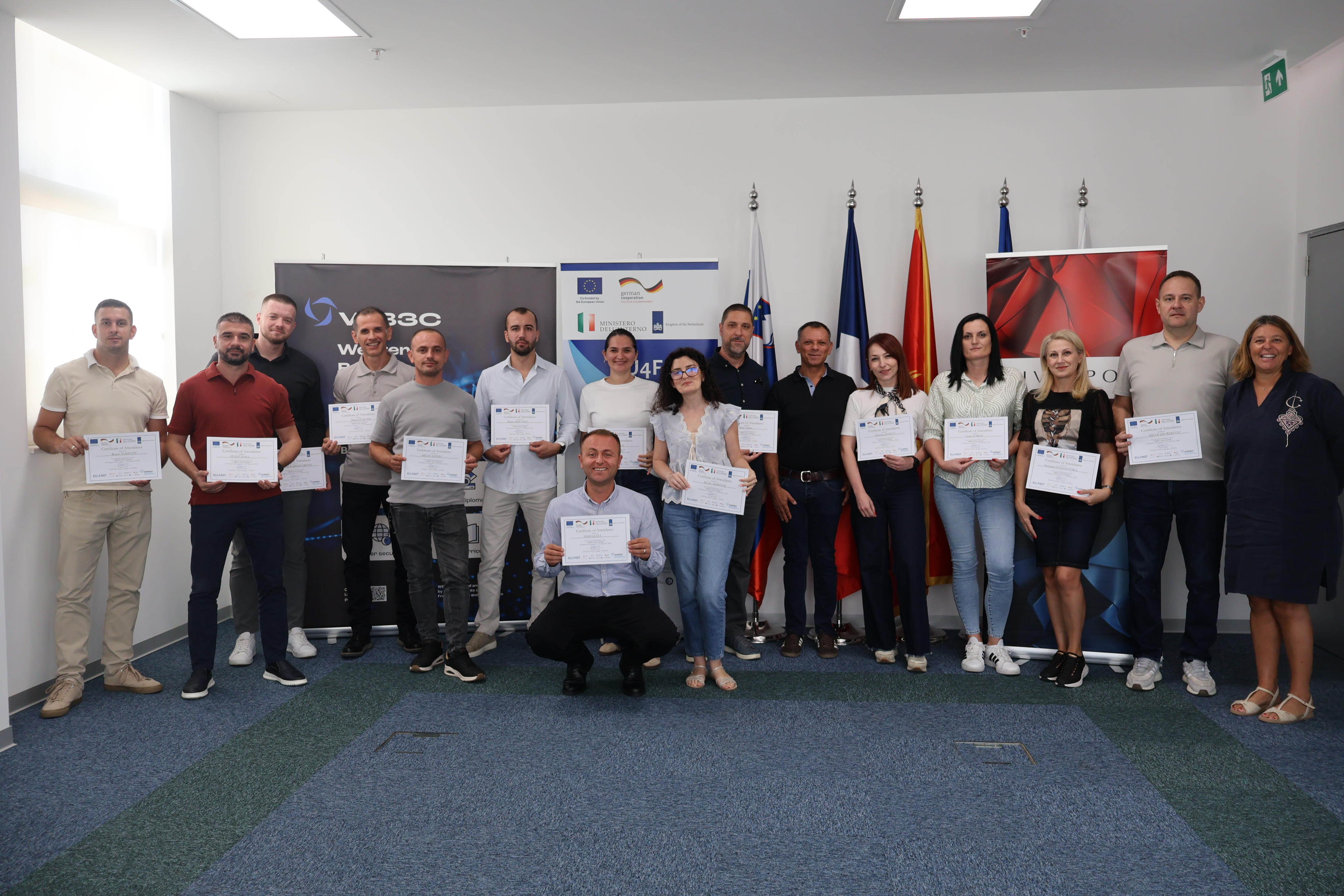
This week at WB3C, police officers and prosecutors from the Western Balkans worked through a four-day practical programme on Open-Source Intelligence (OSINT) and Dark Web investigations, delivered in cooperation with CIVIPOL and EU4FAST.
Led by WB3C training team Cyril CORRIAS and Jean-Pierre Bonnet, the course focused on the practical skills needed to collect and analyse publicly available information in support of Internet investigations — from identifying potential threats and gathering digital evidence to producing actionable intelligence. 

The programme moved progressively through the fundamentals of Internet investigations and evidence preservation, protection and anonymisation techniques, social network investigations, online checks and surveys, and safe navigation of the Dark Web, combining each area with practical exercises. Participants also worked on approaches to data collection and the legal and ethical considerations linked to the use of digital information. 

The training brought together law-enforcement practitioners from the WB6 who were attending a WB3C programme for the first time, expanding the network of professionals in the region equipped to work with open-source information in increasingly complex digital investigations. 

Our thanks to our partners CIVIPOL and EU4FAST, and especially Marie Pierre MOSIN for supporint this programme, and to all participants for four intensive and highly practical days in Podgorica.
Minister Delegate Marie-Pierre Vedrenne Visits WB3C

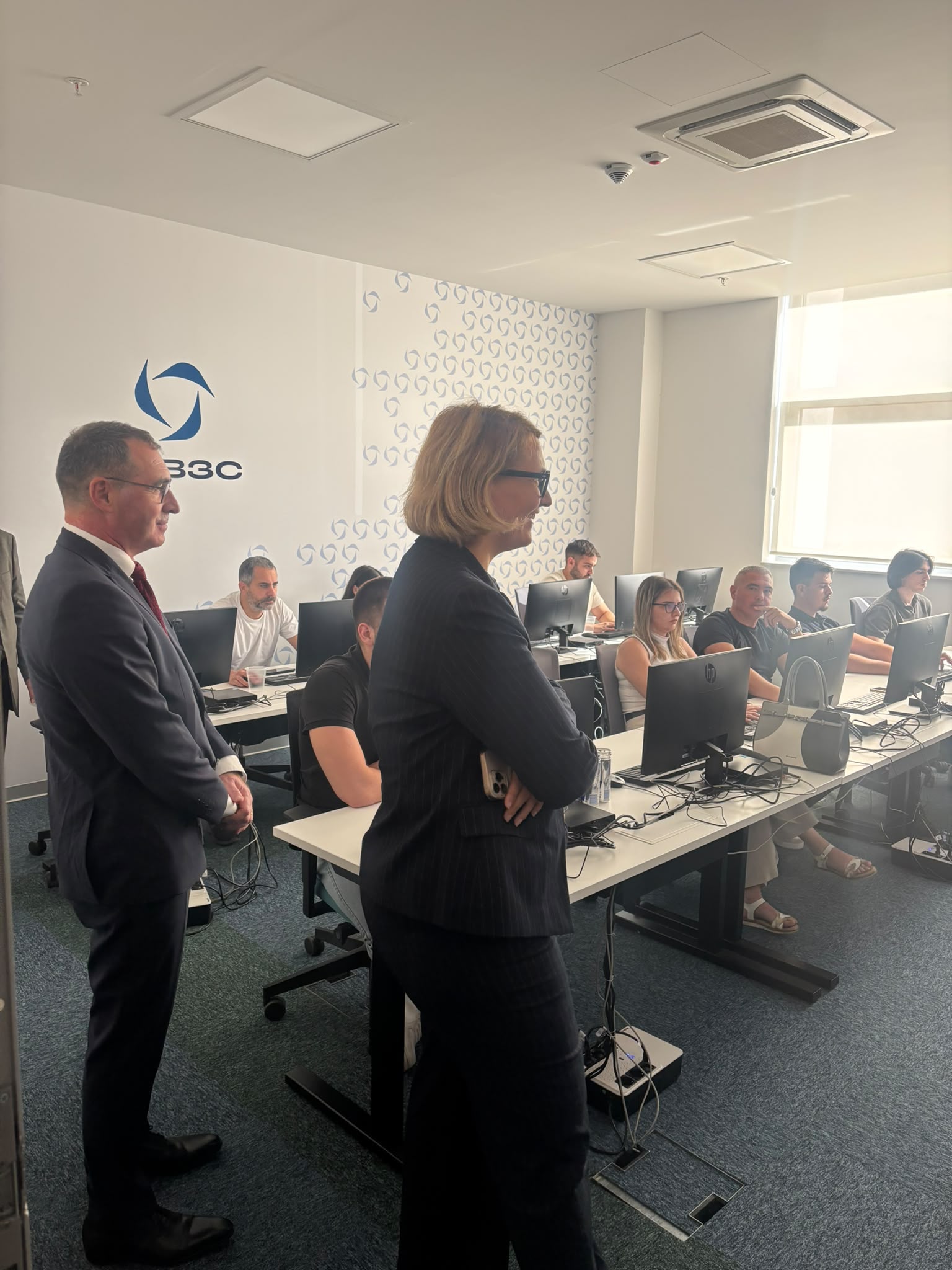
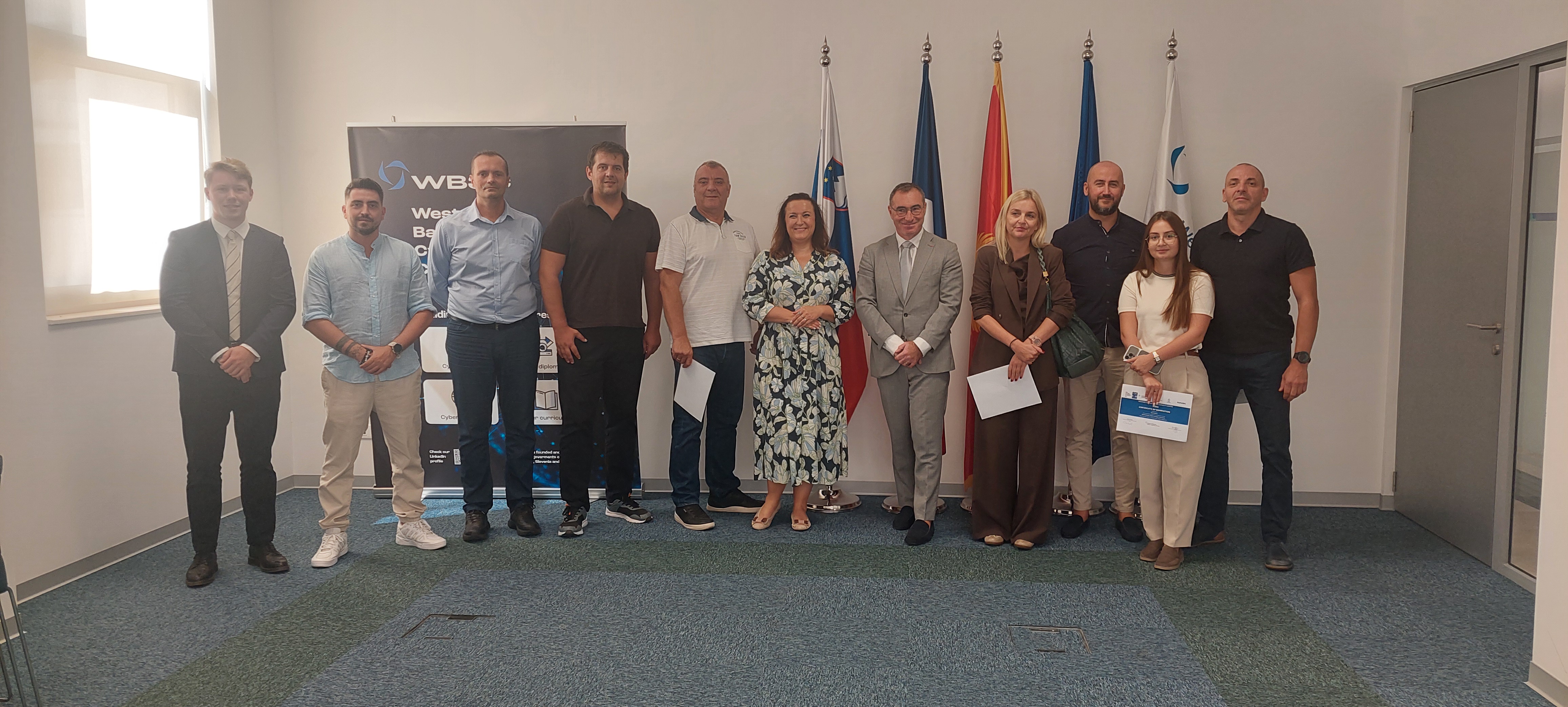
On the sidelines of the BerlinProcess meetings held in Montenegro this week, we were honoured to welcome Ms Marie-Pierre Vedrenne, Minister Delegate to the Minister of the Interior, responsible for Citizenship.

Accompanied by the newly appointed French Ambassador to Montenegro, Ms Cécile Humbert-Bouvier, the Minister met with the WB3C team and learned more about the training programmes being delivered at the Cyber Centre this week.

She spoke with participants, WB3C trainers and external experts, including Reza Elgalai from the University of Technology of Troyes (UTT) and Major Marc TEROUANNE of the French Gendarmerie, who travelled to the WB3C specifically to deliver digital forensics training.

The Minister also met with Polish experts from NASK, who are working alongside Slovenia’s URSIV to deliver cybersecurity training focused on disinformation. She also engaged with CIVIPOL experts from the EU4FAST project, who are providing specialised cybercrime and OSINT training to strengthen the fight against migrant smuggling and irregular migration.

Cyber awareness, disinformation and OSINT: three connected perspectives on working safely with information

This week at WB3C, participants from public institutions across the Western Balkans are looking at the information environment from three different but closely connected perspectives: cyber awareness, disinformation and open-source intelligence (OSINT).
The training is delivered by Marcin Napiórkowski, Sylwia Adamczyk and Jakub Orzeszek from NASK – the Polish Research and Academic Computer Network, combining practical cyber hygiene with an understanding of how information is manipulated, verified and analysed online. 
The first part of the course focuses on cyber awareness in both private and professional environments. Participants examine common threats from an end-user perspective, incident reporting, protection of email and social media accounts, and the security practices that organisations can put in place to reduce everyday exposure.
From there, the discussion moves to disinformation and the mechanisms that make it effective: filter bubbles, cognitive biases and techniques such as false context and cherry-picking. An important part of the work is not only recognising manipulation, but understanding how institutions can respond and communicate when misleading information begins to affect their reputation or the audiences they serve. 
The OSINT component then takes participants into the practical work of finding, verifying and evaluating information from open digital sources. Search techniques, social media and visual-media analysis are combined with exercises in identifying disinformation and checking the reliability of what has been found.
There is also another side to OSINT that is sometimes overlooked: protecting the analyst. Participants are introduced to OPSEC methodologies and operational anonymity, looking at how research can be conducted without unnecessarily exposing the analyst, the organisation or the investigative workflow. 
Bringing these three areas together is particularly relevant for public institutions. The same digital environment in which staff communicate and work is also the environment in which information is collected, manipulated, amplified and investigated.
By the end of the course, the objective is therefore not simply to know more tools or terminology, but to be better able to recognise threats, question information, verify sources and work more securely online. 
Gilles Schwoerer, our Programme Director, greeted the participants and thanked our partners in URSIV, Urad Vlade Republike Slovenije za informacijsko varnost for funding this training and its continued support to WB3C activities.


Copyright © WB3C

Disclaimer: Translations of the original content written in English into other languages are AI generated by Weglot.