Regulatory Framework for the Protection of Children Online
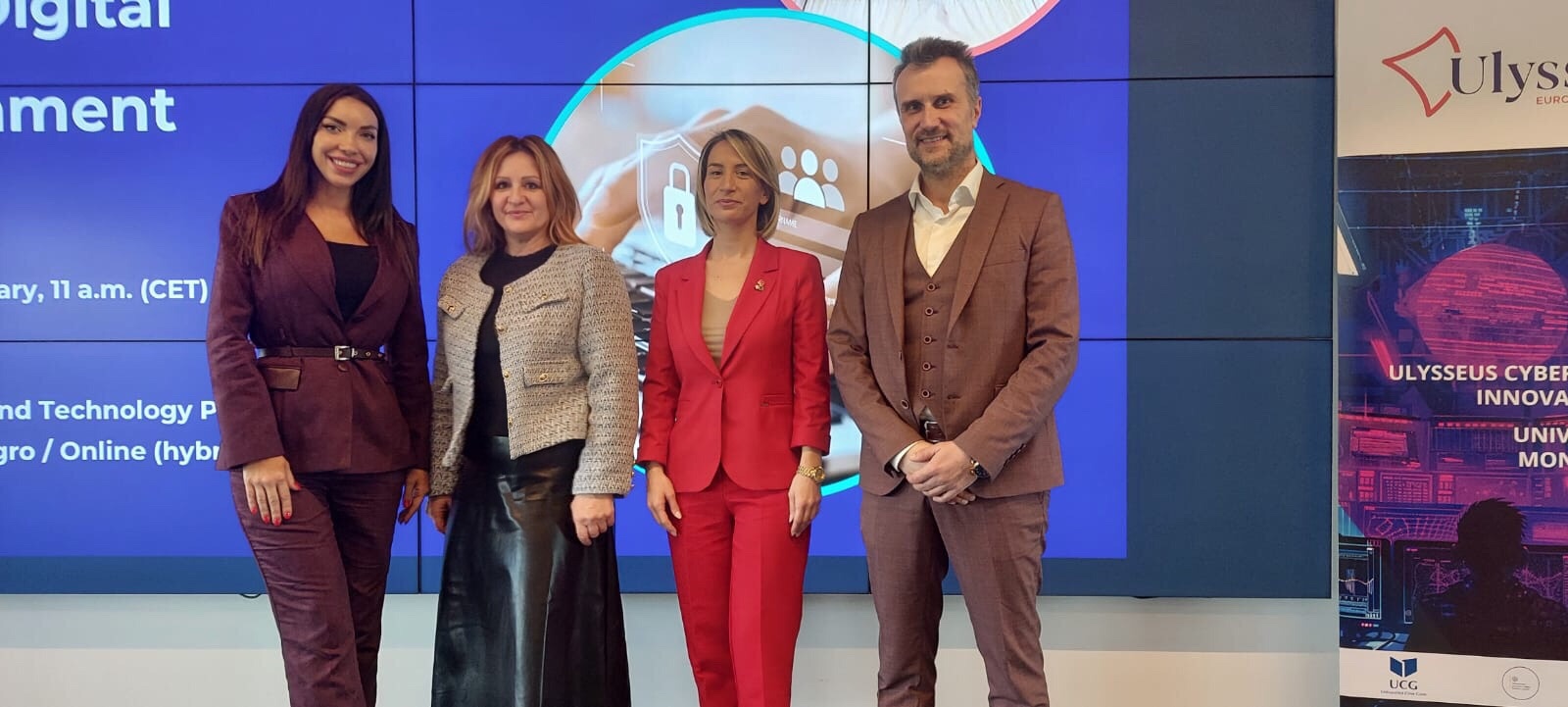
Today, WB3C participated in a multisectoral roundtable on the “Protection of Children in the Digital Environment – A New Draft Law”, hosted by the Ulysseus European University – Innovation Hub for Cybersecurity at the University of Montenegro, led by Andreja Mihailovic, PhD in academic cooperation with the University of Genoa.
The discussion, opened by Prof. Dr. Savo Tomović and MP Slađana Kaludjerović, addressed the proposed Law on the Protection of Minors in the Digital Environment from multiple professional angles.
Our Senior Project Manager Vanja Madzgalj MBE noted that clearly this is an exceptionally complex regulatory space.
On one hand, states face structural barriers: limited jurisdiction over very large digital platforms operating across borders, difficulties in enforcing obligations against global service providers and the technical opacity of algorithmic systems. On the other hand, children are digital natives with legitimate rights to access, participate in, and benefit from the digital world. Protection cannot mean exclusion.
⚡ At the same time, the data are stark.
We see increasing numbers of minors falling victim to digital crimes, including online sexual exploitation and abuse. We also see minors committing digital offences, often without understanding the legal consequences. Internet addiction is emerging at an early age, with long-term psychological and social impacts. Uncontrolled and unsupervised digital exposure is producing measurable harm.
The forum brought together ICT professionals, children’s rights organizations, parent associations, regulators, policymakers, and educators.
There was broad agreement that:
Cross-border cooperation with EU regulators is essential, particularly in light of the Digital Services Act and emerging European enforcement mechanisms.
Parents and schools carry a critical share of responsibility.
Children’s rights — including access to information and digital participation — must be preserved alongside protection measures.
Clear criminalization of digital child sexual abuse material (CSAM), grooming, and manipulation of minors online is essential.
We also agreed that waiting for perfect solutions is not an option. We must start somewhere.
National awareness campaigns on digital risks, structured parental education, and early cybersecurity education in schools are foundational. Parents need greater support — and greater accountability. At the same time, targeted institutional regulation and enforceable legal provisions remain necessary, particularly in areas of exploitation, manipulation, and platform responsibility.
Protecting minors online is not a single-law issue. It is a societal, institutional, and technological challenge that requires coordinated national action and effective alignment with European regulatory frameworks. The complexity should not paralyze us — it should push us toward pragmatic, enforceable, and balanced solutions.