×

Professor Savo Tomović completes Digital Forensic Diploma Course

13.02.2026

Image for Professor Savo Tomović completes Digital Forensic Diploma Course

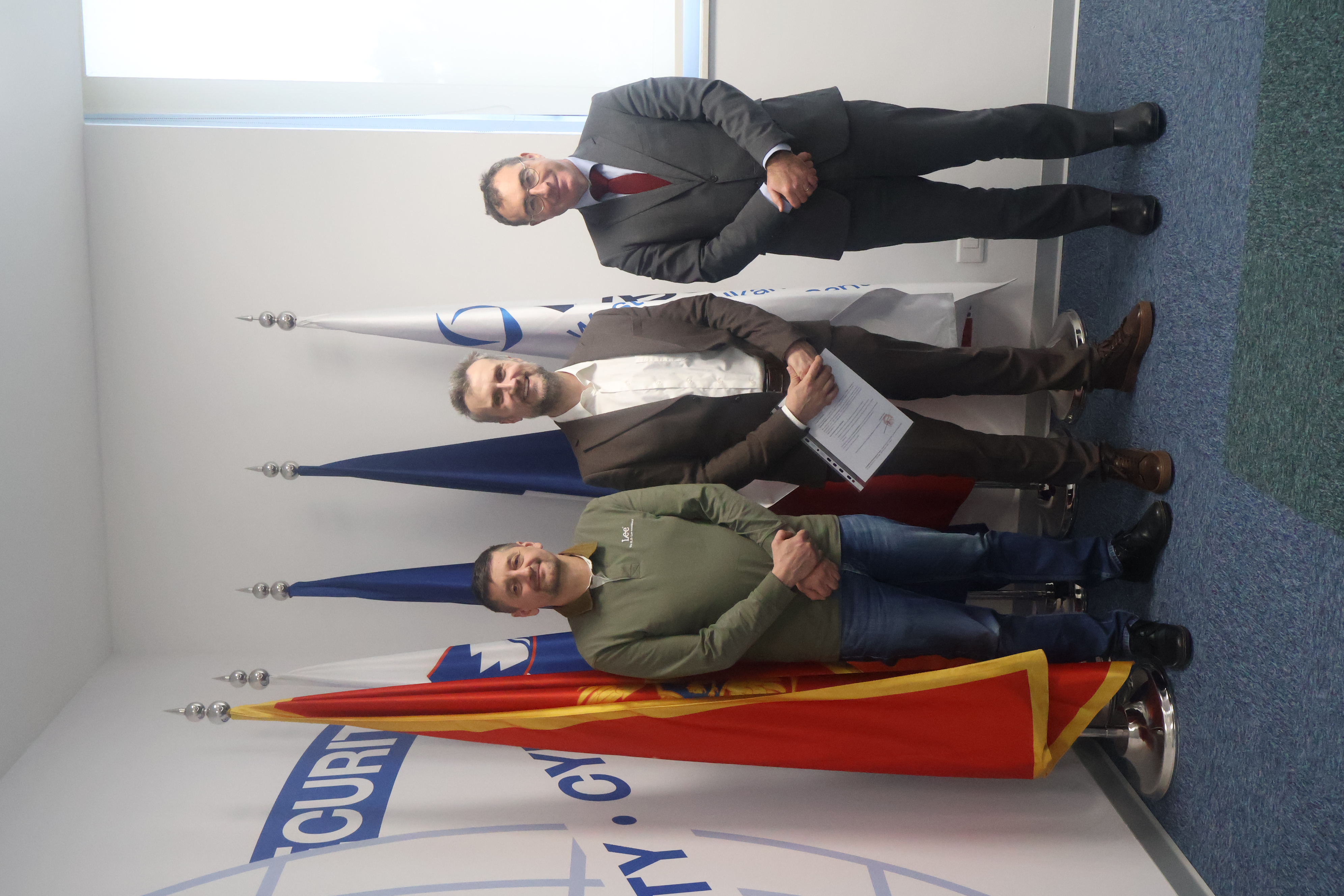
We are so pleased to share with our community that professor Savo Tomovic, PhD received his certificate of completion for the 1-year Digital Forensics specialist training delivered by the Université de Technologie de Troyes (UTT), implemented in cooperation with the Western Balkans Cyber Capacity Centre (WB3C)
Prof. Tomović is the Academic Lead of the Cybersecurity Innovation Hub and the Head of the Master’s study programme “Information Security" at the University of Montenegro.
This milestone marks the programme’s first academic participant, deliberately included alongside 15 law enforcement practitioners, to strengthen the link between operational needs and curriculum development. 

The training included 11 weeks (55 days) of classroom work coupled with research and exams. This training is a blend of theory and hands-on practice, built on the original French Gendarmerie investigator curriculum for Professional Bachelor's Degree (Professional License in Digital Forensics). The programme's core areas include: legal frameworks, digital evidence preservation, forensic analysis, OSINT/CyberPatrol techniques, networks/data analytics, investigative methodologies and information security. 
The rest of the group including 15 police investigators will continue with further training until June 2026, when the final exam and the dissertation are expected to take place in Troyes, France, before the UTT examination panel. 

This programme is a unique, EU-recognised, digital forensics qualification combining advanced hands-on investigative training with an accredited 60-ECTS academic credential - directly strengthening institutional capacity to handle complex cybercrime cases end-to-end. It was led by our experienced team of experts including Reza Elgalai, Ljuban Petrovic, Cyril C. and Yannick Casse. 

A symbolic awarding ceremony led by Gilles Schwoerer and Ljuban Petrovic just to say thank you to our dedicated colleague from the University of Montenegro, working hard all year round to support future talent through new future learning pathways.


Regulatory Framework for the Protection of Children Online

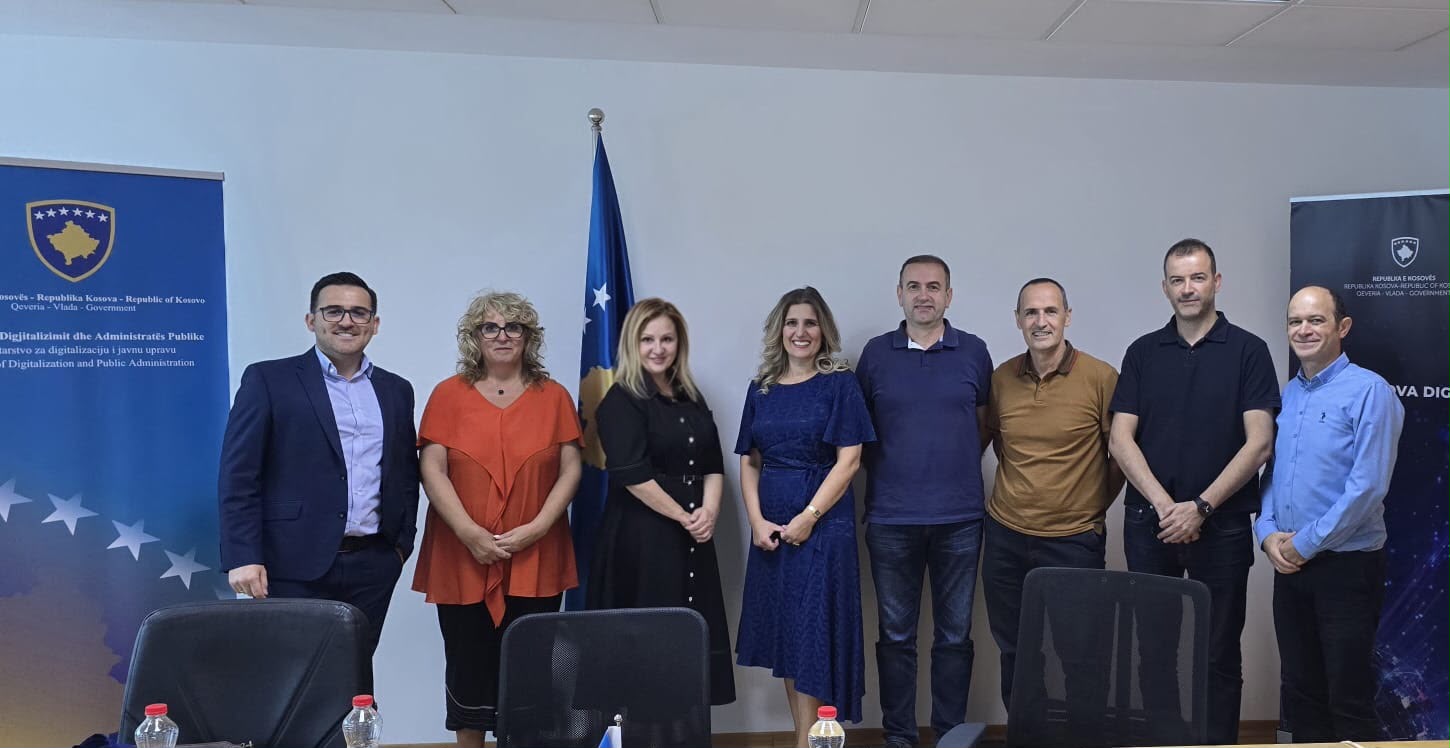
Today, WB3C participated in a multisectoral roundtable on the “Protection of Children in the Digital Environment – A New Draft Law”, hosted by the Ulysseus European University – Innovation Hub for Cybersecurity at the University of Montenegro, led by Andreja Mihailovic, PhD in academic cooperation with the University of Genoa.
The discussion, opened by Prof. Dr. Savo Tomović and MP Slađana Kaludjerović, addressed the proposed Law on the Protection of Minors in the Digital Environment from multiple professional angles.

Our Senior Project Manager Vanja Madzgalj MBE noted that clearly this is an exceptionally complex regulatory space. 
On one hand, states face structural barriers: limited jurisdiction over very large digital platforms operating across borders, difficulties in enforcing obligations against global service providers and the technical opacity of algorithmic systems. On the other hand, children are digital natives with legitimate rights to access, participate in, and benefit from the digital world. Protection cannot mean exclusion.

⚡ At the same time, the data are stark.
We see increasing numbers of minors falling victim to digital crimes, including online sexual exploitation and abuse. We also see minors committing digital offences, often without understanding the legal consequences. Internet addiction is emerging at an early age, with long-term psychological and social impacts. Uncontrolled and unsupervised digital exposure is producing measurable harm.
The forum brought together ICT professionals, children’s rights organizations, parent associations, regulators, policymakers, and educators. 

There was broad agreement that:
Cross-border cooperation with EU regulators is essential, particularly in light of the Digital Services Act and emerging European enforcement mechanisms.
Parents and schools carry a critical share of responsibility.
Children’s rights — including access to information and digital participation — must be preserved alongside protection measures.
Clear criminalization of digital child sexual abuse material (CSAM), grooming, and manipulation of minors online is essential.
We also agreed that waiting for perfect solutions is not an option. We must start somewhere.
National awareness campaigns on digital risks, structured parental education, and early cybersecurity education in schools are foundational. Parents need greater support — and greater accountability. At the same time, targeted institutional regulation and enforceable legal provisions remain necessary, particularly in areas of exploitation, manipulation, and platform responsibility.
Protecting minors online is not a single-law issue. It is a societal, institutional, and technological challenge that requires coordinated national action and effective alignment with European regulatory frameworks. The complexity should not paralyze us — it should push us toward pragmatic, enforceable, and balanced solutions.

Strengthening OSINT Capacities for Investigators and Prosecutors

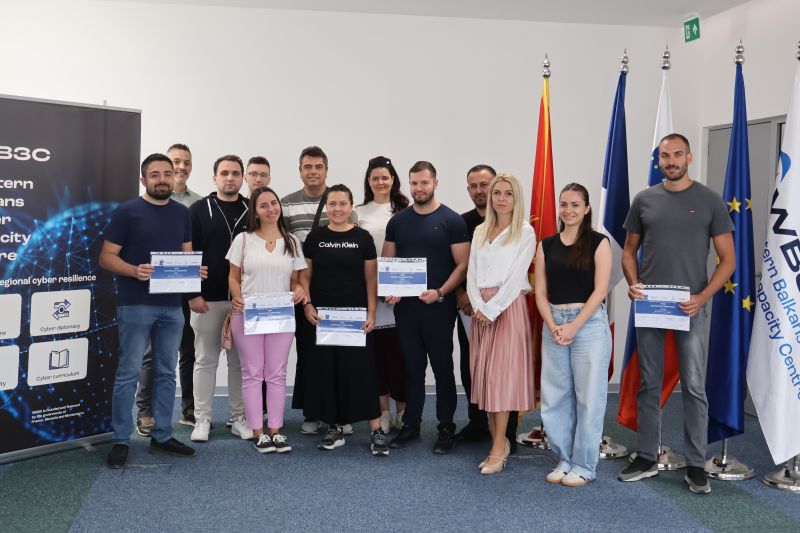
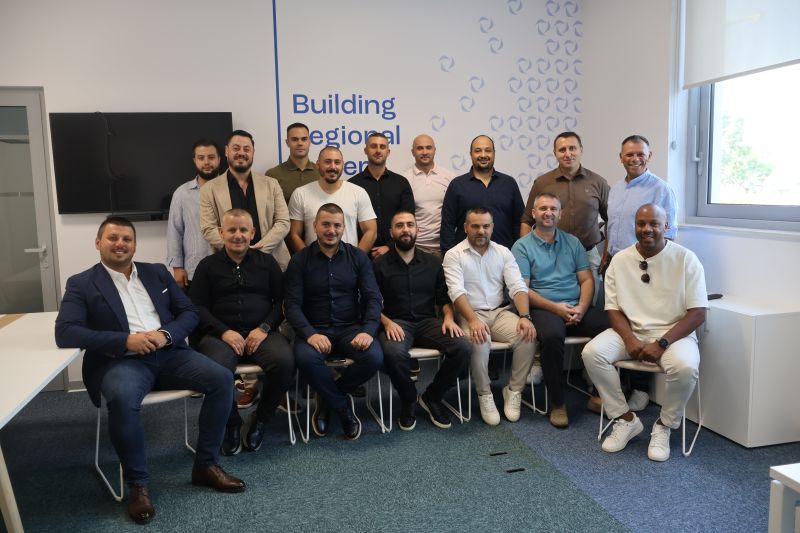
WB3C has launched a new edition of its four-day intensive OSINT training, bringing together police investigators and prosecutors from across the Western Balkans.
The participants were welcomed by Gilles Schwoerer, Head of WB3C, who underlined the importance of building coordinated investigative and prosecutorial responses to evolving digital threats. The training is delivered by WB3C’s in-house cybercrime expert, Cyril C., specializing in open-source intelligence (OSINT).
The programme focuses on practical, case-based learning to strengthen participants’ ability to collect, analyse and preserve digital evidence in line with legal standards. Through structured exercises, participants develop skills in advanced online searches, metadata analysis, secure data handling and safe navigation of the darknet environment.
By combining investigative techniques with prosecutorial perspectives, the training supports stronger end-to-end cooperation between police and justice actors — a critical factor in delivering prosecution-ready cybercrime cases.
Building sustainable regional capacity in open-source intelligence remains a key pillar of our work to enhance resilience against evolving digital threats.


Visit by EEAS, Western Balkans Division

Today, we hosted an EU delegation led by Zuzana Michalcova Sutiakova, Head of the Western Balkans Division at European External Action Service (EEAS), accompanied by representatives of the European Commission and the Delegation of the European Union to Montenegro.

The visit was a valuable opportunity to brief the EEAS on WB3C’s ongoing work across the region, supporting practical cooperation, strengthening cyber capabilities, and ensuring our activities remain closely aligned with the priorities that matter most for partners as they advance on the EU accession path.
We appreciate the open, concrete exchange and the continued engagement of EU institutions in helping the Western Balkans build resilient, secure digital systems, grounded in European standards and shared security interests.


Copyright © WB3C

Disclaimer: Translations of the original content written in English into other languages are AI generated by Weglot.