×

WB3C Officially Becomes an International Organization

11.03.2026

Image for WB3C Officially Becomes an International Organization

Yesterday, the Western Balkans Cyber Capacity Centre (WB3C) reached a major milestone in its institutional journey.

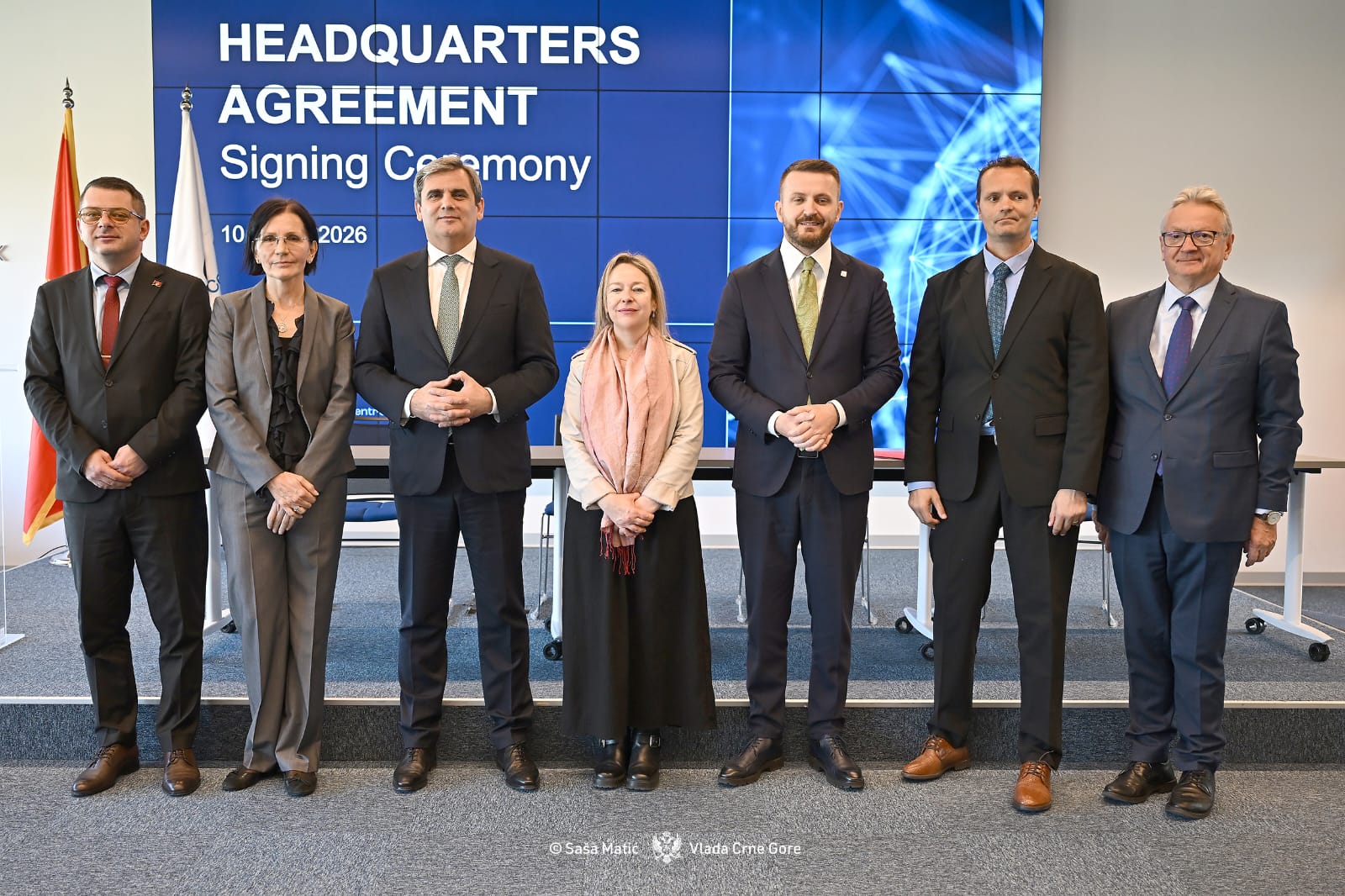
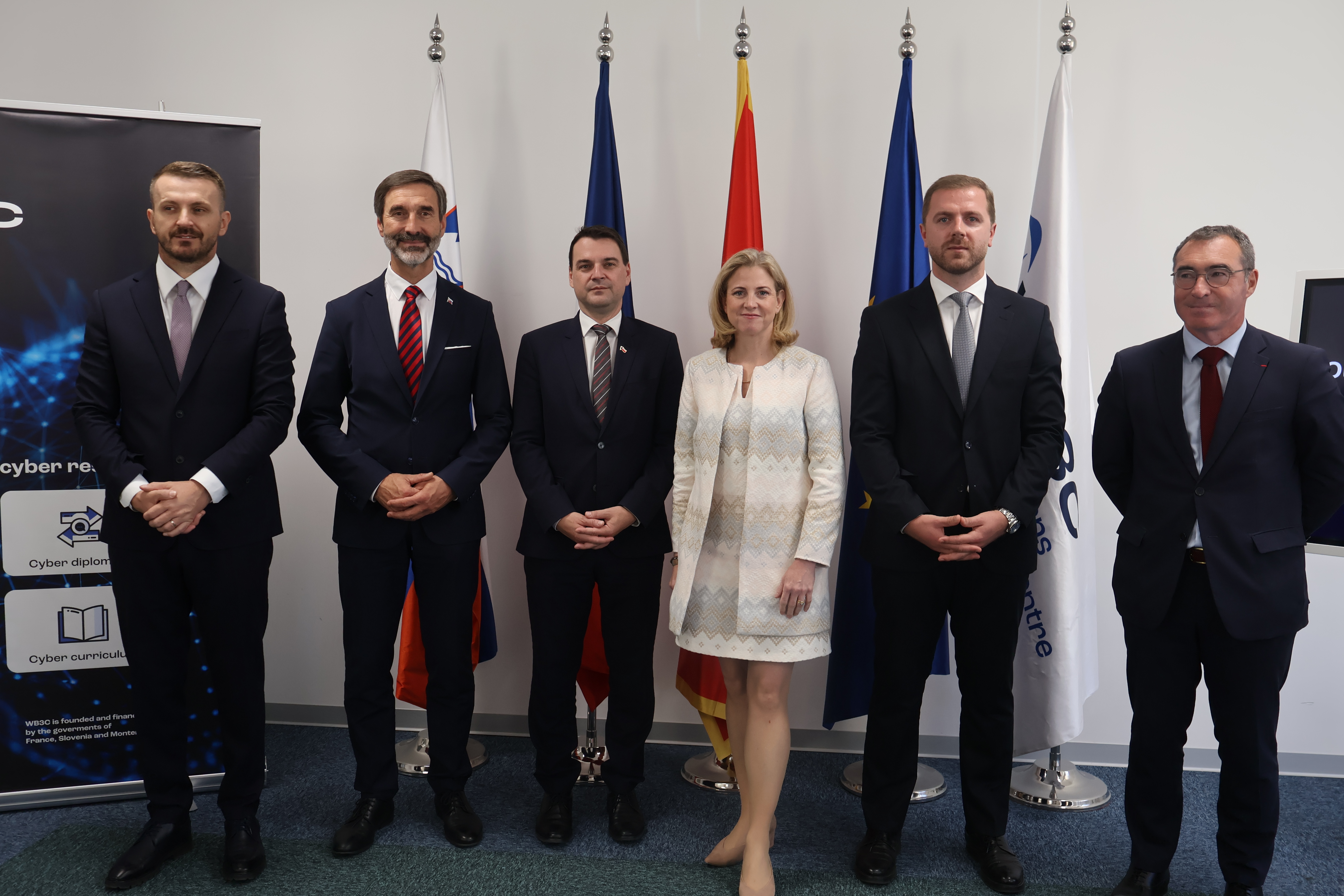
At the first meeting of its Governing Board, representatives of France, Slovenia and Montenegro came together to mark a new chapter for the Centre, with the signing of the Headquarters Agreement formally confirming WB3C as the first international organization headquartered in Podgorica. The appointed members of the Governing Board, H.E. Anne-Marie Maskay and Gen. Stephane Richou for France, iztok jarc and Uroš Svete for Slovenia and Ivan Lekovic and Aleksandar Zecevic for Montenegro, held the first inaugural session to adopt internal documents, while the Programme Director Gilles Schwoerer presented the achievements of the Centre in 2025 and the ambitious plan for 2026.

The event was honoured by the presence of the Deputy Prime Minister and Foreign Minister Ervin Ibrahimovic, Minister of Public Administration Marash Dukaj, French and Slovenian Ambassadors to Montenegro Anne-Marie Maskay and bernarda gradišnik, representatives of the EU Delegation and the diplomatic corps in Montenegro and our institutional partners, reflecting the strong support behind WB3C’s mission to serve as a regional platform for cyber capacity building, cooperation and resilience.

During the official addresses of the high representatives of the founding members, we heard the reassuring words of unwavering support to the region's European future and WB3C's mission in supporting the region on this path through strengthening its resilience against cyber and hybrid threats.

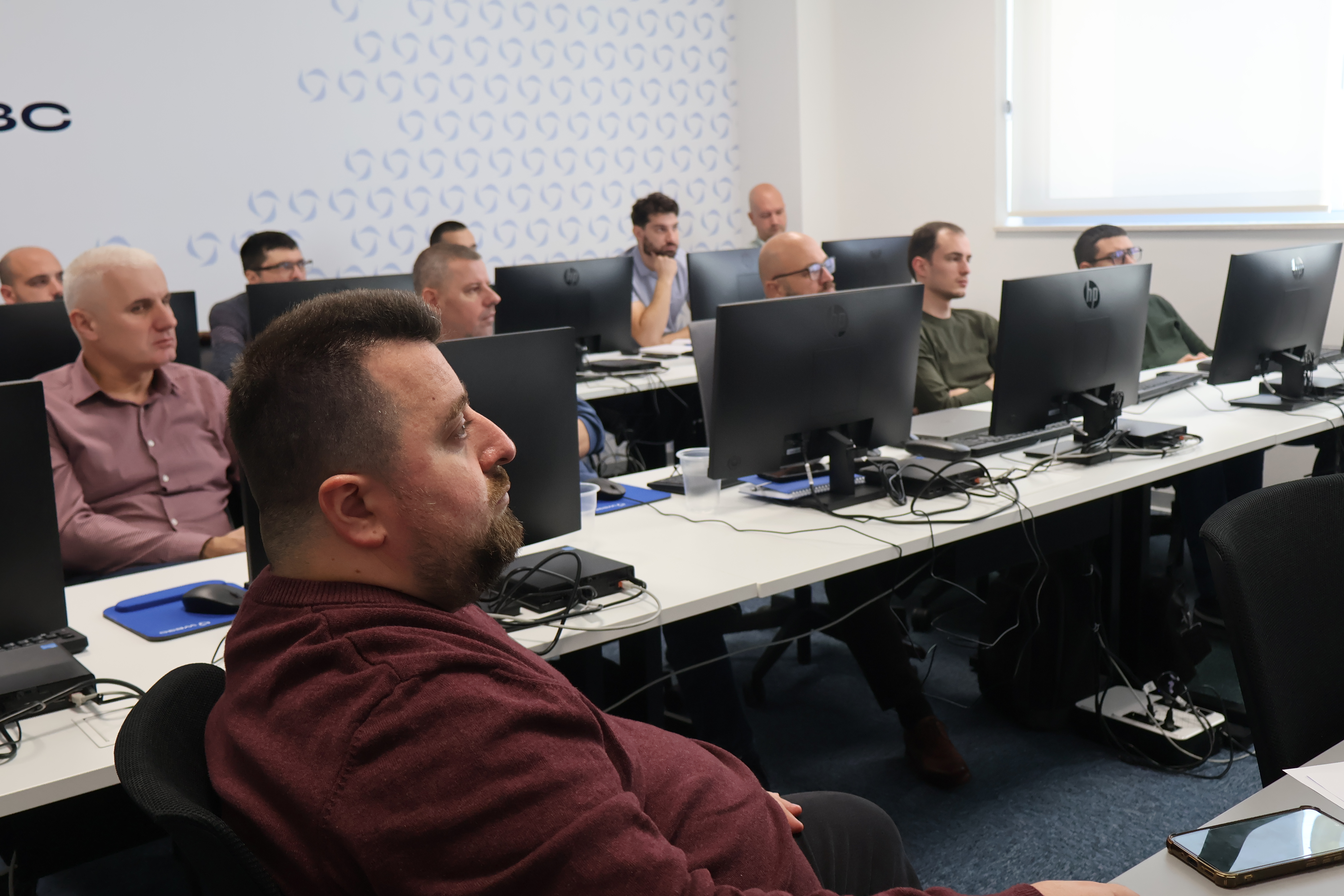
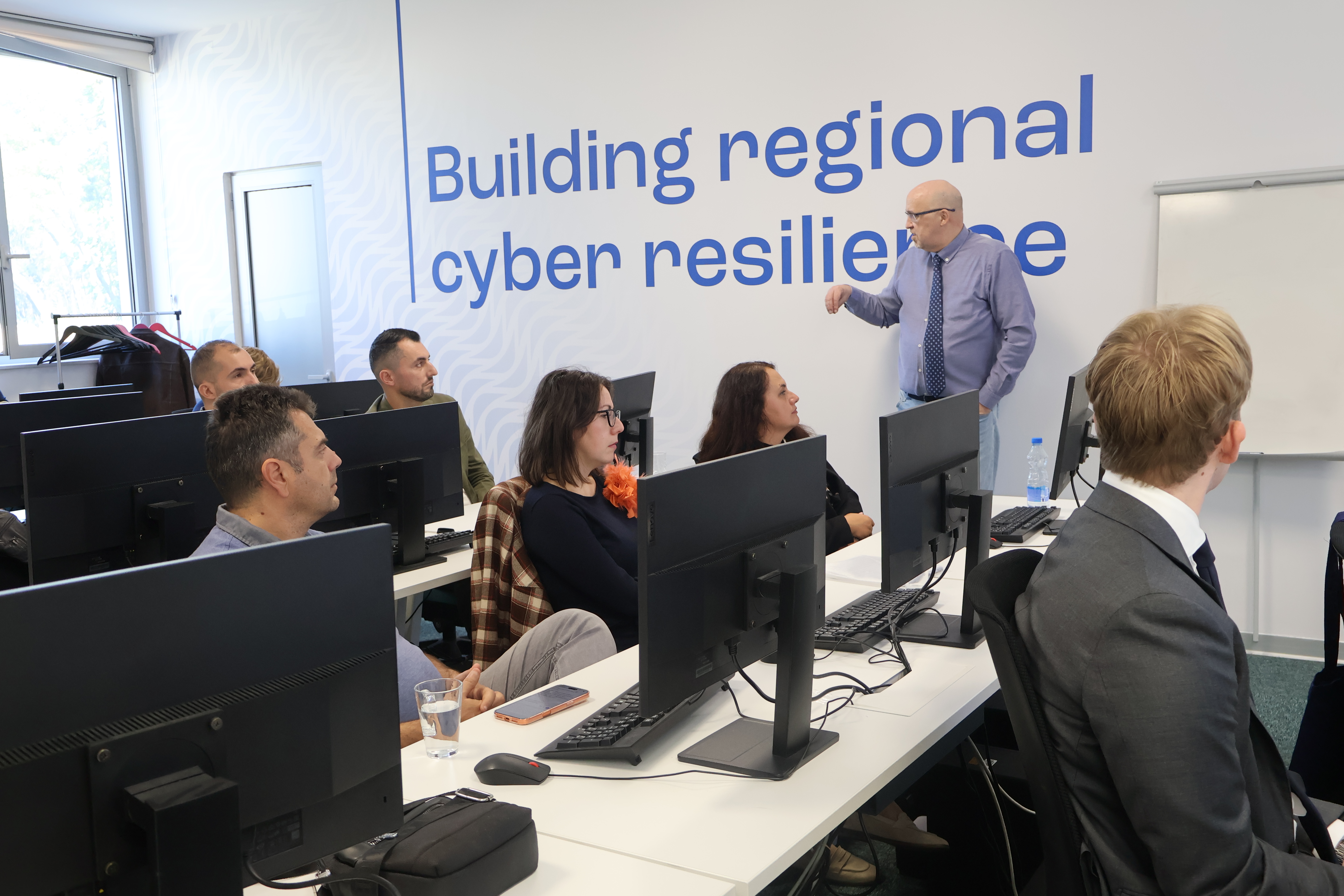
Beyond the formal ceremony, the day also offered a meaningful reminder of what this institution is ultimately about: investing in people, knowledge and the region’s future. On this occasion, General Stéphane Richou, Director of Security and Defense Cooperation at the French Ministry for Europe and Foreign Affairs (Direction de la Coopération de Sécurité et de Défense DCSD 🇫🇷) visited the first class of the Cybersecurity Diploma Course, engaging with participants who represent the next generation of cyber professionals in the Western Balkans.

Taken together, yesterday’s events stood as a powerful testament to a shared commitment to regional cooperation, European values and a more secure digital future.


Image for Regional Conference on Foreign Information Manipulation and Interference and Disinformation
Upcoming
Regional Conference on Foreign Information Manipulation and Interference and Disinformation

Regional Conference on Foreign Information Manipulation and Interference (FIMI) and Disinformation

REGIONAL CONFERENCE ON FIMI AND DISINFORMATION

📅 6–7 May 2026
📍 Science and Technology Park, Podgorica (Conference Hall Unicorn, II floor)

Held under the Chatham House Rule, the conference explores how governments and societies can anticipate (prebunk), prevent, and respond (debunk) to malign information operations. Filming is allowed only in the opening session. 

Conference programme:

DAY 1 – Wednesday, 6 May 2026


🕘 09:00 – 09:30 | OPENING REMARKS

Objectives, Chatham House Rule, Expected Outcomes

Speakers:

  • Gilles Schwoerer, WB3C
  • Filip Ivanović, Deputy Prime Minister for Foreign and European Affairs, Montenegro
  • EU representative (TBC)


🕤 09:30 – 10:15 | KEYNOTE ADDRESS

FIMI as a National Security and Governance Challenge

How foreign influence exploits governance gaps — a historical reflection and how states respond without undermining freedoms.

Speaker: David Colon, PhD, Associate Professor, Sciences Po, France


🕥 10:15 – 11:15 | CASE STUDY

Anatomy of Disinformation Operations: Case Study and Lessons Learned

From storyline to impact: mapping actors, vectors, and decision-making pressure points.

Speaker: Ronan Mouchoux, Co-founder and CTO,  XRATOR, France


11:15 – 11:45 | NETWORKING BREAK


🕦 11:45 – 12:30 | PANEL 1

How FIMI Operations Actually Work

What distinguishes organic debate from coordinated manipulation? Evidence thresholds: what is enough to act as a government? How can early detection enable prebunking of emerging narratives before they take hold?

Speakers:

  • Lejla Turčilo, PhD, Full Professor at the Faculty of Political Science, University of Sarajevo
  • Miroslav Sazdovski, Senior Analyst, European Centre of Excellence for Countering Hybrid Threats, Finland

Moderator: Marko Banović, Digital Forensic Centre, Montenegro


🕧 12:30 – 13:15 | CASE STUDY

Disrupting a Covert Influence Operation: The REST Media / Rybar Case

A deep dive into a Russian state-affiliated influence operation, examining tactics, attribution, and links to the Western Balkans. The session will also explore how such networks can be exposed and disrupted, including legal and operational approaches to tackling FIMI infrastructure.

Speaker: Eto Buziashvili, Research Fellow at the Atlantic Council DFR Lab


🍽 13:15 – 14:15 | LUNCH BREAK


🕑 14:15 – 15:00 | PANEL 2

Election Integrity: Building Resilience

A whole-of-society approach to countering FIMI — institutions, platforms, media, and rapid response protocols for the final mile including prebunking of electoral manipulation narratives.

Speakers:

  • Milica Kovačević, President, Centre for Democratic Transition (CDT)
  • Zlatko Vujović, PhD, CEO of the European Network for Election Monitoring (ENEMO)
  • OSCE/ODIHR (TBC)

Moderator: Olivera Komar, PhD, Full Professor at the Faculty of Political Science, University of Montenegro


🕒 15:00 – 15:45 | PANEL 3

Response Options: What is Legitimate, Effective, Safe                                                                                                                                                                                                                                                                                                          Public communication under uncertainty, legal tools, cross-government coordination, institutional trust, media literacy.

 Speakers:

  • Thibaud Perrard (Mhack), THUCY, Cybersecurity expert and founder of Offensive Intelligence
  • Radica Zeković, Director General at the Directorate for Media, Ministry of Culture and Media, Montenegro
  • Jetmir Rajta, Specialist at the Sector for Statistics, Modelling and Indicator Analysis, National Authority for Cybersecurity of Albania

Moderator: Draško Jabučanin, Analyst, Digital Forensic Centre, Montenegro


🕓 15:45 – 16:00 | DAY 1 CLOSING

Reflection and Family Photo


DAY 2 – Thursday, 7 May 2026

🕘 09:00 – 09:15 | MORNING BRIEFING

Recap & Key Takeaways


🕤 09:15 – 10:15 | PANEL 4

Safeguarding the European Path: Building Resilience in the Western Balkans

Strengthening institutions, defending public trust, and reducing vulnerabilities to foreign interference.

Speakers:

  • Biljana Papović, State Secretary, Ministry for European Affairs of Montenegro
  • Natalie Pauwels, Head of the Strategic Coordination and Communication Unit, DG ENEST
  • Miroslav Sazdovski, Senior Analyst, European Centre of Excellence for Countering Hybrid Threats, Finland
  • Armela Krasniqi, Chairwoman of the Audiovisual Media Authority of Albania

Moderator: Nikoleta Đukanović, PhD, Associate Professor, Faculty for Humanistic Studies, University Donja Gorica


🕥 10:15 – 11:00 | PANEL 5

Judicial Response to FIMI and Disinformation
From digital evidence to prosecution of FIMI. Strengthening rule of law in the digital space.

Speakers:

  • Audrey Gerbaud, Deputy Prosecutor at the Paris Judicial Court, Cyber Department J3
  • Arben Murtezić, PhD, Legal Counsel at the Office of Vice President of the Federation of Bosnia and Herzegovina
  • Marina Barbir, Judge at Higher Court in Belgrade
  • Ivan Jokić, Head of Cybercrime Unit, Police Administration of Montenegro (TBC)

Moderator: Ana Bukilić, Programme Manager at IDLO


11:00 – 11:30 | NETWORKING BREAK


🕦 11:30 – 12:30 | PANEL 6

Media on the Frontline of the Fight Against Disinformation    

How media organisations detect, verify, respond to, and build resilience against disinformation, including AI-generated content with a focus on debunking practices and audience trust.

Speakers:

  • Nicolas Goinard, Journalist, Ouest-France
  • Marko Banović, Analyst, Digital Forensic Centre, Montenegro
  • Adelina Hasani, Head of Research  at Kosovar Institute for Policy Research and Development (KIPRED)
  • Sunčica Bakić, Director, Agency for Audio-Visual Media of Montenegro

Moderator: Olivera Nikolić, PhD, Director of Montenegro Media Institute


🕧 12:30 – 14:00 | INTERACTIVE EXERCISE

War Game: Tabletop Simulation

Mixed country groups with assigned roles. Injects: manipulated video, leaked documents, coordinated hashtags, proxy media, diaspora channels, offline incidents. Participants will test both prebunking and debunking responses under time pressure.

Facilitators:

  • Ronan Mouchoux, Co-founder and CTO, XRATOR, France
  • Thibaud Perrard (Mhack), THUCY, Cybersecurity expert and founder of Offensive Intelligence
  • Nicolas Goinard, Journalist, Ouest-France 


🕑 14:00 – 14:15 | CLOSING REMARKS

Conference Wrap-up and Family Photo


🍽 14:15 – 15:15 | LUNCH  

✈️ DEPARTURE


III International Conference of the Association of Security Managers of Montenegro

WB3C took part in the III International Conference of the Association of Security Managers of Montenegro on 17-18 April in Budva, attended by security professionals from Montenegro and the region.

Every year, the conference creates a platform for discussion on how the security landscape is evolving, particularly in light of rapid technological change.
WB3C had the opportunity to contribute to the panel exploring “The Role of the CISO in the Post Quantum Era: Risks, Investments and Operational Shifts.” The discussion addressed what the emergence of quantum technologies means in practice: for cryptography, data protection, risk management and ultimately for how organisations structure and empower their security leadership.
Across the conference, one message was consistent: cyber resilience is becoming a core governance issue, not just a technical one. In this context, regional cooperation and alignment with European and international partners remain essential. 

Our colleagues Gilles Schwoerer and Maja Miranovic took this opportunity to congratulate Dragan Radulović on his election as the next President of the Southeastern Europe Corporate Security Association (SEECSA).

CTI for Critical Infrastructure Training Completed

Last week at WB3C, we wrapped up a four-day training on Cyber Threat Intelligence (CTI) focused on the energy sector and government infrastructure, led by Ljuban Petrovic.

Working with SOC, CSIRT and CERT teams from across the region, the training reinforced a simple point: CTI only matters when it informs decisions. When it helps prioritise. When it changes how teams prepare and respond.
The sectoral focus proved its value. Energy infrastructure comes with its own risk landscape, and the discussions reflected that reality—specific, operational, and directly relevant.

We are continuing this work in September, building on what started here.
Because strengthening resilience is not a one-off effort. It is something that develops over time, through practice, exchange, and trust. 


Copyright © WB3C

Disclaimer: Translations of the original content written in English into other languages are AI generated by Weglot.