×

Western Balkans at the Forum INCYBER in Lille, France

31.03.2026

Image for Western Balkans at the Forum INCYBER in Lille, France

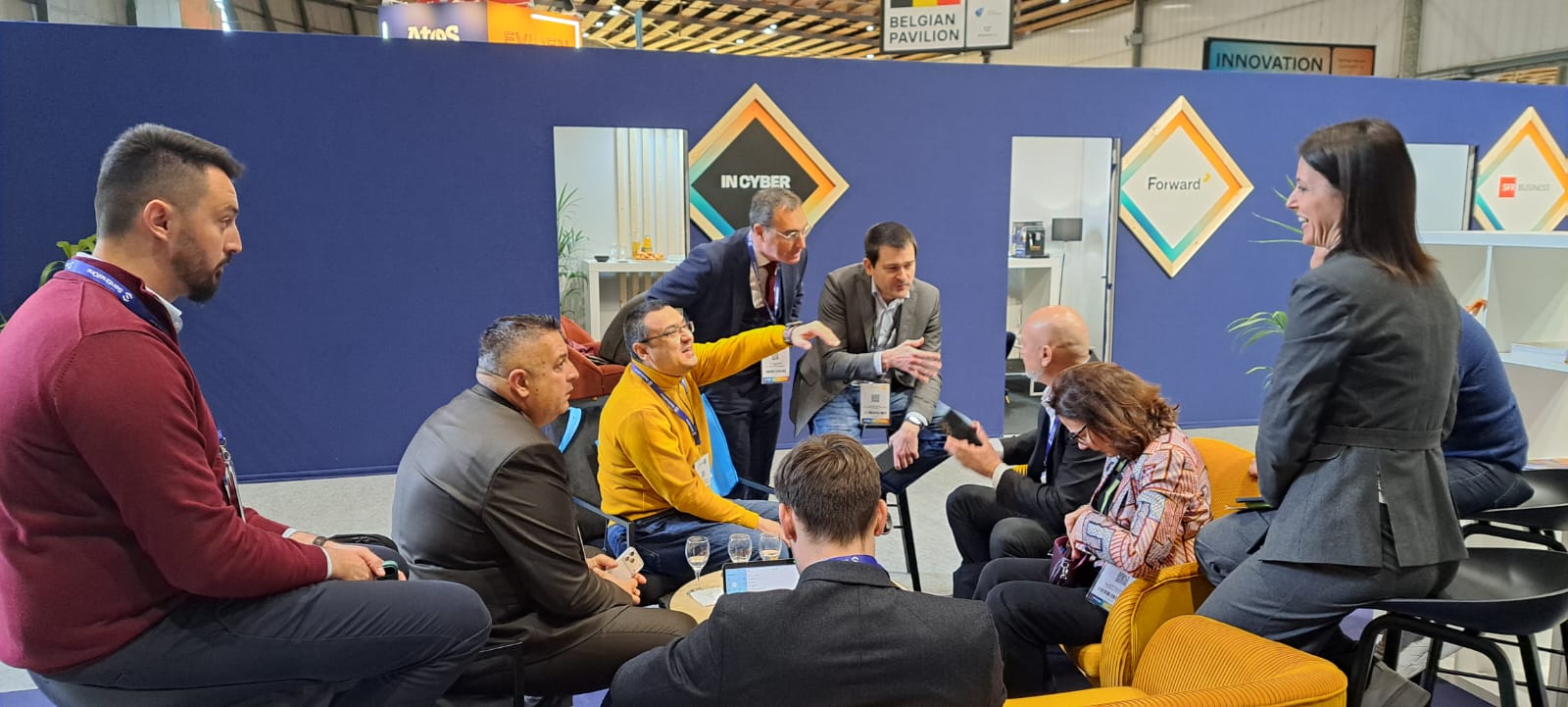
For the second year in a row, WB3C is organizing a regional study visit to Lille, where the Forum INCYBER (FIC) 2026 is taking place — one of Europe’s leading cybersecurity events and a key meeting point for public authorities, critical infrastructure operators, industry leaders and cybersecurity experts shaping the continent’s digital security agenda.
Our delegation has arrived today to take part in this three-day forum, engaging in discussions, exchanges, and partnership-building with European counterparts.
Beyond participation, this visit carries a forward-looking objective. Throughout the Forum, the delegation — led by Gilles Schwoerer and Maja Miranovic — will engage in a series of conversations on bringing a similar industry event to Podgorica this summer, marking the launch of the first industry event of this kind in the Western Balkans.
Our regional delegation brings together representatives from across institutions including national cybersecurity authorities, critical infrastructure, private sector and regional organizations: 

  • Samir Orahovac, Acting Director of National Cyber Security Agency of Montenegro;
  • Jovan Kljajić, President of a Council of National Cyber Security Agency of Montenegro;
  • Spasoje Zecevic, Infrastructure Manager at Science-Technology Park, Montenegro;
  • Dragan Radulović, President of Association of Security Managers of Montenegro and incoming President of South-East Europe Association;
  • Metodi Hadјi Janev, Cybersecurity Solutions Strategist at CDRF Global & Professor at Military Academy, Skopje, North Macedonia;
  • Predrag Puharic, CEO at Cyber Security Excellence Centre and Vice Mayor of Sarajevo, Bosnia and Hercegovina;
  • Mladen Bukilic, CISO / SOC Manager at Cikom
  • Tanja Maraš, Expert on Digital Connectivity at Regional Cooperation Council (RCC), Bosnia and Hercegovina. 

During the Forum, WB3C will also contribute through a dedicated panel focused on the cybersecurity of critical infrastructure, ensuring that regional perspectives are part of the broader European conversation.


Image for Regional Conference on Foreign Information Manipulation and Interference and Disinformation
Upcoming
Regional Conference on Foreign Information Manipulation and Interference and Disinformation

This regional conference intended for governments, media and civil society brings diverse perspectives on the growing hybrid threats of fake news, disinformation, manipulative and malign narratives that have the power to undermine democratic processes, trust in media and institutions and overal societal resilience and cohesion. Understanding, detecting, preventing, responding, debunking, investigating and prosecuting such manipulations will be the task of our panels, case studies and interactive exercises aimed at supporting governemnts and societies to tackle this challenge. The conference will feature 30 prominent speakers from the EU and the WB region from various departments, sectors and industries. 

CTI for Critical Infrastructure Training Completed

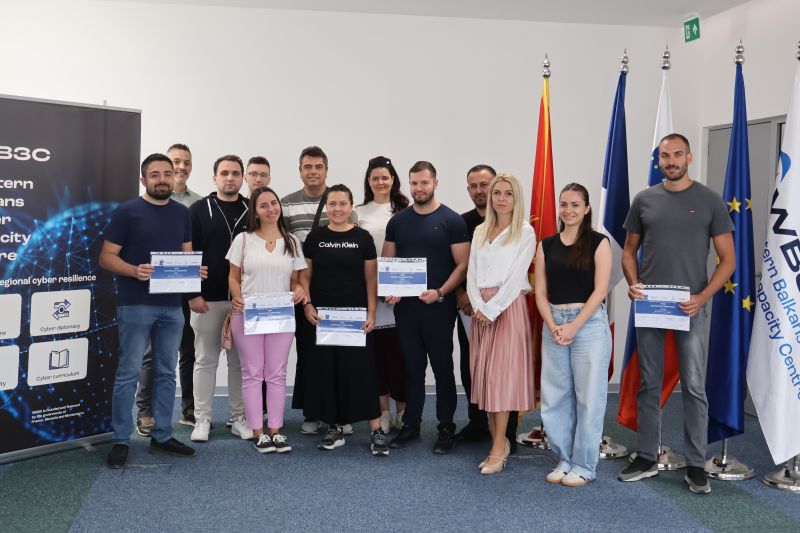
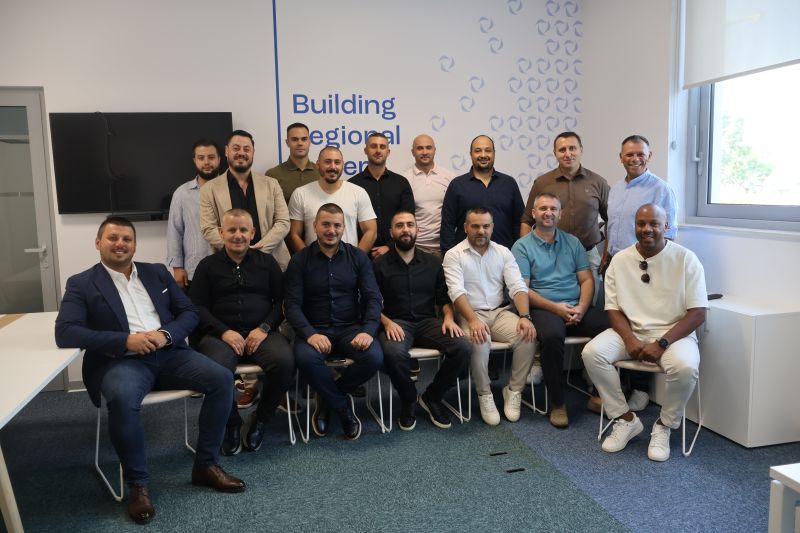
Last week at WB3C, we wrapped up a four-day training on Cyber Threat Intelligence (CTI) focused on the energy sector and government infrastructure, led by Ljuban Petrovic.

Working with SOC, CSIRT and CERT teams from across the region, the training reinforced a simple point: CTI only matters when it informs decisions. When it helps prioritise. When it changes how teams prepare and respond.
The sectoral focus proved its value. Energy infrastructure comes with its own risk landscape, and the discussions reflected that reality—specific, operational, and directly relevant.

We are continuing this work in September, building on what started here.
Because strengthening resilience is not a one-off effort. It is something that develops over time, through practice, exchange, and trust. 

What is Cyber Threat Intelligence (CTI) — and why does it matter?

Simply put, CTI is about turning information into insight, before a threat happens.

Not just collecting data on threats, but understanding who is behind them, how they operate, and what that means for your own systems.
Without that understanding, cybersecurity remains reactive. With it, organisations can anticipate, prioritise and respond with purpose.

Next week at WB3C, we will be running a four-day regional training on Cyber Threat Intelligence (CTI).
The training is designed for SOC, CSIRT and CERT teams, as well as IT professionals working within critical entities—specifically the energy sector. The choice is deliberate.

We are taking a sectoral approach to cybersecurity capacity building. Because threats are not abstract—they target specific systems, infrastructures and vulnerabilities. And the energy sector, as a backbone of economic and societal stability, requires tailored, operationally relevant skills that reflect its real risk landscape.
Over four days, participants will cover:
💡 understanding CTI in the context of critical infrastructure
💡 analysing threats and assessing their impact
💡 translating intelligence into actionable outputs

All week, we will be working closely with cybersecurity professionals from across the region’s energy sector—moving from concepts to application, and building capabilities that can directly support operational decision-making.
This is where CTI becomes operational. Protecting our energy infrastructure means protecting our economy, our security and our livelihood.

Image: Patrick https://lnkd.in/diYnZEgB


Copyright © WB3C

Disclaimer: Translations of the original content written in English into other languages are AI generated by Weglot.