
×

Regional Conference on Foreign Information Manipulation and Interference and Disinformation

06.05.2026

Image for Regional Conference on Foreign Information Manipulation and Interference and Disinformation

Regional Conference on Foreign Information Manipulation and Interference (FIMI) and Disinformation

REGIONAL CONFERENCE ON FIMI AND DISINFORMATION

📅 6–7 May 2026
📍 Science and Technology Park, Podgorica (Day 1: Conference Hall Unicorn, II floor; Day 2: MVP Conference Room, II floor)

Held under the Chatham House Rule, the conference explores how governments and societies can anticipate (prebunk), prevent, and respond (debunk) to malign information operations. Filming and recording is allowed only in the opening session. The preparation of this conference is supported by the Atlantic Council of Montenegro.

Conference programme:

DAY 1 – Wednesday, 6 May 2026


🕘 09:00 – 09:30 | OPENING REMARKS

Objectives, Chatham House Rule, Expected Outcomes

Conference host: Ms. Vanja Madzgalj, Senior Project Manager, WB3C

Speakers:

  • Mr. Gilles Schwoerer, WB3C
  • Mr. Filip Ivanović, PhD, Deputy Prime Minister for Foreign and European Affairs, Government of Montenegro
  • Mr. Emanuele Giaufret, Deputy Managing Director - Western Europe, European External Action Service (EEAS)
  • Mr Cosmin Dobran, Director for Peace, Partnerships and Crisis Management, European External Action Service (EEAS) 


🕤 09:30 – 10:15 | KEYNOTE ADDRESS

FIMI as a National Security and Governance Challenge

How foreign influence exploits governance gaps — a historical reflection and how states respond without undermining freedoms.

Speaker: Mr. David Colon, PhD, Associate Professor, Sciences Po, France


🕥 10:15 – 11:15 | CASE STUDY

Anatomy of Disinformation Operations: Case Study and Lessons Learned

From storyline to impact: mapping actors, vectors, and decision-making pressure points.

Speaker: Mr. Ronan Mouchoux, Co-founder and CTO,  XRATOR, France


☕ 11:15 – 11:45 | NETWORKING BREAK


🕦 11:45 – 12:30 | PANEL 1

How FIMI Operations Actually Work

What distinguishes organic debate from coordinated manipulation? Evidence thresholds: what is enough to act as a government? How can early detection enable prebunking of emerging narratives before they take hold?

Speakers:

  • Ms. Lejla Turčilo, PhD, Full Professor at the Faculty of Political Science, University of Sarajevo
  • Mr. Miroslav Sazdovski, Senior Analyst, European Centre of Excellence for Countering Hybrid Threats
  • Mr. Filip Stojanovski, Metamorphosis Foundation

Moderator: Mr. Marko Banović, Digital Forensic Centre, Montenegro


🕧 12:30 – 13:15 | CASE STUDY

Disrupting a Covert Influence Operation: The REST Media / Rybar Case

A deep dive into a Russian state-affiliated influence operation, examining tactics, attribution, and links to the Western Balkans. The session will also explore how such networks can be exposed and disrupted, including legal and operational approaches to tackling FIMI infrastructure.

Speaker: Mr. Jakub Kubś, PhD, Researcher at GLOBSEC


🍽 13:15 – 14:15 | LUNCH BREAK


🕑 14:15 – 15:00 | PANEL 2

Election Integrity: Building Resilience

A whole-of-society approach to countering FIMI — institutions, platforms, media, and rapid response protocols for the final mile including prebunking of electoral manipulation narratives.

Speakers:

  • Ms. Milica Kovačević, President, Centre for Democratic Transition (CDT)
  • Mr. Zlatko Vujović, PhD, CEO of the European Network for Election Monitoring (ENEMO)
  • Ms. Danijela Vojinović, Centre for Research, Transparency and Accountability (CRTA)
  • Ms. Madalina Voinea, EFOR, Romania

Moderator: Ms. Olivera Komar, PhD, Full Professor at the Faculty of Political Science, University of Montenegro


🕒 15:00 – 15:45 | PANEL 3

Response Options: What is Legitimate, Effective and Safe 

Public communication under uncertainty, legal tools, cross-government coordination, institutional trust, media literacy

 Speakers:

  • Ms. Radica Zeković, Director General at the Directorate for Media, Ministry of Culture and Media of Montenegro
  • Mr. Jetmir Rajta, Specialist at the Sector for Statistics, Modelling and Indicator Analysis, National Authority for Cybersecurity of Albania

Moderator: Mr. Draško Jabučanin, Analyst, Digital Forensic Centre, Montenegro


🕓 15:45 – 16:00 | DAY 1 CLOSING

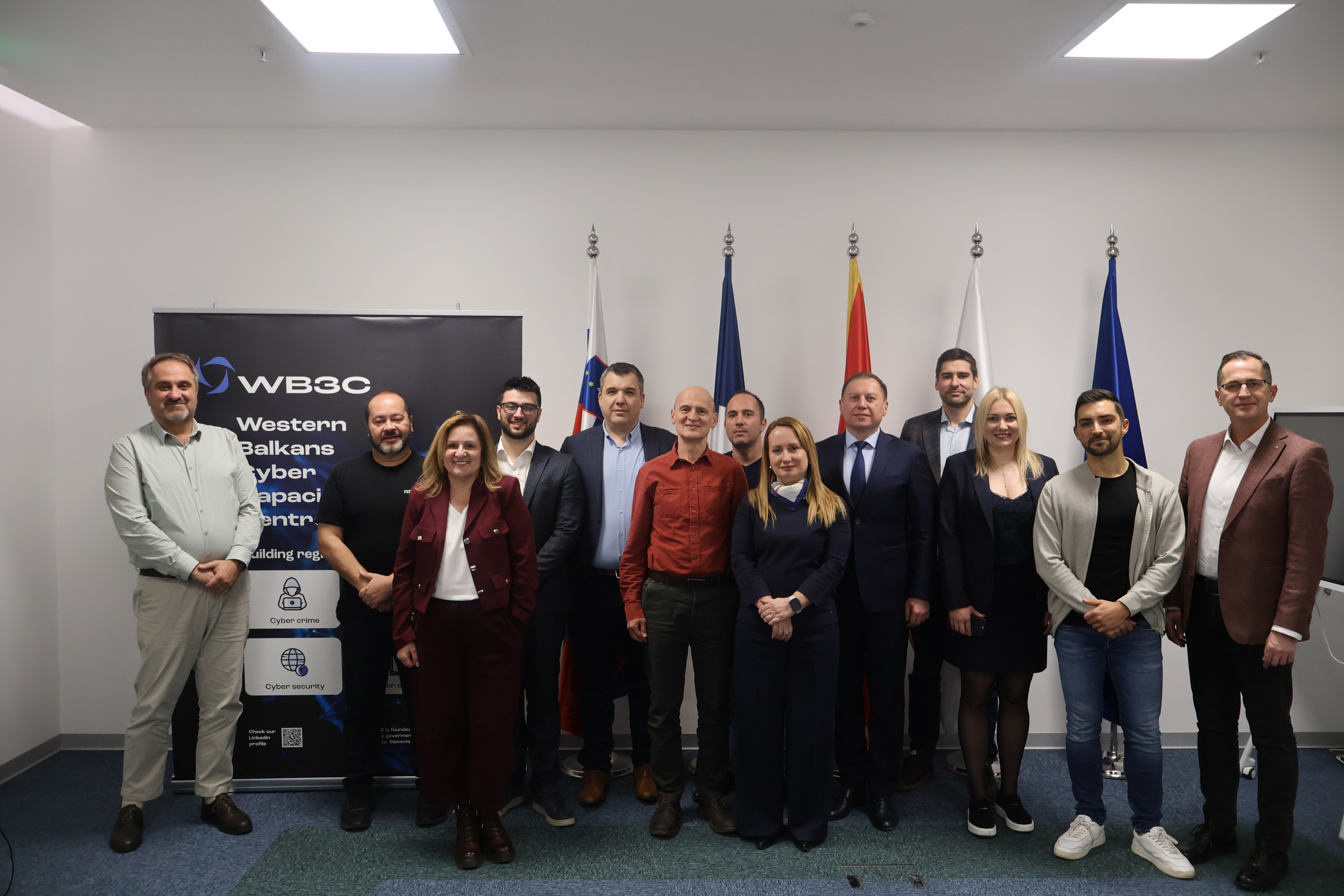
Reflection and Family Photo


DAY 2 – Thursday, 7 May 2026

🕘 09:00 – 09:15 | MORNING BRIEFING AND OPENING REMARKS

Recap & Key Takeaways

Speaker: Ms. Sofia Badari, Programme Manager for Cybersecurity, DG ENEST


🕤 09:15 – 10:15 | PANEL 4

Safeguarding the European Path: Building Resilience in the Western Balkans

Strengthening institutions, defending public trust, and reducing vulnerabilities to foreign interference.

Speakers:

  • Ms. Biljana Papović, State Secretary, Ministry for European Affairs of Montenegro
  • Ms. Natalie Pauwels, Head of the Strategic Coordination and Communication Unit, DG ENEST
  • Mr. Miroslav Sazdovski, Senior Analyst, European Centre of Excellence for Countering Hybrid Threats
  • Ms. Armela Krasniqi, Chairwoman of the Audiovisual Media Authority of Albania

Moderator: Nikoleta Đukanović, PhD, Associate Professor, Faculty for Humanistic Studies, University Donja Gorica


🕤 10:15 – 10:25 | INSIGHT

Election Integrity in the Age of FIMI: Lessons from Election Observation

Speakers: Ms. Jelena Stefanović, MPA, Political and Election Expert, OSCE; Serbia


🕥 10:25 – 11:10 | PANEL 5

Judicial Response to FIMI and Disinformation
From digital evidence to prosecution of FIMI. Strengthening rule of law in the digital space.

Speakers:

  • Ms. Audrey Gerbaud, Deputy Prosecutor at the Paris Judicial Court, Cyber Department J3
  • Mr. Arben Murtezić, PhD, Legal Counsel at the Office of Vice President of the Federation of Bosnia and Herzegovina
  • Ms. Marina Barbir, Judge at Higher Court in Belgrade
  • Mr. Ivan Jokić, Head of Head of the Criminal Intelligence Division at the Police Administration of Montenegro

Moderator: Ms. Ana Bukilić, Programme Manager at IDLO


☕ 11:10 – 11:40 | NETWORKING BREAK


🕦 11:40 – 12:40 | PANEL 6

Media on the Frontline of the Fight Against Disinformation    

How media organisations detect, verify, respond to, and build resilience against disinformation, including AI-generated content with a focus on debunking practices and audience trust.

Speakers:

  • Mr. Nicolas Goinard, Journalist, Ouest-France
  • Mr. Marko Banović, Analyst, Digital Forensic Centre
  • Ms. Adelina Hasani, PhD, Head of Research  at Kosovar Institute for Policy Research and Development (KIPRED)
  • Ms. Sunčica Bakić, Director, Agency for Audio-Visual Media Services of Montenegro

Moderator: Olivera Nikolić, Director of Montenegro Media Institute


🕧 12:40 – 14:10 | INTERACTIVE EXERCISE

War Game: Tabletop Simulation

Mixed country groups with assigned roles. Injects: manipulated video, leaked documents, coordinated hashtags, proxy media, diaspora channels, offline incidents. Participants will test both prebunking and debunking responses under time pressure.

Facilitators:

  • Mr. Ronan Mouchoux, Co-founder and CTO, XRATOR
  • Mr. Nicolas Goinard, Journalist, Ouest-France 


🕑 14:10 – 14:15 | CLOSING REMARKS

Conference Wrap-up 


🍽 14:15 – 15:15 | LUNCH  

✈️ DEPARTURE


Image for Disinformation and Foreign Information Manipulation and Interference Capacity Building Workshops
Upcoming
Disinformation and Foreign Information Manipulation and Interference Capacity Building Workshops

Programme 


📅 30 November – 1 December 2026
📍 Science and Technology Park, Podgorica, Montenegro
🏛️ Conference Hall Unicorn, 2nd floor
 

Context: Building on WB3C’s May 2026 regional conference, these workshops examine how governments, media and other stakeholders can anticipate, prevent and respond to malign information operations. Sessions combine strategic perspectives with practical approaches to threat detection, crisis coordination, reporting and AI-enabled information manipulation. The programme is provisional and still subject to change. 
Audience: Government strategic communications officials, cybersecurity leadership, journalists, media regulators, fact-checkers and civil society organisations.
Working language: English (no simultaneous interpretation).
Chatham House Rule: The workshops will be held under the Chatham House Rule, providing a safe space for an open dialogue.                                               

Funding: The event is organised under the EU-funded project “Improving the resilience of critical entities and the protection of public spaces and cyberspace against security threats in the Western Balkans” (2026–2028). This event is also supported by Poland, Norway, United Kingdom and France, through their diplomatic missions in Podgorica and Belgrade.


DAY 1 – Monday, 30 November 2026


☕ 08:30–09:00  |  ARRIVAL
Registration and welcome coffee


🕘 09:00–09:30  |  OPENING REMARKS
• WB3C
• Ministry for European Affairs of Montenegro
• EU 


🎙️ 09:30–10:00  |  MODERATED POLICY DIALOGUE
Montenegro at the Crossroads: Safeguarding Its Democracy and European Future in an Era of Hybrid Threats
• Biljana Papović — State Secretary, Ministry of European Affairs of Montenegro
• Todor Goranović — Defence and Security Advisor to the Prime Minister of Montenegro

Moderator: Matthew Booth, UK
 

🕘 10:00–10:45  |  EXPERT SESSION
The Agents of Chaos: The Shadow Campaign Against the West
• Maciej Bukowski — Casimir Pulaski Foundation, Poland


☕ 10:45–11:15  |  COFFEE BREAK


🕚 11:15–12:00  |  EXPERT SESSION
From Detection to Decision: How VIGINUM Feeds Government Crisis Management During Hybrid Campaigns
•VIGINUM — France’s service for vigilance and protection against foreign digital interference


🕐 12:00–13:00  |  MODERATED DISCUSSION
The AI Disinformation Battlefield: New Weapons, New Threats, New Defences – and the Fight for Public Trust
• Dr. Raphaël-David Lasseri — Magic LEMP, France
• Henrik Vold — Norwegian Institute of Journalism, Norway
• Eirik Veum — Norwegian Police Security Service (PST), Norway 
 
Moderator: Dr. Ingrid Vik, Director UTSYN, Centre for Security and Resilience, Norway                                                                                                                                                                                                                                                                                                                                                                                                                                                                                                                                  

🍽️ 13:00–14:00  |  LUNCH


🕑 14:00–14:30  |  EXPERT SESSION
Geopolitical shifts and impact on the Western Balkans 
• Jamie Tarabay — Crumpton Global, USA  


🕑 14:30–15:15  |  EXPERT SESSION
Coordination and decision making during an ongoing hybrid assault
• Matthew Booth — FCDO, United Kingdom


🕒 15:15–16:30 |  EXPERT SESSION
Modern Information Warfare: The Global Strategy to Destabilise the Western Balkans
• David Colon — Sciences Po, France


🎤 16:30–17:00  |  QUESTIONS FROM THE AUDIENCE 


DAY 2 – Tuesday, 1 December 2026


🛠️ 08:00–09:30  |  CLOSED WORKSHOP

• David Colon — France
• Matthew Booth — United Kingdom
 

🕙 10:00–12:00  |  ROOM 1: WORKSHOP FOR GOVERNMENT INSTITUTIONS 
From Detection to Institutional Response

• David Colon — Sciences Po, France
• VIGINUM — France  
• Dr. Raphaël-David Lasseri — Magic LEMP, France   

Context: Government institutions may detect suspicious activity without a clear process for assessing significance and mobilising a response.

Objective: Practise moving from initial indicators and analytical findings to an institutional assessment, escalation decision and coordinated response.


🕚 10:00–12:00  |  ROOM 2: WORKSHOP FOR MEDIA AND CIVIL SOCIETY 
Verification of an AI-Amplified Information Operations

• Henrik Vold — Norwegian Institute of Journalism, Norway
• Eirik Veum — Norwegian Police Security Service (PST), Norway 
• Dr. Daniel Schroeder — SINTEF Digital, Norway

Context: Synthetic content, coordinated amplification and misleading claims complicate verification under time pressure.

Objective: Apply verification and source-assessment methods to a simulated information operation, distinguishing evidence, uncertainty and responsible reporting.


☕ 12:00–13:00  |  LUNCH 
 

🧩 13:00–14:30  |  WORKSHOP FOR GOVERNMENT INSTITUTIONS 
Crisis decisions under pressure
• Maciej Bukowski — Casimir Pulaski Foundation, Poland
Practical tabletop exercise.


🧩 13:00–14:30  |  WORKSHOP FOR MEDIA AND CIVIL SOCIETY 
Editorial judgement during a hybrid crises (TBC)
• Jamie Tarabay  — Crumptom Global, USA
Practical tabletop exercise.


🍽️ 14:30–15:00  |  COFFEE BREAK 
 

🛠️ 15:00–16:30  |  PLENARY WORKSHOP 
Government-Media Crisis Coordination Simulation 

• Matthew Booth — FCDO, UK 


DAY 3 – Wednesday, 2 December 2026 


🛠️ Time TBC  |  UNIVERSITY GUEST LECTURES 

• Maciej Bukowski — Casimir Pulaski Foundation, Poland
• Jamie Tarabay — Crumpton Global LLC
University of Donja Gorica, Faculty of Humanities 

NB. To register for the conference please use this LINK or contact vanja.madzgalj@wb3c.org. The number of seats is limited. 

This event will be photographed. Please read our Privacy Policy on the Registration Form. 

To download the programme and the speakers bios, go to the top of the page.
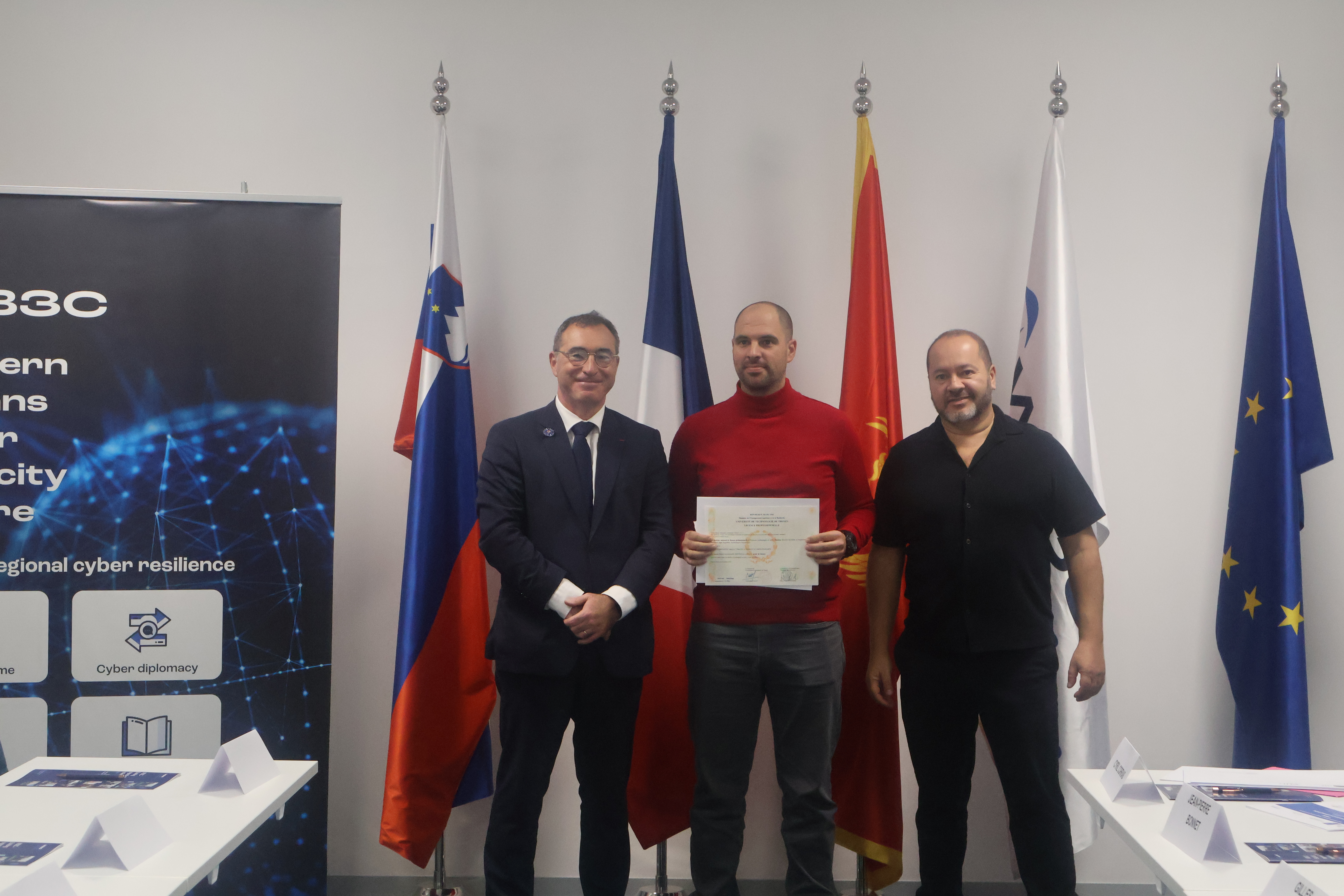
French university diplomas for WB3C’s first generation of Digital Forensics graduates

Last week, WB3C welcomed several graduates of its Digital Forensics programme to formally present them with their French Licence Professionnelle diplomas, issued by the Université de Technologie de Troyes (UTT).
The fourteen graduates successfully completed the programme in June 2026, following intensive academic and practical training over 15 months. Those unable to join us today will receive their diplomas in their respective countries.
Congratulations once again to our graduates, and our sincere thanks to UTT and the French Gendarmerie for their contribution to developing specialised cybercrime investigation capacities across the Western Balkans.
 

From cyber education to cyber careers: bridging the skills, experience and employment gap

Employers struggle to recruit qualified cybersecurity professionals, while university graduates struggle to secure their first professional position, often because even entry-level jobs require prior work experience. How can academia and industry address this apparent contradiction?

On 24 November, the WB3C hosted a regional academic working meeting in to examine this issue.
The discussion covered existing academic capacities, the responsiveness of university curricula to technological developments and labour market needs, and opportunities to integrate professional experience into higher education. Particular attention was given to work-based learning, industry-led academic projects, shared laboratories, practitioner-led teaching, mentoring, academic mobility and brain circulation.
The academic community was represented by:
POLIS University: Blerina Bektashi, PhD Candidate
University of Sarajevo: Prof. Dr Sasa Mrdovic
University of Prishtina: Prof. Dr Blerim Rexha
University of Montenegro: Prof. Dr Savo Tomovic and Dr Andreja Mihailovic, PhD
Ss. Cyril and Methodius University in Skopje / Универзитет „Св. Кирил и Методиј“ во Скопје: Prof. Dr Anastas Mishev
Military Academy “General Mihailo Apostolski” - Skopje: Prof. Dr Dimitar Bogatinov
University of Novi Sad, Faculty of Sciences: Prof. Dr Stevan Gostojić
University of Belgrade: Dr Miloš Vukelić
State University of Information and Communication Technologies, Ukraine: Rector Prof. Dr Volodymyr Shulha and Anastasiia Petrovska, Head of the International Relations Office
@Matteo Rossi, representing Italy’s CINI Cybersecurity National Laboratory, 
Université de Technologie de Troyes: Reza Elgalai and Branko Džakula, representing industry perspective on behalf of ICT Cortex.

The working meeting also explored practical models of public–private partnerships in cybersecurity education.
In 2027, WB3C intends to extend this conversation through a dedicated regional academia–industry policy dialogue, involving employers, universities and relevant public institutions in developing sustainable pathways from education to professional practice.
Our appreciation goes to all participating colleagues for their substantive contributions and openness to further academic cooperation across the region and beyond. 
This event was an opportuntity for our Programme Director Gilles Schwoerer to inctroduce WB3C new Director General Naim M. GJOKAJ who presented his view of future development of young talent.


Copyright © WB3C

Disclaimer: Translations of the original content written in English into other languages are AI generated by Weglot.