
×

French university diplomas for WB3C’s first generation of Digital Forensics graduates

25.11.2026

Image for French university diplomas for WB3C’s first generation of Digital Forensics graduates

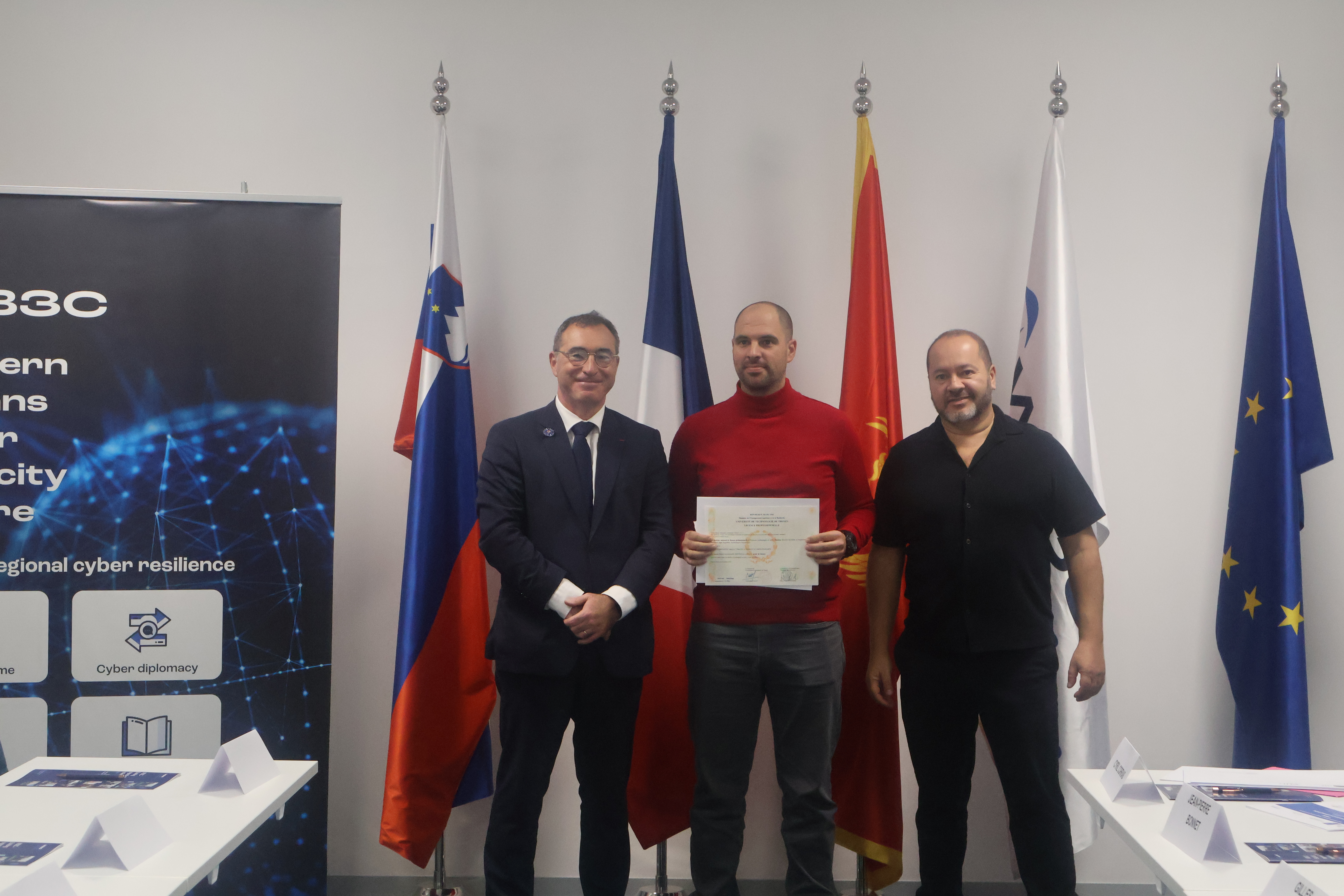
Last week, WB3C welcomed several graduates of its Digital Forensics programme to formally present them with their French Licence Professionnelle diplomas, issued by the Université de Technologie de Troyes (UTT).
The fourteen graduates successfully completed the programme in June 2026, following intensive academic and practical training over 15 months. Those unable to join us today will receive their diplomas in their respective countries.
Congratulations once again to our graduates, and our sincere thanks to UTT and the French Gendarmerie for their contribution to developing specialised cybercrime investigation capacities across the Western Balkans.


Image for Disinformation and Foreign Information Manipulation and Interference Capacity Building Workshops
Upcoming
Disinformation and Foreign Information Manipulation and Interference Capacity Building Workshops

Programme 


📅 30 November – 1 December 2026
📍 Science and Technology Park, Podgorica, Montenegro
🏛️ Conference Hall Unicorn, 2nd floor
 

Context: Building on WB3C’s May 2026 regional conference, these workshops examine how governments, media and other stakeholders can anticipate, prevent and respond to malign information operations. Sessions combine strategic perspectives with practical approaches to threat detection, crisis coordination, reporting and AI-enabled information manipulation. The programme is provisional and still subject to change. 
Audience: Government strategic communications officials, cybersecurity leadership, journalists, media regulators, fact-checkers and civil society organisations.
Working language: English (no simultaneous interpretation).
Chatham House Rule: The workshops will be held under the Chatham House Rule, providing a safe space for an open dialogue.                                               

Funding: The event is organised under the EU-funded project “Improving the resilience of critical entities and the protection of public spaces and cyberspace against security threats in the Western Balkans” (2026–2028). This event is also supported by Poland, Norway, United Kingdom and France, through their diplomatic missions in Podgorica and Belgrade.


DAY 1 – Monday, 30 November 2026


☕ 08:30–09:00  |  ARRIVAL
Registration and welcome coffee


🕘 09:00–09:30  |  OPENING REMARKS
• WB3C
• Ministry for European Affairs of Montenegro
• EU 


🎙️ 09:30–10:00  |  MODERATED POLICY DIALOGUE
Montenegro at the Crossroads: Safeguarding Its Democracy and European Future in an Era of Hybrid Threats
• Biljana Papović — State Secretary, Ministry of European Affairs of Montenegro
• Todor Goranović — Defence and Security Advisor to the Prime Minister of Montenegro

Moderator: Matthew Booth, UK
 

🕘 10:00–10:45  |  EXPERT SESSION
The Agents of Chaos: The Shadow Campaign Against the West
• Maciej Bukowski — Casimir Pulaski Foundation, Poland


☕ 10:45–11:15  |  COFFEE BREAK


🕚 11:15–12:00  |  EXPERT SESSION
From Detection to Decision: How VIGINUM Feeds Government Crisis Management During Hybrid Campaigns
•VIGINUM — France’s service for vigilance and protection against foreign digital interference


🕐 12:00–13:00  |  MODERATED DISCUSSION
The AI Disinformation Battlefield: New Weapons, New Threats, New Defences – and the Fight for Public Trust
• Dr. Raphaël-David Lasseri — Magic LEMP, France
• Henrik Vold — Norwegian Institute of Journalism, Norway
• Eirik Veum — Norwegian Police Security Service (PST), Norway 
 
Moderator: Dr. Ingrid Vik, Director UTSYN, Centre for Security and Resilience, Norway                                                                                                                                                                                                                                                                                                                                                                                                                                                                                                                                  

🍽️ 13:00–14:00  |  LUNCH


🕑 14:00–14:30  |  EXPERT SESSION
Geopolitical shifts and impact on the Western Balkans 
• Jamie Tarabay — Crumpton Global, USA  


🕑 14:30–15:15  |  EXPERT SESSION
Coordination and decision making during an ongoing hybrid assault
• Matthew Booth — FCDO, United Kingdom


🕒 15:15–16:30 |  EXPERT SESSION
Modern Information Warfare: The Global Strategy to Destabilise the Western Balkans
• David Colon — Sciences Po, France


🎤 16:30–17:00  |  QUESTIONS FROM THE AUDIENCE 


DAY 2 – Tuesday, 1 December 2026


🛠️ 08:00–09:30  |  CLOSED WORKSHOP

• David Colon — France
• Matthew Booth — United Kingdom
 

🕙 10:00–12:00  |  ROOM 1: WORKSHOP FOR GOVERNMENT INSTITUTIONS 
From Detection to Institutional Response

• David Colon — Sciences Po, France
• VIGINUM — France  
• Dr. Raphaël-David Lasseri — Magic LEMP, France   

Context: Government institutions may detect suspicious activity without a clear process for assessing significance and mobilising a response.

Objective: Practise moving from initial indicators and analytical findings to an institutional assessment, escalation decision and coordinated response.


🕚 10:00–12:00  |  ROOM 2: WORKSHOP FOR MEDIA AND CIVIL SOCIETY 
Verification of an AI-Amplified Information Operations

• Henrik Vold — Norwegian Institute of Journalism, Norway
• Eirik Veum — Norwegian Police Security Service (PST), Norway 
• Dr. Daniel Schroeder — SINTEF Digital, Norway

Context: Synthetic content, coordinated amplification and misleading claims complicate verification under time pressure.

Objective: Apply verification and source-assessment methods to a simulated information operation, distinguishing evidence, uncertainty and responsible reporting.


☕ 12:00–13:00  |  LUNCH 
 

🧩 13:00–14:30  |  WORKSHOP FOR GOVERNMENT INSTITUTIONS 
Crisis decisions under pressure
• Maciej Bukowski — Casimir Pulaski Foundation, Poland
Practical tabletop exercise.


🧩 13:00–14:30  |  WORKSHOP FOR MEDIA AND CIVIL SOCIETY 
Editorial judgement during a hybrid crises (TBC)
• Jamie Tarabay  — Crumptom Global, USA
Practical tabletop exercise.


🍽️ 14:30–15:00  |  COFFEE BREAK 
 

🛠️ 15:00–16:30  |  PLENARY WORKSHOP 
Government-Media Crisis Coordination Simulation 

• Matthew Booth — FCDO, UK 


DAY 3 – Wednesday, 2 December 2026 


🛠️ Time TBC  |  UNIVERSITY GUEST LECTURES 

• Maciej Bukowski — Casimir Pulaski Foundation, Poland
• Jamie Tarabay — Crumpton Global LLC
University of Donja Gorica, Faculty of Humanities 

NB. To register for the conference please use this LINK or contact vanja.madzgalj@wb3c.org. The number of seats is limited. 

This event will be photographed. Please read our Privacy Policy on the Registration Form. 

To download the programme and the speakers bios, go to the top of the page.
From cyber education to cyber careers: bridging the skills, experience and employment gap

Employers struggle to recruit qualified cybersecurity professionals, while university graduates struggle to secure their first professional position, often because even entry-level jobs require prior work experience. How can academia and industry address this apparent contradiction?

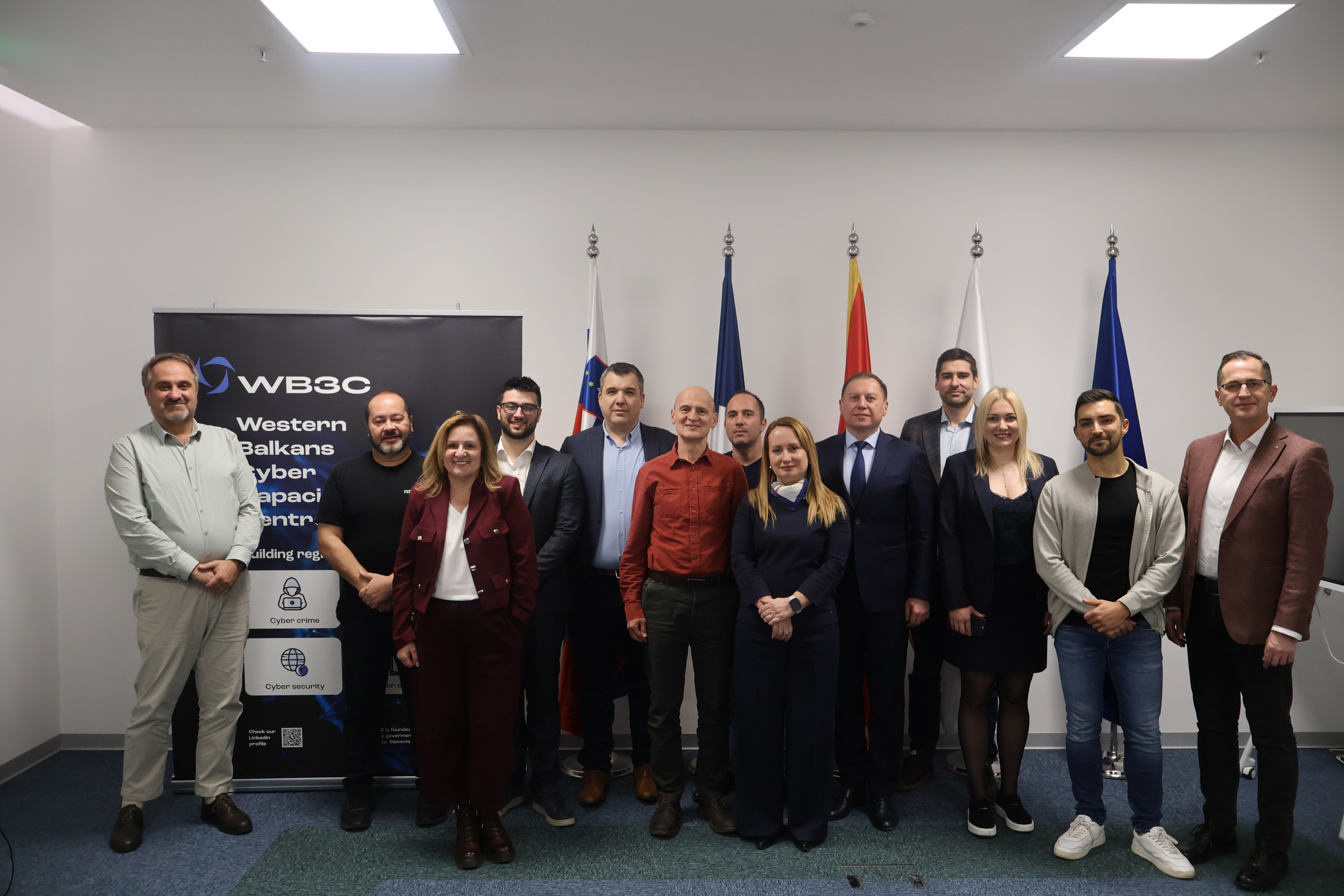
On 24 November, the WB3C hosted a regional academic working meeting in to examine this issue.
The discussion covered existing academic capacities, the responsiveness of university curricula to technological developments and labour market needs, and opportunities to integrate professional experience into higher education. Particular attention was given to work-based learning, industry-led academic projects, shared laboratories, practitioner-led teaching, mentoring, academic mobility and brain circulation.
The academic community was represented by:
POLIS University: Blerina Bektashi, PhD Candidate
University of Sarajevo: Prof. Dr Sasa Mrdovic
University of Prishtina: Prof. Dr Blerim Rexha
University of Montenegro: Prof. Dr Savo Tomovic and Dr Andreja Mihailovic, PhD
Ss. Cyril and Methodius University in Skopje / Универзитет „Св. Кирил и Методиј“ во Скопје: Prof. Dr Anastas Mishev
Military Academy “General Mihailo Apostolski” - Skopje: Prof. Dr Dimitar Bogatinov
University of Novi Sad, Faculty of Sciences: Prof. Dr Stevan Gostojić
University of Belgrade: Dr Miloš Vukelić
State University of Information and Communication Technologies, Ukraine: Rector Prof. Dr Volodymyr Shulha and Anastasiia Petrovska, Head of the International Relations Office
@Matteo Rossi, representing Italy’s CINI Cybersecurity National Laboratory, 
Université de Technologie de Troyes: Reza Elgalai and Branko Džakula, representing industry perspective on behalf of ICT Cortex.

The working meeting also explored practical models of public–private partnerships in cybersecurity education.
In 2027, WB3C intends to extend this conversation through a dedicated regional academia–industry policy dialogue, involving employers, universities and relevant public institutions in developing sustainable pathways from education to professional practice.
Our appreciation goes to all participating colleagues for their substantive contributions and openness to further academic cooperation across the region and beyond. 
This event was an opportuntity for our Programme Director Gilles Schwoerer to inctroduce WB3C new Director General Naim M. GJOKAJ who presented his view of future development of young talent.

From international support to sustainable national cybersecurity capabilities

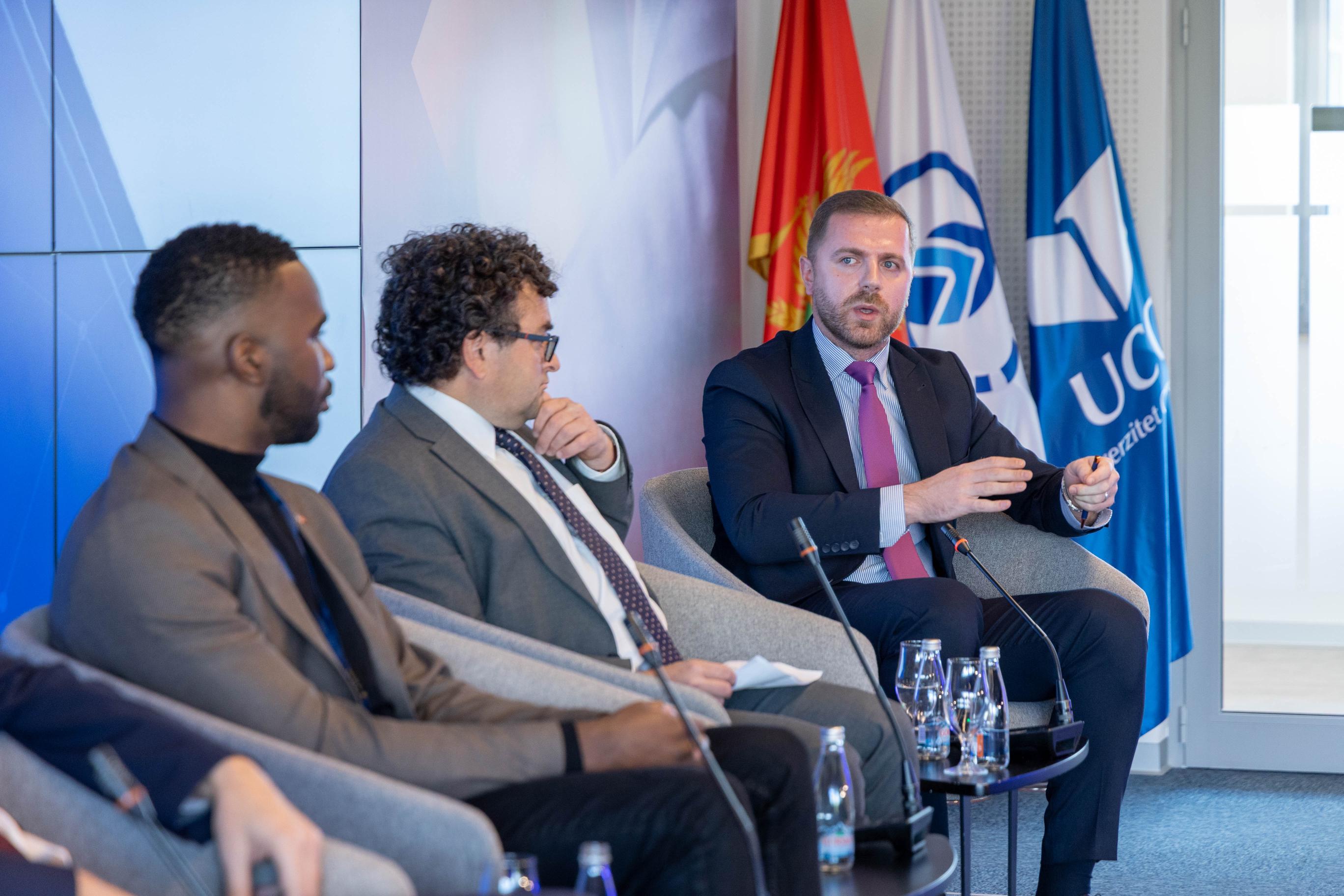
How can international cooperation help Montenegro and the Western Balkans build cybersecurity capabilities that last? This was the central question of a panel discussion at the 7th Regional Cyber Security Conference, organised by NGO Secure. The discussion explored the strategic value of international partnerships, the challenges of translating assistance into lasting institutional capabilities, and the region's role in wider European and transatlantic security. Two themes stood out: national ownership and succession planning — both essential to ensuring that expertise and capacities remain within institutions beyond individual projects and external support.
Naim M. GJOKAJ, Director General of the Western Balkans Cyber Capacity Centre (WB3C), presented his vision for the Centre's next phase of development. He highlighted WB3C's role in connecting regional institutions with international expertise and partners, while placing greater emphasis on long-term capacity development, practical cooperation and responses tailored to national needs. With countries across the region facing different levels of institutional readiness and shortages of specialised personnel, WB3C has an important role in helping them move beyond individual training activities towards more sustainable capabilities and stronger regional cooperation.
The panel brought together Miloš Nikolić, Director General for NATO and Security Policy at Montenegro's Ministry of Foreign Affairs; Christian Middleton, Security Advisor to Montenegro's Ministry of Defence, U.S. Embassy; and Daniel Putík, Chargé d'Affaires of the Embassy of the Czech Republic in Montenegro. The discussion was moderated by Vanja Madzgalj MBE Madžgalj, WB3C Senior Project Manager.
Our thanks to NVO Secure for the invitation and for providing a valuable forum for dialogue among national institutions and international partners working to strengthen cybersecurity across the region.


Copyright © WB3C

Disclaimer: Translations of the original content written in English into other languages are AI generated by Weglot.