×

Launching Our First EU-Funded Project

05.05.2026

Image for Launching Our First EU-Funded Project

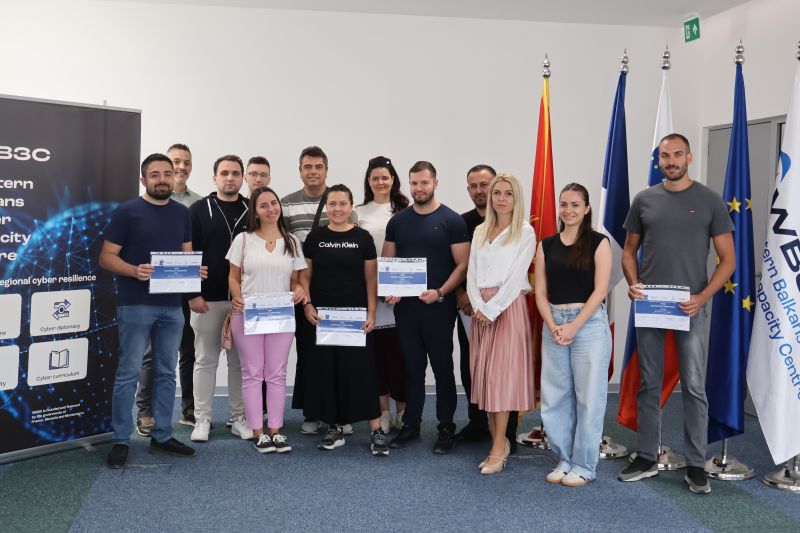
On 5 May 2026, we kicked off our first EU-funded project at WB3C in Podgorica — “Improving the Resilience of Critical Entities and the Protection of Public Spaces and Cyberspace against Security Threats in the Western Balkans.”
The project is focused on strengthening the resilience of critical entities, public spaces and cyberspace across the region by bringing together two complementary components — one centred on cyber capacity building, and the other on the legal and institutional frameworks for protection of critical infrastructure.
The WB3C component focuses on people and practice. Over the next three years, it will deliver targeted training, mentoring and technical support in cybersecurity, cybercrime and cyber diplomacy — with a strong emphasis on applied skills, operational readiness, and cooperation between institutions.
In parallel, the CEPS component, led by CIVIPOL in cooperation with the Ministries of Interior of France, Italy, Croatia and Greece, works on strengthening legal alignment, institutional frameworks and regional coordination mechanisms for the protection of critical entities and public spaces.
The two components are implemented as distinct programmes, but intersect where it matters most — particularly in strengthening the capacities of technical teams responsible for critical infrastructure, where policy, systems and operational response come together.
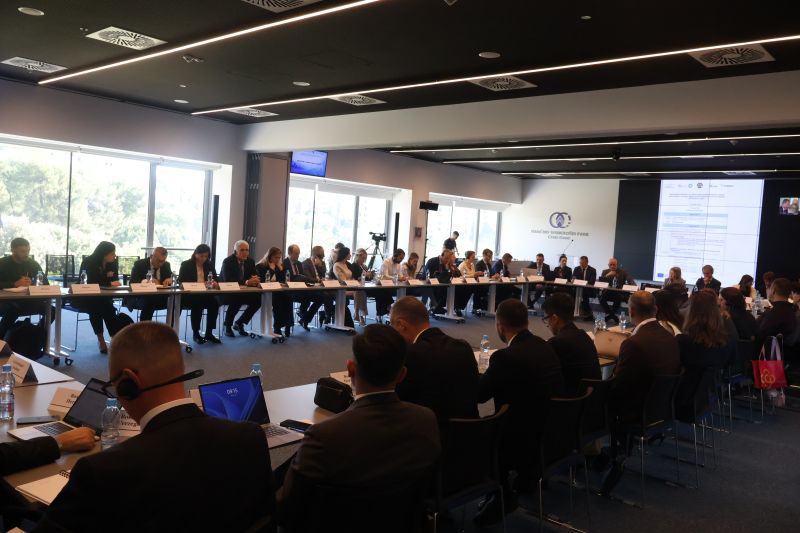
The kick-off brought together partners from Albania, Bosnia and Herzegovina, Kosovo*, Montenegro, North Macedonia and Serbia, alongside EU institutions and implementing partners, with over 60 participants representing key ministries and institutions.
Participants were welcomed by the European Union, Civipol as project operator, partner countries, WB3C, and Montenegro as host. The session participants were welcomed by H.E. Anne-Marie Maksay, French Ambassador to Montenegro, Amin Boutaghane, the team leader who presented the CEPS component, Sofia Badari (DG ENEST) who gave the EU perspective, Gilles Schwoerer who introduced WB3C’s programme and Aleksandar Zečević of the Ministry of Public Administration, who welcomed participants on behalf of the Government of Montenegro.
For WB3C, this marks an important step — our first EU grant and a clear signal of trust in the role we are building as a regional platform.

The kick-off event provided an opportunity for complementary donors and partners to present their initiaitves including European Union Agency for Cybersecurity (ENISA), e-Governance Academy, Integrative Internal Security Governance (RCC IISG) and the Council of Europe.


Certified Data Protection Officer training,

This week, 26-28 May 2026, we organized the Certified Data Protection Officer training, a three-day regional programme for public servants involved in the implementation, supervision and monitoring of data protection measures across governmental and public sector institutions.

Data protection is a key part of digital trust. As public services become more digital and interconnected, institutions need the capacity to protect personal data, strengthen compliance, and ensure that citizens’ rights are respected in practice.

For the Western Balkans, this training is especially relevant. Strong data protection frameworks support better public administration, safer digital services, responsible data use and closer alignment with European standards. They also help institutions move beyond formal compliance and towards a more practical, people-centred approach to privacy and accountability.

Over the next three days, participants will work through the key pillars of data protection practice:

Organisational governance — understanding roles, responsibilities and internal accountability
Customer-centric compliance — applying data protection principles in services and institutional processes
People-focused rights and responsibilities — strengthening the protection of individuals and supporting responsible decision-making

The course combines theory with practical exercises, peer exchange, group work and interactive simulations. Participants will work in small groups using a mock organisation aligned with their institutional context, allowing them to apply lessons to realistic public-sector scenarios.

The training is also designed as a certification programme, with short daily quizzes and final certification based on the average score across all three days.

By investing in Data Protection Officer capacities, WB3C is supporting the development of a stronger regional professional network — one that can help institutions protect personal data, build public trust and embed data protection into everyday governance. Big thank you to our trainers Blerta Xhako, Stella Manga Chesnay and Stefano Leucci.

Curtesy Visit by the Norwegian Ministry of Foreign Affairs

WB3C pleased to welcome a delegation of the Kingdom of Norway for a courtesy visit and exchange on possible areas of future cooperation.
The visit was an opportunity to present WB3C’s work as a regional platform for cybersecurity, cybercrime and cyber diplomacy, and to discuss how practical capacity-building can support resilience, institutional cooperation and the European path of the Western Balkans.
We were honoured to receive Mr Eirik Nestås Mathisen, Special Envoy for the Western Balkans at the Norwegian Ministry of Foreign Affairs, together with Ms Anita Krokan, Special Adviser at the Norwegian Ministry of Foreign Affairs, Colonel Dag-Magne Lunde, Defence Attaché of the Kingdom of Norway, Mrs. Ingrid Vik from the Norwegian NGO UTSYN and Mr Rajko Radevic, Adviser at the Norwegian Ministry of Defence, who were welcome by our programme lead Gilles Schwoerer.
Norway has long been a valued partner to the region, with a strong understanding of security, governance and resilience challenges in the Western Balkans. We look forward to continuing the dialogue and exploring concrete ways to work together in the period ahead.

Cyber Vigilance for Children - Session 2

Cyber vigilance starts with very simple questions.
❓ What do we share online?
❓Who can see it?
❓When is screen time too much?
❓What should we do if something online feels strange, scary or unkind?

Yesterday, WB3C held a second session on Cyber Vigilance for Children for the French School in Podgorica, this time with the youngest age group, children aged 7 to 10.
The session, prepared and delivered by Cyril CORRIAS and Yannick CASSE, WB3C cybercrime trainers, introduced children to the basics of safer and healthier digital habits in a way they could understand, discuss and remember.
Together, they explored screen time, passwords, privacy, online behaviour, social media, bullying, and the importance of speaking to a trusted adult when something does not feel right.
The morning ended with a group-game questionnaire and the awarding of an individual Internet License — a small certificate, but with a meaningful message: being online also means learning how to be careful, kind and responsible.
At this age, cyber education is not about fear. It is about giving children confidence, language and instincts that can protect them as their digital world grows.


Copyright © WB3C

Disclaimer: Translations of the original content written in English into other languages are AI generated by Weglot.