×

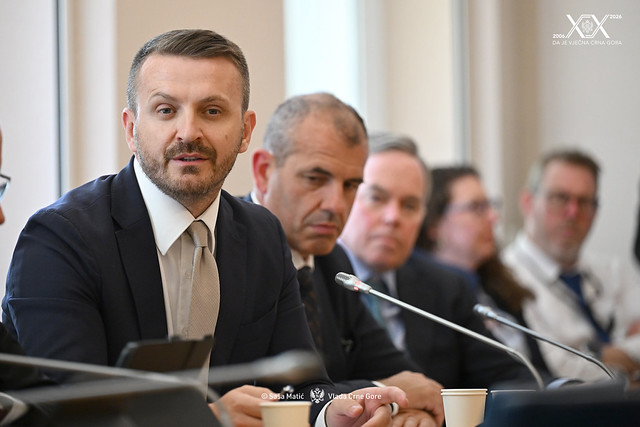
WB3C and Regional Ministers participate in a Round Table at the French Senate

01.06.2026

Image for WB3C and Regional Ministers participate in a Round Table at the French Senate

How do we build cyber resilience in a region facing accelerating digital transformation, growing geopolitical pressures and an increasingly complex threat landscape?
This was the central question of the high-level round table hosted at the French Senate as part of the Western Balkans Ministerial Visit to the Paris Cyber Summit organized jointly by WB3C and the Ministry of Public Administration of Montenegro.
Bringing together ministers and senior government representatives from across the Western Balkans, the discussion highlighted a new reality: besides protecting networks and critical infrastructure, cybersecurity is critical for protecting our democracy and society as a whole, our institutions, economic development, public trust and our European future.
Opening the discussion, Senator Olivier Cadic framed cybersecurity as a challenge of "permanent threat", ranging from cyberattacks and ransomware to foreign information manipulation and interference. He also reaffirmed France's strong support for the European future of the Western Balkans.
Gilles Schwoerer presented WB3C's role in strengthening regional cyber capacities, operational cooperation and interoperability, while Vanja Madzgalj MBE, as the moderator of the discussion, set the strategic context around digitalisation, geopolitics and EU accession.
While each country brought its own perspective, several common themes emerged. Minister Marash Dukaj stressed the importance of turning legislative alignment into operational readiness. Minister Lulezon Jagxhiu highlighted secure digitalisation and regional cooperation. Minister Stefan Andonovski emphasised implementation and stronger integration into European digital initiatives, while Deputy Minister Enkelejda Muçaj shared lessons learned from Albania's experience following the 2022 cyberattacks.
The strongest takeaway was clear: alignment with European standards remains essential, but resilience ultimately depends on operational preparedness, trusted partnerships and the ability to act together when incidents occur.
Equally clear was the message that the Western Balkans are ready not only to receive support, but to contribute actively to Europe's collective security. A secure Western Balkans means a more secure Europe. The round table was attended by 50 policy makers and industry leaders from around the world.

Our sincere thanks to Senators Olivier Cadic and Ludovic HAYE, Sébastien Garnault and the Paris Cyber Summit team and to the Ministry of Public Administration of Montenegro for joining WB3C in the initiative to convene and lead this important regional engagement ahead of the EU–Western Balkans Summit tomorrow. We also thank DG ENEST and Regional Cooperation Council (RCC) for joining us in Paris.


The First Generation of Digital Forensics Specialists Graduates at WB3C with International Diplomas

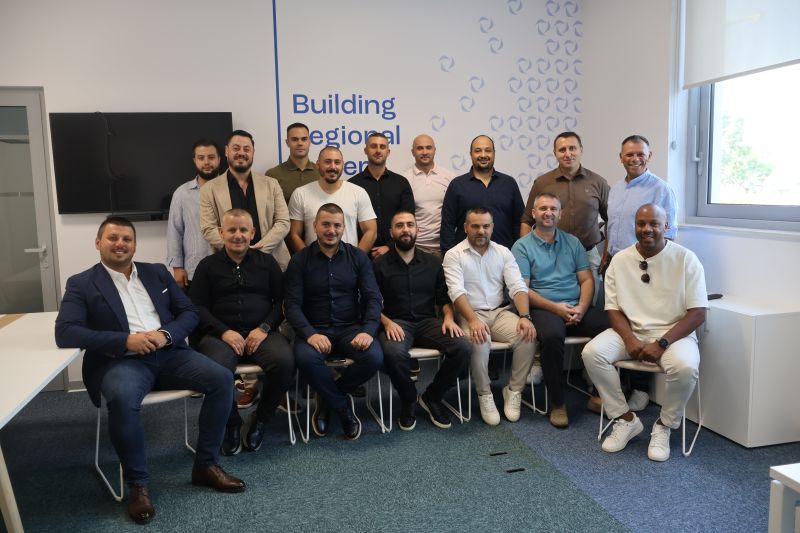
Fourteen police investigators from five countries across the region obtained a university qualification in digital forensics and cybercrime investigations, while their institutions received specialised equipment worth €150,000.

Fourteen police investigators from Albania, Bosnia and Herzegovina, Kosovo*, Montenegro and Serbia have successfully completed the first university-level Digital Forensics programme organised by the Western Balkans Cyber Capacity Centre (WB3C) in partnership with the University of Technology of Troyes (UTT), one of France's leading public higher education institutions in technology, engineering and cybersecurity.

The graduation ceremony marked the completion of an intensive educational programme that ran from February 2025 to May 2026, combining academic instruction, practical training, independent research and thesis development. The programme represents the first university qualification of its kind organised by WB3C and one of the region's most significant initiatives aimed at strengthening law enforcement capacities to combat high-tech crime.


The French Training Model Brought to WB3C Classrooms

A unique feature of the programme is that it is based on the original N'Tech Investigator curriculum developed by the French Gendarmerie for the training of its own high-tech crime investigators.

The curriculum has been used for years within French police and gendarmerie structures and was transferred in its entirety to WB3C classrooms, enabling participants from the Western Balkans to follow the same course content, methodology and practical exercises as investigators in France.

The programme was delivered in cooperation with the University of Technology of Troyes (UTT), which oversees the academic component and is recognised as one of France's leading centres for education and research in digital forensics, cybercrime and technological solutions for law enforcement.  


1,400 Hours of Training and 60 ECTS Credits

Throughout the programme, participants completed approximately 1,400 hours of theoretical and practical instruction, corresponding to 60 ECTS credits, equivalent to one full academic year of study.

The curriculum covered:

  •          Digital forensics and preservation of electronic evidence;
  •          Cybercrime investigations and legal aspects of digital investigations;
  •          OSINT and CyberPatrol methodologies;
  •          Computer networks, programming and data analytics;
  •          Information security;
  •          Cybercrime psychology;
  •          Investigative methodologies;
  •          Analysis of electronic communications and digital traces.

Particular emphasis was placed on practical work involving real investigative scenarios and the use of specialised forensic tools routinely employed by cybercrime units.


Successful Defence of Final Theses

At the conclusion of the programme, all participants sat for a final examination and defended their professional theses before a panel composed of French professors and instructors involved in programme delivery.

All 14 participants successfully defended their theses and obtained the Professional Bachelor License qualification awarded by the University of Technology of Troyes, demonstrating the high level of expertise and commitment they maintained throughout the fifteen-month programme.

The qualification they earned is internationally recognised and certifies specialised knowledge in digital forensics and cybercrime investigations.


€150,000 Donation of Digital Forensics Equipment

To ensure that newly acquired knowledge can be immediately applied in operational work, WB3C donated specialised digital forensic equipment worth €150,000 to the high-tech crime units from which the graduates originate.

The donation includes:

  •          Data extraction licences;
  •          Write-blocker devices used to preserve the integrity of digital evidence;
  •          High-performance computers for forensic analysis;
  •          Equipment for the storage and analysis of digital evidence;
  •          Additional specialised forensic tools and accessories.

This represents the first equipment donation made by WB3C since its establishment.


Bojan Miranović, on Behalf of the Police Administration of Montenegro: Knowledge, Equipment and Cooperation Are Key to Successfully Combating Cybercrime

The ceremony was attended by Bojan Miranović, Head of the Unit for Combatting High-Tech Crime at the Police Administration of Montenegro, whose officers were among the programme participants.

Addressing the graduates, Miranović emphasised that the programme represents a strategic investment in strengthening the capacities of law enforcement agencies across the region to detect, document and prosecute cybercrime.

He stressed that modern threats require highly specialised expertise, continuous professional development and access to advanced tools, noting that the combination of quality training and appropriate equipment enables law enforcement agencies to respond effectively to growing challenges in the digital domain.

He also highlighted the importance of regional cooperation fostered through the programme, underlining that cybercrime does not recognise national borders and that professional networks, mutual trust and direct communication among investigators are essential for successful international investigations.


French Expertise for a Safer Region

The programme was delivered by French professors, experts and practitioners, including Reza El Galai, UTT's leading expert in digital forensics and cybercrime investigations; Marc Terouanne, specialist investigator in new technologies and cybercrime; and Ljuban Petrović, a digital forensics and cybersecurity expert with international experience gained in Germany, including work with Siemens.

By combining the academic excellence of the University of Technology of Troyes with the operational experience of the French Gendarmerie, the programme provided participants with access to the latest methodologies, techniques and tools used by some of Europe's most advanced cybercrime investigation systems.


WB3C Supporting the Region's Cyber Resilience

For WB3C and its partners, the programme demonstrates that long-term investment in education, equipment and international cooperation creates sustainable capacities that contribute to a safer digital environment and a stronger institutional response to cyber threats.

The programme is of particular importance to the Western Balkans in the context of the region's European integration aspirations, as it contributes to strengthening law enforcement capacities and raising cyber resilience levels necessary for alignment with European security standards, combating cybercrime, and fulfilling obligations under Chapter 24, while supporting the region's integration into the broader European security and cyber ecosystem.


Key Facts

  •          Programme: Digital Forensics for Police Investigators
  •          Organisers: WB3C and the University of Technology of Troyes (UTT), France
  •          Duration: February 2025 – May 2026
  •          Training Volume: Approximately 1,400 hours
  •          Academic Value: 60 ECTS credits
  •          Number of Graduates: 14
  •          Participating Countries: Albania, Bosnia and Herzegovina, Kosovo*, Montenegro and Serbia
  •          Value of Equipment Donation: €150,000
  •          Significance: The first university-level Digital Forensics programme organised by WB3C and the first equipment donation made by the Centre.


* This designation is without prejudice to positions on status and is in line with UNSCR 1244 and the ICJ Opinion on the Kosovo Declaration of Independence.


Visit of the French National Assembly to WB3C

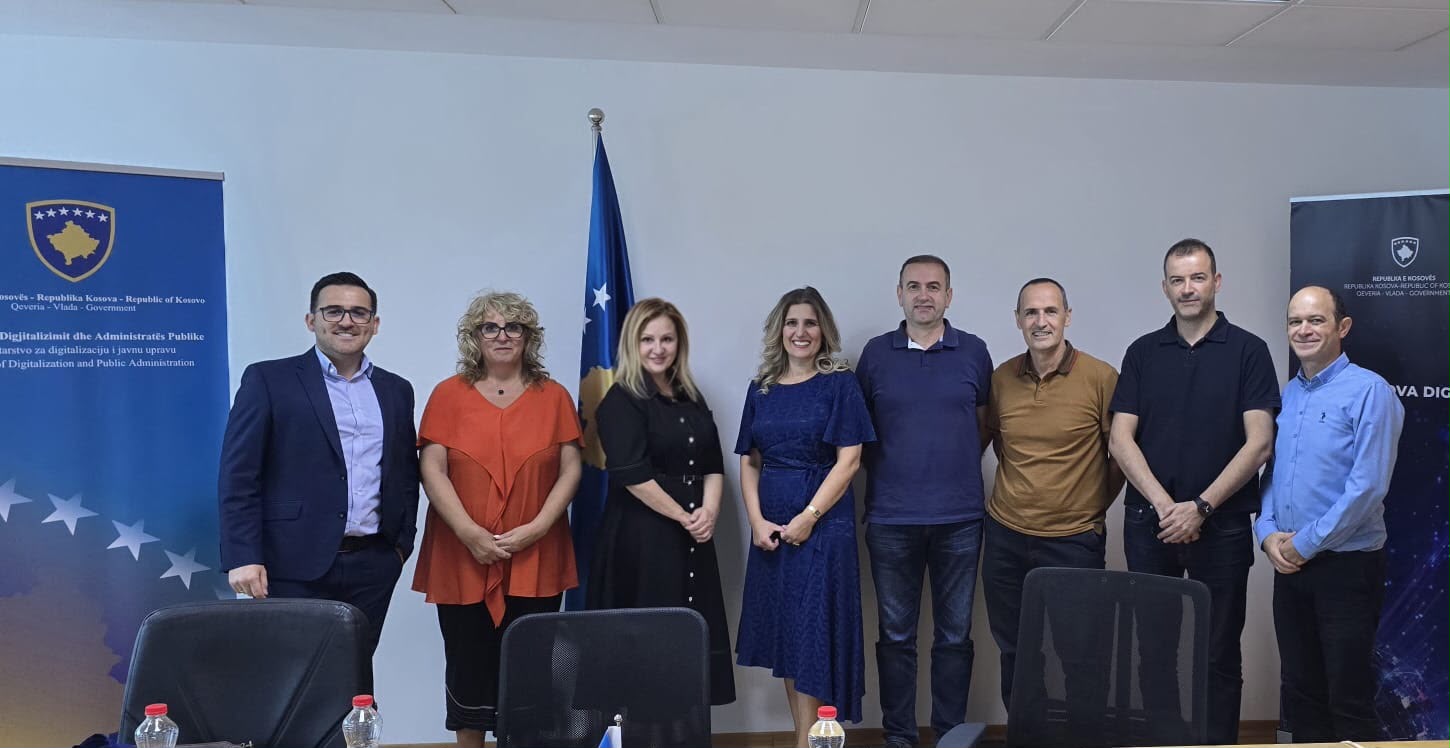
Amid an intensive period of Franco-Montenegrin exchanges, the Western Balkans Cyber Capacity Centre (WB3C) had the pleasure of welcoming a delegation of the French Assemblée nationale during their official visit to Montenegro.
The delegation was led by Mr Pieyre-Alexandre Anglade, Member of Parliament and Chair of the European Affairs Committee of the French National Assembly, and included Ms Manon Bouquin, MP and Vice-Chair of the Committee; Mr Laurent Mazaury, MP and Vice-Chair of the Committee; Mr Pascal LECAMP, MP; Mr Charles Sitzenstuhl, MP; Mr Romain L., adviser to Mr Anglade; and Mr Christophe Lescot, Head of the Secretariat of the European Affairs Committee. The delegation was accompanied by H.E. Anne-Marie Maskay, Ambassador of France to Montenegro, and Mr Théo Basely, Political Attaché.
On behalf of WB3C, Mr Naim M. GJOKAJ and Mr Gilles Schwoerer welcomed the delegation, presented the Centre’s mission and work, and guided them through WB3C’s facilities.
Mr Schwoerer recalled the recent Western Balkans ministerial visit to Paris, which included participation in the Paris Cyber Summit, a high-level round table at the French Senate , and a visit to Campus Cyber. This initiative helped place the Western Balkans more firmly within the broader European and global discussion on persistent cyber and hybrid threats, particularly at a critical moment for the region, marked by upcoming electoral cycles and Montenegro’s final phase of EU accession negotiations.
Mr Gjokaj presented the context in which WB3C was established, its regional mandate, and its strategic objectives for strengthening cyber resilience across the Western Balkans. Mr Schwoerer provided further insight into WB3C’s programme delivery model and its cooperation with beneficiaries, donors, and partners on the ground.
The visit reaffirmed the importance of the Franco-Montenegrin partnership and of parliamentary dialogue in advancing the region’s cyber resilience, European integration, and readiness to respond collectively to evolving digital and hybrid threats.

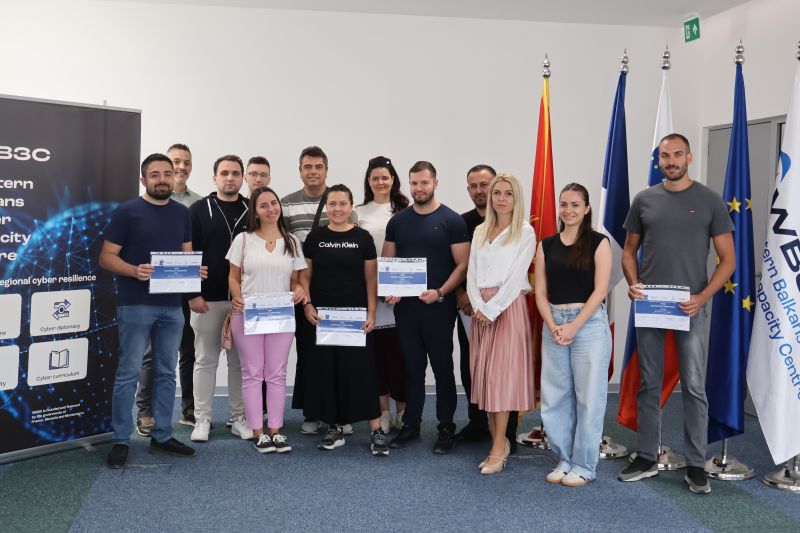
Third intensive 2-week session of Cybersecurity Diploma Programme completed in June.

The Western Balkans Cyber Capacity Centre (WB3C), in partnership with the Université de Technologie de Troyes (UTT), is currently delivering its second university-level programme, this time for advanced ICT students from across the Western Balkans, following the successful completion and graduation of the first generation of Digital Forensics specialists earlier this month.

Launched in February 2026, the Cybersecurity University Diploma Course is structured as a year-long programme, combining intensive classroom sessions with independent work, supervised projects and professional placements later on. It is designed to contribute to the long-term development of a skilled cybersecurity workforce across the region.

We have just concluded a two-week intensive session which focused on audit and penetration testing, covering established methodologies, reconnaissance techniques, the use of specialised tools, and structured reporting. The approach combines theoretical grounding with hands-on laboratories, case studies and simulation exercises, in line with the programme’s emphasis on practical competencies .
Beyond the immediate training, the programme is structured to align skills development with operational needs — preparing participants for roles across cybersecurity operations, incident response, auditing and related fields.

The group will continue with two further intensive blocks in September and November, after which participants will move into individual project work and final examinations. Upon successful completion, they will obtain an internationally recognised diploma, opening pathways into some of the most in-demand entry-level roles in cybersecurity.

By building on the Digital Forensics programme and expanding into broader cybersecurity domains, WB3C is progressively establishing a coherent academic track that supports sustainable workforce development and regional resilience.


Copyright © WB3C

Disclaimer: Translations of the original content written in English into other languages are AI generated by Weglot.