×

WB3C at the Regional Cybersecurity Workshop in Tirana, Albania

04.11.2024

Image for WB3C at the Regional Cybersecurity Workshop in Tirana, Albania

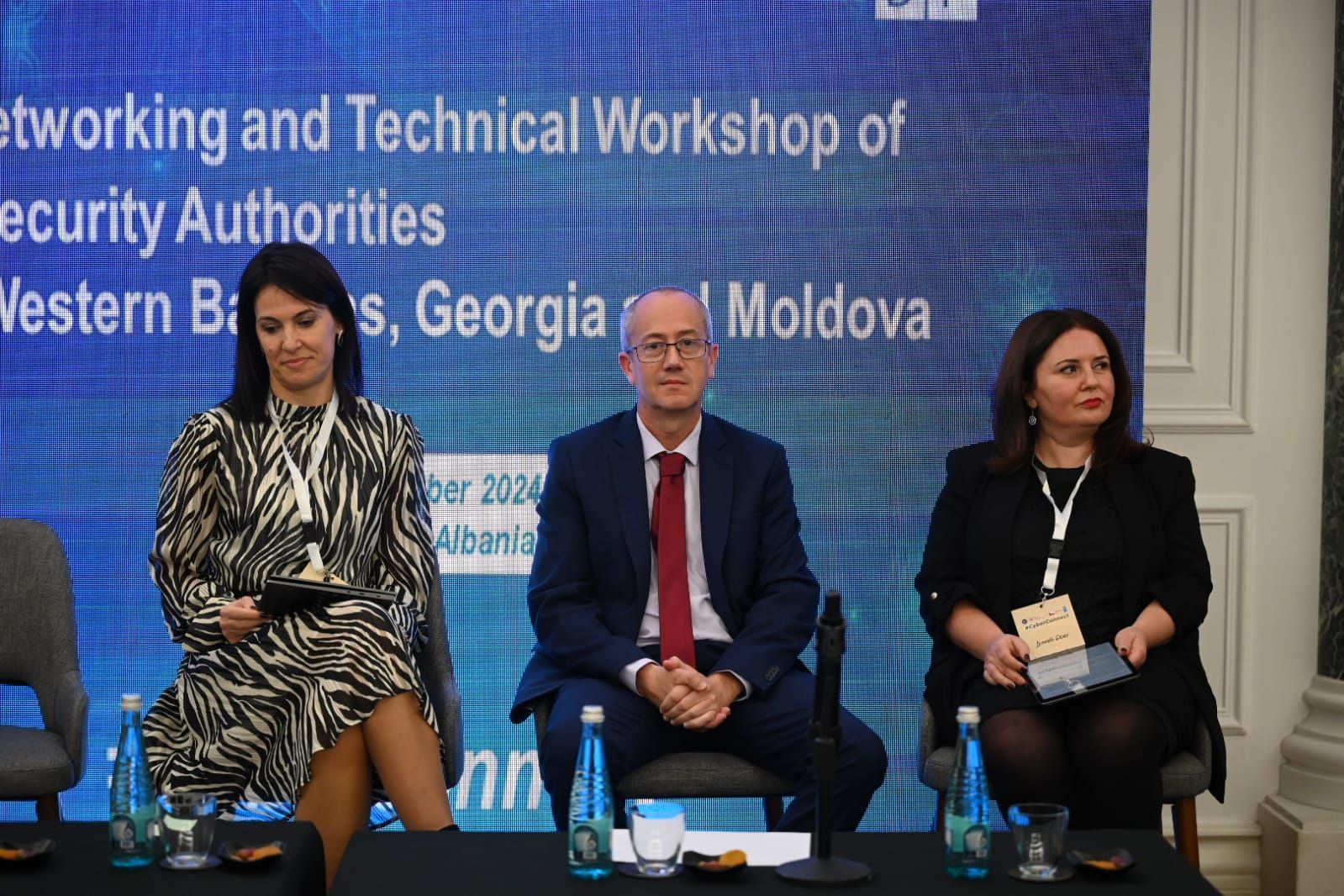
Western Balkans Cyber Capacity Centre (WB3C) is participating at the First Networking & Technical Workshop on Cybersecurity, organized by UNDP, the Albanian Cybersecurity Authority, and partners from Slovakia 🇸🇰 and Czech Development Agency - CzechAid 🇨🇿. Representing WB3C, our Programme Director, Yannick Casse, contributed to a panel discussion on our role in strengthening cyber resilience across the Western Balkans.
The event, which brings together cybersecurity agencies from the Western Balkans, Georgia and Moldova, emphasizes the importance of regional cooperation to confront evolving digital threats. Mr Casse highlighted WB3C’s initiatives, from capacity-building to policy alignment, all aimed at fostering a secure digital environment in line with EU standards.

Key discussions included:
👉 Cybersecurity Policy & Strategy: Setting up a Cybersecurity Cooperation Network (CCN) for enhanced regional intelligence-sharing and coordinated responses. 
👉 Human Element in Cybersecurity: Addressing vital training needs to reduce risks stemming from human error. 
👉 EU Cyber Alignment: Aligning cybersecurity strategies with EU regulations—a crucial milestone for the region’s digital security ambitions.

We look forward to continued collaboration with our regional partners in building a resilient and secure cyber space!


Second Cybersecurity Diploma Prep Course Completed

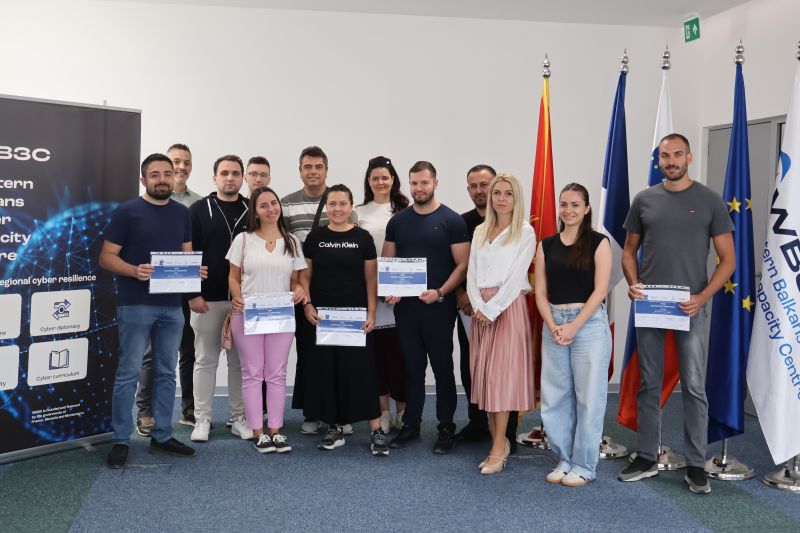
Our second Prep Course cohort (December) led by Ljuban Petrovic just finished two intense weeks of learning, practice and assessment. These ICT students showed up with curiosity and ambition to build their future career in cybersecurity field.

Now, the bigger picture:

We’ve completed two Prep Course cohorts (November + December), with 18 students in total from the Western Balkans. They have already taken the final test, and the final selection will be made in January for the free Cybersecurity University Diploma starting in February 2026, delivered by WB3C in cooperation with the Université de Technologie de Troyes (UTT).

What makes this course unique is that it’s not “just another training.” It’s a real academic pathway that helps students build lasting qualifications and it sits alongside our year round short courses as part of a wider talent strategy.

What this diploma prepares students for (entry roles):
🛡️ Security Administrator
đź§  SOC Analyst (Junior)
đź§Ş Junior Penetration Tester
🔍 Digital Forensics Technician
âś… Cybersecurity Auditor (Junior)

What happens next:

📝 January: final selection
🎓 February 2026: one-year long diploma course starts

Our cooperation with universities is an investment in long-term cybersecurity workforce development and we have more plans for the future how to make these courses available to more people in the region.

Governing Commercial Cyber Intrusion Capabilities (CCICs)

Today, December 12th, the Western Balkans Cyber Capacity Centre (WB3C) had the pleasure to host a training on Governing Commercial Cyber Intrusion Capabilities (CCICs). 
Organized by the Ministère des Affaires Ă©trangères français and implemented by Expertise France in the framework of a European Commission subvention under the Multi-Partner Contribution Agreement (MPCA) on Cyber and Artificial Intelligence, this training gathered diverse actors involved in the cybersecurity landscape of the Western Balkans region such as diplomats, magistrates and law enforcement officers to discuss the growing challenge posed by the proliferation and irresponsible use of CCICs. 

Throughout the day, participants deep dived into the characteristics of the CCICs market and exchanged the need for strong governance frameworks:
1)     Assessing the threat and current trends in the global cyber intrusion market.
2)     Decoding the Pall Mall Process: ensuring government responsible use of commercial cyber intrusion capabilities.
3)     National CCIC governance frameworks: sharing of national experiences and identifying challenges and guidance.

Complementary to the other WB3C trainings, this workshop has contributed to advancing responsible governance of CCICs and strengthening accountability in the cyber domain. We thank the speakers MahĂ© Dersoir (Ministère des Affaires Ă©trangères français), Robert Pellow (Foreign, Commonwealth and Development Office), James Shires and Lena Riecke for their precious contributions and expertise in the subject. 
Moreover, we thank all participants for their active engagement and constructive exchanges, which are essential to continuously improve our collective understanding and oversight of CCICs. 
We are grateful to our local partners Davide Meinero, PhD of the EU Delegation to Montenegro, Melanie Moffat of the British Embassy, Bertrand Baucher of the French Embassy and Gilles Schwoerer, Head of WB3C for supporting this initiative.

Darkweb, Crypto and OSINT Training for Police Academy Montenegro

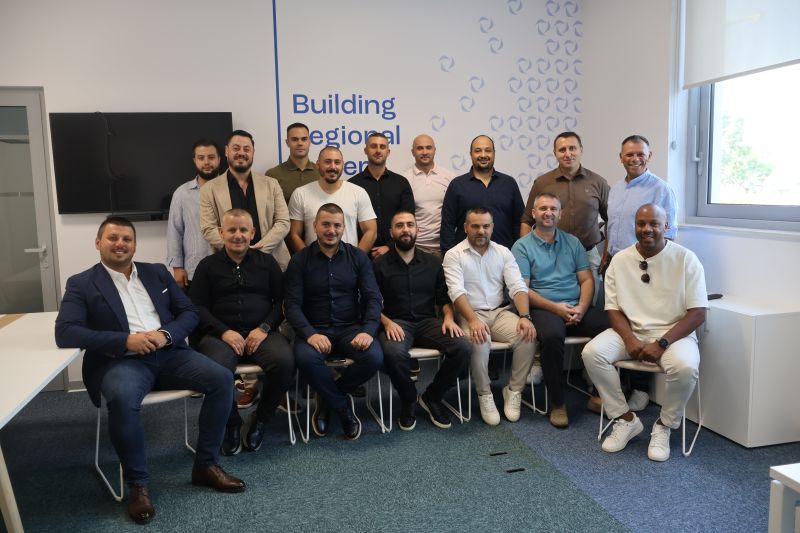
Today, we are starting the third cycle of our specialized cybercrime training for 11 new cadets from the Police Academy of Montenegro. This ongoing initiative is building essential skills in digital investigations from the ground up.

The instruction comes directly from the field: our trainers, Yannick Casse and Cyril C. C, are serving officers from the French Gendarmerie and National Police, bringing real-world expertise to every session.
For today's police, digital literacy is as essential as field training. Building skills in OSINT, dark web monitoring and investigation and crypto-tracing isn't about specialization, it's about core competency because effective investigation requires understanding that in today's world evidence is digital, money is crypto and crimes leave traces on servers instead of streets.

The cadets will immerse themselves in digital investigation techniques over the next three days, and to solidify their learning, will conclude with a practical test, assessing their newfound skills in these critical areas.


Copyright © WB3C

Disclaimer: Translations of the original content written in English into other languages are AI generated by Weglot.