×

WB3C participates in the 8th Western Balkans Digital Summit

15.10.2026

Image for WB3C participates in the 8th Western Balkans Digital Summit

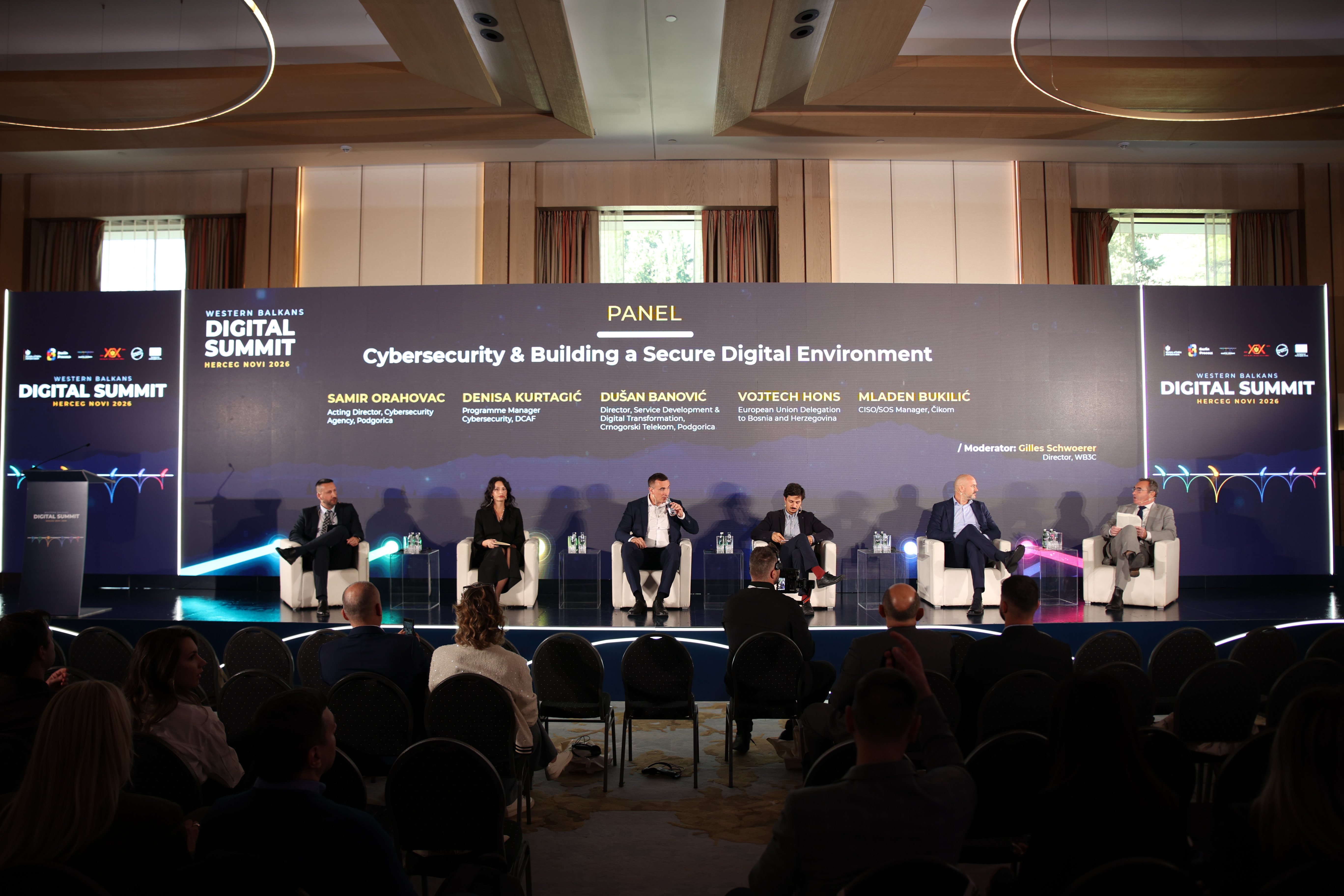
The eighth Western Balkans Digital Summit took place on 13 and 14 October, organised by Montenegro’s Ministry of Public Administration with the Regional Cooperation Council (RCC) and the European Union. It was part of Montenegro’s 2026 chairmanship of the #BerlinProcess, and the Leaders’ Summit follows on 22 October. More than 150 people from the region’s governments, EU institutions, industry and civil society attended.
Our Programme Director, Gilles Schwoerer, moderated the panel on “Cybersecurity & Building a Secure Digital Environment”. He led a discussion with people who deal with these issues every day:
 ◽ Samir Orahovac, former Acting Director, Agencija za sajber bezbjednost Crne Gore / Cybersecurity Agency of Montenegro
◽Denisa Kurtagic, Programme Manager Cybersecurity, DCAF - Geneva Centre for Security Sector Governance
◽Dusan Banovicć, Director, Service Development & Digital Transformation, Crnogorski Telekom
◽Vojtěch H. (Hons), EU Delegation, Sarajevo
 ◽Mladen Bukilic Bukilić, CISO/SOC Manager, Čikom

Having a regulator, a telecom operator, a SOC team, a donor and an EU delegation at one table is useful, because each of them sees a different part of the same weak spot. Digital identity, e-services and AI all rely on networks and institutions that can withstand an attack. 

The summit closed with a clear list of priorities for the region: mutual recognition of digital identities, digital identity wallets, more affordable roaming with the EU, improved connectivity and stronger cybersecurity cooperation. RCC Secretary General Amer Kapetanović said the task ahead is to connect the six economies, not only to digitalise them. It was a privilege for WB3C to moderate the cybersecurity discussion, and we look forward to the work that follows.


Hosting European journalists at WB3C: a conversation on hybrid threats in Montenegro

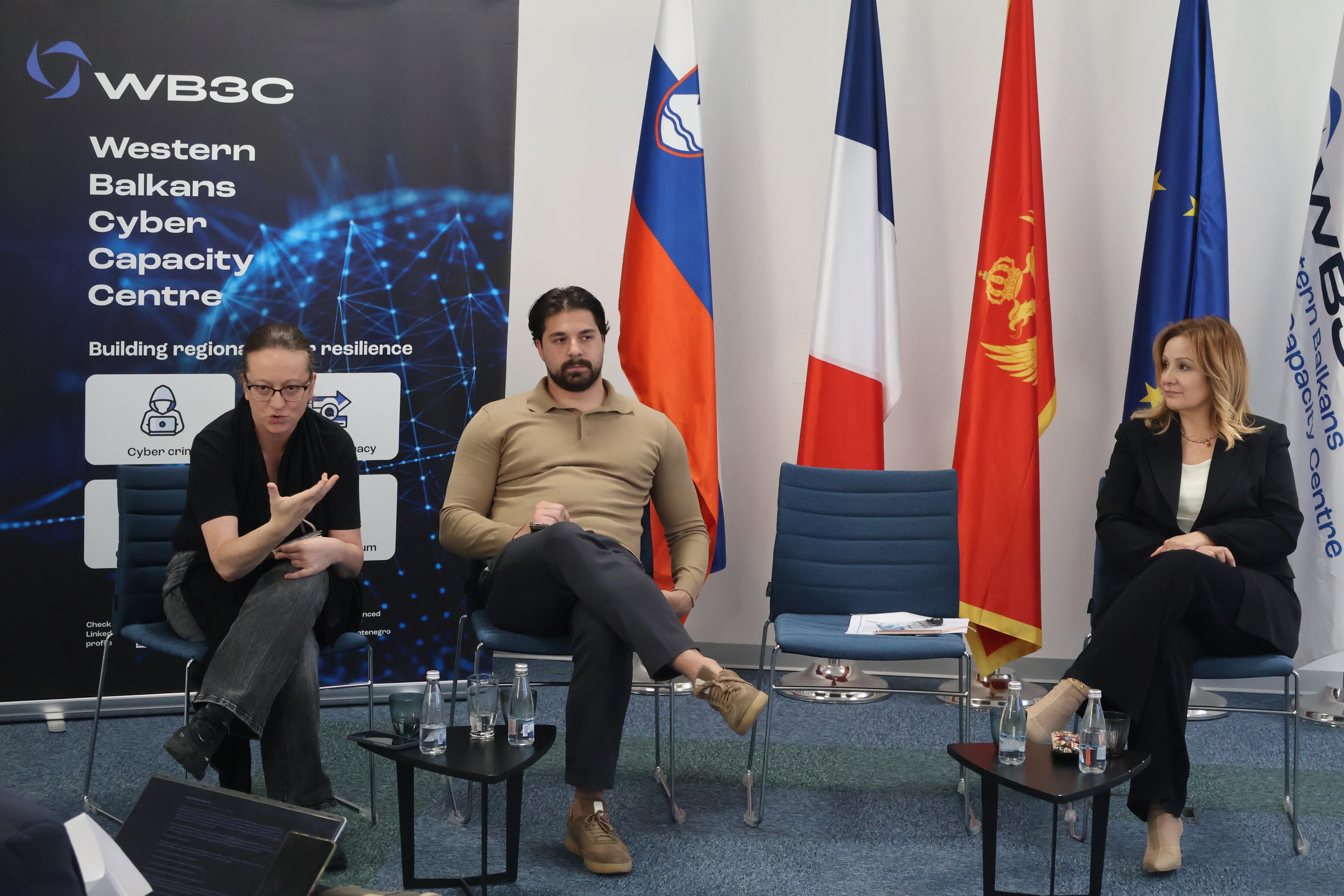
This week, we had the pleasure of welcoming a delegation of around 15 journalists from across the EU who came to Montenegro to better understand the hybrid threats the country is facing. The visit was supported by DG ENEST.
The group brought together reporters, editors and camera crews from L’Opinion and Le Nouvel Obs (France), Rai (Italy), Deutsche Welle (Germany), Deník N and TV Nova (Czechia), Kurier and Profil (Austria), and De Telegraaf (the Netherlands).
The programme included perspectives from two of Montenegro’s leading civil society voices invited by the EU Delegation in Montenegro, Zlatko Vujovic (CEMI) and Milica Kovačević (CDT), who shared their insights on how hybrid threats show up on the ground and what they mean for Montenegrin European perspective and upcoming general elections in 2027. 
On behalf of Western Balkans Cyber Capacity Centre (WB3C), Vanja Madzgalj MBE had the opportunity to show the journalists our facility and talk about our work, including our efforts on FIMI and disinformation. These are topics where good journalism and good cooperation matter a great deal. Our trainers for cybercrime Cyril CORRIAS and Jean-Pierre Bonnet (JP BNT) stirred particular interest in the work we do to support law enforcement and the judiciary in their fight against financial and crypto frauds, digital forensics, online and anti-drug investigations, cross-border trafficking, human smuggling, online sexual exploitation and much more. 

Thank you to our colleagues from DG ENEST, Jerneja Starič and Christina Moldt, and to Zeljka Lekic-Subasic from Ecorys for the smooth organisation. And thank you to all the journalists for your time, curiosity and the important work you do.
Hybrid threats don’t stop at borders, and neither should our conversations about them.
Cyber resilience starts with people

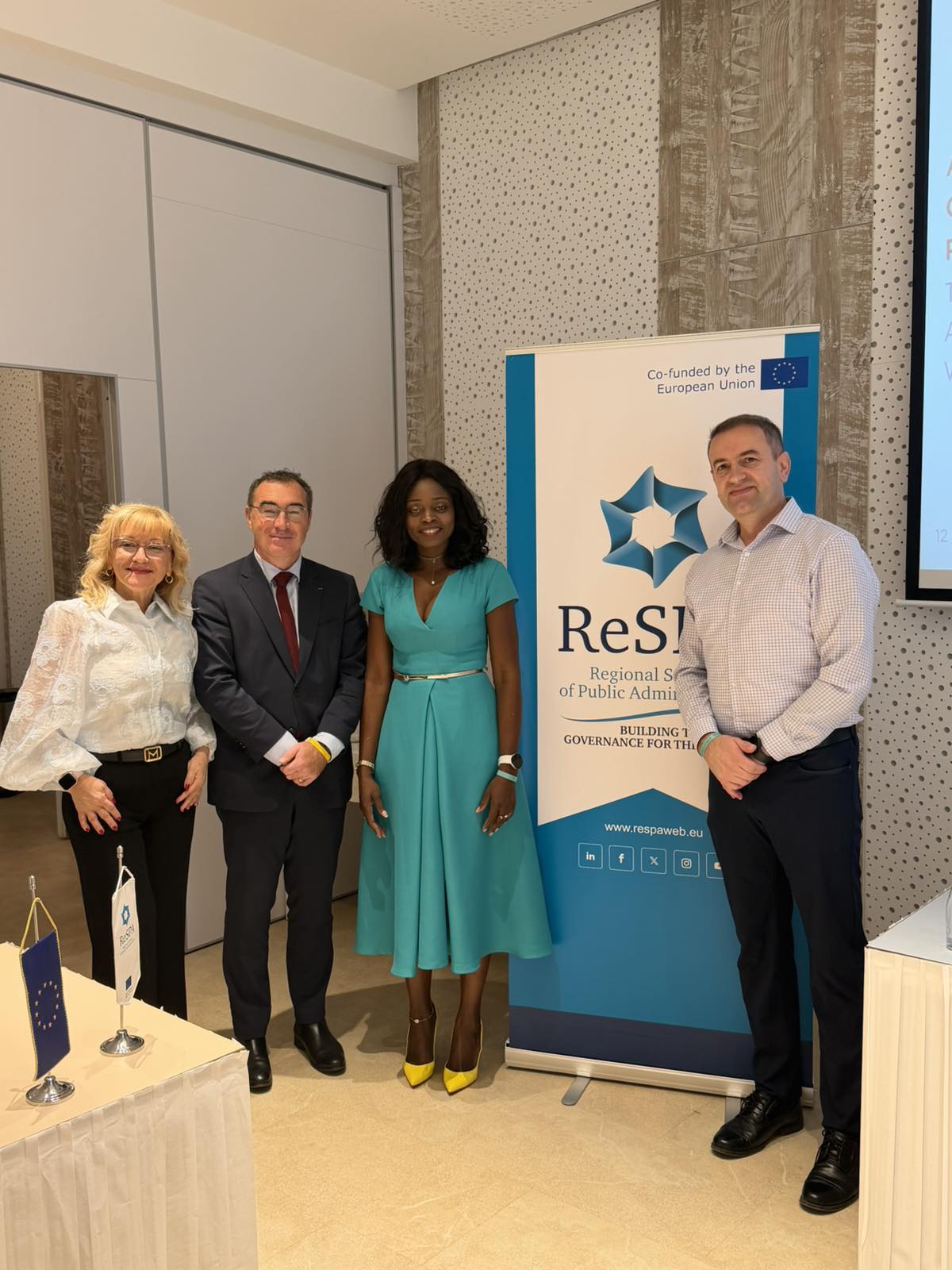
From 12 to 14 October, WB3C is in Herceg Novi with the Regional School of Public Administration (ReSPA) for an advanced Training of Trainers on Cyber Resilience and Data Protection. In the room are public administration professionals from across the Western Balkans, plus colleagues from Armenia, Moldova and Ukraine. The training runs alongside the Western Balkans Digital Summit, and participants are taking part in both.

Today, governments run more and more of their services on connected systems and data. When those systems fail, or when data is mishandled, citizens lose trust. Technology alone doesn’t solve the risks. You need people who know what to do, institutions that have thought it through in advance, and neighbours who share what they learn. That’s the thinking behind the three days.

✅ Day 1 is about preparedness: current cyber threats, governance, cyber hygiene, incident prevention and response, business continuity and crisis management, and the legal basis for data protection in the public sector.

✅ Day 2 gets practical on data protection. We’re working through GDPR principles, Records of Processing Activities, Data Protection Impact Assessments, transparency obligations and the rights of data subjects.

✅ Day 3 looks ahead: artificial intelligence, information sharing, cooperation between institutions, and how to train others well. Each participant leaves with an institutional action plan and a realistic way to pass this knowledge on at home.
Our experts Arianit Maraj and Stella Manga Chesnay are leading the sessions, drawing on their work in cybersecurity governance, institutional resilience and data protection.
The “training of trainers” format is deliberate. What happens in this room only counts if it travels, so we’re asking every participant to take it back to their own administration and share it with colleagues. The week is also a chance for Western Balkans and Eastern Partnership colleagues to compare notes on shared problems and find ways to keep working together.
Our Programme Director, Gilles Schwoerer, put it simply: “Cyber resilience is about more than technology. It requires skilled people, prepared institutions and strong regional cooperation.”
Thank you to our partners at ReSPA, and to Bojana Bajić for opening the event, and to everyone taking part this week.
 

Visit to RACVIAC, Zagreb

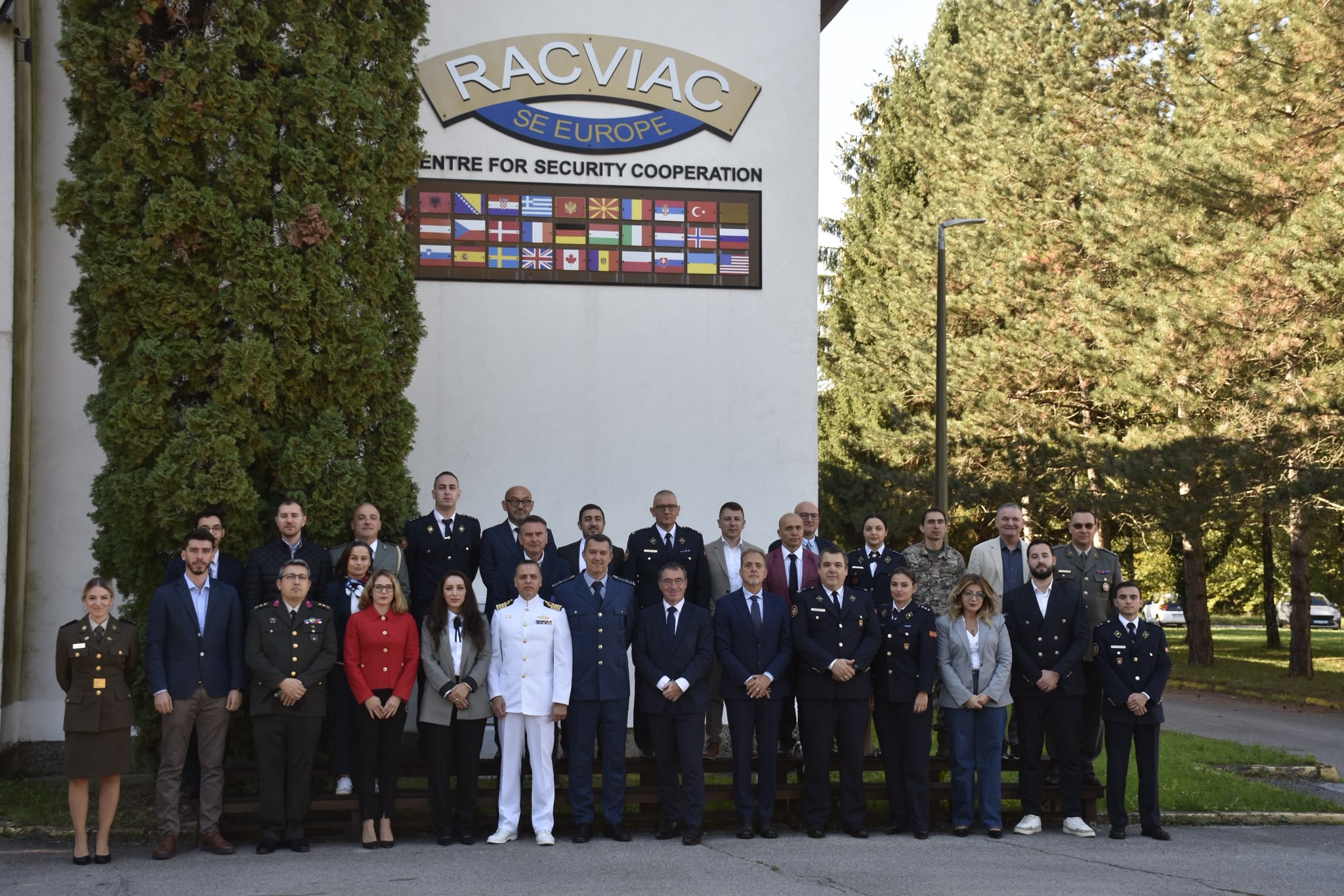
The WB3C Programme Director participated in the conference organised by RACVIAC in Zagreb, entitled “Strengthening SEE Resilience in Cyber Security Against Hybrid Threats.” 
The mission provided an opportunity to present the Centre’s activities and discuss several potential areas of cybersecurity cooperation.

The areas under consideration include strengthening the cyber resilience of critical entities in the Western Balkans through NIS2 training and technical training aimed at addressing the skills gap in operational technology security, with priority given to young civilian and military talent. 

They also include training on artificial intelligence and the implications of the European Union’s AI Act, the development of new cybersecurity curricula with universities and military academies in the region, and the possibility of providing cybersecurity training to military units in cooperation with RACVIAC.


Copyright © WB3C

Disclaimer: Translations of the original content written in English into other languages are AI generated by Weglot.