
×

WB3C Welcomes NATO Framework Nation Concept Delegations

28.10.2026

Image for WB3C Welcomes NATO Framework Nation Concept Delegations

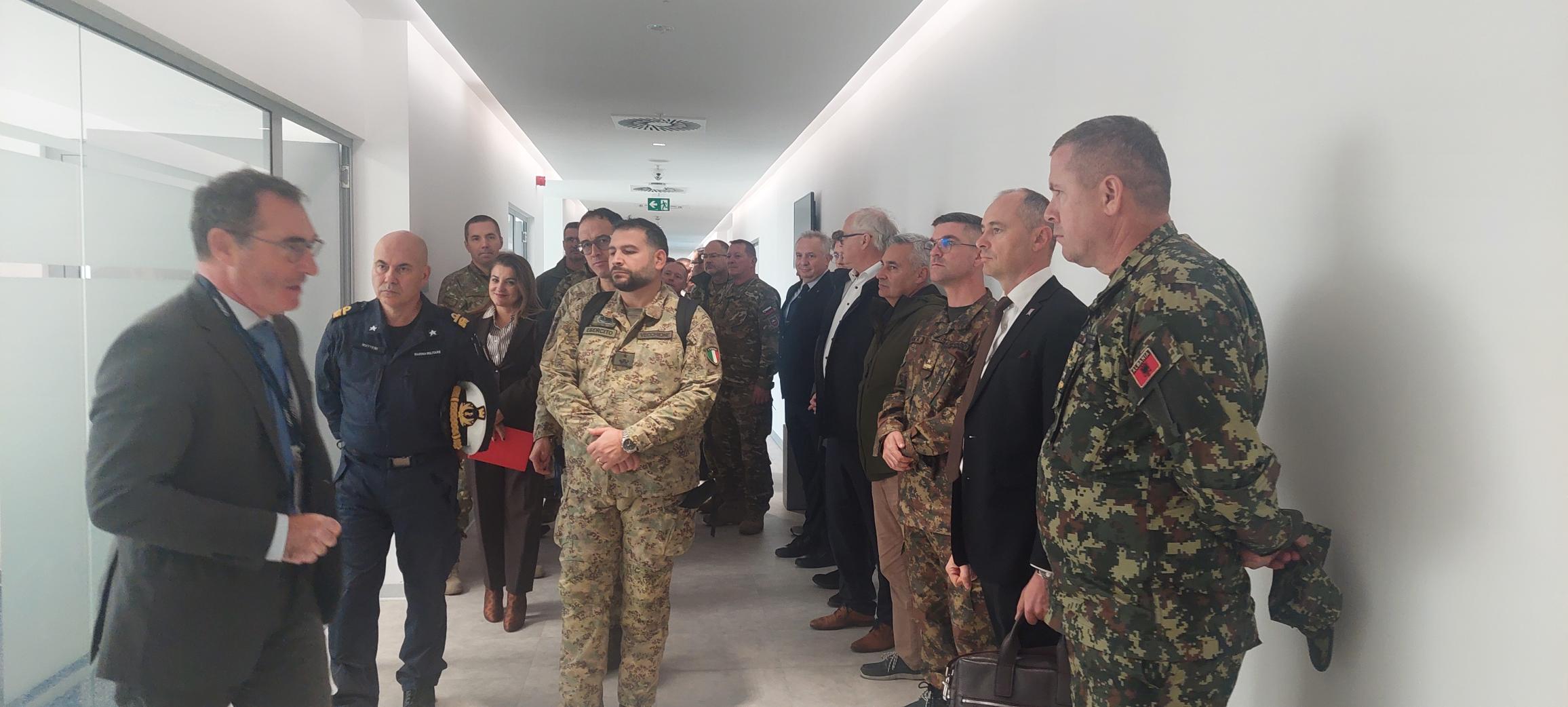
WB3C welcomed a delegation of military and defence representatives participating in the 13th Coordination Board meeting of the NATO Framework Nation Concept, led by Italy (FNC-ITA), hosted by Montenegro's Ministry of Defence of Montenegro.
The visit provided an opportunity to present WB3C’s mandate, activities and strategic priorities in strengthening regional capacities in cybersecurity, cybercrime and cyber diplomacy, while exploring potential areas of cooperation with defence and security institutions.
The Italian-led Framework Nation Concept brings together NATO allies to strengthen multinational cooperation through education and training, joint exercises, operational engagement and capability development.
As cyber threats increasingly intersect with broader security and defence challenges, the visit highlighted the importance of strengthening cyber resilience, developing specialised skills and fostering closer cooperation between civilian and defence institutions.
WB3C remains committed to expanding partnerships that contribute to regional security, institutional resilience and the development of cyber capabilities across the Western Balkans.


Image for Disinformation and Foreign Information Manipulation and Interference Capacity Building Workshops
Upcoming
Disinformation and Foreign Information Manipulation and Interference Capacity Building Workshops

Draft Programme 


πŸ“… 30 November – 1 December 2026
πŸ“ Science and Technology Park, Podgorica, Montenegro
πŸ›οΈ Conference Hall Unicorn, 2nd floor
 

Context: Building on WB3C’s May 2026 regional conference, these workshops examine how governments, media and other stakeholders can anticipate, prevent and respond to malign information operations. Sessions combine strategic perspectives with practical approaches to threat detection, crisis coordination, reporting and AI-enabled information manipulation. The programme is provisional and still subject to change. 
Audience: Government strategic communications officials, cybersecurity leadership, journalists, media regulators, fact-checkers and civil society organisations.
Working language: English (no simultaneous interpretation).
Chatham House Rule: The workshops will be held under the Chatham House Rule, providing a safe space for an open dialogue.                                               

Funding: The event is organised under the EU-funded project β€œImproving the resilience of critical entities and the protection of public spaces and cyberspace against security threats in the Western Balkans” (2026–2028). This event is also supported by Poland, Norway, United Kingdom and France, through their diplomatic missions in Podgorica and Belgrade.


DAY 1 – Monday, 30 November 2026


β˜• 08:30–09:00  |  ARRIVAL
Registration and welcome coffee


πŸ•˜ 09:00–09:30  |  OPENING REMARKS
β€’ WB3C
β€’ Ministry for European Affairs of Montenegro
β€’ EU 


πŸŽ™οΈ 09:30–10:00  |  MODERATED POLICY DIALOGUE
Montenegro at the Crossroads: Safeguarding Its Democracy and European Future in an Era of Hybrid Threats
‒ Biljana Papović — State Secretary, Ministry of European Affairs of Montenegro
‒ Todor Goranović — Defence and Security Advisor to the Prime Minister of Montenegro
 

πŸ•˜ 10:00–10:45  |  EXPERT SESSION
The Agents of Chaos: The Shadow Campaign Against the West
β€’ Maciej Bukowski β€” Casimir Pulaski Foundation, Poland


β˜• 10:45–11:15  |  COFFEE BREAK


πŸ•š 11:15–12:00  |  EXPERT SESSION
From Detection to Decision: How VIGINUM Feeds Government Crisis Management During Hybrid Campaigns
β€’ VIGINUM β€” France’s service for vigilance and protection against foreign digital interference


πŸ• 12:00–12:45  |  EXPERT SESSION
AI-Enabled Disinformation, Coordinated AI Agents and Simulation of Influence Operations
β€’ Daniel Schroeder β€” SINTEF Digital, Norway
β€’ Henrik Vold β€” Norwegian Institute of Journalism, Norway
β€’ Eirik Veum β€” Norwegian Police Security Service (PST), Norway


🍽️ 12:45–13:45  |  LUNCH


πŸ•‘ 14:00–14:45  |  EXPERT SESSION
Coordination and decision making during an ongoing hybrid assault
β€’ Matthew Booth β€” FCDO, United Kingdom


πŸ•’ 14:45–15:15  |  VOICES FROM THE AUDIENCE 


β˜• 15:15–15:30  |  COFFEE BREAK
 

πŸ•’ 15:30–17:00  |  EXPERT SESSION
Modern Information Warfare: The Global Strategy to Destabilise the Western Balkans
β€’ David Colon β€” Sciences Po, France


DAY 2 – Tuesday, 1 December 2026


πŸ› οΈ 08:00–10:00  |  CLOSED WORKSHOP
β€’ David Colon β€” France
β€’ Matthew Booth β€” United Kingdom
 

πŸ•™ 10:00–11:00  |  TECHNICAL SESSION
Technical Attribution, Classification and Cross-Border Interoperability
β€’ VIGINUM β€” France


πŸ•š 11:00–12:00  |  EXPERT SESSION
Reporting in the Age of Information Warfare: Challenges for Journalists and Newsrooms
β€’ Jamie Tarabay β€” Managing Director, Intelligence & Strategic Engagement, Crumpton Global LLC, USA


β˜• 12:00–12:30  |  COFFEE BREAK
 

🧩 12:30–14:00  |  TABLETOP EXERCISE
The First 24 Hours: Managing a Coordinated Hybrid Crisis
β€’ Maciej Bukowski β€” Casimir Pulaski Foundation, Poland
Practical tabletop exercise.


🍽️ 14:00–15:00  |  LUNCH
 

πŸ› οΈ 15:00–17:00  |  PRACTICAL WORKSHOP
Fighting Disinformation with Agentic Intelligence
β€’ Henrik Vold β€” Norwegian Institute of Journalism, Norway
β€’ Daniel Schroeder β€” SINTEF Digital, Norway
β€’ Eirik Veum β€” Norwegian Police Security Service (PST), Norway


DAY 3 – Wednesday, 2 December 2026 


πŸ› οΈ 10:00–12:00  |  UNIVERSITY GUEST LECTURES 
β€’ Maciej Bukowski β€” Casimir Pulaski Foundation, Poland
β€’ Jamie Tarabay β€” Crumpton Global LLC
University of Donja Gorica, Faculty of Humanities 

NB. To register for the conference please use this LINK or contact vanja.madzgalj@wb3c.org. The number of seats is limited. This event will be photographed. Please read our Privacy Policy on the Registration Form. 

WB3C Strengthens Cooperation on Countering Terrorist Content Online

This week, WB3C Cybercrime Trainer Jean-Pierre Bonnet is attending meetings in Sarajevo with representatives of Bosnia and Herzegovina, Europol SIRIUS and CEBS to discuss cooperation on countering terrorist propaganda and other terrorism-related content online. 

The discussions focus on developing a specialised training programme to strengthen the capacities of law enforcement and relevant institutions to identify, investigate and facilitate the removal of terrorist content from digital platforms.

The initiative forms part of WB3C’s ongoing efforts to enhance regional cybercrime capabilities, promote international cooperation and address emerging threats in the digital environment in partenrship with leading European partners.

WB3C in the International Spotlight: Cyber Resilience at the Heart of Regional Security and European Integration

The Western Balkans Cyber Capacity Centre has attracted growing attention from senior European officials, government delegations, defence representatives and international media during a particularly active period of diplomatic engagement in Montenegro. Several visits took place on the margins of the Berlin Process, reflecting the increasing importance of cybersecurity and institutional resilience within the wider European security and integration agenda.

As cyberattacks become more sophisticated and increasingly target essential services, public institutions and critical infrastructure, the ability of Western Balkan countries to prevent, withstand and respond to cyber incidents has become a matter of strategic importance. These challenges extend beyond national borders and require closer regional cooperation, stronger institutions and sustained investment in specialised skills.

For countries pursuing EU membership, cybersecurity is also an important dimension of alignment with European legislation, standards and security frameworks. Building the capacities required to implement the NIS2 Directive, the Critical Entities Resilience Directive and other relevant EU requirements is essential for the region's integration into Europe's common security and digital environment.

High-level visits during the Berlin Process

On 16 September, WB3C welcomed Marie-Pierre Vedrenne, French Minister Delegate, during her visit to Montenegro on the margins of the Berlin Process. The visit provided an opportunity to present the Centre's regional mandate and its contribution to strengthening cybersecurity, combating cybercrime and supporting cyberdiplomacy across the Western Balkans.

On 25 September, the Centre received representatives of EU Member States, providing further opportunities to present its work and discuss the contribution of international cooperation to regional cyber resilience.

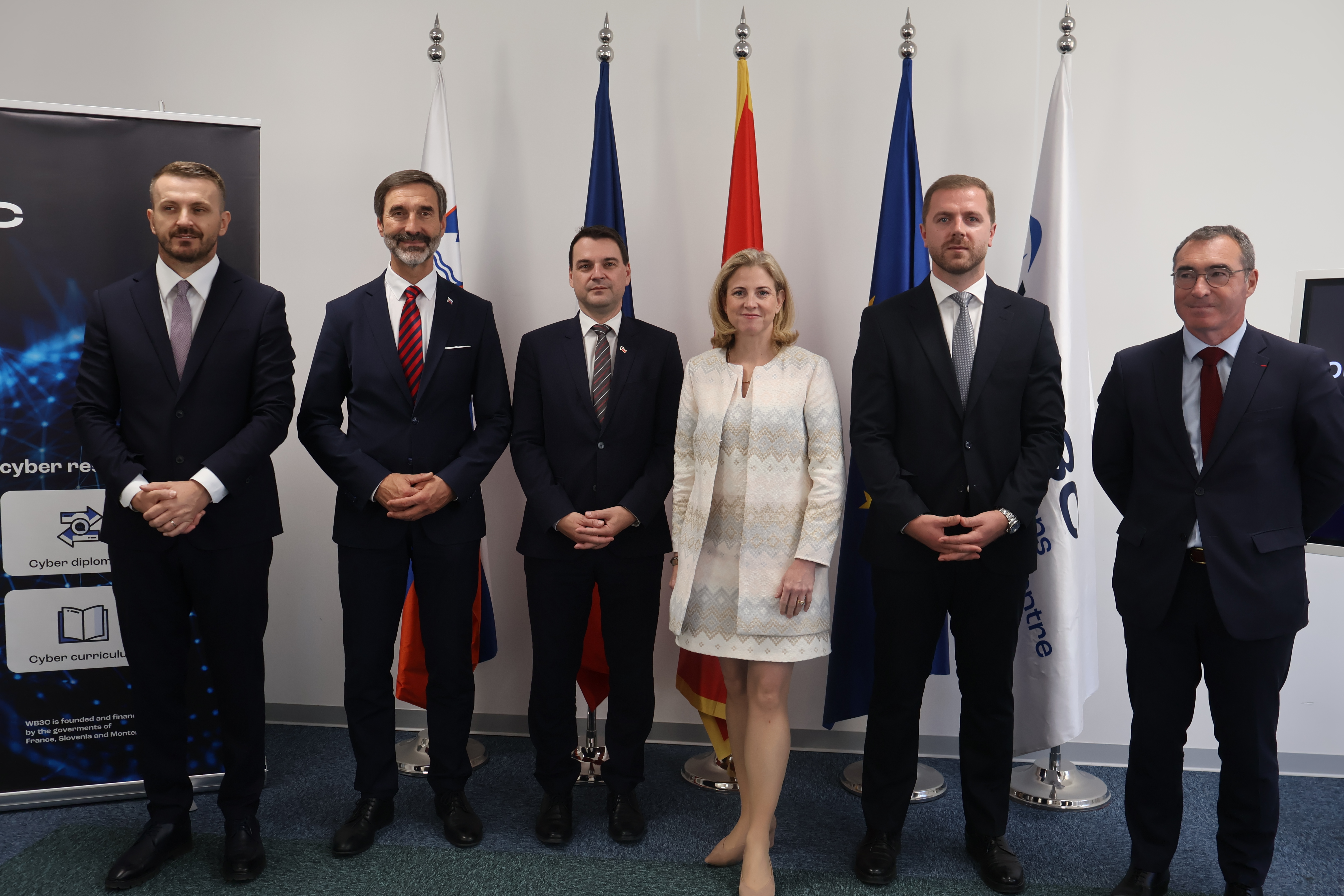
A further high-level visit followed on 2 October, when the Foreign Ministers of Austria, Czechia and Slovakia visited WB3C. The engagement placed the Centre's work within the broader context of European security, regional stability and the Western Balkans' EU perspective.

These visits offered opportunities to demonstrate how the Centre translates international cooperation into practical support for Western Balkan institutions, bringing together European expertise, regional priorities and targeted professional training.

European media engagement

On 13 October, WB3C welcomed a delegation of European media representatives in cooperation with the European Commission's Directorate-General for Enlargement and Eastern Neighbourhood (DG ENEST) and the EU Delegation to Montenegro.

The visit focused on the Centre's role in strengthening regional cyber resilience and addressing emerging security challenges, including hybrid threats, foreign information manipulation and interference (FIMI), and disinformation.

Discussions highlighted the links between cybersecurity, institutional resilience and democratic stability, particularly in an environment where information manipulation, cybercrime and cyberattacks can undermine public trust and the functioning of essential services.

Regional defence and security cooperation

The Centre's international engagement also extends to the defence and security community.

On 28 October, WB3C is scheduled to welcome delegations participating in the Framework Nations Concept cooperation initiative led by Italy (FNC-ITA), in cooperation with Montenegro's Ministry of Defence. The visit will bring together representatives of participating NATO member and partner countries from South-East Europe, providing an opportunity to exchange perspectives on cyber resilience and regional security cooperation.

During this period, WB3C representatives were invited to Zagreb to meet with RACVIAC – Centre for Security Cooperation, a regional intergovernmental organisation dedicated to strengthening security dialogue, institutional capacities and cooperation in South-East Europe, including in cybersecurity and countering transnational threats, to explore opportunities for closer cooperation in addressing shared regional security challenges.

This engagement reflects the importance of cybersecurity across civilian and defence sectors, where the protection of critical infrastructure, continuity of essential services and effective institutional coordination are closely interconnected.

Building resilience is a strategic investment in the region's European future. Through its training programmes, institutional partnerships and regional cooperation mechanisms, WB3C will continue to contribute to a more secure and resilient Western Balkans, strengthening both regional stability and Europe's collective cyber resilience.


Copyright Β© WB3C

Disclaimer: Translations of the original content written in English into other languages are AI generated by Weglot.