
×

WB3C Welcomes EU Council Working Party on Hybrid Threats

04.11.2026

Image for WB3C Welcomes EU Council Working Party on Hybrid Threats

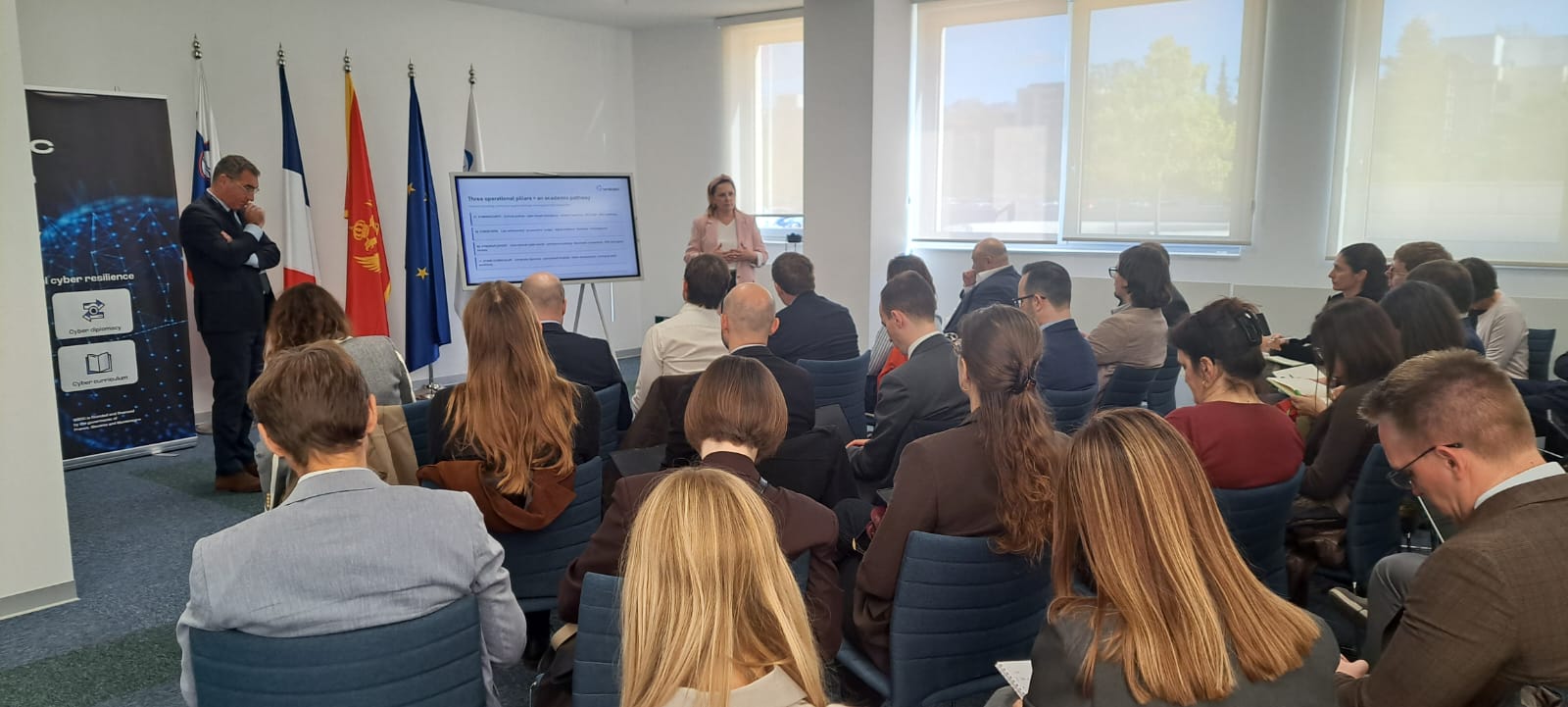
On 4 November, the Western Balkans Cyber Capacity Centre (WB3C) welcomed a high-level delegation from the Council of the European Union's Horizontal Working Party on Enhancing Resilience and Countering Hybrid Threats (HWP ERCHT), led by Conor Nelson of Ireland.
The delegation, comprising representatives of EU Member States and EU institutions, was joined by colleagues from the EU Delegation to Montenegro and Montenegro's Ministry of Foreign Affairs.
During a tour of the Centre, we presented WB3C's mission, strategic objectives and capacity-building activities across cybersecurity, cybercrime and cyber diplomacy, including our work on foreign information manipulation and interference (FIMI) and disinformation, which are currently in our focus.
The discussions highlighted WB3C's distinctive value as a regional platform connecting institutions, expertise and international partners, translating shared security priorities into practical capacity building and stronger regional cooperation. This approach generated particular interest among the visiting delegation.
Engagements of this calibre are especially valuable in strengthening WB3C's visibility among EU institutions, fostering a closer understanding of its strategic role and opening opportunities for deeper cooperation on shared security challenges.
We thank the delegation for their interest and constructive exchange, and look forward to continuing the dialogue.


Image for Disinformation and Foreign Information Manipulation and Interference Capacity Building Workshops
Upcoming
Disinformation and Foreign Information Manipulation and Interference Capacity Building Workshops

Draft Programme 


📅 30 November – 1 December 2026
📍 Science and Technology Park, Podgorica, Montenegro
🏛️ Conference Hall Unicorn, 2nd floor
 

Context: Building on WB3C’s May 2026 regional conference, these workshops examine how governments, media and other stakeholders can anticipate, prevent and respond to malign information operations. Sessions combine strategic perspectives with practical approaches to threat detection, crisis coordination, reporting and AI-enabled information manipulation. The programme is provisional and still subject to change. 
Audience: Government strategic communications officials, cybersecurity leadership, journalists, media regulators, fact-checkers and civil society organisations.
Working language: English (no simultaneous interpretation).
Chatham House Rule: The workshops will be held under the Chatham House Rule, providing a safe space for an open dialogue.                                               

Funding: The event is organised under the EU-funded project “Improving the resilience of critical entities and the protection of public spaces and cyberspace against security threats in the Western Balkans” (2026–2028). This event is also supported by Poland, Norway, United Kingdom and France, through their diplomatic missions in Podgorica and Belgrade.


DAY 1 – Monday, 30 November 2026


☕ 08:30–09:00  |  ARRIVAL
Registration and welcome coffee


🕘 09:00–09:30  |  OPENING REMARKS
• WB3C
• Ministry for European Affairs of Montenegro
• EU 


🎙️ 09:30–10:00  |  MODERATED POLICY DIALOGUE
Montenegro at the Crossroads: Safeguarding Its Democracy and European Future in an Era of Hybrid Threats
• Biljana Papović — State Secretary, Ministry of European Affairs of Montenegro
• Todor Goranović — Defence and Security Advisor to the Prime Minister of Montenegro
 

🕘 10:00–10:45  |  EXPERT SESSION
The Agents of Chaos: The Shadow Campaign Against the West
• Maciej Bukowski — Casimir Pulaski Foundation, Poland


☕ 10:45–11:15  |  COFFEE BREAK


🕚 11:15–12:00  |  EXPERT SESSION
From Detection to Decision: How VIGINUM Feeds Government Crisis Management During Hybrid Campaigns
•VIGINUM — France’s service for vigilance and protection against foreign digital interference


🕐 12:00–13:00  |  MODERATED DISCUSSION
The AI Disinformation Battlefield: New Weapons, New Threats, New Defences – and the Fight for Public Trust
• Raphaël-David Lasseri — Magic LEMP, France
• Henrik Vold — Norwegian Institute of Journalism, Norway
• Eirik Veum — Norwegian Police Security Service (PST), Norway 
• Daniel Schroeder — SINTEF Digital, Norway   
                                                                                                                                                                                                                                                                                                                                                                                                                                                                                                                                  

🍽️ 13:00–14:00  |  LUNCH


🕑 14:00–14:30  |  EXPERT SESSION
Geopolitical shifts and impact on the Western Balkans 
• Jamie Tarabay — Crumpton Global, USA  (TBC)


🕑 14:30–15:15  |  EXPERT SESSION
Coordination and decision making during an ongoing hybrid assault
• Matthew Booth — FCDO, United Kingdom


🕒 15:15–16:30 |  EXPERT SESSION
Modern Information Warfare: The Global Strategy to Destabilise the Western Balkans
• David Colon — Sciences Po, France


🎤 16:30–17:00  |  QUESTIONS FROM THE AUDIENCE 


DAY 2 – Tuesday, 1 December 2026


🛠️ 08:00–09:30  |  CLOSED WORKSHOP

• David Colon — France
• Matthew Booth — United Kingdom
 

🕙 10:00–12:00  |  ROOM 1: WORKSHOP FOR GOVERNMENT INSTITUTIONS 
From Detection to Institutional Response

• David Colon — Sciences Po, France
• VIGINUM — France  
• Raphaël-David Lasseri — Magic LEMP, France   

Context: Government institutions may detect suspicious activity without a clear process for assessing significance and mobilising a response.

Objective: Practise moving from initial indicators and analytical findings to an institutional assessment, escalation decision and coordinated response.


🕚 10:00–12:00  |  ROOM 2: WORKSHOP FOR MEDIA AND CIVIL SOCIETY 
Verification of an AI-Amplified Information Operations

• Henrik Vold — Norwegian Institute of Journalism, Norway
• Eirik Veum — Norwegian Police Security Service (PST), Norway 
• Daniel Schroeder — SINTEF Digital, Norway

Context: Synthetic content, coordinated amplification and misleading claims complicate verification under time pressure.

Objective: Apply verification and source-assessment methods to a simulated information operation, distinguishing evidence, uncertainty and responsible reporting.


☕ 12:00–13:00  |  LUNCH 
 

🧩 13:00–14:30  |  WORKSHOP FOR GOVERNMENT INSTITUTIONS 
Crisis decisions under pressure
• Maciej Bukowski — Casimir Pulaski Foundation, Poland
Practical tabletop exercise.


🧩 13:00–14:30  |  WORKSHOP FOR MEDIA AND CIVIL SOCIETY 
Editorial judgement during a hybrid crises (TBC)
• Jamie Tarabay  — Crumptom Global, USA
Practical tabletop exercise.


🍽️ 14:30–15:00  |  COFFEE BREAK 
 

🛠️ 15:00–16:30  |  PLENARY WORKSHOP 
Government-Media Crisis Coordination Simulation 

• Matthew Booth — FCDO, UK 


DAY 3 – Wednesday, 2 December 2026 


🛠️ Time TBC  |  UNIVERSITY GUEST LECTURES 

• Maciej Bukowski — Casimir Pulaski Foundation, Poland
• Jamie Tarabay — Crumpton Global LLC
University of Donja Gorica, Faculty of Humanities 

NB. To register for the conference please use this LINK or contact vanja.madzgalj@wb3c.org. The number of seats is limited. 

This event will be photographed. Please read our Privacy Policy on the Registration Form. 

To download the programme and the speakers bios, go to the top of the page.
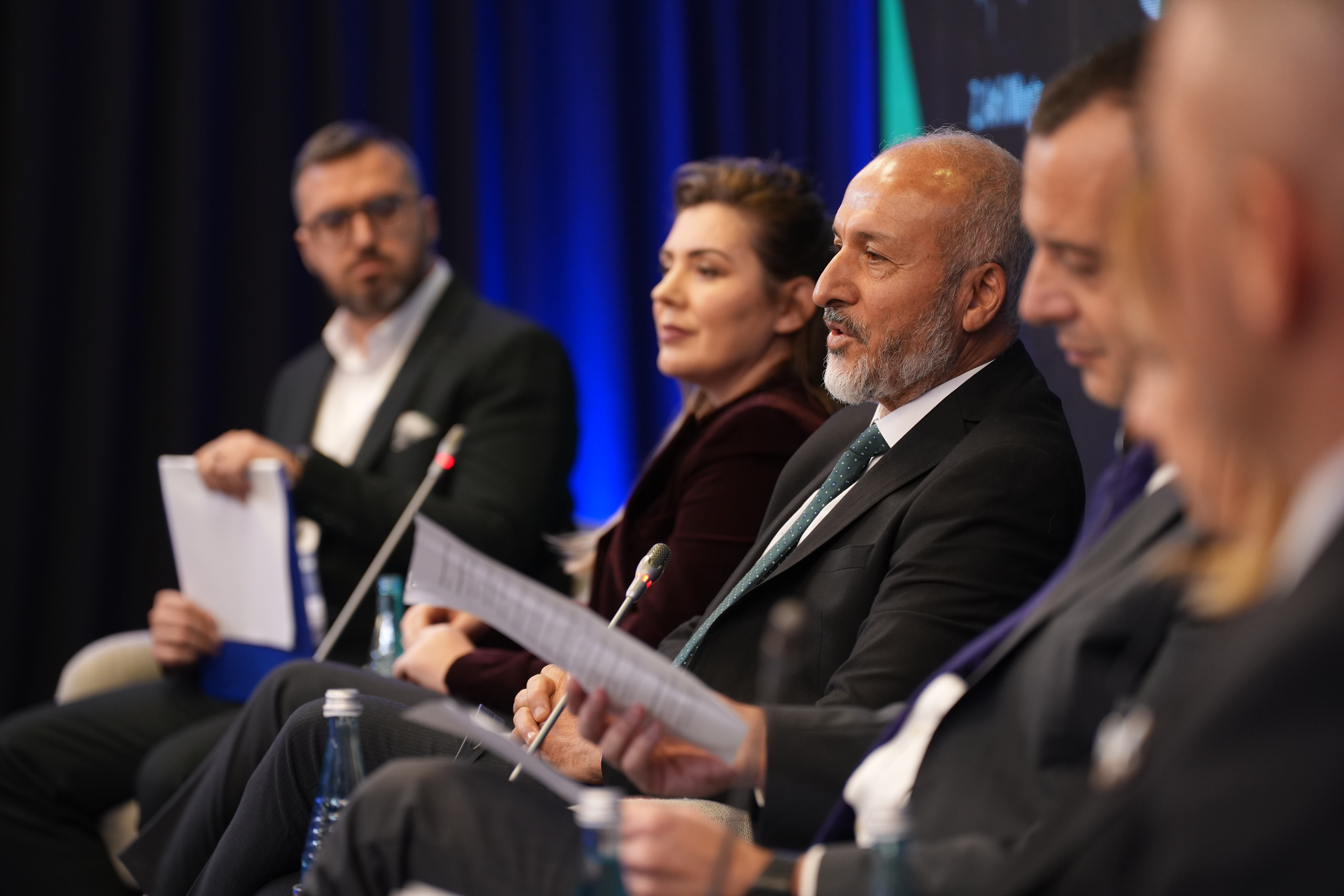
 

More Rules, More Responsibilities, Fewer Experts: Closing the Cybersecurity Capacity Gap

As cybersecurity threats grow more sophisticated and AI changes the rules of the game, how can we build the workforce needed to protect our critical infrastructure, institutions and economies?
This was the central question of the panel our colleague Vanja Madzgalj MBE joined at Albania's National Cybersecurity Conference, organised by the Autoriteti Kombëtar për Sigurinë Kibernetike / National Cyber Security Authority in Tirana on 3 November.

One of the paradoxes I highlighted is that organisations struggle to recruit cybersecurity professionals while many graduates struggle to secure their first jobs. Employers want experienced professionals, yet too few pathways exist for young people to gain that experience.

The World Economic Forum's Global Cybersecurity Outlook 2026 reinforces the urgency: 54% of organisations identify insufficient skills as a barrier to adopting AI in cybersecurity, while 94% of respondents expect AI to be a major force reshaping the cybersecurity landscape.
My message was that we cannot solve the cybersecurity workforce shortage through training alone. We need to act on several fronts simultaneously.
This requires stronger partnerships between governments, academia and industry, flexible curricula aligned with real-world needs, structured internships and apprenticeships, skills-based recruitment rather than degree- based, and continuous learning as AI transforms cybersecurity roles.
We also need to mobilise talent that remains underutilised: women, young people outside major cities, mid-career professionals and diaspora experts who can contribute through knowledge exchange and brain circulation rather than permanent brain drain.

For operators of critical and important infrastructure, the challenge is particularly pressing. Meeting growing regulatory obligations is not simply a question of compliance. It requires practical capabilities, including operational technology (OT) security, incident response, cross-sector coordination and exercises that test preparedness under real-world conditions.
This is where organisations such as the Western Balkans Cyber Capacity Centre (WB3C) can make a difference, connecting institutions and expertise across borders and helping turn shared priorities into practical capabilities.
Ultimately, the challenge is not just to train more people. It is to turn education into experience, connect talent with opportunity, and build a cybersecurity workforce capable of adapting to a rapidly changing threat landscape. The lively exchange with the audience raised as many questions as it answered, underscoring the complexity of the challenge and the need to continue this important conversation.
Big thanks to AKSK and Floreta Faber for this opportunity.

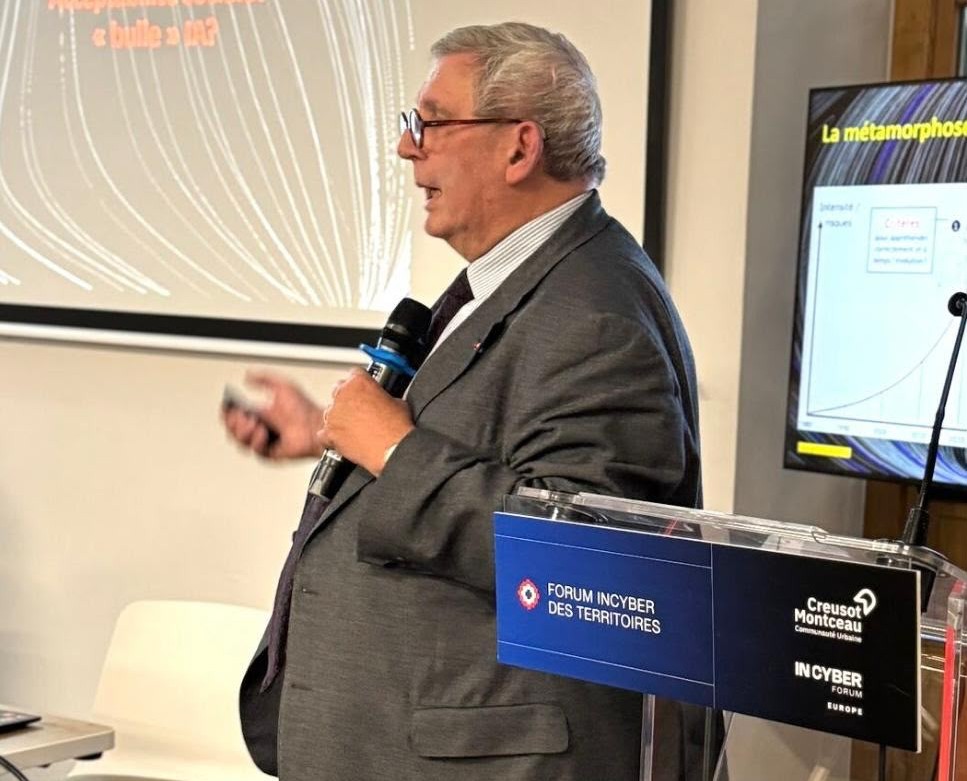
From Le Creusot to the Western Balkans: New Opportunities for Cybersecurity Cooperation

This year's Forum INCYBER (FIC) des Territoires, held in Le Creusot, France, on 21-22 October, brought together experts, industry representatives and public institutions to discuss some of today's most pressing cybersecurity challenges: artificial intelligence, collective cyber defence and the protection of critical infrastructure.
For WB3C, participating at the invitation of General marc watin augouard- was an opportunity to exchange experience and explore new partnerships that could contribute to strengthening cyber resilience across the Western Balkans.
We were particularly encouraged by discussions that our Programme Director Gilles Schwoerer had with Hexatrust on critical infrastructure protection and Flavien CHERVET on the evolving role of artificial intelligence in cybersecurity. These contacts offer promising avenues for future cooperation and knowledge exchange.
The Forum also offered an opportunity to discover the remarkable heritage of Le Creusot, including the Château de la Verrerie, originally built in the 18th century as the royal crystal and enamel factory of Queen Marie-Antoinette. A memorable setting that brought together technological innovation and French industrial history.
Our thanks to General Marc Watin-Augouard and the organising team for the invitation, the valuable discussions and the opportunity to build new connections between French cybersecurity expertise and the Western Balkans.
📷 Photo credits: Communauté Urbaine Creusot Montceau (Forum INCYBER des Territoires) and Creusot-infos.com.


Copyright © WB3C

Disclaimer: Translations of the original content written in English into other languages are AI generated by Weglot.