×

Balkan Cybersecurity Days 2025

18.03.2025

Image for Balkan Cybersecurity Days 2025

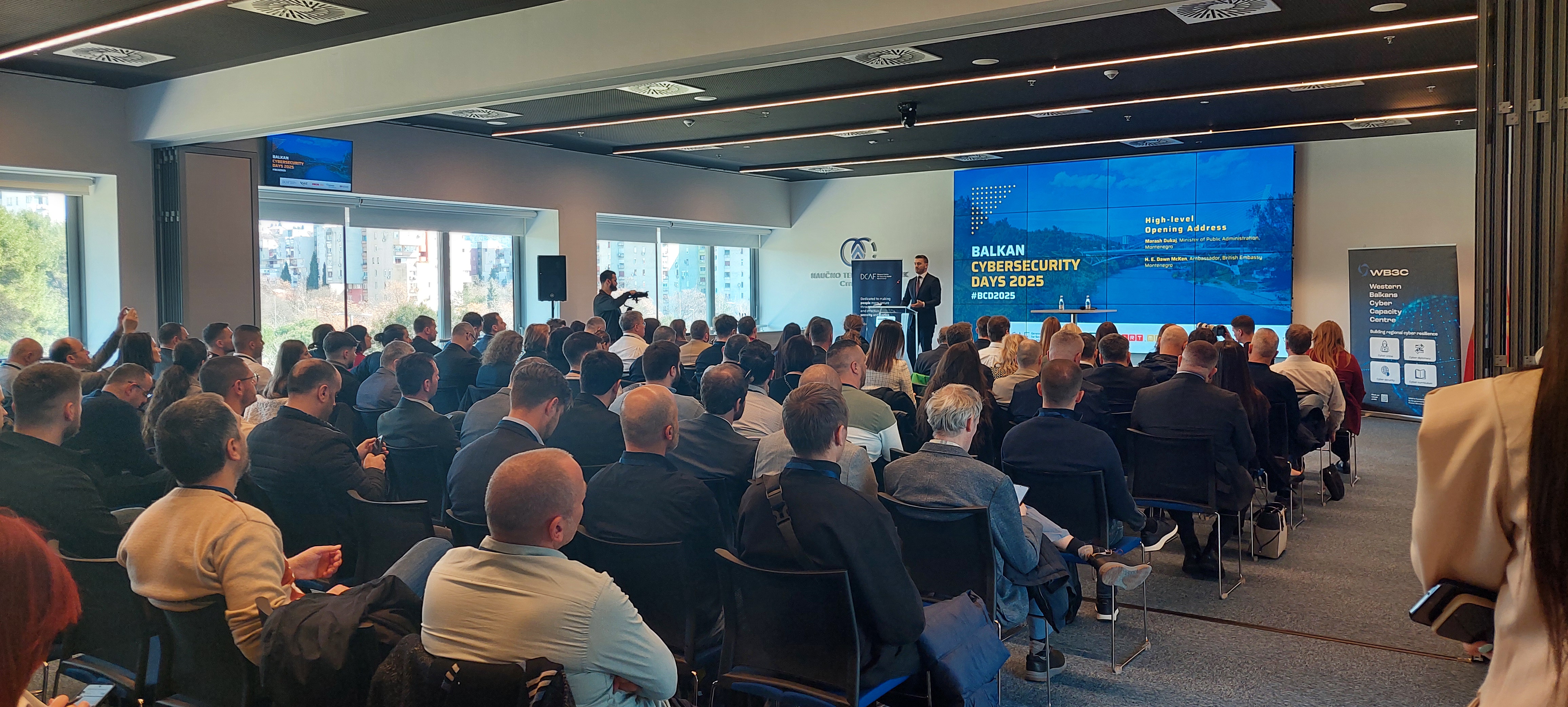
The Western Balkans Cyber Capacity Centre (WB3C) has the pleasure of hosting the 3-day Balkan Cybersecurity Days 2025 conference, co-organized by DCAF - Geneva Centre for Security Sector Governance in collaboration with CIRT.ME and supported by the UK Government’s Foreign, Commonwealth and Development Office (FCDO). This conference reflects WB3C’s ongoing partnership with DCAF, underscoring a shared commitment to strengthening cybersecurity capabilities across the Western Balkans.

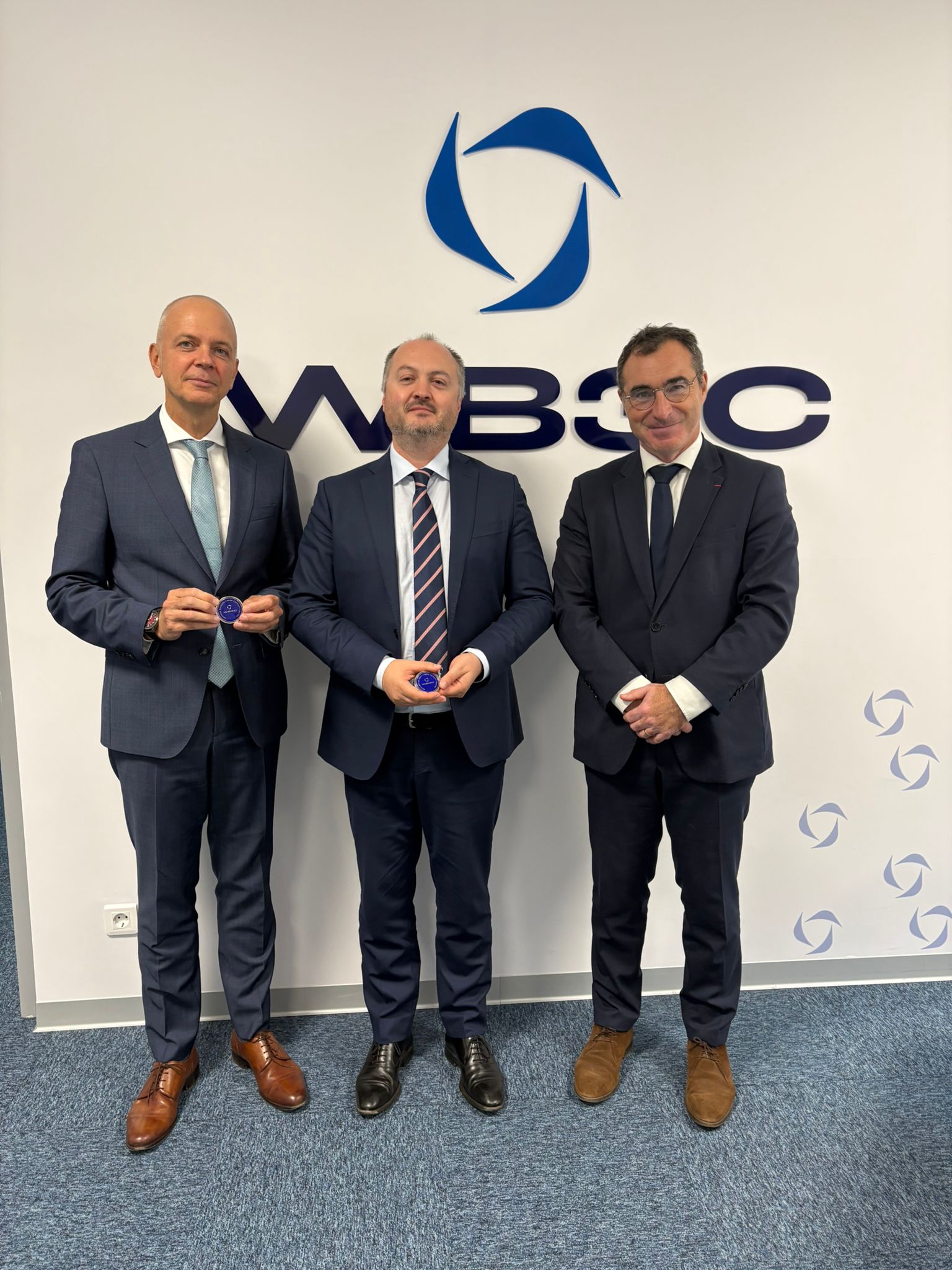
The conference opened yesterday at the Naučno-tehnološki park Crne Gore / Science Technology Park of Montenegro, bringing together around 150 cybersecurity professionals from across the region. Opening remarks were delivered by Gilles Schwoerer, Head of WB3C, alongside British Ambassador Dawn McKen and Montenegrin Minister of Public Administration Marash Dukaj, whose Ministry is leading on the digital and cyber agenda in Montenegro. Franziska Klopfer, Principal Programme Manager at DCAF, and Serge Droz, Member of the Board of Directors at FIRST, also shared their perspectives on strengthening partnerships and enhancing cyber resilience.

In his address, Gilles Schwoerer highlighted WB3C’s central role in providing sustainable, long-term capacity building to the region across three pillars: cybersecurity, cybercrime and cyberdiplomacy, but also our role in strengthening regional cooperation and supporting the EU alignment process for all Western Balkans administrations. 

Over the three days, the conference will continue with expert-led discussions and specialized training sessions designed to equip participants with practical skills in addressing emerging cybersecurity challenges.


Image for Regional Conference on Foreign Information Manipulation and Interference and Disinformation
Upcoming
Regional Conference on Foreign Information Manipulation and Interference and Disinformation

This regional conference intended for governments, media and civil society brings diverse perspectives on the growing hybrid threats of fake news, disinformation, manipulative and malign narratives that have the power to undermine democratic processes, trust in media and institutions and overal societal resilience and cohesion. Understanding, detecting, preventing, responding, debunking, investigating and prosecuting such manipulations will be the task of our panels, case studies and interactive exercises aimed at supporting governemnts and societies to tackle this challenge. The conference will feature 30 prominent speakers from the EU and the WB region from various departments, sectors and industries. 

CTI for Critical Infrastructure Training Completed

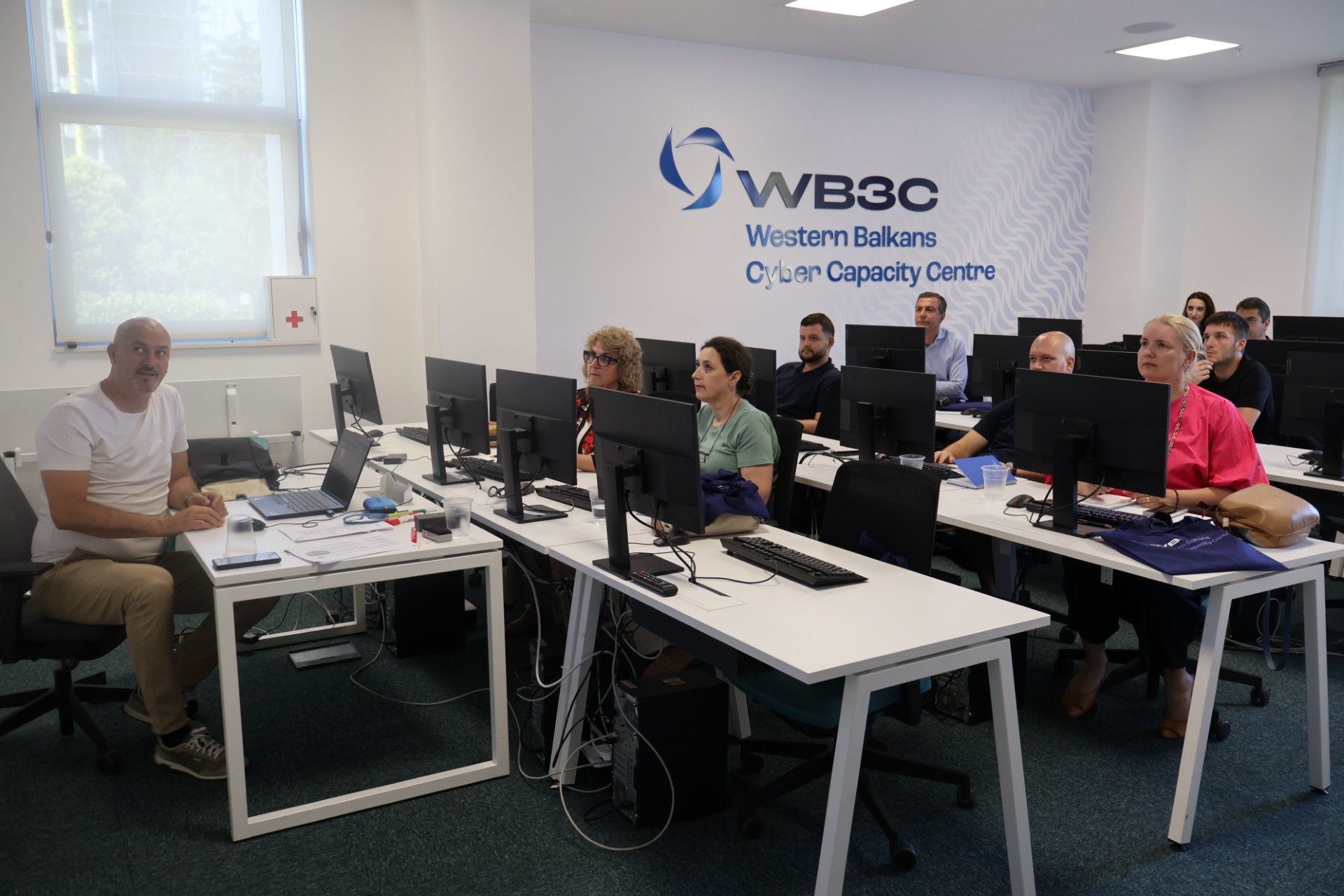
Last week at WB3C, we wrapped up a four-day training on Cyber Threat Intelligence (CTI) focused on the energy sector and government infrastructure, led by Ljuban Petrovic.

Working with SOC, CSIRT and CERT teams from across the region, the training reinforced a simple point: CTI only matters when it informs decisions. When it helps prioritise. When it changes how teams prepare and respond.
The sectoral focus proved its value. Energy infrastructure comes with its own risk landscape, and the discussions reflected that reality—specific, operational, and directly relevant.

We are continuing this work in September, building on what started here.
Because strengthening resilience is not a one-off effort. It is something that develops over time, through practice, exchange, and trust. 

What is Cyber Threat Intelligence (CTI) — and why does it matter?

Simply put, CTI is about turning information into insight, before a threat happens.

Not just collecting data on threats, but understanding who is behind them, how they operate, and what that means for your own systems.
Without that understanding, cybersecurity remains reactive. With it, organisations can anticipate, prioritise and respond with purpose.

Next week at WB3C, we will be running a four-day regional training on Cyber Threat Intelligence (CTI).
The training is designed for SOC, CSIRT and CERT teams, as well as IT professionals working within critical entities—specifically the energy sector. The choice is deliberate.

We are taking a sectoral approach to cybersecurity capacity building. Because threats are not abstract—they target specific systems, infrastructures and vulnerabilities. And the energy sector, as a backbone of economic and societal stability, requires tailored, operationally relevant skills that reflect its real risk landscape.
Over four days, participants will cover:
💡 understanding CTI in the context of critical infrastructure
💡 analysing threats and assessing their impact
💡 translating intelligence into actionable outputs

All week, we will be working closely with cybersecurity professionals from across the region’s energy sector—moving from concepts to application, and building capabilities that can directly support operational decision-making.
This is where CTI becomes operational. Protecting our energy infrastructure means protecting our economy, our security and our livelihood.

Image: Patrick https://lnkd.in/diYnZEgB


Copyright © WB3C

Disclaimer: Translations of the original content written in English into other languages are AI generated by Weglot.