×

Australian Federal Police visit to WB3C

02.06.2025

Image for Australian Federal Police visit to WB3C

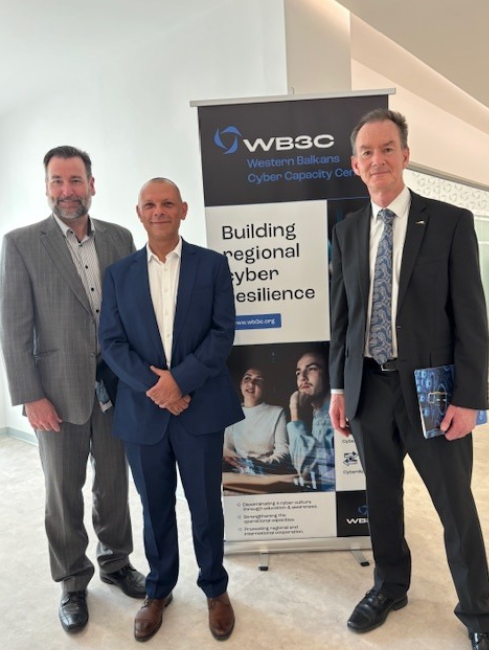
Today, WB3C was paid a curtesy visit by Australian Federal Police representatives based at the Australian Embassy in Belgrade, Mr Phillip Anderson and Deputy Head of Mission and Mr Ian Nelson Counsellor.

This visit to WB3C was to see the facilities and initiate a discussion on potential cooperation and support to WB3C's mission. The delegation was met by our in-house trainer on cybercrime Cyril C.


WB3C Participates in the Regional Development Forum for Europe

Gilles Schwoerer represented WB3C this week in Prague at the International Telecommunication Union's (ITU) Regional Development Forum for Europe, hosted by the Czech Ministry of Industry and Trade.
In a session on Partner2Connect matchmaking, the focus was clear: how to better align countries’ needs with partners’ expertise and investment to accelerate digital development.
Bringing together diverse voices across governments, industry, academia and international organisations, the discussion moved towards a more practical question—how to turn cooperation into concrete, measurable results.

The panel brought together a strong cross-sector group of experts spanning technology, digitalisation and cybersecurity:

Mr. David Vicente Ninou, Director, Andorra Digital, Andorra
Mr. Amb. Janis Karklins, Head of Government and International Organization Engagement, ICANN
Mr. Gilles Schwoerer, Head of WB3C, Montenegro
Mr. Boris Radanović, Head of International Development, SWGfL, United Kingdom
Mr. Per Fröjdh, VP International Standards, Ericsson
Prof. Volodymyr Shulha, Rector, State University of Information and Communication Technologies, Ukraine

For WB3C, this forum was a great opportunity to showcase our work focused on translating priorities into operational capacity and regional impact.
We are grateful that, as a result of this forum, WB3C’s cybersecurity contribution is now included among the official submissions to the ITU Regional Development Forum for Europe—opening further space for partnership and delivery.

Coordination Meeting with RCC/IISG

There are many initiatives across the Western Balkans focused on building capacity in cybersecurity — but how can donors work more closely together to use resources more efficiently and maximise impact? And how do we ensure that training and learning are translated into real operational capability?
At the same time, how can the Integrative Internal Security Governance (IISG) mechanism, coordinated by Regional Cooperation Council (RCC), for mapping regional needs and ongoing support be strengthened to enable more tailored, targeted capacity building?
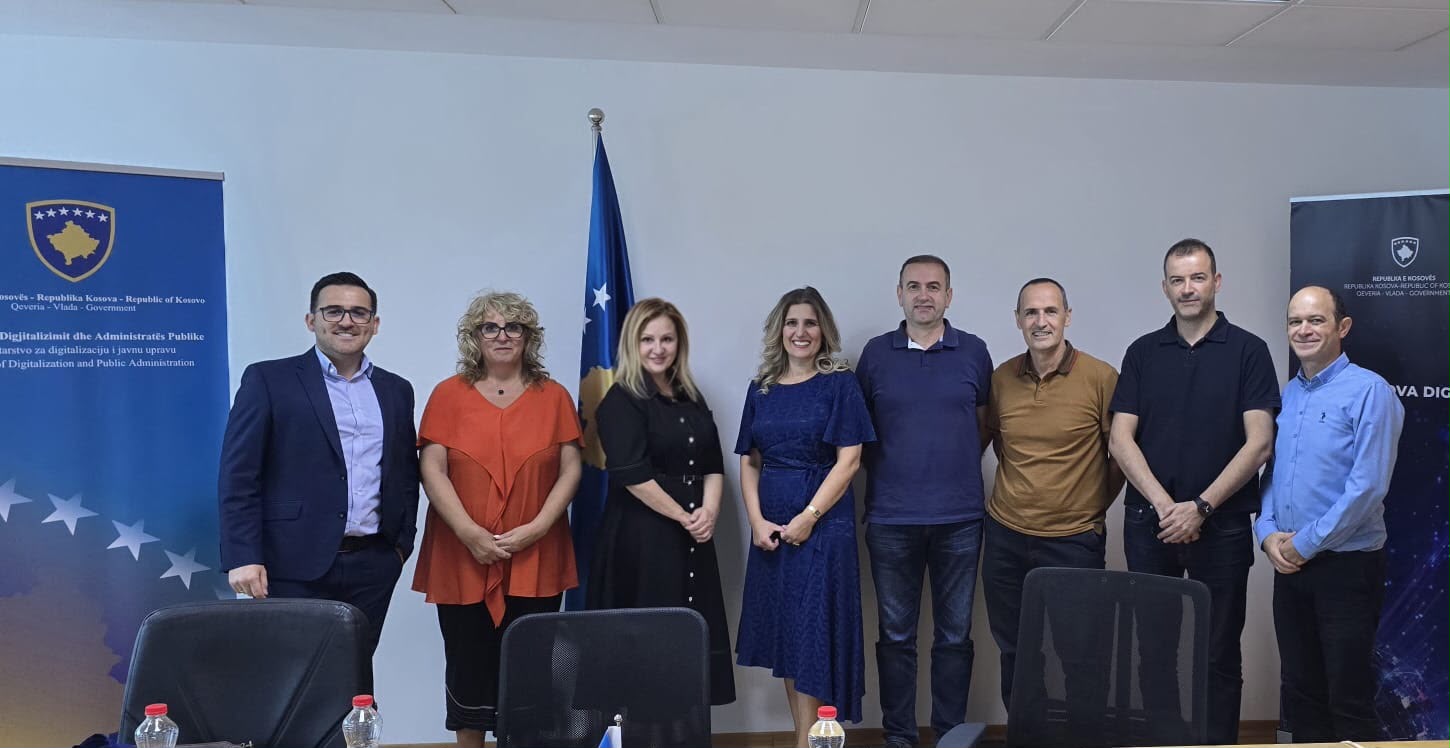
These were the key questions guiding today’s discussion at the WB3C, where we hosted colleagues from the IISG Secretariat — AGRON SOJATI, Ibrahim Begic and Ajsa Buko-Durmić — as part of their mission to Montenegro.
The conversation focused on how to take the existing needs assessment further — towards a more detailed and actionable mapping of institutional needs, closely linked to national strategic priorities and aligned with EU requirements. 
We look forward to continuing our strong cooperation with RCC and IISG in taking these ideas forward and translating them into concrete, coordinated action for the region.

Translating EU Standards into Practice: Workshop for Public Servants Training Institutions

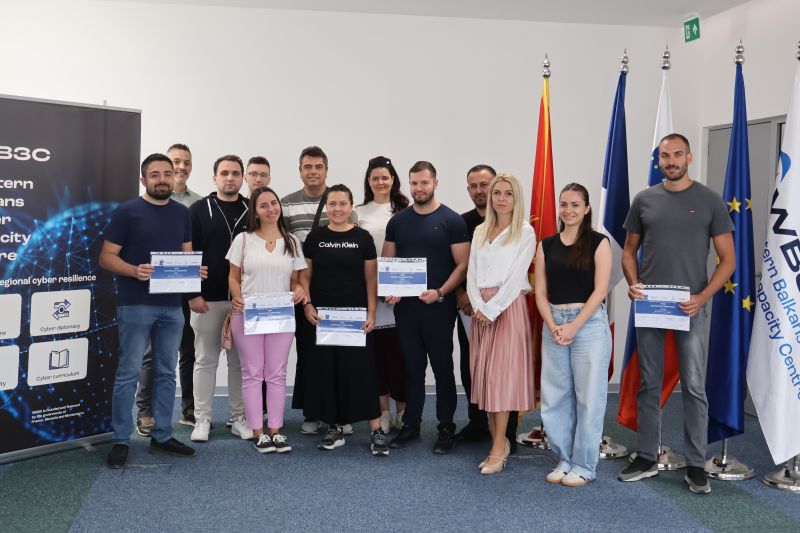
Building on last year’s work on EU legislation and public-sector cybersecurity standards, we continued the conversation this week — but moved it one step further.
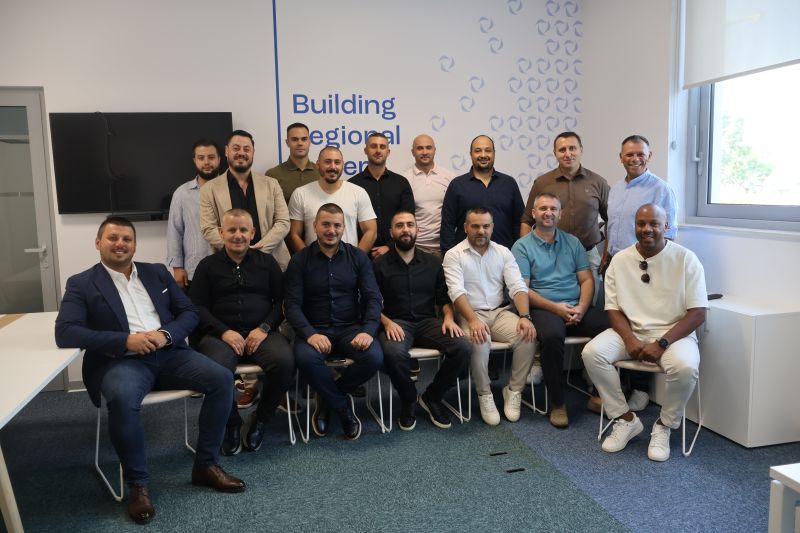
This regional training brought together institutions in the region responsible for training public servants, with a clear focus: how do we translate standards into practice?
Participants explored emerging trends, but more importantly, worked through how to design and deliver cybersecurity curricula that actually respond to today’s risks — grounded in real case studies from both the EU and the region, and shaped by peer exchange.
What made this edition different was its depth. With a more technical focus, and under the guidance of Mladen Bukilic Head of Čikom's Security Operations Centre, the discussions moved closer to operational realities — from frameworks to implementation.
The participants were welcomed by the partnership teams representatives Bojana Bajić (Regional School of Public Administration), Sokol Haxhiu (DCAF - Geneva Centre for Security Sector Governance) and Gilles Schwoerer (Western Balkans Cyber Capacity Centre (WB3C)), reaffirming a shared commitment to strengthening institutional capacity across the region.


Copyright © WB3C

Disclaimer: Translations of the original content written in English into other languages are AI generated by Weglot.