×

RCC CyberPulse 2025: Regional Stakeholder Join Forces in Cybersecurity

02.07.2025

Image for RCC CyberPulse 2025: Regional Stakeholder Join Forces in Cybersecurity

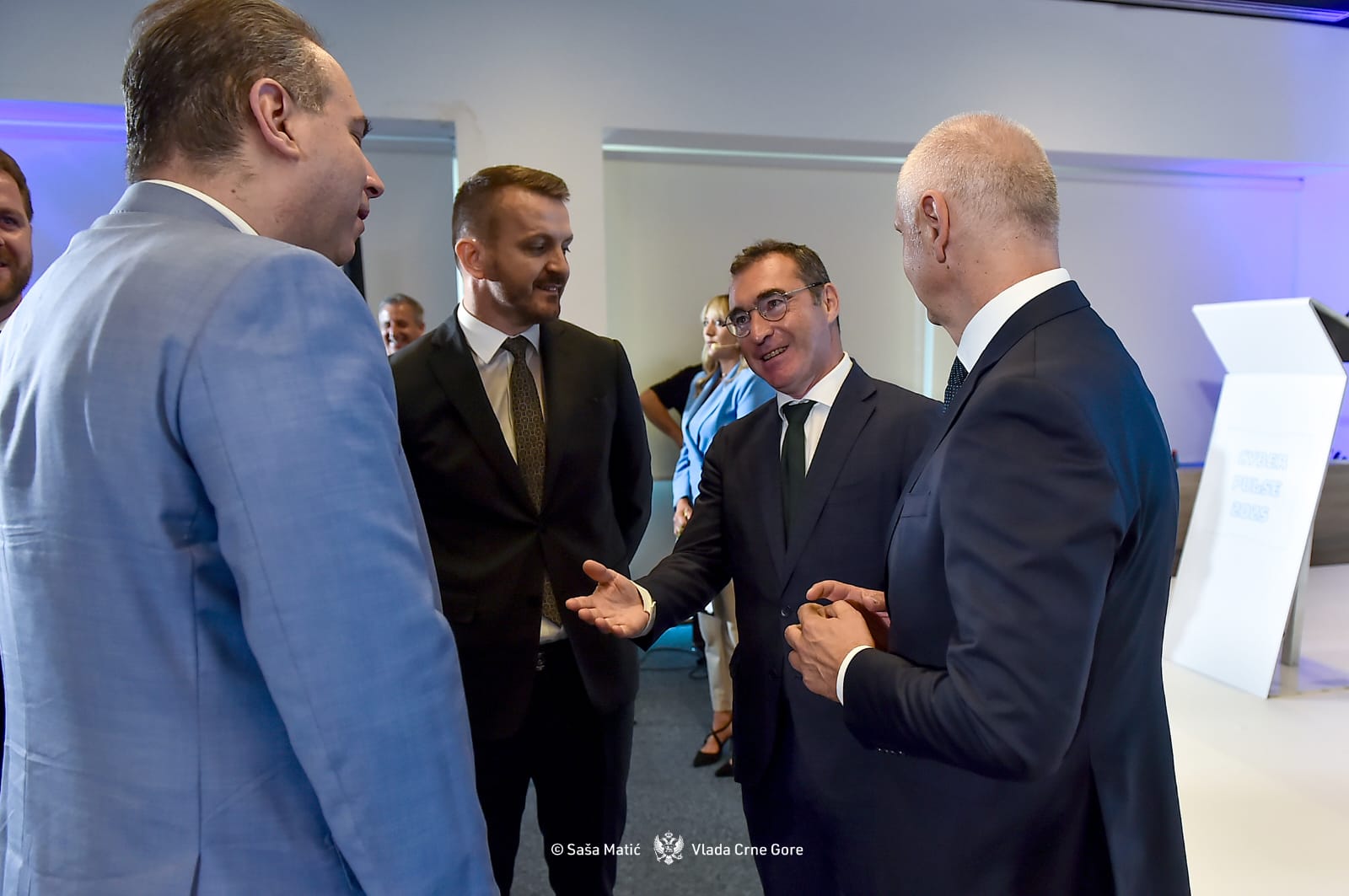
The High-Level Western Balkans Cybersecurity Conference – CyberPulse 2025: Tracking Progress, Building Resilience, Driving Change – gathered government representatives, EU institutions, regional organizations, cybersecurity experts and private sector leaders to address the growing cyber threat landscape in the Western Balkans.

CyberPulse 2025 focused on three priorities:

  • addressing current gaps in regional cyber capacities,
  • exploring the role of emerging technologies, and
  • operationalising joint initiatives and partnerships.

Opening Remarks

The conference opened with high-level messages of commitment to regional cyber resilience:

  • Amer Kapetanović, Secretary General of the RCC, highlighted the sharp rise in cyber incidents and stressed that trust, political will and coordinated regional action are the strongest “firewall” against threats. He also announced the development of the new regional cybersecurity needs database.
  • Filip Ivanović, Deputy Prime Minister of Montenegro for Foreign and European Affairs, emphasized Montenegro’s adoption of European cybersecurity standards and its vision of a secure, resilient digital future as part of EU integration.
  • Michael Docherty, speaking on behalf of the European Commission Delegation, reaffirmed EU support for the region through initiatives with ENISA and the Council of Europe, underlining that cybersecurity is now a central element of the EU Growth Plan for the Western Balkans.
  • Gilles Schwoerer, Head of WB3C, noted that while digital transformation offers many opportunities, it also expands the attack surface, underscoring the urgent need for secure digital pathways and collective resilience.

Conference Panels

  • High-Level Panel: Stronger Connectivity, Smarter Security, Resilient Future (moderated by Danijela Gačević, Head of the Programme Department, RCC)
    Senior government representatives from the region exchanged views on national priorities, institutional capacities, and EU integration in the field of cybersecurity.
    • Governments stressed the shortage of cybersecurity professionals as a critical challenge.
    • Kosovo*’s representative emphasized dependence on external consultants and the need to train public servants internally.
    • Montenegro focused on intersectoral cooperation and the role of NATO and EU support.
    • North Macedonia presented its new Ministry for Digital Transformation and its national cybersecurity strategy.

      Panelists:

    • Bardhyl Dobra – Deputy Minister of Internal Affairs, Pristina
    • Naim Gjokaj – State Secretary, Ministry of Public Administration, Podgorica
    • Radoslav Nastasijevikj Vardjiski – Deputy Minister for Digital Transformation, Skopje


  • Navigating Cyber Threats in the Western Balkans: The Evolving Role of AI and Emerging Technologies (moderated by Mirza Jamaković, Prosecutor's Office Sarajevo)
    Experts from Europol, law enforcement, and the private sector discussed the opportunities and risks of AI, from forensic tools to the misuse of generative AI by organized crime groups.
    • Europol described using machine learning to analyze millions of data points in criminal investigations.
    • Concerns raised about organized crime groups developing their own AI tools, including large language models, for cybercrime.
    • Calls for explainable and transparent AI outcomes in cybersecurity decision-making.
    • Oracle warned against uploading confidential data into public AI tools, stressing regulatory gaps.

      Panelists:

    • Emmanuel Kessler – Europol
    • Jelena Zelenović Matone – WomenCyberForce / Women4Cyber
    • Nenad Bogunović – Cybercrime Unit, Belgrade
    • Amar Dedović – Oracle


  • Empowering Talent: Skill-Building for the Future in the Western Balkans (moderated by Andreja Mihailović, Women4Cyber Montenegro)
    The session focused on education, workforce shortages, women’s participation in cybersecurity, and ways to redirect youth talent from informal digital activities to formal opportunities.
    • Highlighted that women’s participation in cybersecurity remains below 20% in the Western Balkans.
    • Croatia shared progress from 30% to 52% female participation in the UN Cybersecurity Working Group between 2019 and 2024.
    • Albania’s Cybersecurity Agency argued for education reform starting at primary school.
    • Open Society Foundation raised concerns about youth involvement in grey/illegal digital activities, calling for redirection into formal sectors.

      Panelists:

    • Tamara Tafra – Deputy Minister of Foreign and European Affairs, Zagreb
    • Igli Tafa – Director, National Cybersecurity Agency, Tirana
    • Andi Dobrushi – Open Society Foundation
    • Fabio di Franco – ENISA


  • Integrating Experience and Strategy: A Multisector Dialogue on SOC Advancement (moderated by Vanja Madžgalj, WB3C)
    Panelists shared good practices for building and operating Security Operations Centres, stressing the importance of policy alignment, inter-sectoral cooperation and trust-building between public and private actors.
  • Albania’s national experience showed that the 2022 cyberattack became a catalyst for building SOC capacity and adopting “zero trust” and defense-in-depth strategies.
  • Differences between public and private sector approaches to threat intelligence were emphasized, with trust and data-sharing seen as barriers for public institutions.
  • North Macedonia introduced a new law placing the Ministry for Digital Transformation as the central cybersecurity authority.

    Panelists:

    • Franc Zyliftari – Head of Incident Response Team, Tirana
    • Philippe Gillet – Gatewatcher, Paris
    • Aleksandar Acev – Cyber Balkans, Skopje


  • Sectors United Against Cyber Threats: Building Bridges Across Sectors (Milan Sekuloski, e-Governance Academy, Tallinn)
    This discussion brought together public institutions, civil society, academia, and the private sector, highlighting how multi-stakeholder collaboration is essential to strengthening regional resilience.
    • Pristina shared good practices in bringing all relevant actors together regularly on critical infrastructure protection.
    • Civil society organizations were recognized as important but vulnerable actors requiring targeted cyber hygiene tools and support.
    • SMEs were highlighted as particularly exposed, requiring systemic support from the public sector.
    • The EBRD linked its investment strategy to cybersecurity, showing that infrastructure projects cannot be sustainable without integrated cyber risk management.

      Panelists:

    • Lulezon Jagxhiu – Prime Minister’s Cabinet, Pristina
    • Predrag Puharić – Cybersecurity Centre of Excellence, Sarajevo
    • Ivona Dabetić – NGO Secure, Podgorica
    • Roy Yarom – European Bank for Reconstruction and Development (EBRD)

The conference concluded that cybersecurity in the Western Balkans can no longer be treated as a purely technical issue but must be recognized as a strategic priority, requiring long-term cooperation, sustained investment and coordinated regional action.


Certified Data Protection Officer training,

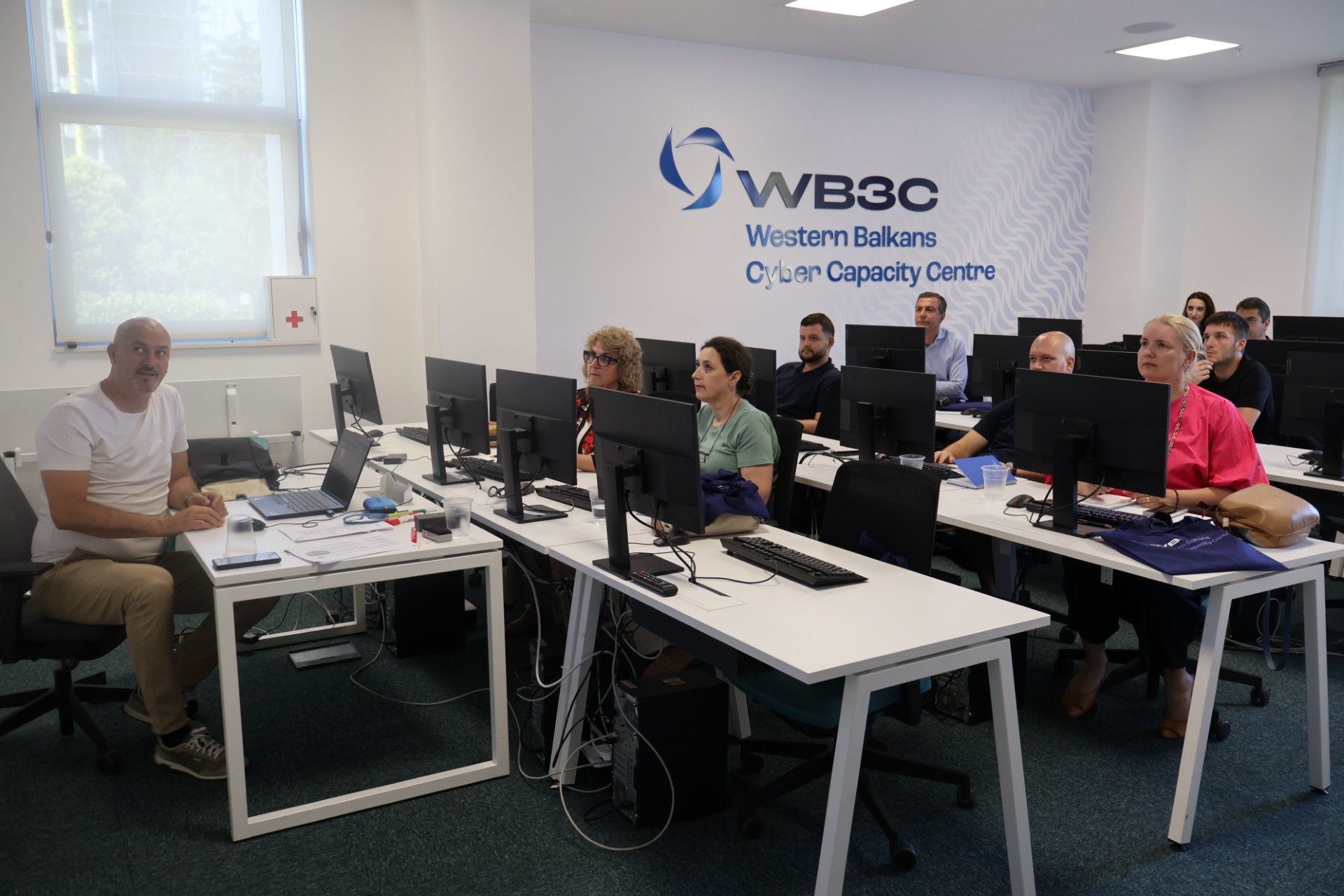
This week, 26-28 May 2026, we organized the Certified Data Protection Officer training, a three-day regional programme for public servants involved in the implementation, supervision and monitoring of data protection measures across governmental and public sector institutions.

Data protection is a key part of digital trust. As public services become more digital and interconnected, institutions need the capacity to protect personal data, strengthen compliance, and ensure that citizens’ rights are respected in practice.

For the Western Balkans, this training is especially relevant. Strong data protection frameworks support better public administration, safer digital services, responsible data use and closer alignment with European standards. They also help institutions move beyond formal compliance and towards a more practical, people-centred approach to privacy and accountability.

Over the next three days, participants will work through the key pillars of data protection practice:

Organisational governance — understanding roles, responsibilities and internal accountability
Customer-centric compliance — applying data protection principles in services and institutional processes
People-focused rights and responsibilities — strengthening the protection of individuals and supporting responsible decision-making

The course combines theory with practical exercises, peer exchange, group work and interactive simulations. Participants will work in small groups using a mock organisation aligned with their institutional context, allowing them to apply lessons to realistic public-sector scenarios.

The training is also designed as a certification programme, with short daily quizzes and final certification based on the average score across all three days.

By investing in Data Protection Officer capacities, WB3C is supporting the development of a stronger regional professional network — one that can help institutions protect personal data, build public trust and embed data protection into everyday governance. Big thank you to our trainers Blerta Xhako, Stella Manga Chesnay and Stefano Leucci.

Curtesy Visit by the Norwegian Ministry of Foreign Affairs

WB3C pleased to welcome a delegation of the Kingdom of Norway for a courtesy visit and exchange on possible areas of future cooperation.
The visit was an opportunity to present WB3C’s work as a regional platform for cybersecurity, cybercrime and cyber diplomacy, and to discuss how practical capacity-building can support resilience, institutional cooperation and the European path of the Western Balkans.
We were honoured to receive Mr Eirik Nestås Mathisen, Special Envoy for the Western Balkans at the Norwegian Ministry of Foreign Affairs, together with Ms Anita Krokan, Special Adviser at the Norwegian Ministry of Foreign Affairs, Colonel Dag-Magne Lunde, Defence Attaché of the Kingdom of Norway, Mrs. Ingrid Vik from the Norwegian NGO UTSYN and Mr Rajko Radevic, Adviser at the Norwegian Ministry of Defence, who were welcome by our programme lead Gilles Schwoerer.
Norway has long been a valued partner to the region, with a strong understanding of security, governance and resilience challenges in the Western Balkans. We look forward to continuing the dialogue and exploring concrete ways to work together in the period ahead.

Enhancing Cyber Resilience Across Critical Sectors through NIS2 Alignment

Today, we are launching a four-day regional training on Enhancing Cyber Resilience Across Critical Sectors through NIS2 Alignment, organised in cooperation with the The World Bank Group.
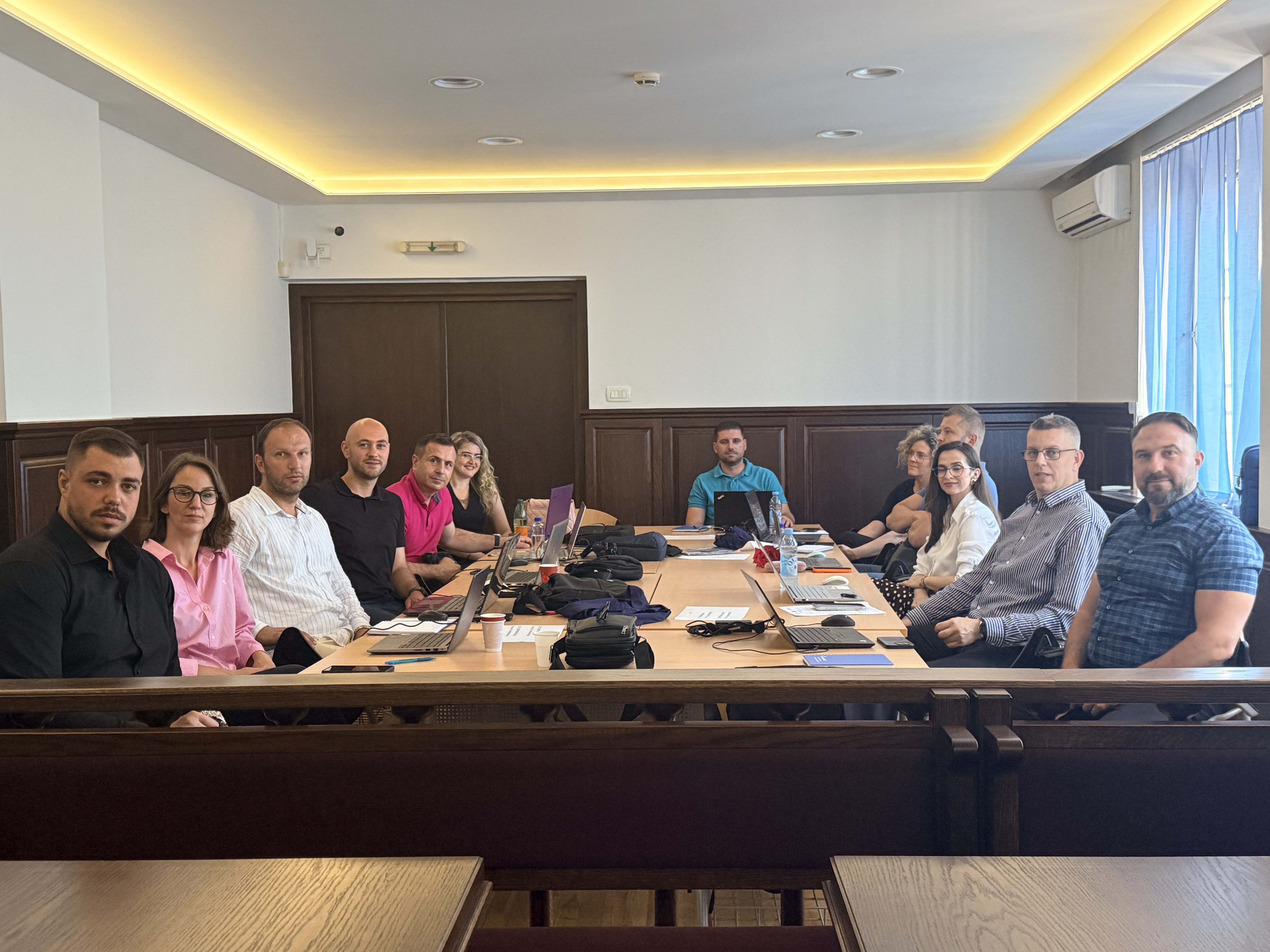
The training brings together regional representatives working across government, regulation, cybersecurity, critical infrastructure and policy. Over the next four days, participants will explore what NIS2 alignment means in practice for the Western Balkans, and how stronger cyber governance can help protect the critical services our societies rely on, from energy and telecommunications to transport, water, health and public administration.
This is especially relevant for our region. Cyber incidents do not stop at borders, and neither do the systems, services and supply chains that connect us. Building resilience requires clear institutional roles, practical incident reporting mechanisms, proportionate supervision, stronger risk management and better regional coordination.
The training will focus on practical policy choices and implementation challenges, including:
• identifying essential and important entities
• strengthening governance and accountability
• designing incident reporting and coordination pathways
• understanding supervision and enforcement approaches
• addressing supply-chain risk
• developing realistic implementation roadmaps
By the end of the training, participants will work towards concrete outputs, including national choices maps, incident coordination diagrams, supervisory capability gap lists and 24-month roadmaps for priority technical assistance and investment needs.
Through this cooperation, WB3C and the World Bank Group are supporting regional efforts to move from awareness to implementation, helping institutions make informed decisions, align with European cybersecurity standards and strengthen resilience across critical sectors.
The training is led by Mladen Bukilic, SOC Manager and CISO at Čikom, Montenegro and Vincent Desroches of EU4CYBER.


Copyright © WB3C

Disclaimer: Translations of the original content written in English into other languages are AI generated by Weglot.