×

RCC CyberPulse 2025: Regional Stakeholder Join Forces in Cybersecurity

02.07.2025

Image for RCC CyberPulse 2025: Regional Stakeholder Join Forces in Cybersecurity

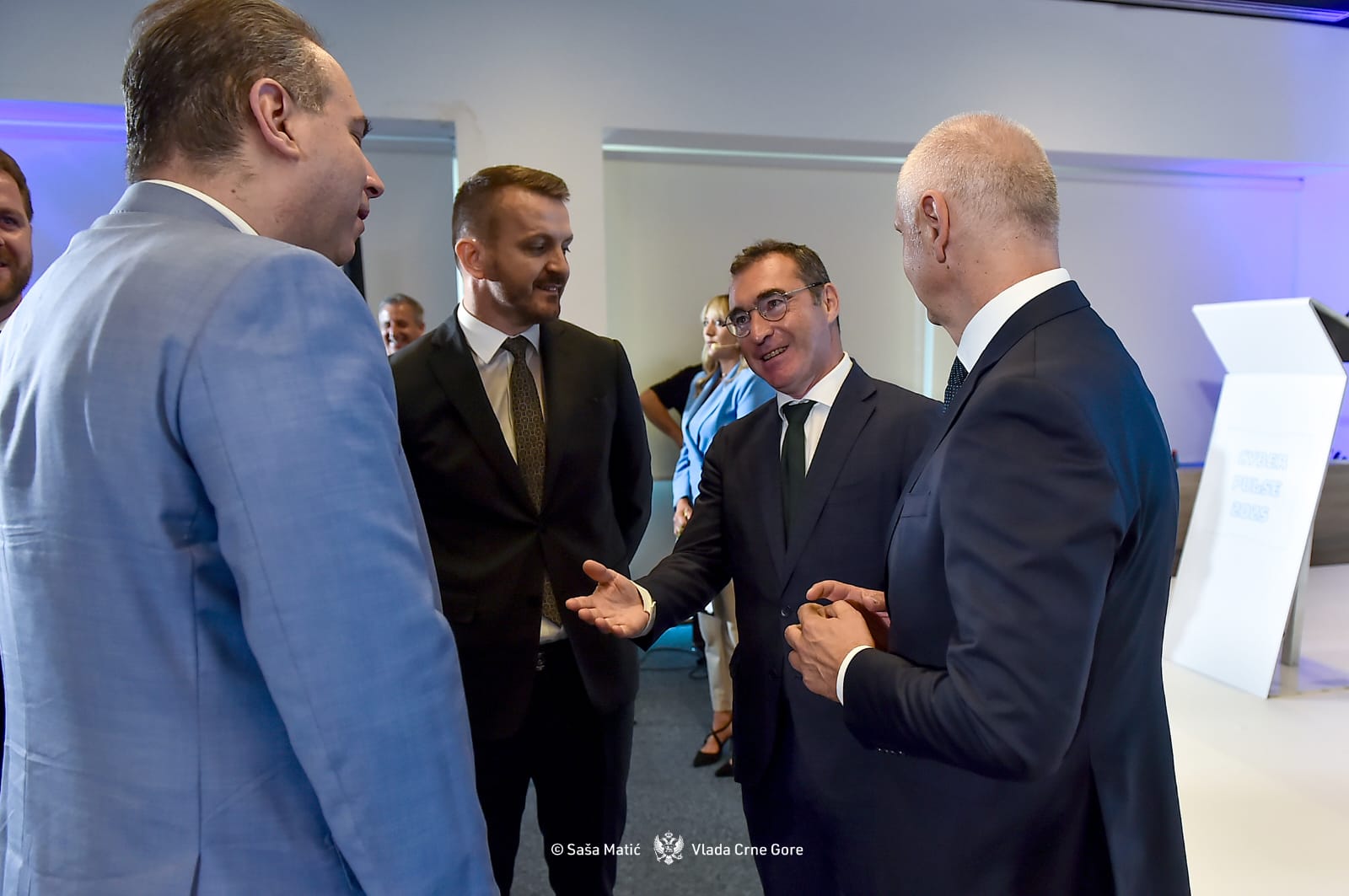
The High-Level Western Balkans Cybersecurity Conference – CyberPulse 2025: Tracking Progress, Building Resilience, Driving Change – gathered government representatives, EU institutions, regional organizations, cybersecurity experts and private sector leaders to address the growing cyber threat landscape in the Western Balkans.

CyberPulse 2025 focused on three priorities:

  • addressing current gaps in regional cyber capacities,
  • exploring the role of emerging technologies, and
  • operationalising joint initiatives and partnerships.

Opening Remarks

The conference opened with high-level messages of commitment to regional cyber resilience:

  • Amer Kapetanović, Secretary General of the RCC, highlighted the sharp rise in cyber incidents and stressed that trust, political will and coordinated regional action are the strongest “firewall” against threats. He also announced the development of the new regional cybersecurity needs database.
  • Filip Ivanović, Deputy Prime Minister of Montenegro for Foreign and European Affairs, emphasized Montenegro’s adoption of European cybersecurity standards and its vision of a secure, resilient digital future as part of EU integration.
  • Michael Docherty, speaking on behalf of the European Commission Delegation, reaffirmed EU support for the region through initiatives with ENISA and the Council of Europe, underlining that cybersecurity is now a central element of the EU Growth Plan for the Western Balkans.
  • Gilles Schwoerer, Head of WB3C, noted that while digital transformation offers many opportunities, it also expands the attack surface, underscoring the urgent need for secure digital pathways and collective resilience.

Conference Panels

  • High-Level Panel: Stronger Connectivity, Smarter Security, Resilient Future (moderated by Danijela Gačević, Head of the Programme Department, RCC)
    Senior government representatives from the region exchanged views on national priorities, institutional capacities, and EU integration in the field of cybersecurity.
    • Governments stressed the shortage of cybersecurity professionals as a critical challenge.
    • Kosovo*’s representative emphasized dependence on external consultants and the need to train public servants internally.
    • Montenegro focused on intersectoral cooperation and the role of NATO and EU support.
    • North Macedonia presented its new Ministry for Digital Transformation and its national cybersecurity strategy.

      Panelists:

    • Bardhyl Dobra – Deputy Minister of Internal Affairs, Pristina
    • Naim Gjokaj – State Secretary, Ministry of Public Administration, Podgorica
    • Radoslav Nastasijevikj Vardjiski – Deputy Minister for Digital Transformation, Skopje


  • Navigating Cyber Threats in the Western Balkans: The Evolving Role of AI and Emerging Technologies (moderated by Mirza Jamaković, Prosecutor's Office Sarajevo)
    Experts from Europol, law enforcement, and the private sector discussed the opportunities and risks of AI, from forensic tools to the misuse of generative AI by organized crime groups.
    • Europol described using machine learning to analyze millions of data points in criminal investigations.
    • Concerns raised about organized crime groups developing their own AI tools, including large language models, for cybercrime.
    • Calls for explainable and transparent AI outcomes in cybersecurity decision-making.
    • Oracle warned against uploading confidential data into public AI tools, stressing regulatory gaps.

      Panelists:

    • Emmanuel Kessler – Europol
    • Jelena Zelenović Matone – WomenCyberForce / Women4Cyber
    • Nenad Bogunović – Cybercrime Unit, Belgrade
    • Amar Dedović – Oracle


  • Empowering Talent: Skill-Building for the Future in the Western Balkans (moderated by Andreja Mihailović, Women4Cyber Montenegro)
    The session focused on education, workforce shortages, women’s participation in cybersecurity, and ways to redirect youth talent from informal digital activities to formal opportunities.
    • Highlighted that women’s participation in cybersecurity remains below 20% in the Western Balkans.
    • Croatia shared progress from 30% to 52% female participation in the UN Cybersecurity Working Group between 2019 and 2024.
    • Albania’s Cybersecurity Agency argued for education reform starting at primary school.
    • Open Society Foundation raised concerns about youth involvement in grey/illegal digital activities, calling for redirection into formal sectors.

      Panelists:

    • Tamara Tafra – Deputy Minister of Foreign and European Affairs, Zagreb
    • Igli Tafa – Director, National Cybersecurity Agency, Tirana
    • Andi Dobrushi – Open Society Foundation
    • Fabio di Franco – ENISA


  • Integrating Experience and Strategy: A Multisector Dialogue on SOC Advancement (moderated by Vanja Madžgalj, WB3C)
    Panelists shared good practices for building and operating Security Operations Centres, stressing the importance of policy alignment, inter-sectoral cooperation and trust-building between public and private actors.
  • Albania’s national experience showed that the 2022 cyberattack became a catalyst for building SOC capacity and adopting “zero trust” and defense-in-depth strategies.
  • Differences between public and private sector approaches to threat intelligence were emphasized, with trust and data-sharing seen as barriers for public institutions.
  • North Macedonia introduced a new law placing the Ministry for Digital Transformation as the central cybersecurity authority.

    Panelists:

    • Franc Zyliftari – Head of Incident Response Team, Tirana
    • Philippe Gillet – Gatewatcher, Paris
    • Aleksandar Acev – Cyber Balkans, Skopje


  • Sectors United Against Cyber Threats: Building Bridges Across Sectors (Milan Sekuloski, e-Governance Academy, Tallinn)
    This discussion brought together public institutions, civil society, academia, and the private sector, highlighting how multi-stakeholder collaboration is essential to strengthening regional resilience.
    • Pristina shared good practices in bringing all relevant actors together regularly on critical infrastructure protection.
    • Civil society organizations were recognized as important but vulnerable actors requiring targeted cyber hygiene tools and support.
    • SMEs were highlighted as particularly exposed, requiring systemic support from the public sector.
    • The EBRD linked its investment strategy to cybersecurity, showing that infrastructure projects cannot be sustainable without integrated cyber risk management.

      Panelists:

    • Lulezon Jagxhiu – Prime Minister’s Cabinet, Pristina
    • Predrag Puharić – Cybersecurity Centre of Excellence, Sarajevo
    • Ivona Dabetić – NGO Secure, Podgorica
    • Roy Yarom – European Bank for Reconstruction and Development (EBRD)

The conference concluded that cybersecurity in the Western Balkans can no longer be treated as a purely technical issue but must be recognized as a strategic priority, requiring long-term cooperation, sustained investment and coordinated regional action.


WB3C Elects Naim Djokaj as its First Director General

The Governing Board of the Western Balkans Cyber Capacity Centre (WB3C), meeting for its first session in Podgorica on 10 March 2026, elected Naim M. GJOKAJ as the Centre’s new Director General.
Mr. Gjokaj currently serves as State Secretary at the Ministry of Public Administration of Montenegro, a role he has held since December 2023. 
He brings extensive experience in public administration reform and regional cooperation, with a strong focus on digital transformation and institutional development. Mr. Gjokaj holds a degree in Banking from the Faculty of Financial Sciences at Marmara University in Istanbul, where he studied as a scholarship recipient of the Government of Turkey. 
His election marks an important step in the continued institutional development of WB3C following the Centre’s transition into an international organisation.
Mr. Gjokaj will be joining WB3C soon to lead the next phase of the Centre’s development, with a focus on strengthening the institution’s foundations, deepening regional cooperation, expanding strategic partnerships and further consolidating WB3C’s role as a key regional platform supporting the EU integration and digital resilience of the Western Balkans. He will be working alongside our Programme Director Gilles Schwoerer in guiding the Centre’s strategic growth and programme development in the years ahead.

We warmly congratulate Director General-elect Naim Gjokaj and look forward to welcoming him to the WB3C team.

WB3C Participates in EU CYBER DIRECT Workshop in Brussels

WB3C was pleased to take part in the discussion organised by the EU Institute for Security Studies and EU Cyber Direct – EU Cyber Diplomacy Initiative on “Europe Connected and Secure: Leveraging cyber and digital capacities in enlargement countries,” held in Brussels on 12 March.
The workshop brought together representatives from the Western Balkans, EU institutions and partners from Ukraine to assess common cyber threats, institutional realities, and the role that digital resilience can play in strengthening Europe’s neighbourhood security.
For WB3C, it was a valuable opportunity to exchange perspectives with colleagues from the WB6 partners, DG ENEST, DG CONNECT, ENISA, EEAS and other stakeholders working to support the EU enlargement agenda through stronger cyber and digital capacities.

Two ideas emerging from the discussion that our Programme Director Gilles Schwoerer engaged in are particularly important for us and will guide WB3C’s work in the coming months:
• A regional cyber diplomacy initiative, to be developed together with EU Cyber Direct, which WB3C aims to host in the second half of the year.
• A structured dialogue with universities across the region, to explore how practice-based cyber modules developed at WB3C can complement and strengthen existing or emerging Master’s programmes in cybersecurity.

Developing talent and building institutional capacity remain central to the region’s digital future. WB3C looks forward to continuing this conversation with partners across the region and the EU.

WB3C Officially Becomes an International Organization

Yesterday, the Western Balkans Cyber Capacity Centre (WB3C) reached a major milestone in its institutional journey.

At the first meeting of its Governing Board, representatives of France, Slovenia and Montenegro came together to mark a new chapter for the Centre, with the signing of the Headquarters Agreement formally confirming WB3C as the first international organization headquartered in Podgorica. The appointed members of the Governing Board, H.E. Anne-Marie Maskay and Gen. Stephane Richou for France, iztok jarc and Uroš Svete for Slovenia and Ivan Lekovic and Aleksandar Zecevic for Montenegro, held the first inaugural session to adopt internal documents, while the Programme Director Gilles Schwoerer presented the achievements of the Centre in 2025 and the ambitious plan for 2026.

The event was honoured by the presence of the Deputy Prime Minister and Foreign Minister Ervin Ibrahimovic, Minister of Public Administration Marash Dukaj, French and Slovenian Ambassadors to Montenegro Anne-Marie Maskay and bernarda gradišnik, representatives of the EU Delegation and the diplomatic corps in Montenegro and our institutional partners, reflecting the strong support behind WB3C’s mission to serve as a regional platform for cyber capacity building, cooperation and resilience.

During the official addresses of the high representatives of the founding members, we heard the reassuring words of unwavering support to the region's European future and WB3C's mission in supporting the region on this path through strengthening its resilience against cyber and hybrid threats.

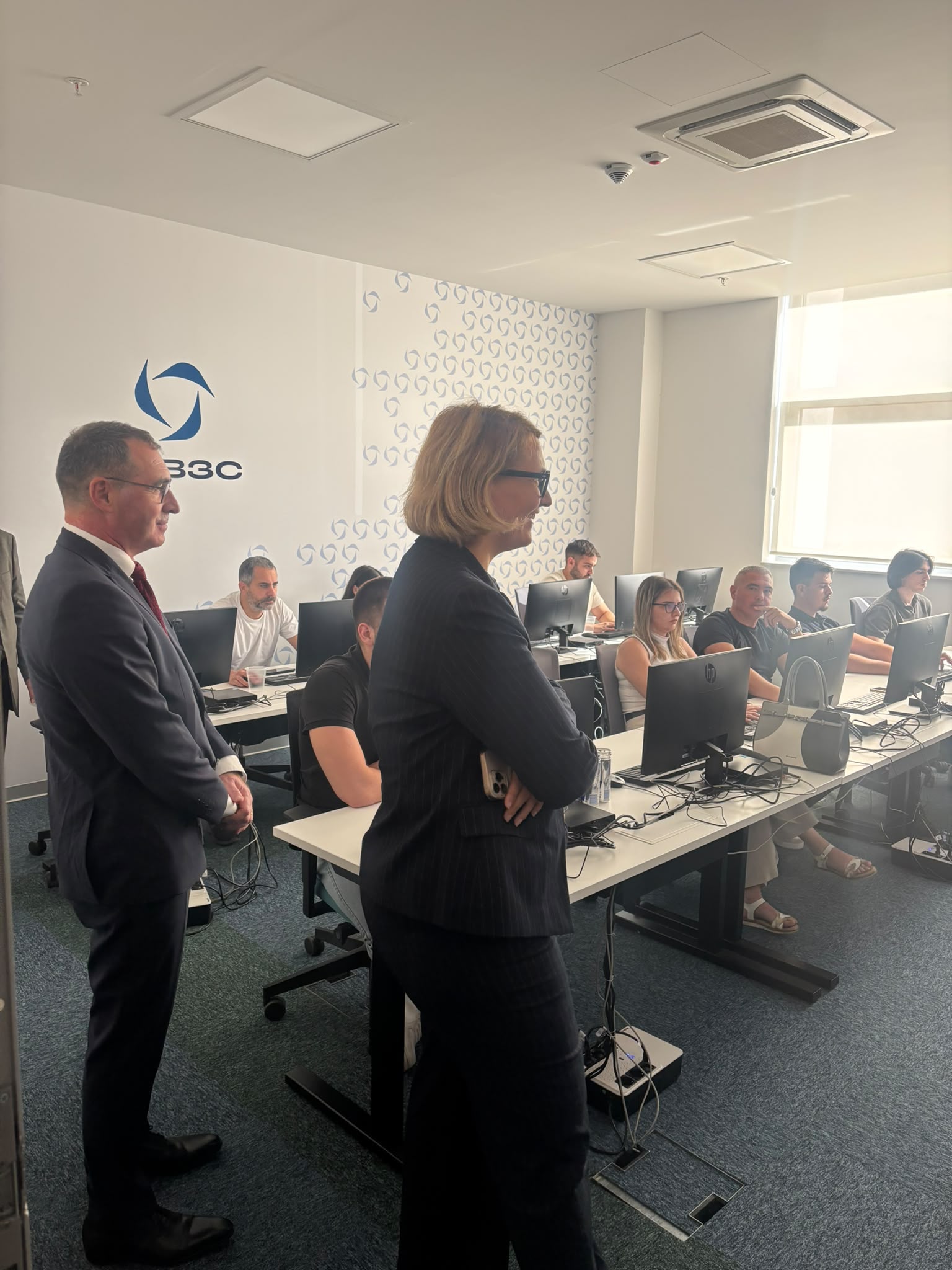
Beyond the formal ceremony, the day also offered a meaningful reminder of what this institution is ultimately about: investing in people, knowledge and the region’s future. On this occasion, General Stéphane Richou, Director of Security and Defense Cooperation at the French Ministry for Europe and Foreign Affairs (Direction de la Coopération de Sécurité et de Défense DCSD 🇫🇷) visited the first class of the Cybersecurity Diploma Course, engaging with participants who represent the next generation of cyber professionals in the Western Balkans.

Taken together, yesterday’s events stood as a powerful testament to a shared commitment to regional cooperation, European values and a more secure digital future.


Copyright © WB3C

Disclaimer: Translations of the original content written in English into other languages are AI generated by Weglot.