×

WB3C joins UK's regional CybHER initiative empowering women and girls for cyber careers

07.11.2025

Image for WB3C joins UK's regional CybHER initiative empowering women and girls for cyber careers

We are proud to be part of the regional CybHER initiative by the British Council, designed to empower girls and women across the Western Balkans to pursue and thrive in cyber careers. For the WB3C, CybHER is not only a regional effort we support, but also a concrete opportunity to invest in our own people and create space for their professional development.

As part of this, WB3C took part in two CybHER components:
1️⃣ A leadership program for early-career women in cybersecurity.
2️⃣ A workshop on gender-sensitive HR policies for cybersecurity organizations.

1. Leadership skills for early-career women in cyber

Our colleague Vanja Radović is representing the WB3C in the CybHER leadership track for young women in cybersecurity. This program is designed to help participants gain both the mindset and the skills needed to grow and lead in a still male-dominated industry. Over the course of the program, participants will:

💡 Build authentic leadership skills by exploring their personal values, leadership styles and emotional intelligence.
💡 Discover diverse cybersecurity career paths and map concrete options for their own development.
💡 Learn practical strategies to navigate stereotypes, bias and workplace barriers with confidence.
💡 Strengthen networking and collaboration skills to build a reliable support system in the sector.
💡 Develop a personal action plan to apply what they learn in their daily work.

We are especially glad that Vanja will learn from experienced regional leaders such as Larisa Halilovic, an international leadership expert, and Andreja Mihailović, PhD, President of Women4Cyber Montenegro, whose guidance connects technical careers with the human skills needed for leadership.

2. Gender-sensitive HR policies in cybersecurity organisations

In parallel, WB3C also joined the CybHER workshop on gender-sensitive HR policies in cybersecurity organizations, focusing on how organizational systems can either open doors for women - or quietly keep them closed. This component, was followed by our colleague Vanja Madzgalj, responsible for strategic communications and with substantive experience in gender mainstreaming, in order to:

💡 Exchange experiences and good practices between companies on inclusive and fair HR approaches.
💡 Look at domestic and international trends in gender-sensitive and inclusive HR in tech and cybersecurity.
💡 Examine how bias, discrimination, the glass ceiling and everyday prejudices show up in recruitment, promotion and leadership opportunities.
💡 Explore practical ways to improve the full HR cycle: from inclusive job descriptions and selection processes, to advancement, leadership roles and supportive workplace culture.
💡 Discuss mechanisms for safety and confidential reporting, and how policies can better protect and empower staff who experience harassment or discrimination.

The workshop concluded with self-assessment of existing HR practices, individual commitments for change and first steps towards mentoring and peer support, so that policy discussions can translate into everyday practice.

At the Western Balkans Cyber Capacity Centre (WB3C), we believe that real change happens when we work on both people and systems. By empowering our own female colleagues through programs like CybHER, and by strengthening HR and organizational practices that support them, we are investing in a cybersecurity community where women can enter, stay, grow and lead.



WB3C Elects Naim Djokaj as its First Director General

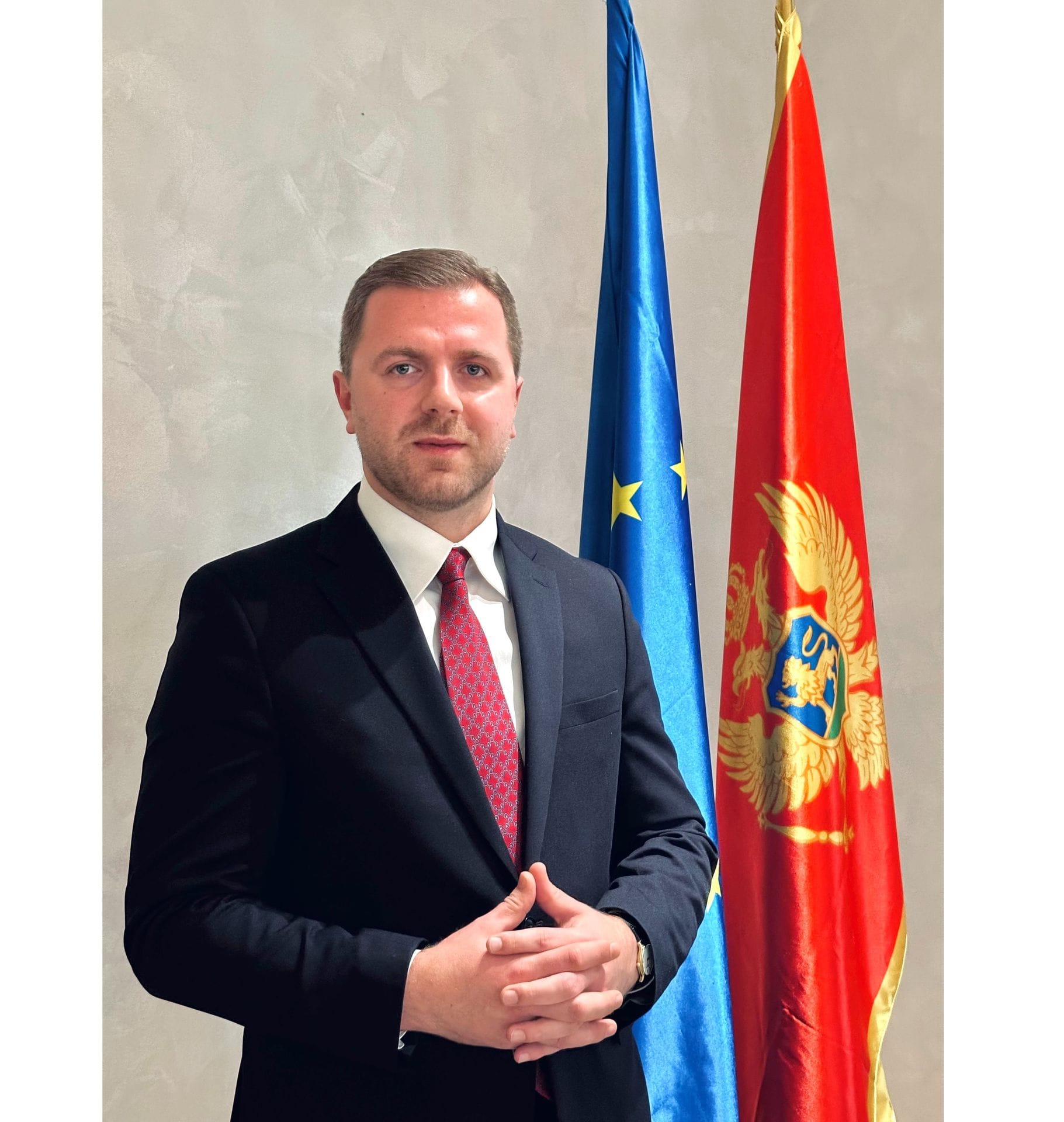
The Governing Board of the Western Balkans Cyber Capacity Centre (WB3C), meeting for its first session in Podgorica on 10 March 2026, elected Naim M. GJOKAJ as the Centre’s new Director General.
Mr. Gjokaj currently serves as State Secretary at the Ministry of Public Administration of Montenegro, a role he has held since December 2023. 
He brings extensive experience in public administration reform and regional cooperation, with a strong focus on digital transformation and institutional development. Mr. Gjokaj holds a degree in Banking from the Faculty of Financial Sciences at Marmara University in Istanbul, where he studied as a scholarship recipient of the Government of Turkey. 
His election marks an important step in the continued institutional development of WB3C following the Centre’s transition into an international organisation.
Mr. Gjokaj will be joining WB3C soon to lead the next phase of the Centre’s development, with a focus on strengthening the institution’s foundations, deepening regional cooperation, expanding strategic partnerships and further consolidating WB3C’s role as a key regional platform supporting the EU integration and digital resilience of the Western Balkans. He will be working alongside our Programme Director Gilles Schwoerer in guiding the Centre’s strategic growth and programme development in the years ahead.

We warmly congratulate Director General-elect Naim Gjokaj and look forward to welcoming him to the WB3C team.

WB3C Participates in EU CYBER DIRECT Workshop in Brussels

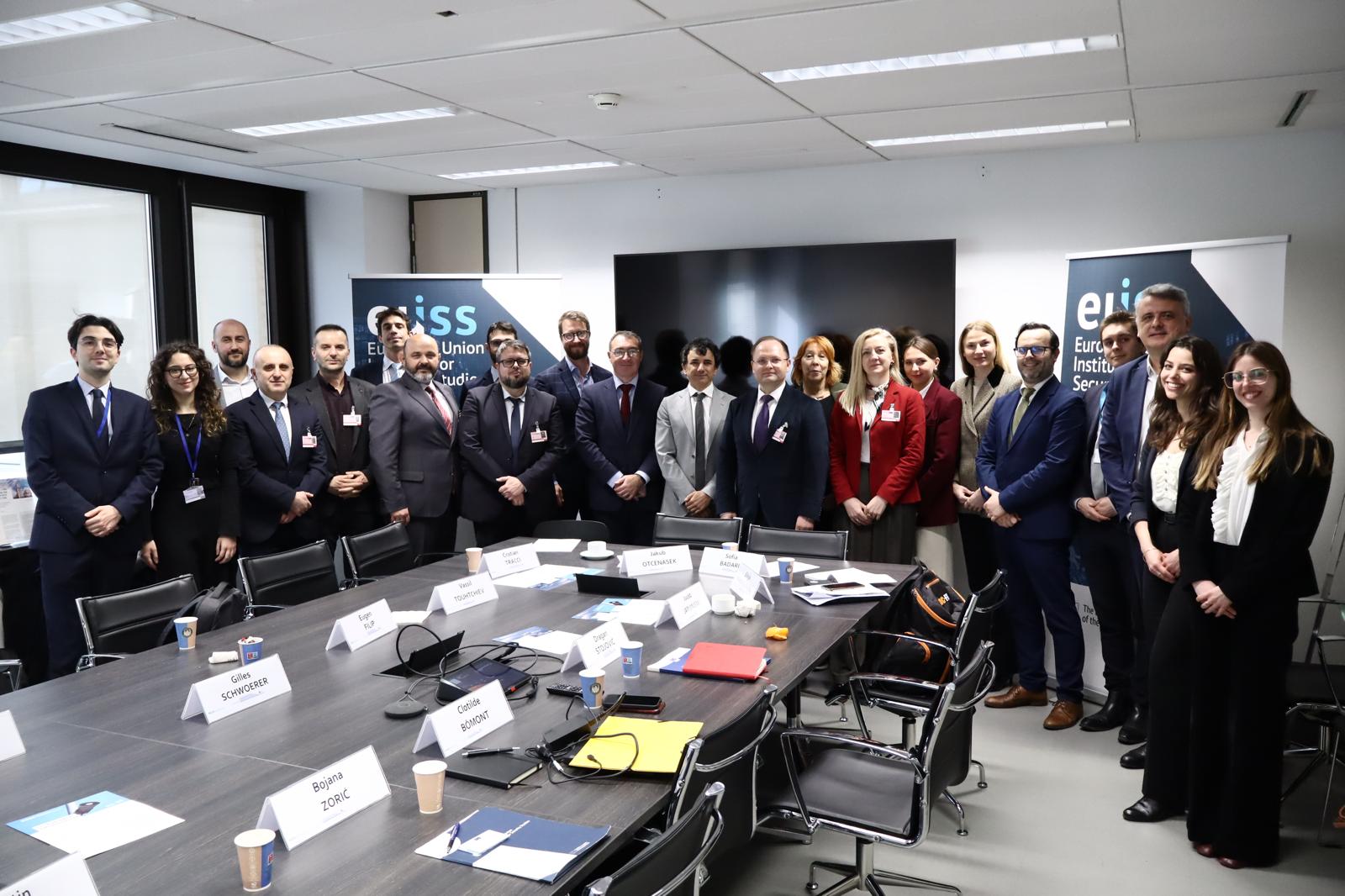
WB3C was pleased to take part in the discussion organised by the EU Institute for Security Studies and EU Cyber Direct – EU Cyber Diplomacy Initiative on “Europe Connected and Secure: Leveraging cyber and digital capacities in enlargement countries,” held in Brussels on 12 March.
The workshop brought together representatives from the Western Balkans, EU institutions and partners from Ukraine to assess common cyber threats, institutional realities, and the role that digital resilience can play in strengthening Europe’s neighbourhood security.
For WB3C, it was a valuable opportunity to exchange perspectives with colleagues from the WB6 partners, DG ENEST, DG CONNECT, ENISA, EEAS and other stakeholders working to support the EU enlargement agenda through stronger cyber and digital capacities.

Two ideas emerging from the discussion that our Programme Director Gilles Schwoerer engaged in are particularly important for us and will guide WB3C’s work in the coming months:
• A regional cyber diplomacy initiative, to be developed together with EU Cyber Direct, which WB3C aims to host in the second half of the year.
• A structured dialogue with universities across the region, to explore how practice-based cyber modules developed at WB3C can complement and strengthen existing or emerging Master’s programmes in cybersecurity.

Developing talent and building institutional capacity remain central to the region’s digital future. WB3C looks forward to continuing this conversation with partners across the region and the EU.

WB3C Officially Becomes an International Organization

Yesterday, the Western Balkans Cyber Capacity Centre (WB3C) reached a major milestone in its institutional journey.

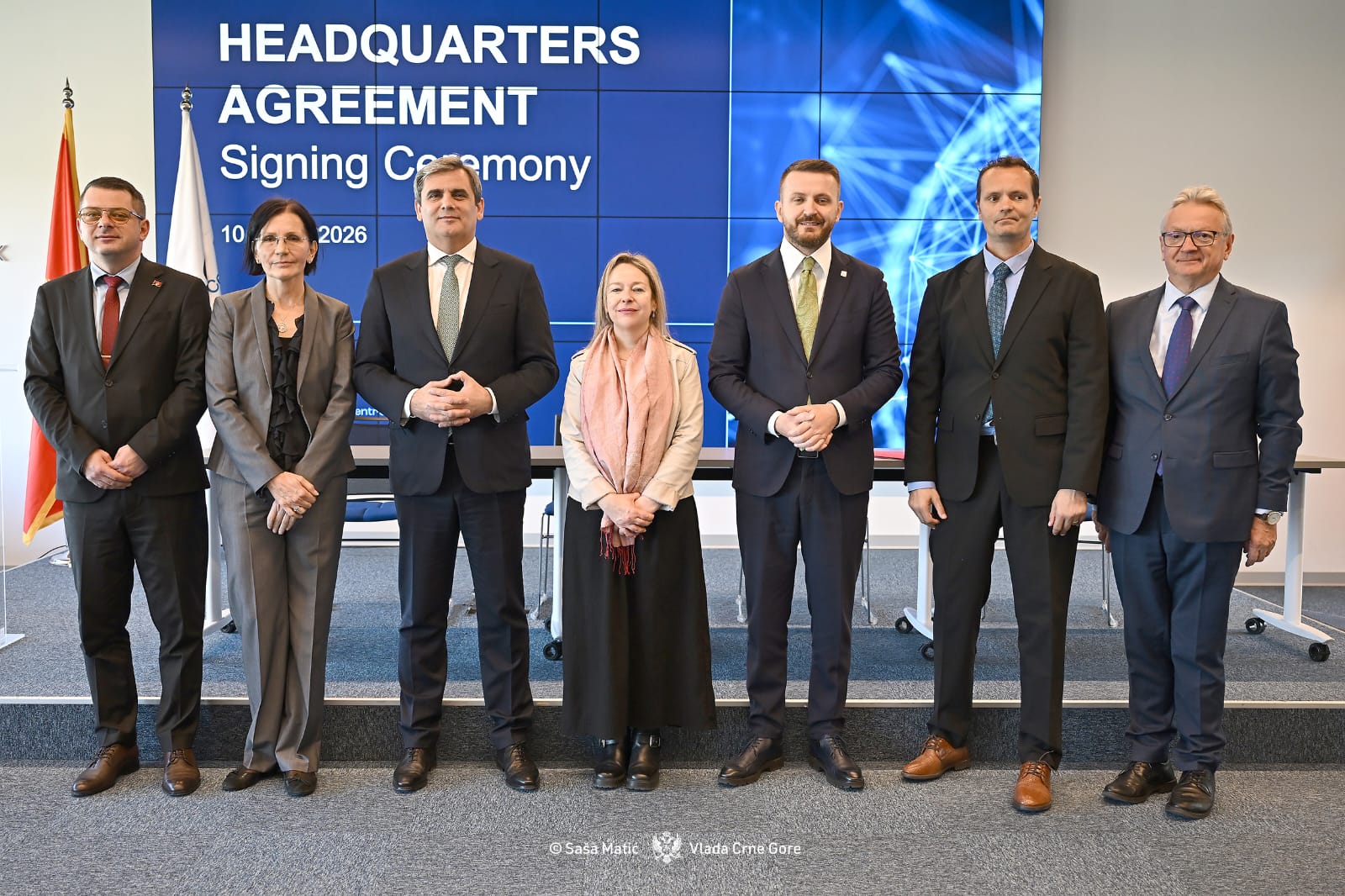
At the first meeting of its Governing Board, representatives of France, Slovenia and Montenegro came together to mark a new chapter for the Centre, with the signing of the Headquarters Agreement formally confirming WB3C as the first international organization headquartered in Podgorica. The appointed members of the Governing Board, H.E. Anne-Marie Maskay and Gen. Stephane Richou for France, iztok jarc and Uroš Svete for Slovenia and Ivan Lekovic and Aleksandar Zecevic for Montenegro, held the first inaugural session to adopt internal documents, while the Programme Director Gilles Schwoerer presented the achievements of the Centre in 2025 and the ambitious plan for 2026.

The event was honoured by the presence of the Deputy Prime Minister and Foreign Minister Ervin Ibrahimovic, Minister of Public Administration Marash Dukaj, French and Slovenian Ambassadors to Montenegro Anne-Marie Maskay and bernarda gradišnik, representatives of the EU Delegation and the diplomatic corps in Montenegro and our institutional partners, reflecting the strong support behind WB3C’s mission to serve as a regional platform for cyber capacity building, cooperation and resilience.

During the official addresses of the high representatives of the founding members, we heard the reassuring words of unwavering support to the region's European future and WB3C's mission in supporting the region on this path through strengthening its resilience against cyber and hybrid threats.

Beyond the formal ceremony, the day also offered a meaningful reminder of what this institution is ultimately about: investing in people, knowledge and the region’s future. On this occasion, General Stéphane Richou, Director of Security and Defense Cooperation at the French Ministry for Europe and Foreign Affairs (Direction de la Coopération de Sécurité et de Défense DCSD 🇫🇷) visited the first class of the Cybersecurity Diploma Course, engaging with participants who represent the next generation of cyber professionals in the Western Balkans.

Taken together, yesterday’s events stood as a powerful testament to a shared commitment to regional cooperation, European values and a more secure digital future.


Copyright © WB3C

Disclaimer: Translations of the original content written in English into other languages are AI generated by Weglot.