How can open societies protect themselves from manipulation without compromising the freedoms that define them?
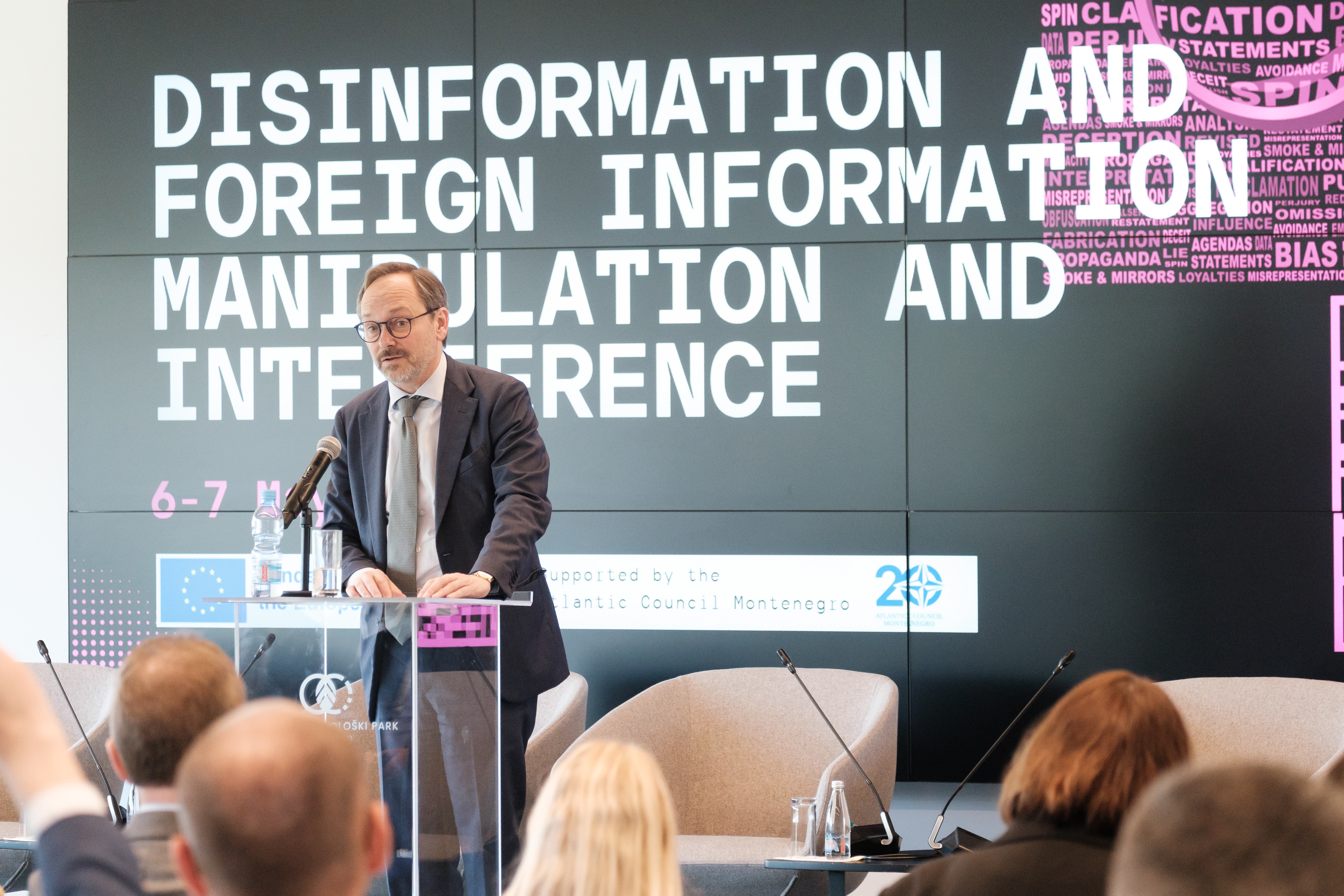
This was the central question at the heart of the Regional Conference on Disinformation and Foreign Information Manipulation and Interference — FIMI, hosted by the Western Balkans Cyber Capacity Centre (WB3C) on 6–7 May 2026 at the Science and Technology Park of Montenegro in Podgorica.
Technology has brought enormous progress. It has opened access to information, connected people and institutions, accelerated public communication and created new spaces for participation. But the same open information environment can also be misused: to spread false and misleading narratives, exploit social vulnerabilities, inflame sensitive issues, weaken trust in institutions and advance foreign actors’ agendas.
For democratic societies, this creates a difficult but essential balance.
Open societies must remain open. Freedom of expression must be protected. Journalism must remain independent. Public debate must remain plural. At the same time, democracies cannot allow those same freedoms, the accessibility of the information space, or the grey zones between legitimate expression and unlawful manipulation to be exploited by malign actors.
This is not a simple communications problem. It is a governance challenge, a security challenge, a media challenge, a legal challenge and a democratic resilience challenge.
That is why WB3C brought together government representatives, EU institutions, media, civil society, academia, law enforcement, the judiciary, strategic communications experts, cybersecurity professionals and practitioners from across the Western Balkans and Europe.
The conference was organised under the EU-funded project “Improving the resilience of critical entities and the protection of public spaces and cyberspace against security threats in the Western Balkans”, with the support of the Atlantic Council of Montenegro in the preparation of the event. It was held under the Chatham House Rule, allowing participants to exchange views openly while ensuring that comments would not be attributed without consent.
Opening the discussion: FIMI as a democratic and security challenge
The conference opened with high-level remarks that placed the issue of FIMI within the broader context of democratic resilience, European security and the Western Balkans’ EU path.
The strong presence of senior representatives of the European External Action Service and the European Commission’s Directorate-General for Enlargement and Eastern Neighbourhood (DG ENEST) throughout the conference was a clear testament to the European Union’s sustained support to the region in strengthening resilience against hybrid threats and malign foreign influence.
For the Western Balkans, this support is particularly important. The European path is not only a technical process of reforms, closing chapters and institutional alignment. It is also a matter of public trust.
That is why the public debate around this process must be grounded in facts, and why the information space must be protected from false and manipulative narratives that undermine trust in the European future of the region and risk derailing progress towards accession — especially in this critical final mile.
Keynote: understanding FIMI as a national security and governance challenge
The substantive part of the conference opened with a keynote address by David Colon, PhD, Associate Professor at Sciences Po, Paris, on “FIMI as a National Security and Governance Challenge.”
Professor Colon brought a historical and strategic lens to the discussion. As a historian, researcher, media specialist and author, his work focuses on propaganda, disinformation, mass manipulation and the ways democratic societies can respond to these threats without weakening the freedoms they are trying to defend.
His keynote helped frame FIMI not as a collection of isolated falsehoods, but as a wider method of influence that exploits governance gaps, institutional weaknesses, public frustrations and social divisions. This framing was important for the rest of the conference: before discussing tools, responses or operational methods, participants were invited to consider the deeper question of how manipulation affects governance, trust and democratic decision-making.
Case Study 1: dissecting the anatomy of a disinformation operation
Following the keynote, Ronan Mouchoux, Co-founder and Chief Technology Officer of XRATOR, presented the case study “Anatomy of Disinformation Operations: Case Study and Lessons Learned.”
This session moved from the strategic level to the operational structure of disinformation campaigns. It examined how a disinformation operation is constructed: from the initial storyline to its dissemination, amplification and eventual impact.
The case study explored how actors, vectors and pressure points interact. It also showed that disinformation is rarely only about one false claim. More often, it is about building an ecosystem around a narrative, identifying vulnerabilities in public debate, and creating pressure on institutions, media and citizens.
By dissecting the internal logic of an operation, the session helped participants look beyond the surface of individual narratives and understand the infrastructure behind manipulation.
Panel 1: how FIMI operations actually work
The first panel, “How FIMI Operations Actually Work,” examined the difficult line between organic public debate and coordinated manipulation.
The discussion focused on several practical questions: What distinguishes genuine public opinion from orchestrated influence? What evidence is needed before institutions can act? How can early detection support prebunking before harmful narratives take hold?
The panel brought together complementary perspectives. Professor Lejla Turčilo contributed deep academic expertise in communications, journalism, media theory and post-truth discourse. Miroslav Sazdovski, Senior Analyst at the European Centre of Excellence for Countering Hybrid Threats, brought a hybrid threats and Western Balkans regional lens. Filip Stojanovski, Programme Lead at the Metamorphosis Foundation, added long-standing experience in countering disinformation, fact-checking, media literacy and regional civil society cooperation.
The discussion was moderated by Marko Banović from the Digital Forensic Centre, whose work focuses on researching and countering malign foreign influence in online media and social media spaces.
This panel made clear that the challenge is not only detecting false information. The harder task is understanding when information activity becomes coordinated manipulation, how to establish evidence thresholds, and how to act early without undermining legitimate public debate.
Case Study 2: disrupting covert influence infrastructure
The second case study, “Disrupting a Covert Influence Operation: The REST Media / Rybar Case,” was delivered by Jakub Kubś, PhD, Researcher at GLOBSEC.
Dr Kubś has worked extensively on Russian propaganda, coordinated inauthentic behaviour, Russian media financing, network analysis, OSINT and the use of tools such as DISARM and OpenCTI. His presentation offered a concrete look at how covert influence infrastructure can be mapped, attributed and disrupted.
The session examined the tactics and operational logic behind a Russian state-affiliated influence operation, including links to the Western Balkans. It also looked at how such networks can be exposed through technical, analytical and legal approaches.
This case study added a crucial layer to the conference: FIMI is not only a narrative problem. It also depends on infrastructure, networks, funding, amplification channels and operational discipline. Understanding these elements is essential for any serious response.
Panel 2: election integrity and democratic choice
The second panel, “Election Integrity: Building Resilience against FIMI and Disinformation,” addressed one of the areas where manipulation can have the most immediate democratic consequences: elections.
The discussion explored a whole-of-society approach to protecting electoral processes, including the role of institutions, platforms, media, civil society, rapid response protocols and prebunking of electoral manipulation narratives.
The panel included Milica Kovačević from the Centre for Democratic Transition, bringing expertise in electoral reform, institutional transparency, democratic development and countering disinformation in Montenegro. Zlatko Vujović, PhD, CEO of ENEMO and President of the Governing Board of CEMI, brought extensive experience in election observation, electoral systems, public opinion and democratic transition. Danijela Vojinović from CRTA shared the perspective of civil society election monitoring in Serbia. Madalina Voinea from Expert Forum in Romania contributed insights from research into influence operations, inauthentic online behaviour, digital policy and AI-generated propaganda targeting voters.
The panel was moderated by Professor Olivera Komar from the Faculty of Political Sciences, University of Montenegro.
The discussion showed that election integrity cannot be reduced to the security of voting procedures alone. It also depends on the integrity of the information environment before, during and after elections. Manipulative narratives can affect trust in institutions, candidates, processes and results — sometimes before citizens even enter a polling station.
Panel 3: response options — legitimate, effective and safe
The third panel, “Response Options: What is Legitimate, Effective, Safe,” moved from diagnosis to response.
The discussion addressed public communication under uncertainty, legal tools, cross-government coordination, institutional trust and media literacy. It asked a difficult but necessary question: how can institutions respond to manipulation in ways that are effective, lawful and democratically responsible?
The panel brought together two different angles, policy and practice ones. Radica Zeković, Director General at the Directorate for Media in Montenegro’s Ministry of Culture and Media, contributed a strategic communications and media policy perspective, including issues of disinformation, hate speech, polarisation and public trust. Jetmir Rajta from Albania’s National Cybersecurity Authority brought technical expertise in simulations, red teaming, vulnerability discovery and protection of critical infrastructure.
The panel was moderated by Draško Jabučanin from the Digital Forensic Centre.
This discussion highlighted the importance of proportionality. Strong responses are needed, but they must be grounded in law, clarity, coordination and respect for democratic freedoms. Poorly designed responses can create new vulnerabilities, including the perception of censorship or politicisation. Effective response therefore requires both capability and legitimacy.
Day 2: safeguarding the European path
Day 2 opened with remarks by Sofia Badari, Programme Manager for Cybersecurity at DG ENEST, whose support to WB3C and to the wider regional project reflects the European Union’s commitment to strengthening cyber and democratic resilience in the Western Balkans.
The opening of Day 2 created a bridge between the operational discussions of Day 1 and the political question at the heart of the region’s future: how to safeguard the European path from manipulation.
False and manipulative narratives do not always attack the European path directly. Often, they work by deepening cynicism, exploiting frustration, questioning institutional credibility, distorting reform debates and making societies doubt the direction they have chosen.
For this reason, the first panel of the day, “Safeguarding the European Path: Building Resilience in the Western Balkans,” focused on how institutions, EU partners, regional experts and media regulators can strengthen resilience, defend public trust and reduce vulnerabilities to foreign interference.
The panel featured Biljana Papović, State Secretary at the Ministry of European Affairs of Montenegro, bringing experience in EU integration, institutional reform, rule of law, electoral processes and public communication of reforms. Natalie Pauwels, Head of the Strategic Coordination and Communication Unit at DG ENEST, provided the European Commission perspective on enlargement communication, policy coordination and resilience to hybrid threats, including FIMI. Miroslav Sazdovski contributed the regional hybrid threats perspective, while Armela Krasniqi, Chairwoman of the Audiovisual Media Authority of Albania, brought the media regulatory lens.
The panel was moderated by Nikoleta Đukanović, PhD, a scholar of European and international studies.
The message from this session was clear: protecting the European path also means protecting the quality of the public conversation around it. Citizens must be able to debate reforms freely and critically, but that debate should not be polluted by false, manipulative or malign narratives designed to weaken trust and derail progress.
Insight session: election observation in the age of FIMI
The conference then moved to a focused insight session by Jelena Stefanović, Political and Election Expert at OSCE/ODIHR, on “Election Integrity in the Age of FIMI: Lessons from Election Observation.”
Drawing on extensive experience across election observation missions, this session connected the earlier election integrity discussion to practical lessons from observing electoral processes.
It reinforced the point that information manipulation increasingly affects the environment in which elections take place. Observation therefore cannot focus only on formal procedures. It must also take into account the broader conditions that shape voter confidence, public debate and trust in outcomes.
Panel 5: judicial response to FIMI and disinformation
The fifth panel, “Judicial Response to FIMI and Disinformation,” examined the rule of law dimension of the problem.
The panel focused on digital evidence, prosecution, legal thresholds and the strengthening of rule of law in the digital space. This is one of the most complex aspects of the FIMI debate, because legal responses must be precise, evidence-based and protective of fundamental rights.
The panel included Audrey Gerbaud from the Cyber Department J3 of the Court of Paris, bringing prosecutorial expertise in complex cybercrime and digital investigations. Arben Murtezić, PhD, Legal Counsel to the Vice President of the Federation of Bosnia and Herzegovina, brought experience in judicial ethics, cybercrime, judicial independence and capacity-building. Marina Barbir, Judge at the Higher Court in Belgrade, contributed judicial experience in criminal law and electronic evidence. Ivan Jokić, Head of the Criminal Intelligence Division of the Police Administration of Montenegro, brought the law enforcement and criminal intelligence perspective.
The panel was moderated by Ana Bukilić, Project Manager for rule of law and justice reform.
This session underlined that not every harmful narrative is a legal matter. But where manipulation crosses legal thresholds — through coordinated criminal conduct, cyber-enabled offences, illegal interference, evidence tampering or other forms of unlawful activity — institutions need the capacity to investigate, preserve evidence, cooperate across borders and act within the law.
Panel 6: media on the frontline
The final panel discussion, “Media on the Frontline of Fight Against Disinformation,” focused on the role of media organisations in detecting, verifying, responding to and building resilience against disinformation, including AI-generated content.
The panel brought together journalists, analysts, researchers and regulators. Nicolas Goinard, journalist with Ouest-France, contributed the perspective of investigative journalism, fact-checking, media literacy and information integrity. Marko Banović from the Digital Forensic Centre brought analytical experience in tracking foreign malign influence and propaganda campaigns in Montenegro and the wider Western Balkans. Adelina Hasani, PhD, Head of Research at KIPRED, contributed academic and policy expertise, including on Russian foreign policy and influence in the former Yugoslav space. Sunčica Bakić, Director of Montenegro’s Agency for Audiovisual Media Services, brought the regulatory perspective on media pluralism, disinformation, hate speech, AI-driven content manipulation and emerging gaps in the media environment.
The panel was moderated by Olivera Nikolić, Director of the Montenegro Media Institute, whose work focuses on media ethics, media literacy and resilience to propaganda and manipulation.
This session made clear that media are often the first to face the pressure of disinformation, but they cannot carry the burden alone. Independent journalism, professional standards, media literacy, regulatory clarity and audience trust all form part of the resilience architecture.
Tabletop exercise: testing responses under pressure
The conference concluded with an interactive War Game: Tabletop Exercise, facilitated by Ronan Mouchoux, Thibaud Perrard and Nicolas Goinard.
Participants worked through scenarios involving manipulated video, leaked documents, coordinated hashtags, proxy media, diaspora channels and offline incidents. The exercise tested both prebunking and debunking responses under time pressure.
This practical element was an important part of the conference design. It moved the discussion from analysis to decision-making. Participants had to consider how institutions, media, experts and other actors might respond when the information environment is moving quickly, evidence is incomplete, and public pressure is growing.
The exercise demonstrated the value of preparation, coordination and trust before a crisis occurs. In a manipulated information environment, the quality of response depends not only on technical expertise, but also on relationships, protocols and clarity of roles.
A shared responsibility
Over two days, the conference examined FIMI from strategic, political, operational, legal, electoral, media and societal perspectives.
The central conclusion was clear: no single institution, profession or country can address this challenge alone.
Governments have a role in protecting institutions, coordinating responses and communicating responsibly. Media have a role in verifying information, informing the public and protecting professional standards. Civil society has a role in monitoring, educating and raising awareness. The judiciary and law enforcement have a role where manipulation crosses legal thresholds. Academia and researchers help us understand patterns, methods and effects. International partners provide support, expertise and coordination.
For the Western Balkans, the stakes are high. The region’s European path, institutional development and democratic resilience all depend on the ability to protect public debate from manipulation while preserving the freedoms that make democratic societies worth defending.
WB3C is grateful to the European Union for its strong financial and strategic support under the project through which this conference was organised. WB3C also sincerely acknowledges the valuable support of the Atlantic Council of Montenegro in the preparation of the event.
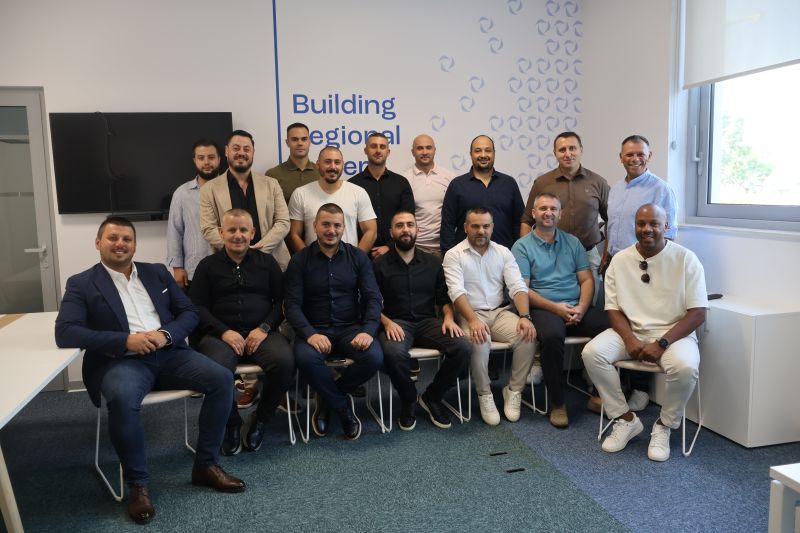
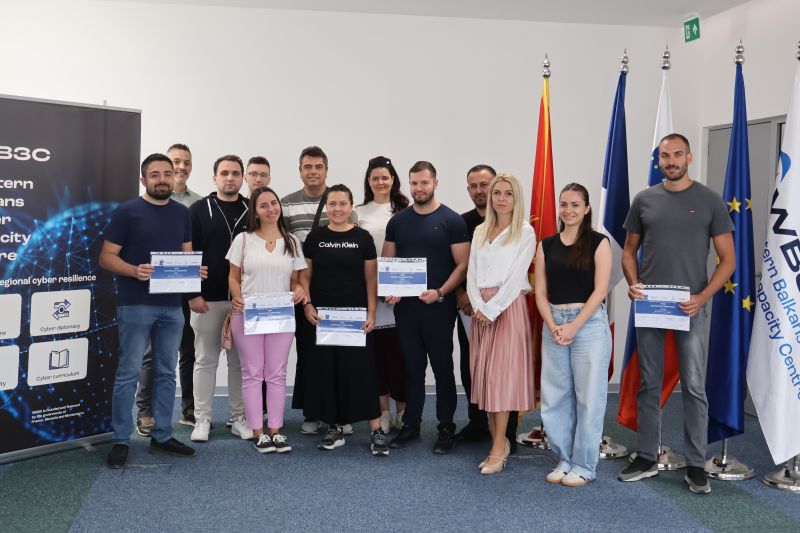
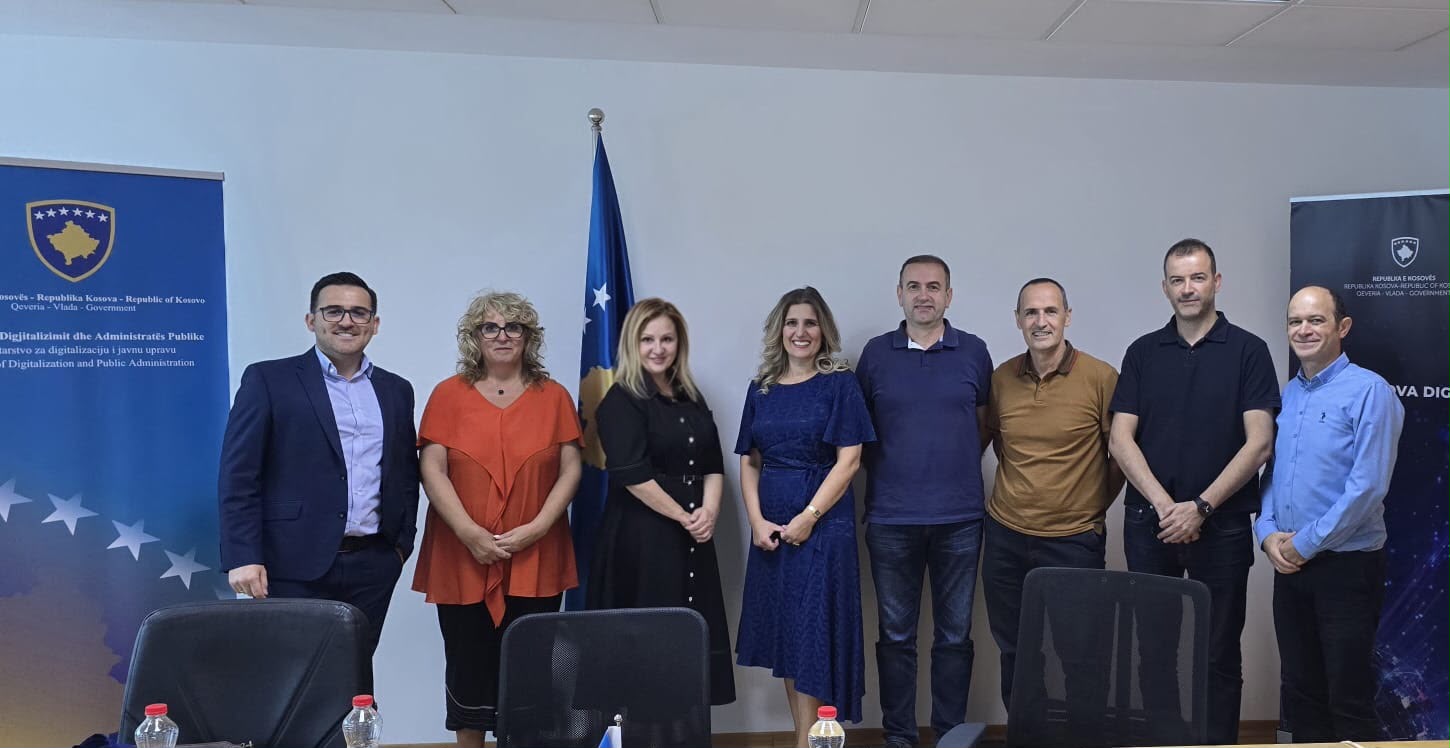
Most importantly, WB3C thanks all speakers, moderators, participants and partners who contributed to two days of serious, open and practical exchange.
The information space is now one of the places where trust, democracy and security are tested. Protecting it will require continued cooperation, careful judgement and the courage to defend openness without allowing it to be exploited.