×

Visit to Campus Cyber - largest cyber ecosystem in Europe

03.06.2026

Image for Visit to Campus Cyber - largest cyber ecosystem in Europe

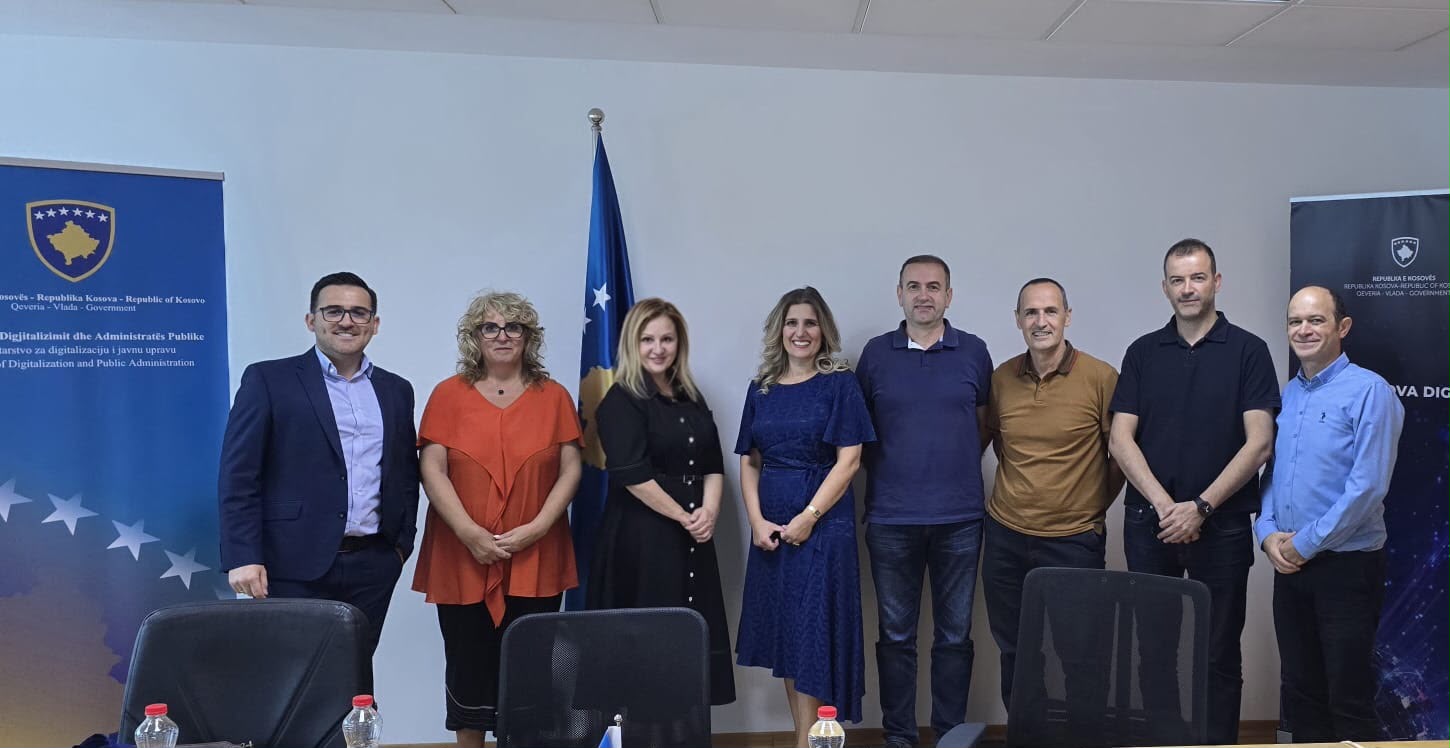
For the Western Balkans ministerial delegation, one of the most valuable moments of the Paris mission was the visit to Campus Cyber, France's flagship cybersecurity hub and one of Europe's most advanced cyber ecosystems.
Our sincere thanks to Nicolas Sastre and the Campus Cyber team for designing a rich and insightful programme, and to Campus President Joffrey Célestin-Urbain for welcoming the delegation and presenting the vision behind this unique model.
More than a building, Campus Cyber is an ecosystem. It brings together public institutions, private companies, startups, law enforcement, academia and training providers under one roof, creating an environment where innovation, operational cooperation and talent development reinforce one another.
There is a strong focus on human capital. Around twenty universities are represented within the campus, working closely with industry to develop tailored curricula, practical training opportunities and internships. An inspiring exchange was with Axel Dreyfus, co-founder of Ecole 2600, who presented a model that tightly connects education and industry from secondary to master's degree programmes designed in close partnership with employers to ensure that skills keep pace with technological change and real market needs. Students gain hands-on experience through practical training, apprenticeships and industry placements, with many securing jobs before completing their studies. For the Western Balkans, where the shortage of cyber talent remains one of the most significant challenges, this model offers valuable lessons on how education and industry can work together to build the next generation of cybersecurity professionals.
The delegation also met with a range of organisations operating within the ecosystem, including Alcyconie, Sekoia.io. and GATEWATCHER, who presented its advanced Network Detection and Response platform combining network visibility, threat detection, AI-driven analysis and response orchestration to identify and mitigate sophisticated cyber threats.
Another highlight was the visit to the FAB LAB, a state-supported innovation space available free of charge to Campus members, providing opportunities to experiment with emerging technologies, prototype solutions and accelerate innovation through collaboration.
Throughout the visit, discussions focused not only on French successes, but also on the challenges our region faces: talent shortages, rapidly evolving technologies, increasing threats and the need to translate strategy into operational capabilities.
The visit reinforced a lesson that emerged repeatedly throughout the week: cyber resilience is ultimately built through people, partnerships and ecosystems. As the Western Balkans continue advancing their digital and European ambitions, experiences such as Campus Cyber provide valuable inspiration for building stronger regional cyber capacities and innovation networks.
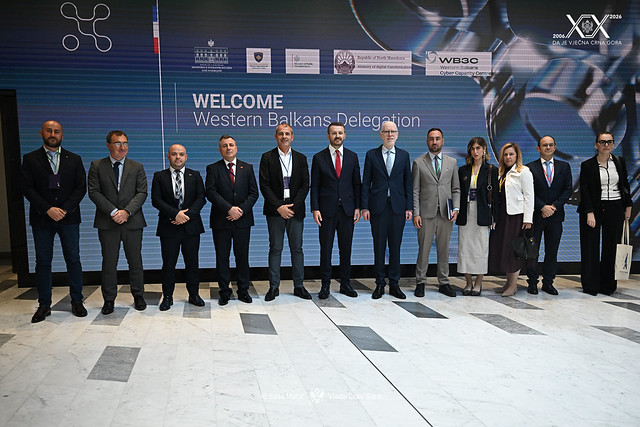
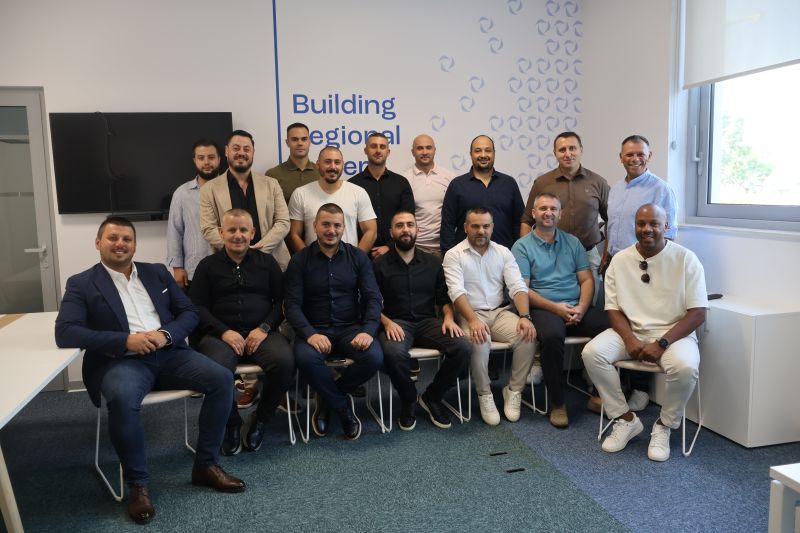
For the Western Balkans ministerial delegation, one of the most valuable moments of the Paris mission was the visit to Campus Cyber, France's flagship cybersecurity hub and one of Europe's most advanced cyber ecosystems.
Our sincere thanks to Nicolas Sastre and the Campus Cyber team for designing a rich and insightful programme, and to Campus President Joffrey Célestin-Urbain for welcoming the delegation and presenting the vision behind this unique model.
More than a building, Campus Cyber is an ecosystem. It brings together public institutions, private companies, startups, law enforcement, academia and training providers under one roof, creating an environment where innovation, operational cooperation and talent development reinforce one another.
There is a strong focus on human capital. Around twenty universities are represented within the campus, working closely with industry to develop tailored curricula, practical training opportunities and internships. An inspiring exchange was with Axel Dreyfus, co-founder of Ecole 2600, who presented a model that tightly connects education and industry from secondary to master's degree programmes designed in close partnership with employers to ensure that skills keep pace with technological change and real market needs. Students gain hands-on experience through practical training, apprenticeships and industry placements, with many securing jobs before completing their studies. For the Western Balkans, where the shortage of cyber talent remains one of the most significant challenges, this model offers valuable lessons on how education and industry can work together to build the next generation of cybersecurity professionals.
The delegation also met with a range of organisations operating within the ecosystem, including Alcyconie, Sekoia.io. and GATEWATCHER, who presented its advanced Network Detection and Response platform combining network visibility, threat detection, AI-driven analysis and response orchestration to identify and mitigate sophisticated cyber threats.
Another highlight was the visit to the FAB LAB, a state-supported innovation space available free of charge to Campus members, providing opportunities to experiment with emerging technologies, prototype solutions and accelerate innovation through collaboration.
Throughout the visit, discussions focused not only on French successes, but also on the challenges our region faces: talent shortages, rapidly evolving technologies, increasing threats and the need to translate strategy into operational capabilities.
The visit reinforced a lesson that emerged repeatedly throughout the week: cyber resilience is ultimately built through people, partnerships and ecosystems. As the Western Balkans continue advancing their digital and European ambitions, experiences such as Campus Cyber provide valuable inspiration for building stronger regional cyber capacities and innovation networks.


Visit of the French National Assembly to WB3C

Amid an intensive period of Franco-Montenegrin exchanges, the Western Balkans Cyber Capacity Centre (WB3C) had the pleasure of welcoming a delegation of the French Assemblée nationale during their official visit to Montenegro.
The delegation was led by Mr Pieyre-Alexandre Anglade, Member of Parliament and Chair of the European Affairs Committee of the French National Assembly, and included Ms Manon Bouquin, MP and Vice-Chair of the Committee; Mr Laurent Mazaury, MP and Vice-Chair of the Committee; Mr Pascal LECAMP, MP; Mr Charles Sitzenstuhl, MP; Mr Romain L., adviser to Mr Anglade; and Mr Christophe Lescot, Head of the Secretariat of the European Affairs Committee. The delegation was accompanied by H.E. Anne-Marie Maskay, Ambassador of France to Montenegro, and Mr Théo Basely, Political Attaché.
On behalf of WB3C, Mr Naim M. GJOKAJ and Mr Gilles Schwoerer welcomed the delegation, presented the Centre’s mission and work, and guided them through WB3C’s facilities.
Mr Schwoerer recalled the recent Western Balkans ministerial visit to Paris, which included participation in the Paris Cyber Summit, a high-level round table at the French Senate , and a visit to Campus Cyber. This initiative helped place the Western Balkans more firmly within the broader European and global discussion on persistent cyber and hybrid threats, particularly at a critical moment for the region, marked by upcoming electoral cycles and Montenegro’s final phase of EU accession negotiations.
Mr Gjokaj presented the context in which WB3C was established, its regional mandate, and its strategic objectives for strengthening cyber resilience across the Western Balkans. Mr Schwoerer provided further insight into WB3C’s programme delivery model and its cooperation with beneficiaries, donors, and partners on the ground.
The visit reaffirmed the importance of the Franco-Montenegrin partnership and of parliamentary dialogue in advancing the region’s cyber resilience, European integration, and readiness to respond collectively to evolving digital and hybrid threats.

President Macron in Cetinje

President Emmanuel Macron mentioned the Western Balkans Cyber Capacity Centre (WB3C) during his speech in Cetinje, highlighting the Centre as an important part of the cooperation between Montenegro and France. 

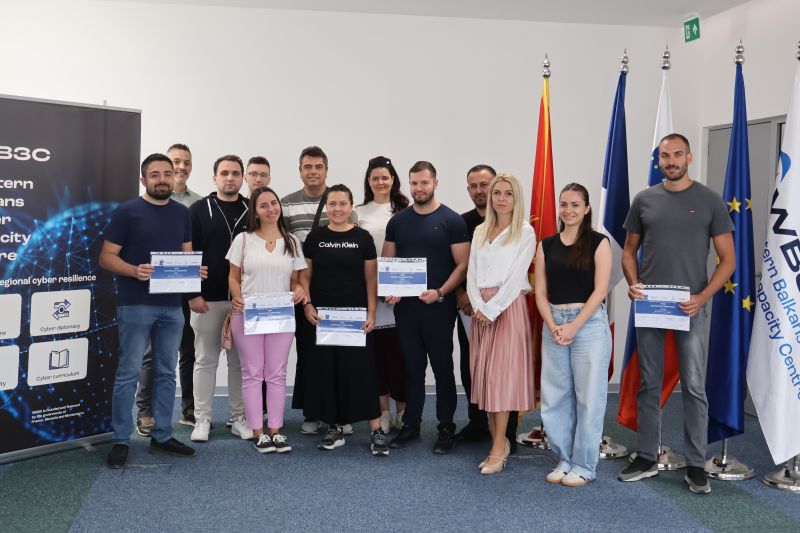
At the same time in Podgorica, WB3C organized a graduation ceremony for the participants of the Digital Forensics Bachelor’s Degree programme, the first university-level training course organised by the Centre in partnership with the French Université de Technologie de Troyes.
Fourteen police investigators from five countries of the WB successfully defended their theses earlier this week and received their diplomas during the ceremony, marking an important milestone in strengthening digital forensic capacities in the region.
To further support their work, the WB3C also donated cybersecurity kits to their respective police units. The kits include data extraction licences, write blockers, high-performance computers and various data storage accessories, with a total value of €150,000.
This also represents the first equipment donation made by the WB3C, reinforcing our commitment to building practical, sustainable cyber capacity across the Western Balkans.

Regional Ministers Visit Paris Cyber Summit

This week, a regional ministerial delegation from the Western Balkans, brought together by the Ministry of Public Administration of Montenegro and Western Balkans Cyber Capacity Centre (WB3C), joined global leaders at the Paris Cyber Summit 2026 to discuss the future of cybersecurity, digital transformation and international cooperation. The theme of this year's summit was The Transatlantic Reset: Rebuilding Trust and Strategic Alignment in the Digital Age — reflecting one of the defining questions of our time: how do we make sovereignties interoperable through trusted architectures, shared standards and common frameworks for innovation, security and market access?
Bringing together around 300 policymakers, industry leaders and cybersecurity experts from across the world, the Summit explored topics ranging from digital sovereignty and strategic regulation to the rise of Agentic AI and how the evolution of generative AI, automation and AI autonomy is redefining not only cybersecurity, but human agency itself.
Alongside the main programme, participants also engaged in the Provocative Lane, a Chatham House platform designed for closed-door discussions on some of today's most sensitive strategic and security challenges.
For the first time, a Western Balkans ministerial delegation participated in both tracks of the Summit. Minister of Public Administration of Montenegro Marash Dukaj delivered a keynote address highlighting the importance of regional cooperation in an era of growing hybrid threats that seek to undermine democratic institutions, societal resilience and the region's European path.
Minister of Digitalization and Public Administration of Kosovo Lulezon Jagxhiu, Minister of Digital Transformation of North Macedonia Stefan Andonovski and WB3C's programme director Gilles Schwoerer joined a NATO-led Chatham House discussion examining how cyber capabilities are increasingly shaping modern warfare and security policy.
Beyond the substance of the discussions, the Summit provided an important opportunity to bring the Western Balkans into the broader European and transatlantic conversation. At a critical moment in the EU accession process, the region's message was clear: the Western Balkans are not only seeking integration into European structures, but are ready to contribute actively to Europe's collective security. A secure Western Balkans means a more secure Europe.
Our sincere thanks to Sébastien Garnault, founder and president of the Paris Cyber Summit, and the chief of staff Marine Plasson whose support enabled meaningful engagement for the regional delegation throughout the week — from the Summit programme itself to strategic networking opportunities and the high-level round table hosted at the French Senate and the Campus Cyber.


Copyright © WB3C

Disclaimer: Translations of the original content written in English into other languages are AI generated by Weglot.