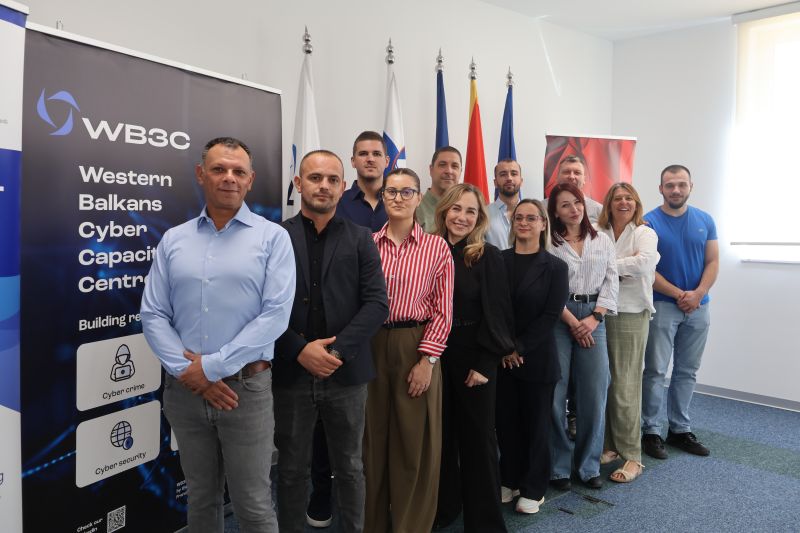
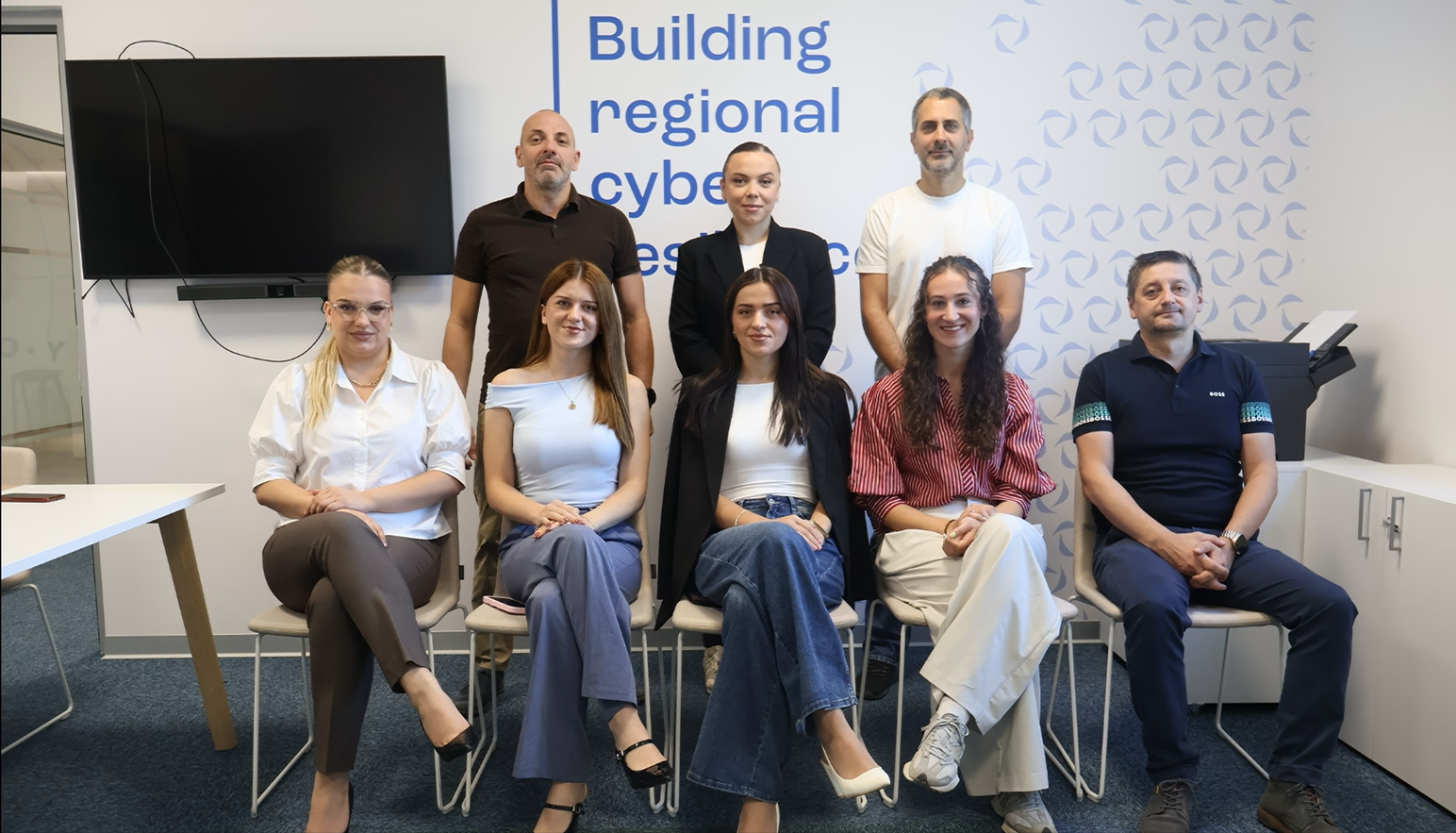
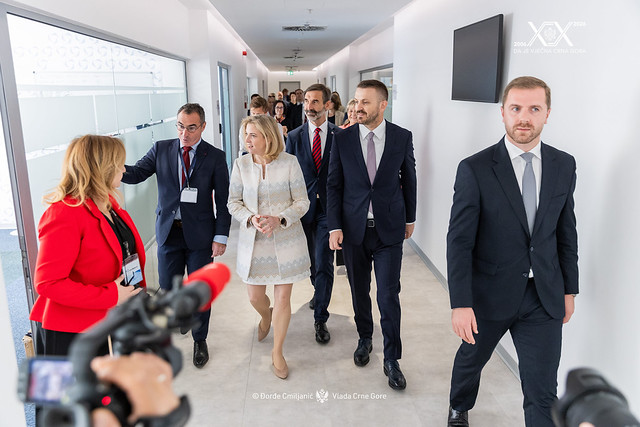
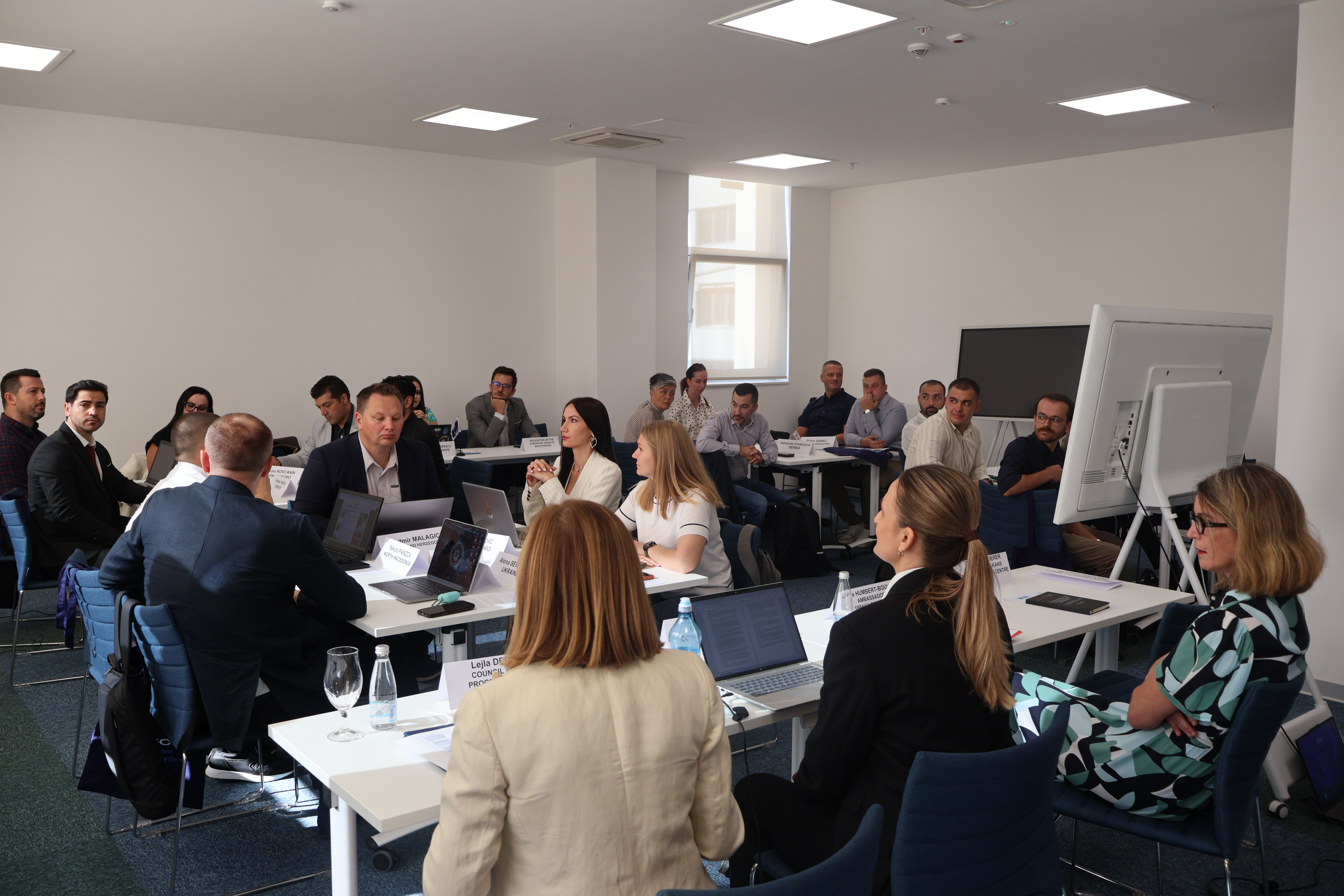
We were much honoured to host today at WB3C the Foreign Ministers of Austria, Czech Republic and Slovakia, together with their delegations, following the Berlin Process Foreign Ministers’ Meeting in Montenegro.
Beate Meinl-Reisinger, Federal Minister for European and International Affairs of Austria, Petr Macinka, Deputy Prime Minister and Minister of Foreign Affairs of the Czech Republic and Juraj Blanár, Minister of Foreign and European Affairs of Slovakia were welcomed by Naim M. GJOKAJ, on behalf of the Government of Montenegro as one of WB3C’s founding partners, and Gilles Schwoerer, WB3C Programme Director. The visit was also attended by Minsiter Marash Dukaj and resident ambassadors of Austria, Slovakia and the Czech Republic in Montenegro.
Their visit gave us an important opportunity to show, first-hand, what WB3C has become and where it is heading.
After a tour of our facilities, we presented the Centre’s mission and work across cybersecurity, cybercrime, cyber diplomacy and hybrid threats, as well as the partnerships that make this regional model possible. Particular attention was given to our cooperation with the European Union, including the EU-supported regional programme, and to the growing network of European and international institutions contributing expertise to our activities.
What matters most is the purpose behind this work.
WB3C was created to give the Western Balkans a permanent facility where countries can build capability together: strengthening public institutions and critical entities, supporting law enforcement and the judiciary, developing the skills of the existing workforce and investing in the next generation through cooperation with universities.
Austria, Slovakia and the Czech Republic are closely engaged in the European integration of the Western Balkans, while the Berlin Process continues to place regional cooperation, security and the region’s European future at the centre of the agenda.
For WB3C, the longer-term direction is equally clear: a Centre increasingly shaped, supported and governed by the Western Balkans themselves, firmly connected to European institutions, standards and expertise.
We greatly appreciated the ministers’ interest in our work and the opportunity to present the role WB3C can play in making regional cooperation in cyber security practical, lasting and genuinely owned by the region.