18.02.2026
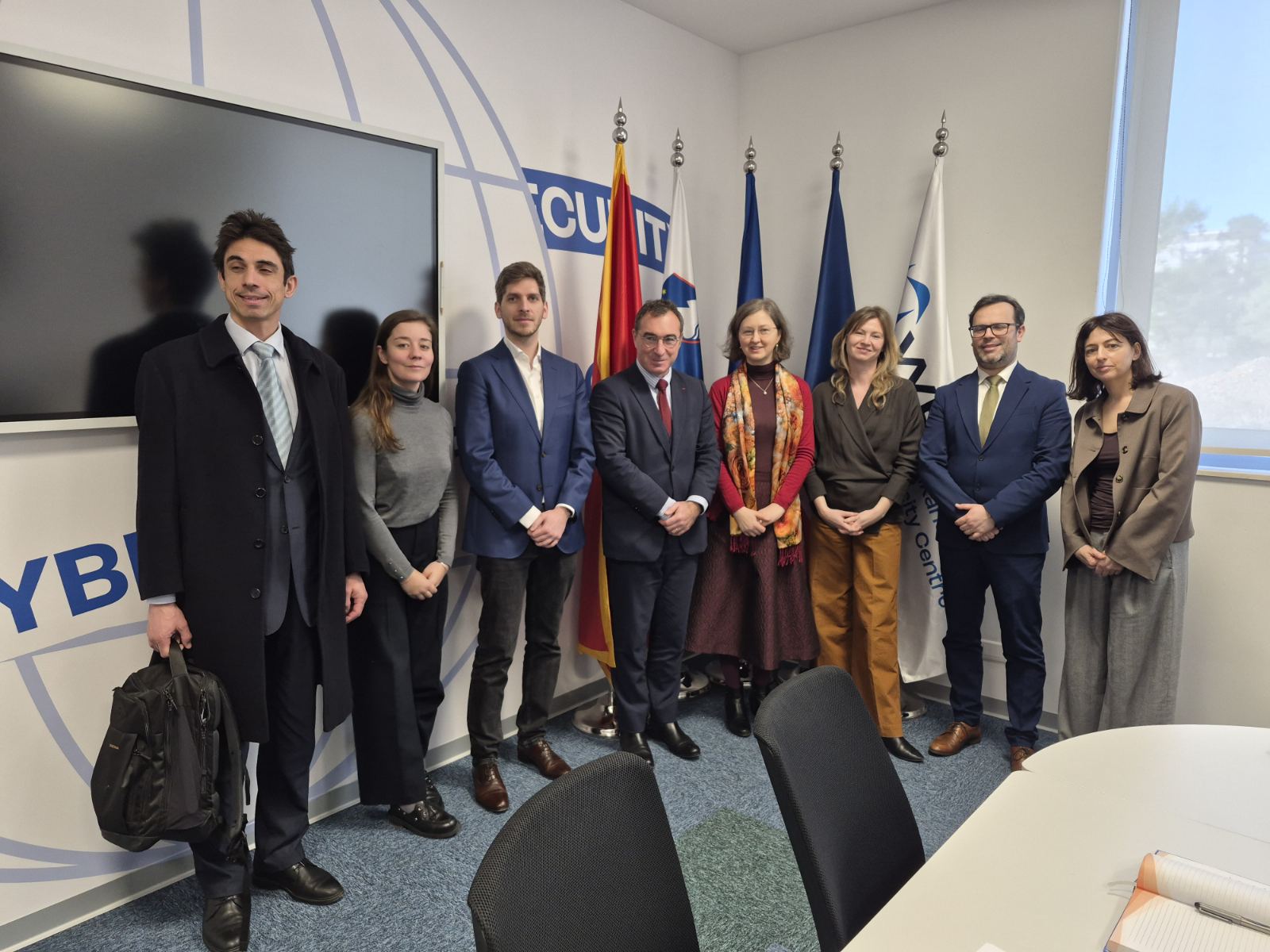
Visit by EEAS, Western Balkans Division
Today, we hosted an EU delegation led by Zuzana Michalcova Sutiakova, Head of the Western Balkans Division at European External Action Service (EEAS), accompanied by representatives of the European Commission and the Delegation of the European Union to Montenegro.
The visit was a valuable opportunity to brief the EEAS on WB3C’s ongoing work across the region, supporting practical cooperation, strengthening cyber capabilities, and ensuring our activities remain closely aligned with the priorities that matter most for partners as they advance on the EU accession path.
We appreciate the open, concrete exchange and the continued engagement of EU institutions in helping the Western Balkans build resilient, secure digital systems, grounded in European standards and shared security interests.
13.02.2026
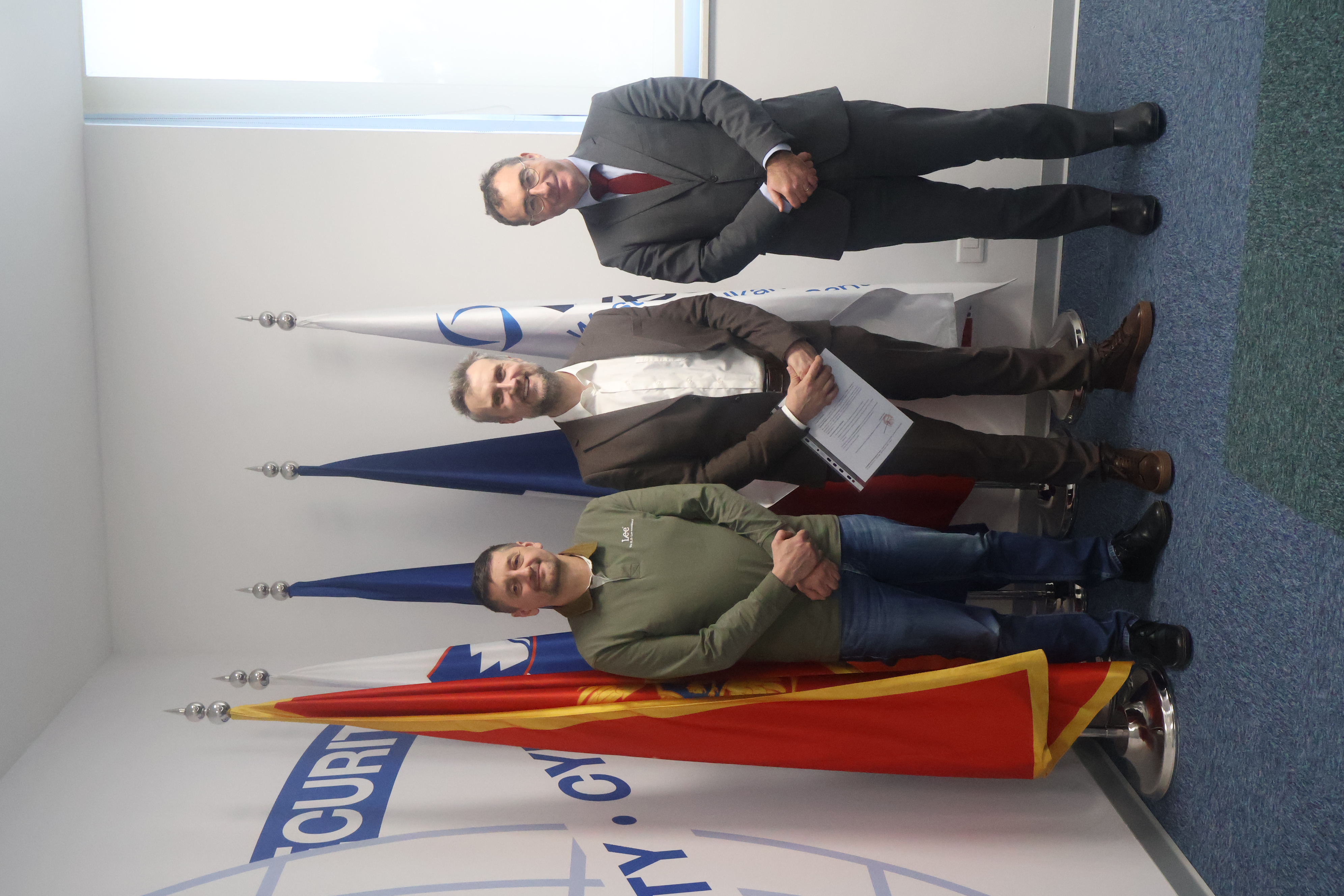
Professor Savo Tomović completes Digital Forensic Diploma Course
We are so pleased to share with our community that professor Savo Tomovic, PhD received his certificate of completion for the 1-year Digital Forensics specialist training delivered by the Université de Technologie de Troyes (UTT), implemented in cooperation with the Western Balkans Cyber Capacity Centre (WB3C).
Prof. Tomović is the Academic Lead of the Cybersecurity Innovation Hub and the Head of the Master’s study programme “Information Security" at the University of Montenegro.
This milestone marks the programme’s first academic participant, deliberately included alongside 15 law enforcement practitioners, to strengthen the link between operational needs and curriculum development.
The training included 11 weeks (55 days) of classroom work coupled with research and exams. This training is a blend of theory and hands-on practice, built on the original French Gendarmerie investigator curriculum for Professional Bachelor's Degree (Professional License in Digital Forensics). The programme's core areas include: legal frameworks, digital evidence preservation, forensic analysis, OSINT/CyberPatrol techniques, networks/data analytics, investigative methodologies and information security.
The rest of the group including 15 police investigators will continue with further training until June 2026, when the final exam and the dissertation are expected to take place in Troyes, France, before the UTT examination panel.
This programme is a unique, EU-recognised, digital forensics qualification combining advanced hands-on investigative training with an accredited 60-ECTS academic credential - directly strengthening institutional capacity to handle complex cybercrime cases end-to-end. It was led by our experienced team of experts including Reza Elgalai, Ljuban Petrovic, Cyril C. and Yannick Casse.
A symbolic awarding ceremony led by Gilles Schwoerer and Ljuban Petrovic just to say thank you to our dedicated colleague from the University of Montenegro, working hard all year round to support future talent through new future learning pathways.
05.02.2026
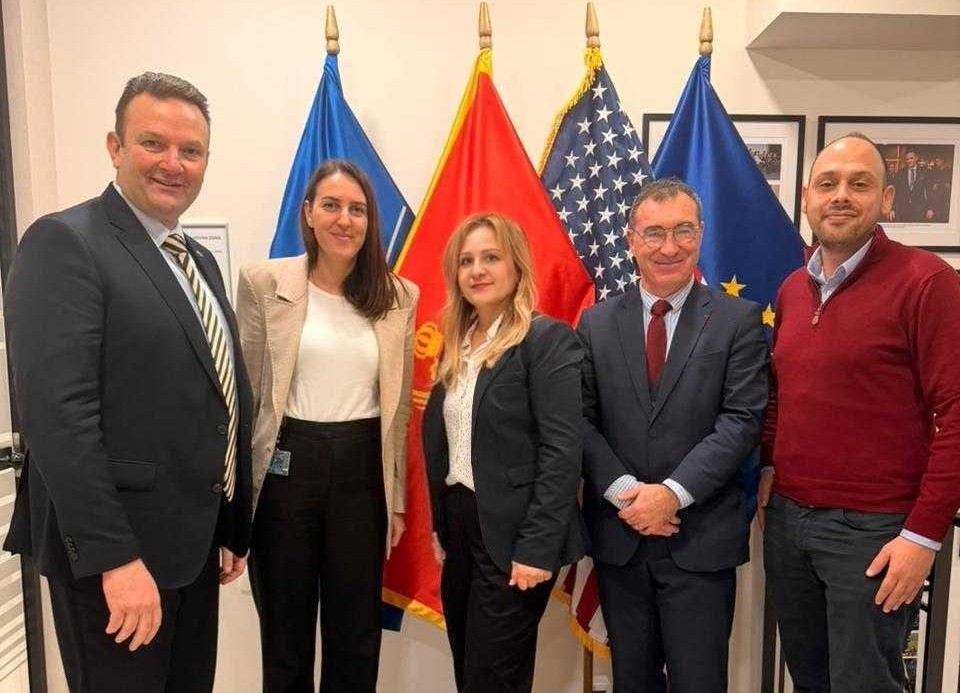
Combatting Disinformation and FIMI
A very productive meeting this morning with the Atlantic Council of Montenegro, led by Mr. Savo Kentera, President and CEO, together with his team Azra Karastanović and Draško Jabučanin. The Western Balkans Cyber Capacity Centre (WB3C) was represented by its Head Gilles Schwoerer and the team: Vanja Madzgalj MBE, Cyril C. and Yannick Casse.
Building on our previous engagements, including the national Round Table on Critical Infrastructure and the 2BS Forum, WB3C is further strengthening this collaboration to address pressing regional challenges.
Our discussions highlighted significant common interests in two crucial areas: critical infrastructure resilience and countering disinformation and foreign information manipulation and interference (FIMI).
This prospective partnership reflects a shared commitment to strengthening regional security and societal resilience against interference and information manipulation. We look forward to developing concrete actions and contributing meaningfully to these important efforts.
04.02.2026
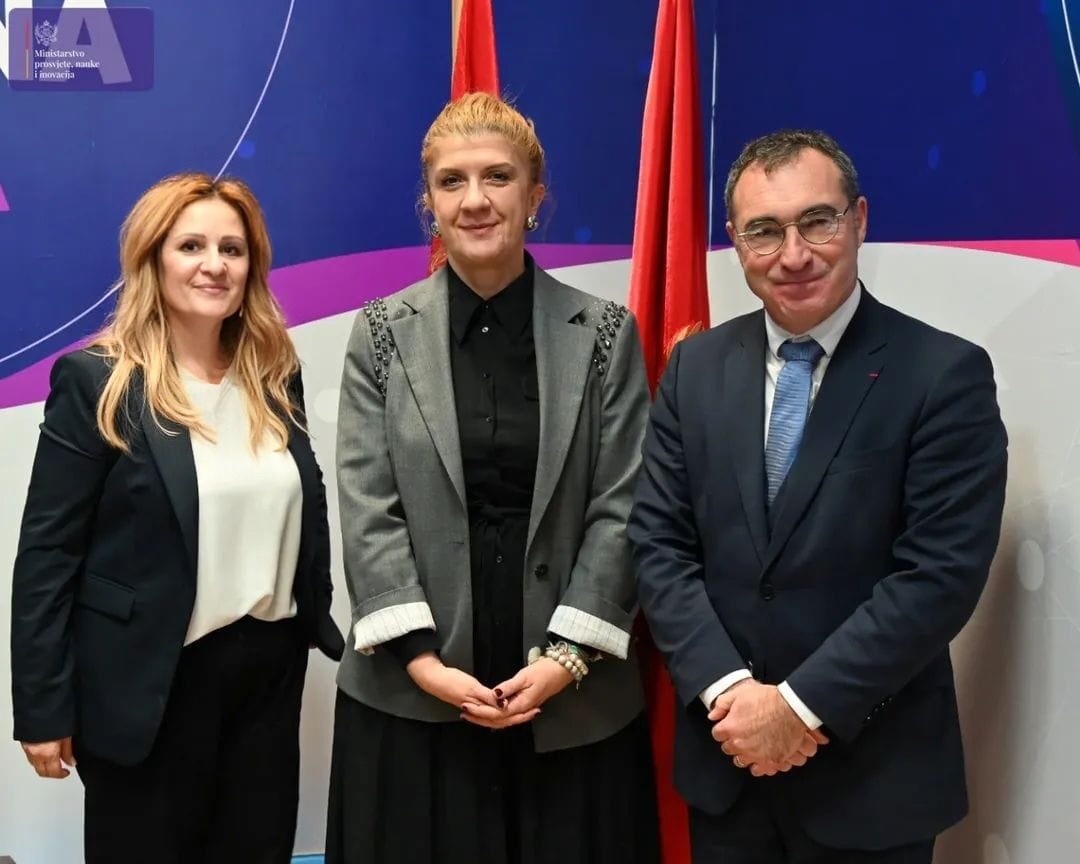
Developing Future Cyber Talent Through Early Interventions in Schools
WB3C paid a visit to the Ministry of Education, Science and Innovation this week. We met with the State Secretary Calasan Tatjana to introduce WB3C’s work and share an overview of our plans for 2026, with a focus on education, young people and cooperation with universities. We talked about practical ways to support foundational awareness and cyber skills in schools and development of academic learning pathways such as micro-credentials and new degree programmes in cybersecurity and digital forensics in universities.
The meeting was also a chance to update the Ministry on how WB3C is developing as an international organization and how our role in Montenegro and the region is growing, as well as to explore how we could work more closely in the future.
We appreciated the open and constructive exchange, and the shared understanding that investing early in digital skills and cyber awareness really matters.
Looking forward to continuing the conversation and building on this momentum.
28.01.2026
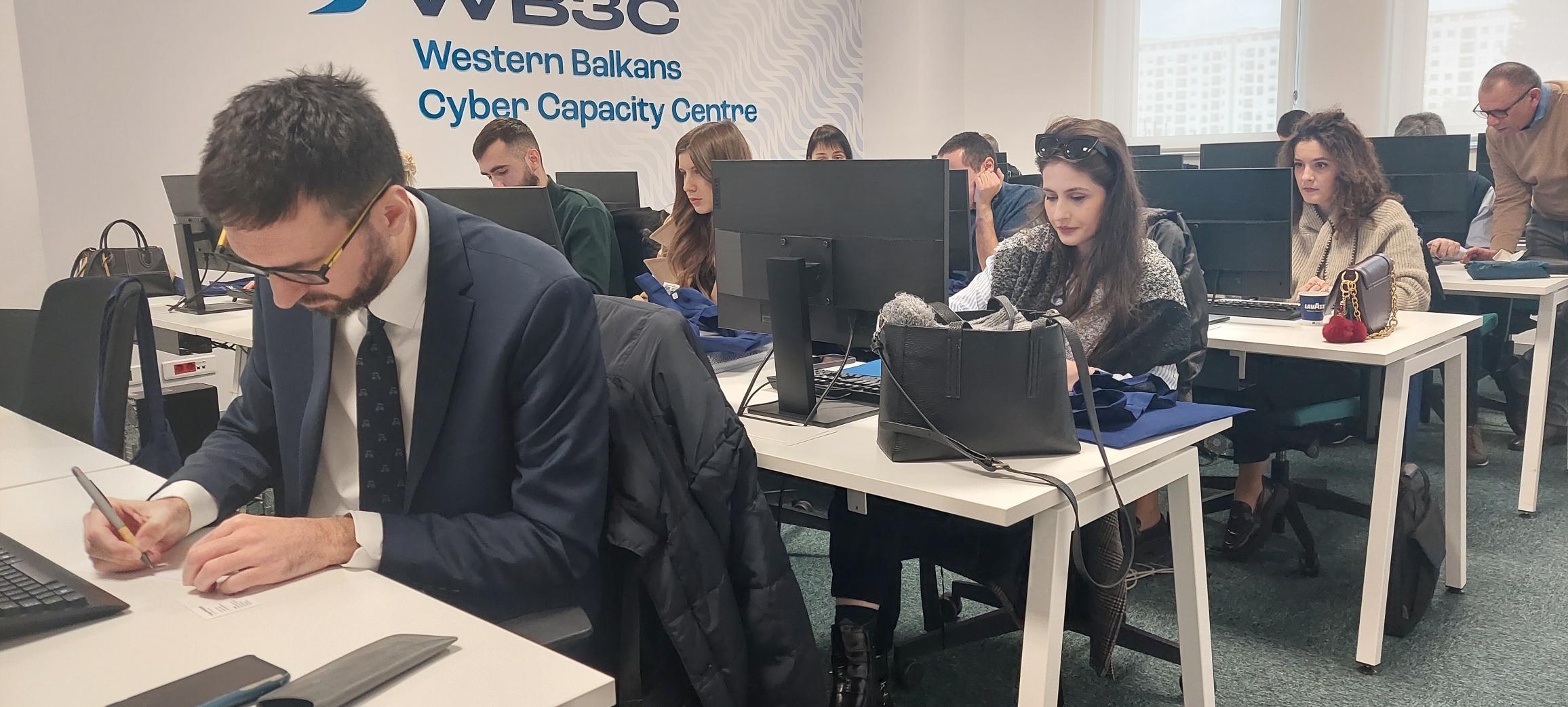
Cyber Hygiene Training for Ministry of European Affairs of Montenegro
Today we start a short CyberHygiene training for colleagues at Montenegro’s Ministry of European Affairs. The training is led by WB3C-s in-house trainers Cyril C. and Yannick Casse.
Over the two days, we will work through the threats civil servants face most often — phishing, malware/ransomware and social engineering — and the practical habits that reduce risk without needing to advance technical skills such as: safer daily practices, data confidentiality and clear incident response basics.
A reminder worth repeating: cyber hygiene is organizational hygiene. Firewalls and policies help, but day-to-day resilience is built in small decisions made across the institution. Every civil servant counts.
A simple checklist that pays off:
⚠️ Pause before you click (especially “urgent” emails)
⚠️ Use strong passwords/passphrases + multi-factor authentication where available
⚠️ Keep devices and apps updated
⚠️ Report suspicious activity early—speed matters
Director Gilles Schwoerer greeted the participants by emphasizing that cybersecurity culture doesn’t start in the IT department, but it starts in each inbox. We are very pleased to welcome the behind-the-scenes force driving Montenegro's successful advancement towards the EU accession and to share that WB3C is expecting its first multi-year EU grant in March this year, aimed at supporting the region in meeting the requirements from the cyber agenda and strengthening its overall resilience, especially its critical infrastructure. We look forward to joining forces with ministries around the region in 2026 - a year expected to bring a dynamic plan of activities.
27.01.2026
Continuing Cooperation with ITU
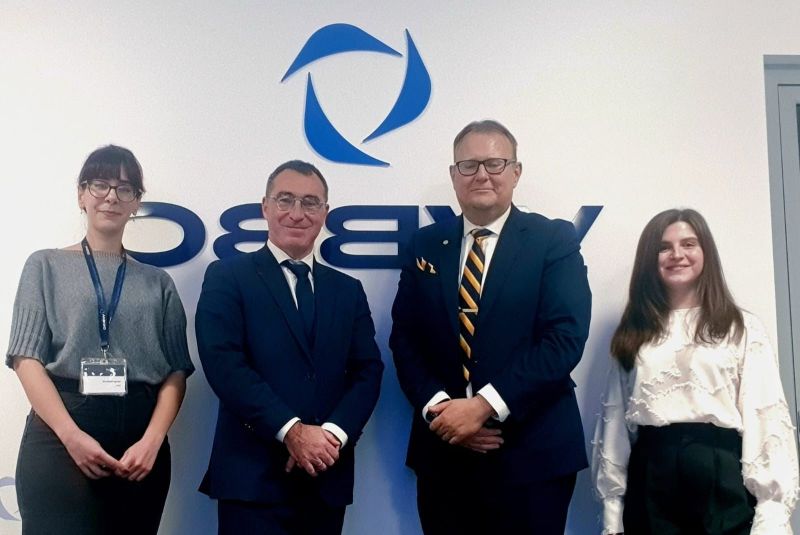
We were pleased to welcome the International Telecommunication Union to WB3C again this week to continue our discussions on working together for the benefit of the region—particularly on cybersecurity for critical infrastructure. Our partnership, launched in 2024, is set to deepen as protecting critical infrastructure becomes an increasingly high priority across the Western Balkans, closely linked to the EU accession path and the need to strengthen resilience against a growing threat landscape. We met with Jaroslaw K. PONDER, Head of ITU Office for Europe and Valentina Stadnic, Programme Officer at the ITU Office for Europe, joined by Director Gilles Schwoerer and Project Assistant Vanja Radović on the WB3C side.
22.01.2026
Prepping Up for the Year Ahead
After the extended Christmas and New Year holidays, WB3C is back in track, using this quieter month to finalize our end-of-year reports, complete our dynamic 2026 work plan and upgrade our IT system ahead of the exciting activities we have coming up.
A big part of this “behind-the-scenes” work is strengthening our training environment.
A sneak peak into this summer: we’re preparing to host the first Forum InCyber Balkans (FIC Balkans) during which we will organize a Capture the Flag (CTF) challenge. FIC Balkans is a new event we are launching with Forum INCYBER (FIC) France, the Association of Security Managers of Montenegro and the Naučno-tehnološki park Crne Gore / Science Technology Park of Montenegro, bringing cyber businesses and institutions together for a cyber fair—and creating space for practical engagement, learning, and a bit of fun for our beneficiary countries.
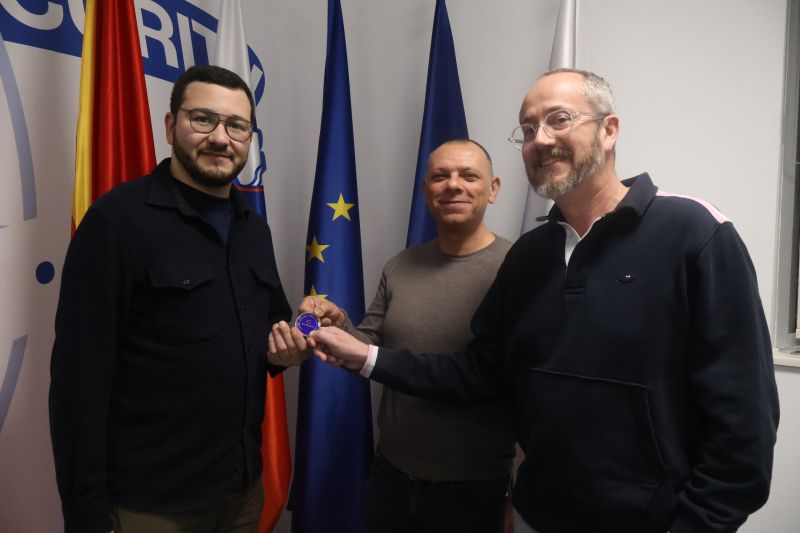
In the photo, our team with colleague Samy SCANNA, member of the Gendarmerie Nationale reserve, who came to help with setting up the system.
Stay tuned for updates as we have a full year of news and activities ahead.
20.01.2026
Courtesy Visit by the Polish Embassy
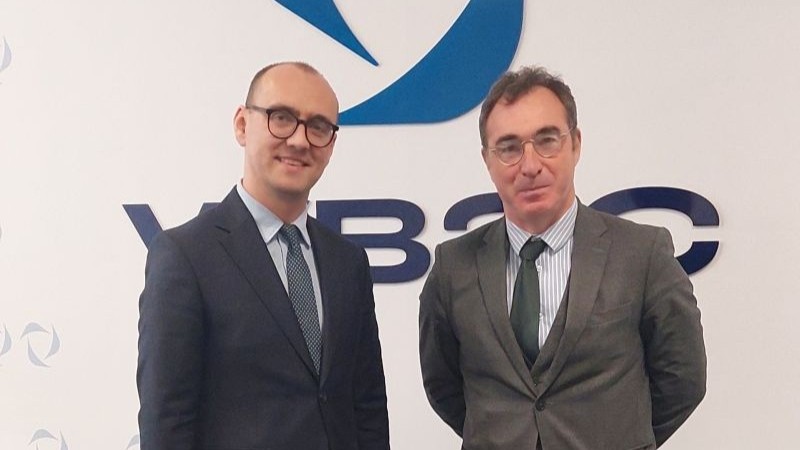
Bartosz Marcinkowski, Chargé d’affaires a.i. at the Embassy of the Republic of Poland in Podgorica, paid his first courtesy visit to the Western Balkans Cyber Capacity Centre (WB3C) yesterday.
The visit was an opportunity to learn more about WB3C’s mission and ongoing work, and to explore potential areas for future cooperation. Mr. Marcinkowski met with Gilles Schwoerer, Head of WB3C and the management team, and was given a tour of the Centre’s premises.
We appreciate the Embassy’s interest and look forward to continuing the dialogue on shared priorities in building cyber capacity and resilience of the region.

14.01.2026
Western Balkan Cyber Camp – Alumni Online Session
On 14 January 2026, the Western Balkan Cyber Camp community reconvened online, to maintain the momentum of regional networking and learning that took place last May in Durres, Albania, bringing together 60 young people from the region who aspire to become cyber professionals. Opening the session, Prof. Asoc. Dr. Igli Tafa, former General Director of AKSK and newly appointed director of AKSHI, underscored the strategic importance of maintaining an active alumni community beyond individual events. His opening remarks were followed by a panel discussion, “The Alumni Network as a Force for Regional Cyber Resilience,” exploring how informal professional ties can complement institutional cooperation. The group heard insights from Ms. Brunilda Halili, National Community Safety Officer, OSCE Presence in Albania and Prof. Blerim Rexha, University of Prishtina, who highlighted the value of cross-border knowledge exchange, early-career mentorship, and collaborative problem-solving in a region facing shared cyber threats. The discussion emphasized that resilience is not built solely through policy frameworks, but through trusted communities of practitioners.
AI and Cybersecurity: Friend or Foe?
A lightning talk by Ms. Piret Hirv, Head of the Data Management Competence Centre at e-Governance Academy, examined the evolving relationship between artificial intelligence and cybersecurity. The session addressed:
- AI as a force multiplier in detection and response
- The risks of AI-enabled manipulation and automated cybercrime
- The growing need for technical literacy and ethical awareness
The discussion placed emerging technologies within a practical, career-oriented context for young professionals.
Cyber Careers in 2025 – Positioning for Impact
In a forward-looking mini-workshop, Mr. Eno Ngjela (UNDP) provided guidance on navigating the cybersecurity landscape in 2026 by looking at the job market in the previous year.
Participants explored:
- Specialisation pathways within cybersecurity
- Aligning skills with international and EU standards
- Building credible professional profiles
- Leveraging regional networks for opportunity and mobility
The workshop reinforced the importance of proactive career planning in a rapidly evolving field.
Next Steps: From Online Exchange to In-Person Engagement
The session concluded with an introduction to the upcoming 2026 in-person Alumni Event, presented by Mr. Gilles Schwoerer, Head of WB3C
The online edition demonstrated that the Western Balkan Cyber Camp is evolving into a durable regional platform. By sustaining dialogue between alumni and partners, the initiative strengthens both professional pathways and collective cyber resilience across the Western Balkans.
Further engagement opportunities and updates on the 2026 gathering will follow.