17.03.2026
Investigating Disinformation - Training for Law Enforcement
Disinformation is taking an increasingly central place in the security agenda. It is a real and growing challenge that can weaken trust, influence democratic processes such as elections and exploit societal vulnerabilities through digital channels with massive reach. That is why WB3C is integrating this topic into its programme portfolio and launching a new training series for law enforcement agencies in the Western Balkans.
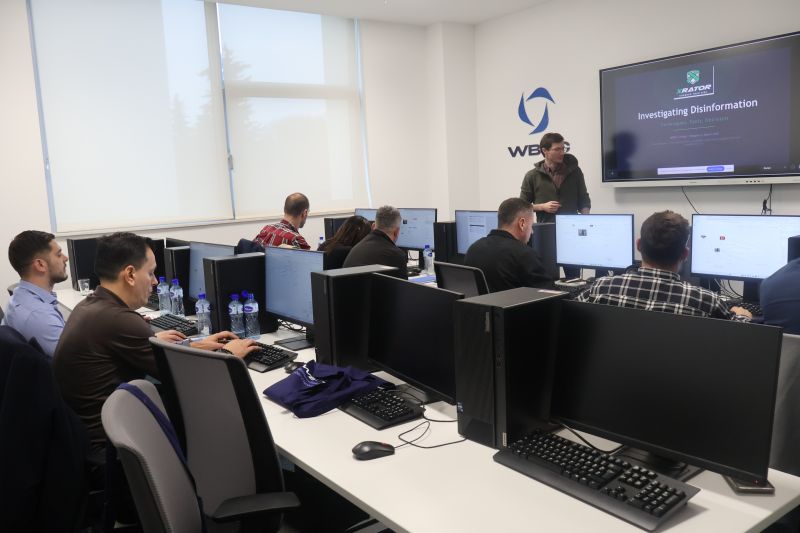
Yesterday, we launched Investigating Disinformation Training for Law Enforcement, bringing together practitioners from across the Western Balkans for a two-day operational training focused on detecting, assessing and responding to disinformation as a security threat.
Delivered with the support of Ronan Mouchoux from XRATOR, the training combines practical exercises, case-based learning and regional scenarios to help connect analysis with lawful and proportionate action.
At the same time, disinformation and FIMI cannot be addressed by one institution alone. While law enforcement has an important role, resilience depends on a whole-of-society approach — with cooperation across public institutions, the judiciary, media, civil society and education systems.
Strengthening this ecosystem is essential for protecting democratic processes, public trust and security across our region.
16.03.2026
Criminal Investigation in a Digital Environment - Training for Judges and Prosecutors
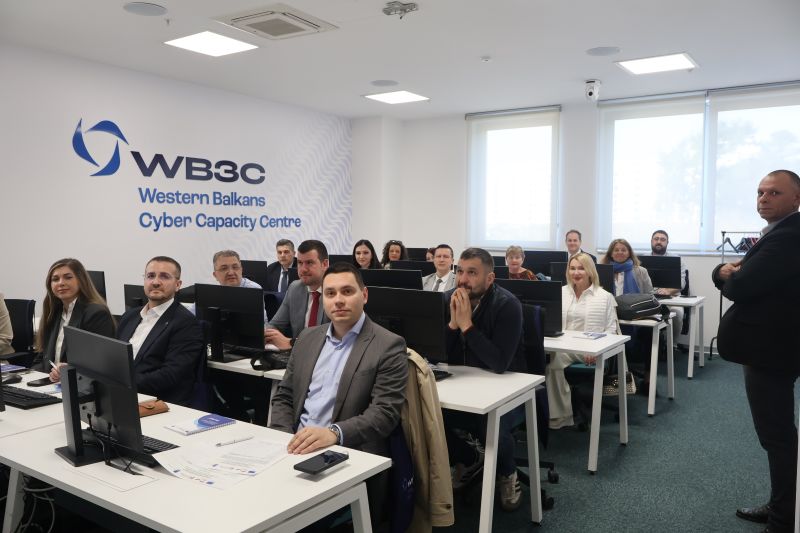
Today, WB3C is launching a four-day regional training for judges and prosecutors delivered in cooperation with EU4FAST and CIVIPOL, continuing our work under the Cybercrime pillar to strengthen the foundations of criminal investigations involving online and digitally enabled crimes.
This course brings together members of the judiciary from across the Western Balkans to deepen their understanding of how cyber-enabled crimes are investigated and prosecuted in practice.
The programme is structured around three core blocks:
• Typologies of cyber and cyber-enabled crime
• OSINT and dark web investigations
• Cryptocurrencies and blockchain in criminal investigations
These areas are increasingly relevant for prosecutors and judges who must assess complex digital evidence and understand the investigative methods used by law enforcement.
The training is delivered by WB3C’s in-house experts Cyril C. and Yannick Casse, building on the Centre’s regional approach that brings together practitioners from across the Western Balkans to learn from shared challenges and investigative experience.
In 2025, WB3C organised 18 training sessions in cybercrime, reaching more than 183 police officers, judges, prosecutors and police cadets.
In 2026, we aim to further intensify this work — expanding our cybercrime training portfolio and introducing new topics, including disinformation and the fight against foreign information manipulation and interference, reflecting the evolving nature of digital threats.
The effective resolution of cybercrime cases is essential for advancing compliance with Chapters 23 and 24, especially with regard to judicial capacity, the rule of law, and internal security.
15.03.2026
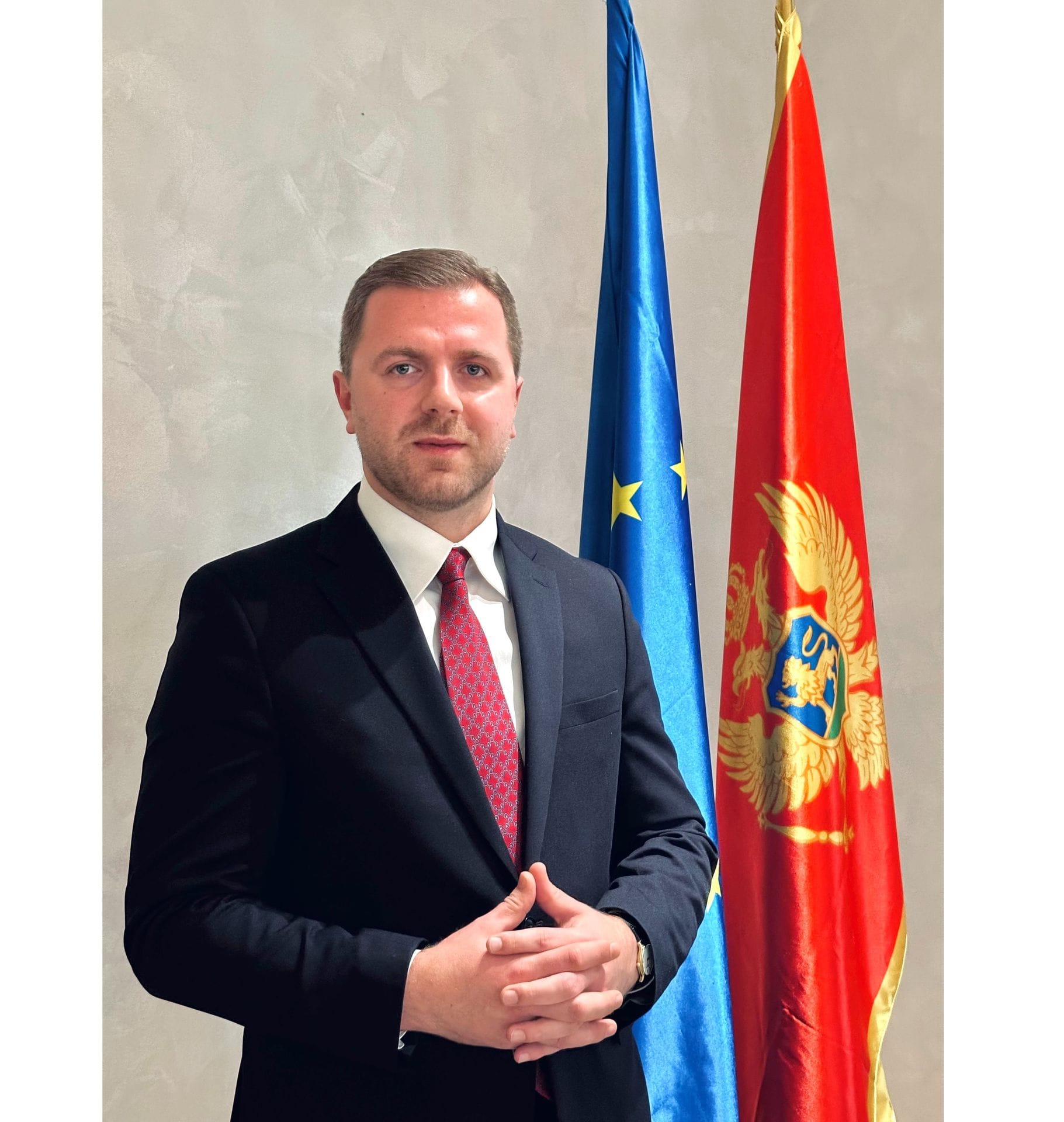
WB3C Elects Naim Gjokaj as its First Director General
The Governing Board of the Western Balkans Cyber Capacity Centre (WB3C), meeting for its first session in Podgorica on 10 March 2026, elected Naim M. GJOKAJ as the Centre’s new Director General. he will be joining WB3C thi ssummer.
Mr. Gjokaj currently serves as State Secretary at the Ministry of Public Administration of Montenegro, a role he has held since December 2023.
He brings extensive experience in public administration reform and regional cooperation, with a strong focus on digital transformation and institutional development. Mr. Gjokaj holds a degree in Banking from the Faculty of Financial Sciences at Marmara University in Istanbul, where he studied as a scholarship recipient of the Government of Turkey.
His election marks an important step in the continued institutional development of WB3C following the Centre’s transition into an international organisation.
Mr. Gjokaj will be taking the position at the end of Q2, joinging our Programme Director Gilles Schwoerer in strengthening the institution’s foundations, deepening regional cooperation, expanding strategic partnerships and further consolidating WB3C’s role as a key regional platform supporting the EU integration and digital resilience of the Western Balkans. He will be working alongside our Programme Director Gilles Schwoerer in guiding the Centre’s strategic growth and programme development in the years ahead.
We warmly congratulate Director General-elect Naim Gjokaj and look forward to welcoming him to the WB3C team.
12.03.2026
WB3C Participates in EU CYBER DIRECT Workshop in Brussels
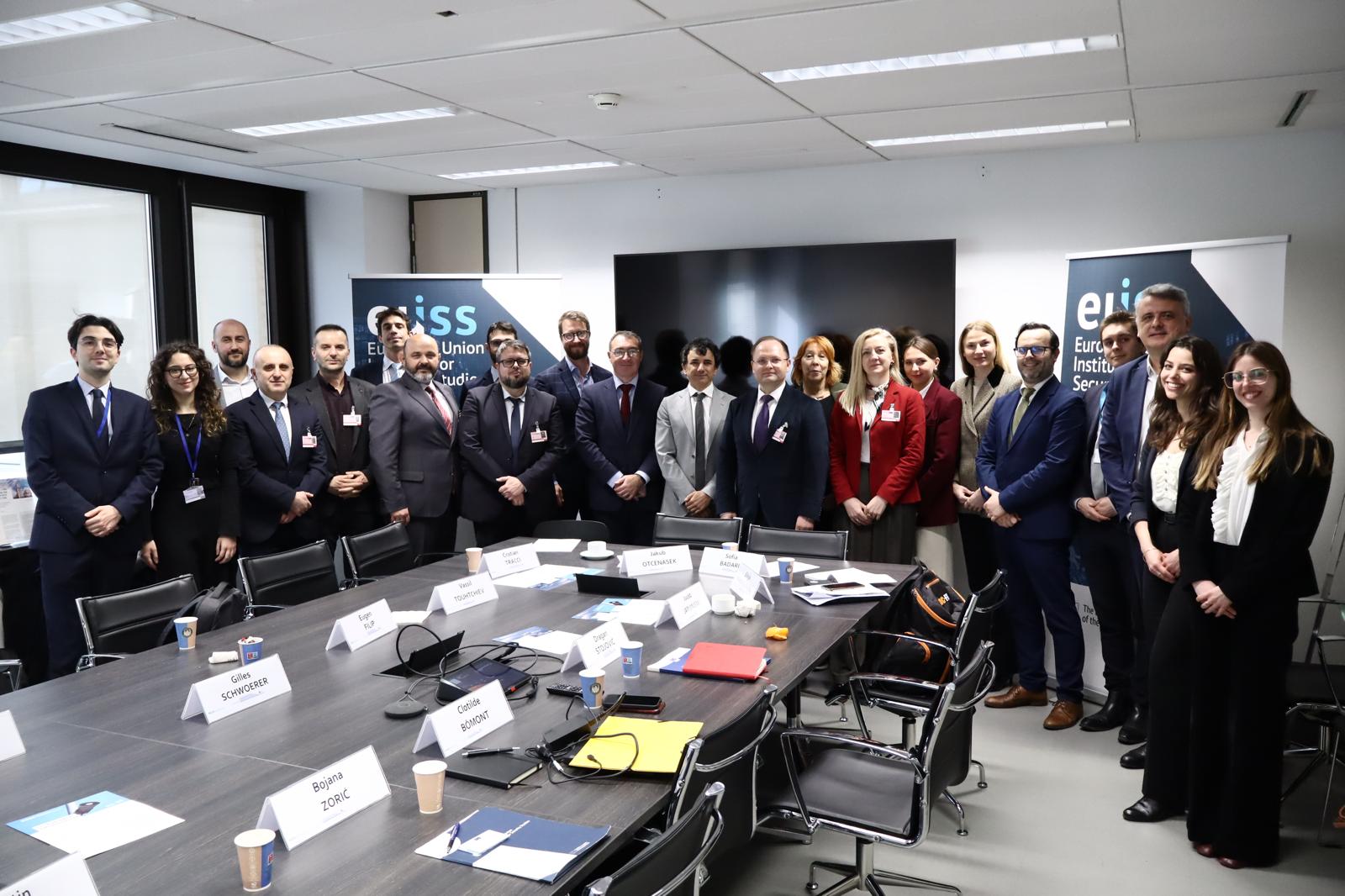
WB3C was pleased to take part in the discussion organised by the EU Institute for Security Studies and EU Cyber Direct – EU Cyber Diplomacy Initiative on “Europe Connected and Secure: Leveraging cyber and digital capacities in enlargement countries,” held in Brussels on 12 March.
The workshop brought together representatives from the Western Balkans, EU institutions and partners from Ukraine to assess common cyber threats, institutional realities, and the role that digital resilience can play in strengthening Europe’s neighbourhood security.
For WB3C, it was a valuable opportunity to exchange perspectives with colleagues from the WB6 partners, DG ENEST, DG CONNECT, ENISA, EEAS and other stakeholders working to support the EU enlargement agenda through stronger cyber and digital capacities.
Two ideas emerging from the discussion that our Programme Director Gilles Schwoerer engaged in are particularly important for us and will guide WB3C’s work in the coming months:
• A regional cyber diplomacy initiative, to be developed together with EU Cyber Direct, which WB3C aims to host in the second half of the year.
• A structured dialogue with universities across the region, to explore how practice-based cyber modules developed at WB3C can complement and strengthen existing or emerging Master’s programmes in cybersecurity.
Developing talent and building institutional capacity remain central to the region’s digital future. WB3C looks forward to continuing this conversation with partners across the region and the EU.
11.03.2026
WB3C Officially Becomes an International Organization
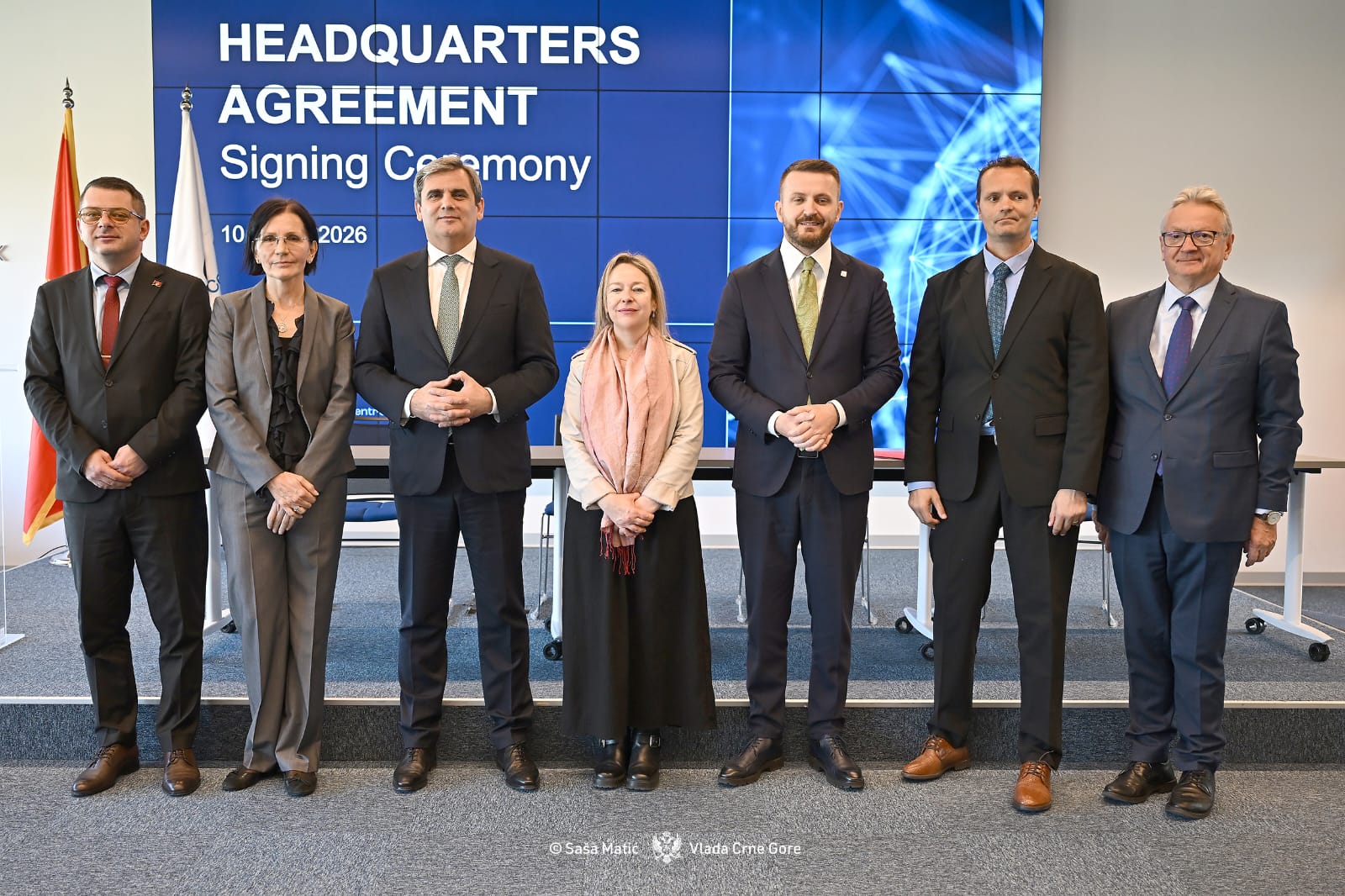
Yesterday, the Western Balkans Cyber Capacity Centre (WB3C) reached a major milestone in its institutional journey.
At the first meeting of its Governing Board, representatives of France, Slovenia and Montenegro came together to mark a new chapter for the Centre, with the signing of the Headquarters Agreement formally confirming WB3C as the first international organization headquartered in Podgorica. The appointed members of the Governing Board, H.E. Anne-Marie Maskay and Gen. Stephane Richou for France, iztok jarc and Uroš Svete for Slovenia and Ivan Lekovic and Aleksandar Zecevic for Montenegro, held the first inaugural session to adopt internal documents, while the Programme Director Gilles Schwoerer presented the achievements of the Centre in 2025 and the ambitious plan for 2026.
The event was honoured by the presence of the Deputy Prime Minister and Foreign Minister Ervin Ibrahimovic, Minister of Public Administration Marash Dukaj, French and Slovenian Ambassadors to Montenegro Anne-Marie Maskay and bernarda gradišnik, representatives of the EU Delegation and the diplomatic corps in Montenegro and our institutional partners, reflecting the strong support behind WB3C’s mission to serve as a regional platform for cyber capacity building, cooperation and resilience.
During the official addresses of the high representatives of the founding members, we heard the reassuring words of unwavering support to the region's European future and WB3C's mission in supporting the region on this path through strengthening its resilience against cyber and hybrid threats.
Beyond the formal ceremony, the day also offered a meaningful reminder of what this institution is ultimately about: investing in people, knowledge and the region’s future. On this occasion, General Stéphane Richou, Director of Security and Defense Cooperation at the French Ministry for Europe and Foreign Affairs (Direction de la Coopération de Sécurité et de Défense DCSD 🇫🇷) visited the first class of the Cybersecurity Diploma Course, engaging with participants who represent the next generation of cyber professionals in the Western Balkans.
Taken together, yesterday’s events stood as a powerful testament to a shared commitment to regional cooperation, European values and a more secure digital future.
09.03.2026
New University Dploma Course in Cybersecurty Launched
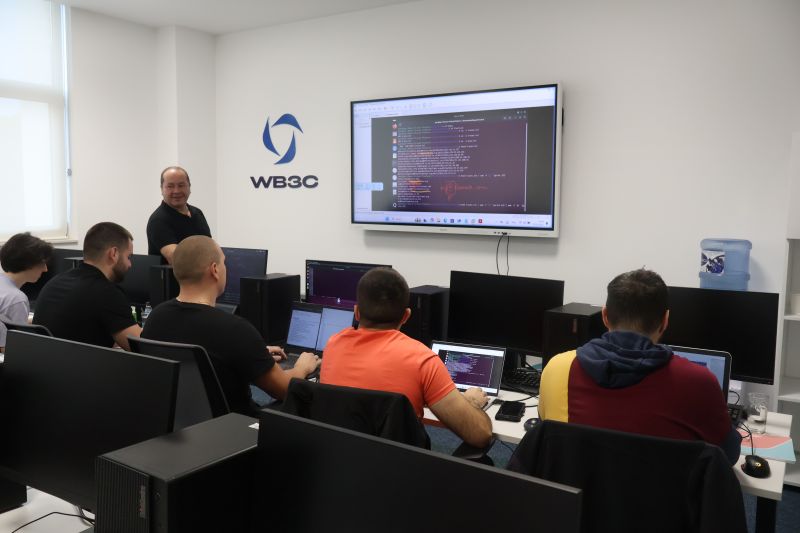
Last week, we officially launched the Cybersecurity University Diploma Course, welcoming a new cohort of 14 talented IT students from the Western Balkans.
Over the past months, many of them went through demanding preparation and pre-selection phases. Now the programme truly begins.
This one-year academic diploma, delivered by the Western Balkans Cyber Capacity Centre in partnership with the Université de Technologie de Troyes (UTT), represents something much bigger than a 1-year training programme. It is an investment in the region’s long-term cyber talent pipeline.
The diploma carries 60 ECTS credits and may lead to a Bachelor’s degree through UTT, once prior academic credits are validated. This means that students from the Western Balkans are not only gaining technical skills — they are building qualifications that are recognized within the European higher-education framework.
The programme is designed to produce work-ready cybersecurity practitioners. Through lectures, hands-on labs, case studies, Capture-the-Flag exercises and a professional internship, participants will develop skills in:
• Secure systems and network administration
• Cryptography and data protection
• Secure software development and auditing
• Penetration testing and cybersecurity assessments
• Incident detection, SOC monitoring and digital forensics
• EU cybersecurity law, regulation and professional ethics
By the end of the programme, participants will be prepared for entry-level roles such as:
• Security Administrator
• SOC Analyst
• Junior Penetration Tester
• Digital Forensics Technician
• Cybersecurity Auditor
The course is taught by professors from UTT — a leading French institution in applied cybersecurity education — including Reza Elgalai, expert in digital forensics and cybersecurity, and Ljuban Petrovic, a recognized cybersecurity expert with extensive academic and industry experience.
Equally important, participants will complete professional internship in public administration, academia or private sector organisations across the region, ensuring that knowledge gained in the classroom translates directly into operational capability.
Cybersecurity skills shortages are one of the most critical challenges facing Europe today. Building these capacities requires sustained investment in education, mentorship and real-world training.
This programme is one step toward ensuring that the Western Balkans develops the next generation of cybersecurity professionals able to protect institutions, economies and citizens in the digital age.
We look forward to following the journey of this first cohort.

05.03.2026
Tracing, Seizing and Recovering Trafficking in Persons Proceeds in the Era of Digital Finance and Crypto-Assets in South Eastern Europe
This week's meeting brought together prosecutors, judges, law enforcement investigators, financial intelligence specialists and policy experts from across South-Eastern Europe and the EU, alongside representatives of international organizations, civil society and the private sector. Participants included experts from institutions such as EUROPOL, INTERPOL, UNODC, national ministries of interior and justice, specialized prosecution offices, financial investigation units, cryptocurrency analytics companies and anti-trafficking organizations.
The event was implemented by UNODC, in collaboration with the Ministry of Interior of Montenegro and the Ministry for Europe and Foreign Affairs of France.
On Day 2, participants visited the Western Balkans Cyber Capacity Centre (WB3C), where our team presented its mandate and activities supporting regional cybercrime investigations. Director Gilles Schwoerer presented the overall operations of the Centre while our in-house expert for cybercrime, Cyril C., introduced WB3C’s crypto-assets training programme, highlighting how investigators in the region are being equipped with practical skills for blockchain analysis, cryptocurrency tracing and digital evidence handling in financial investigations.
Discussions throughout the meeting emphasized the growing importance of digital forensics, blockchain analysis and cross-border cooperation in identifying and recovering criminal proceeds linked to trafficking in persons.
Events like this demonstrate how cooperation between international organizations, governments, investigative bodies and technical experts is becoming essential to address increasingly complex financial crimes in the digital era. The group visited the WB3C training facilities and part of the Science and Technology Park as one of the driving platforms for innovation in Montenegro.
27.02.2026
Regulatory Framework for the Protection of Children Online
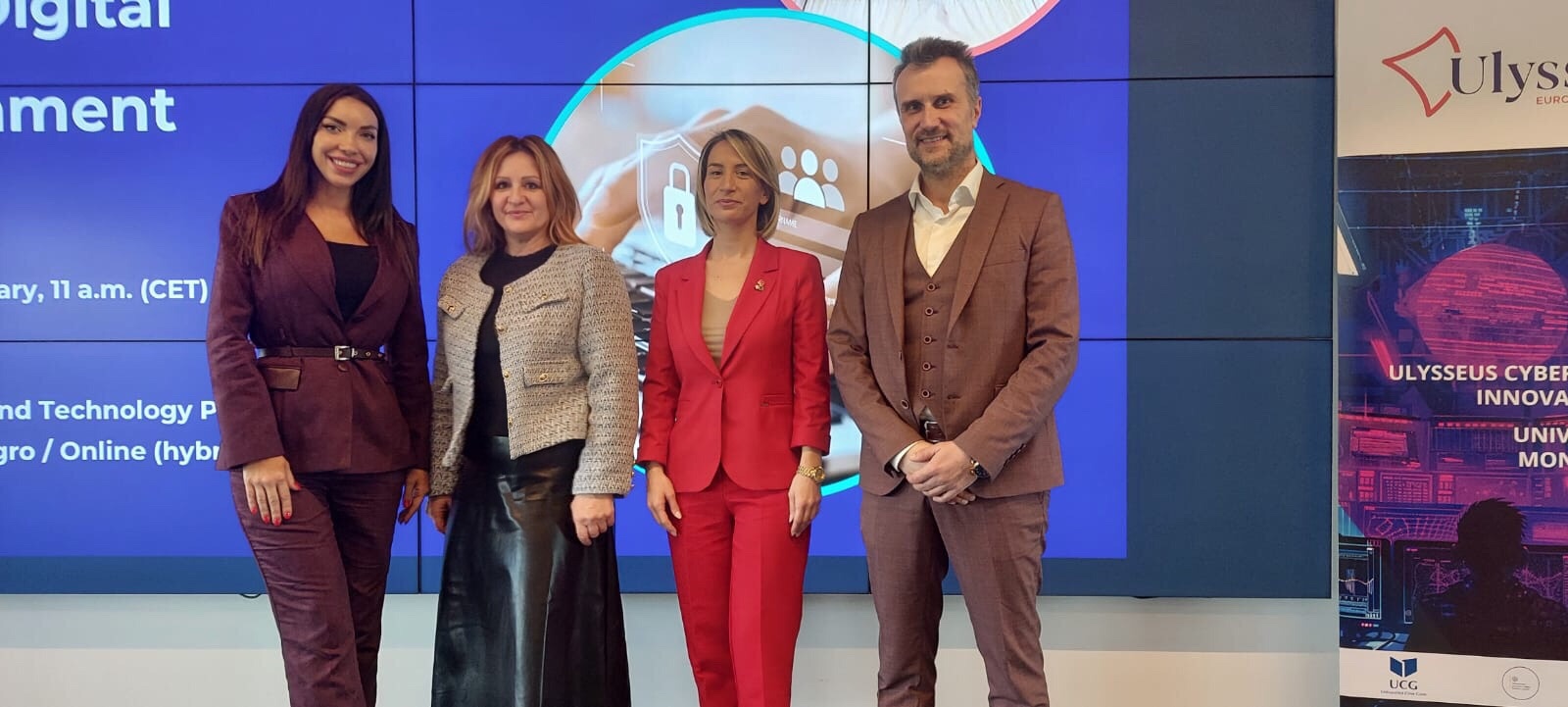
Today, WB3C participated in a multisectoral roundtable on the “Protection of Children in the Digital Environment – A New Draft Law”, hosted by the Ulysseus European University – Innovation Hub for Cybersecurity at the University of Montenegro, led by Andreja Mihailovic, PhD in academic cooperation with the University of Genoa.
The discussion, opened by Prof. Dr. Savo Tomović and MP Slađana Kaludjerović, addressed the proposed Law on the Protection of Minors in the Digital Environment from multiple professional angles.
Our Senior Project Manager Vanja Madzgalj MBE noted that clearly this is an exceptionally complex regulatory space.
On one hand, states face structural barriers: limited jurisdiction over very large digital platforms operating across borders, difficulties in enforcing obligations against global service providers and the technical opacity of algorithmic systems. On the other hand, children are digital natives with legitimate rights to access, participate in, and benefit from the digital world. Protection cannot mean exclusion.
⚡ At the same time, the data are stark.
We see increasing numbers of minors falling victim to digital crimes, including online sexual exploitation and abuse. We also see minors committing digital offences, often without understanding the legal consequences. Internet addiction is emerging at an early age, with long-term psychological and social impacts. Uncontrolled and unsupervised digital exposure is producing measurable harm.
The forum brought together ICT professionals, children’s rights organizations, parent associations, regulators, policymakers, and educators.
There was broad agreement that:
Cross-border cooperation with EU regulators is essential, particularly in light of the Digital Services Act and emerging European enforcement mechanisms.
Parents and schools carry a critical share of responsibility.
Children’s rights — including access to information and digital participation — must be preserved alongside protection measures.
Clear criminalization of digital child sexual abuse material (CSAM), grooming, and manipulation of minors online is essential.
We also agreed that waiting for perfect solutions is not an option. We must start somewhere.
National awareness campaigns on digital risks, structured parental education, and early cybersecurity education in schools are foundational. Parents need greater support — and greater accountability. At the same time, targeted institutional regulation and enforceable legal provisions remain necessary, particularly in areas of exploitation, manipulation, and platform responsibility.
Protecting minors online is not a single-law issue. It is a societal, institutional, and technological challenge that requires coordinated national action and effective alignment with European regulatory frameworks. The complexity should not paralyze us — it should push us toward pragmatic, enforceable, and balanced solutions.
24.02.2026
Strengthening OSINT Capacities for Investigators and Prosecutors
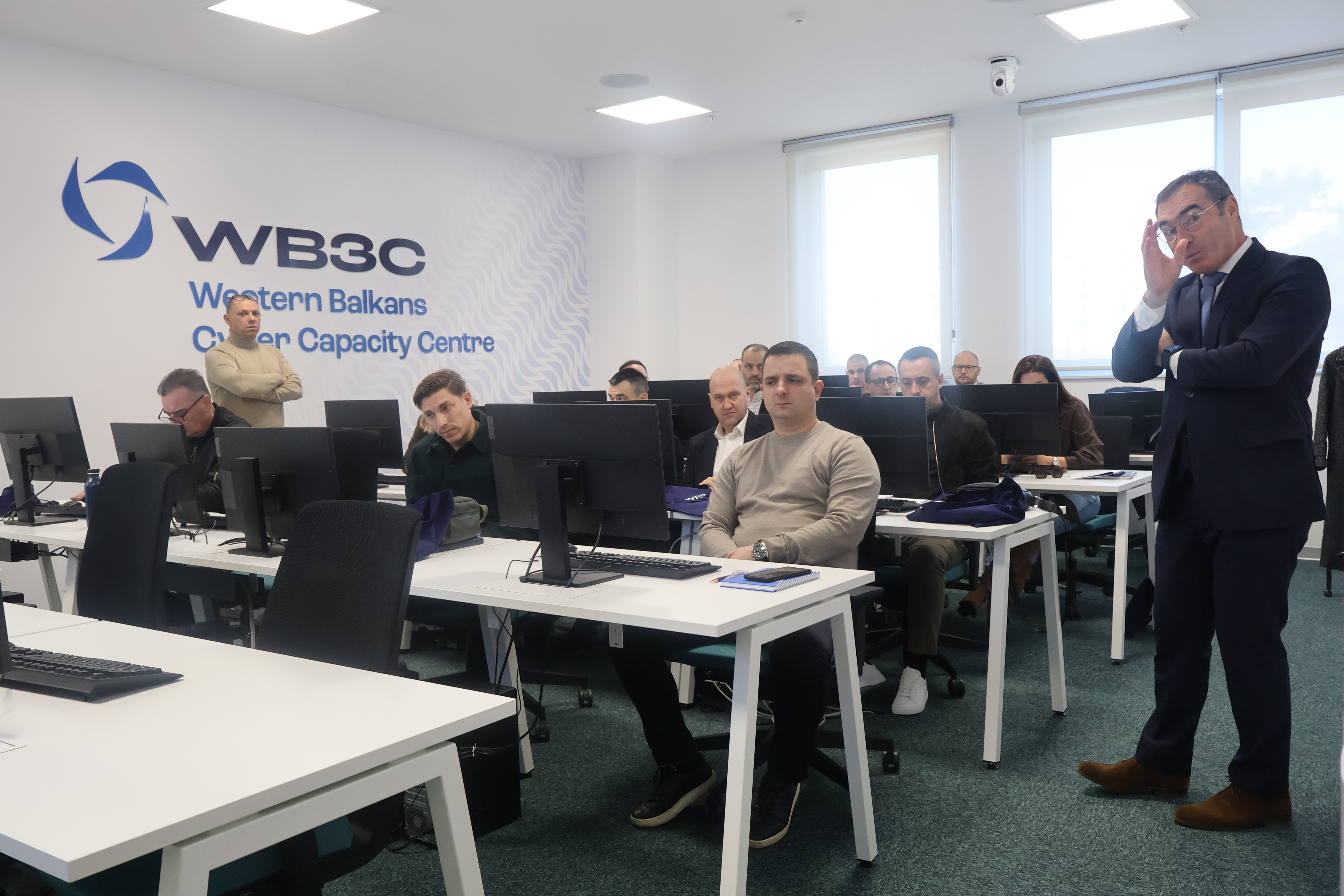
WB3C has launched a new edition of its four-day intensive OSINT training, bringing together police investigators and prosecutors from across the Western Balkans.
The participants were welcomed by Gilles Schwoerer, Head of WB3C, who underlined the importance of building coordinated investigative and prosecutorial responses to evolving digital threats. The training is delivered by WB3C’s in-house cybercrime expert, Cyril C., specializing in open-source intelligence (OSINT).
The programme focuses on practical, case-based learning to strengthen participants’ ability to collect, analyse and preserve digital evidence in line with legal standards. Through structured exercises, participants develop skills in advanced online searches, metadata analysis, secure data handling and safe navigation of the darknet environment.
By combining investigative techniques with prosecutorial perspectives, the training supports stronger end-to-end cooperation between police and justice actors — a critical factor in delivering prosecution-ready cybercrime cases.
Building sustainable regional capacity in open-source intelligence remains a key pillar of our work to enhance resilience against evolving digital threats.